
Capturing Quiet Views of the National Capitol Columns
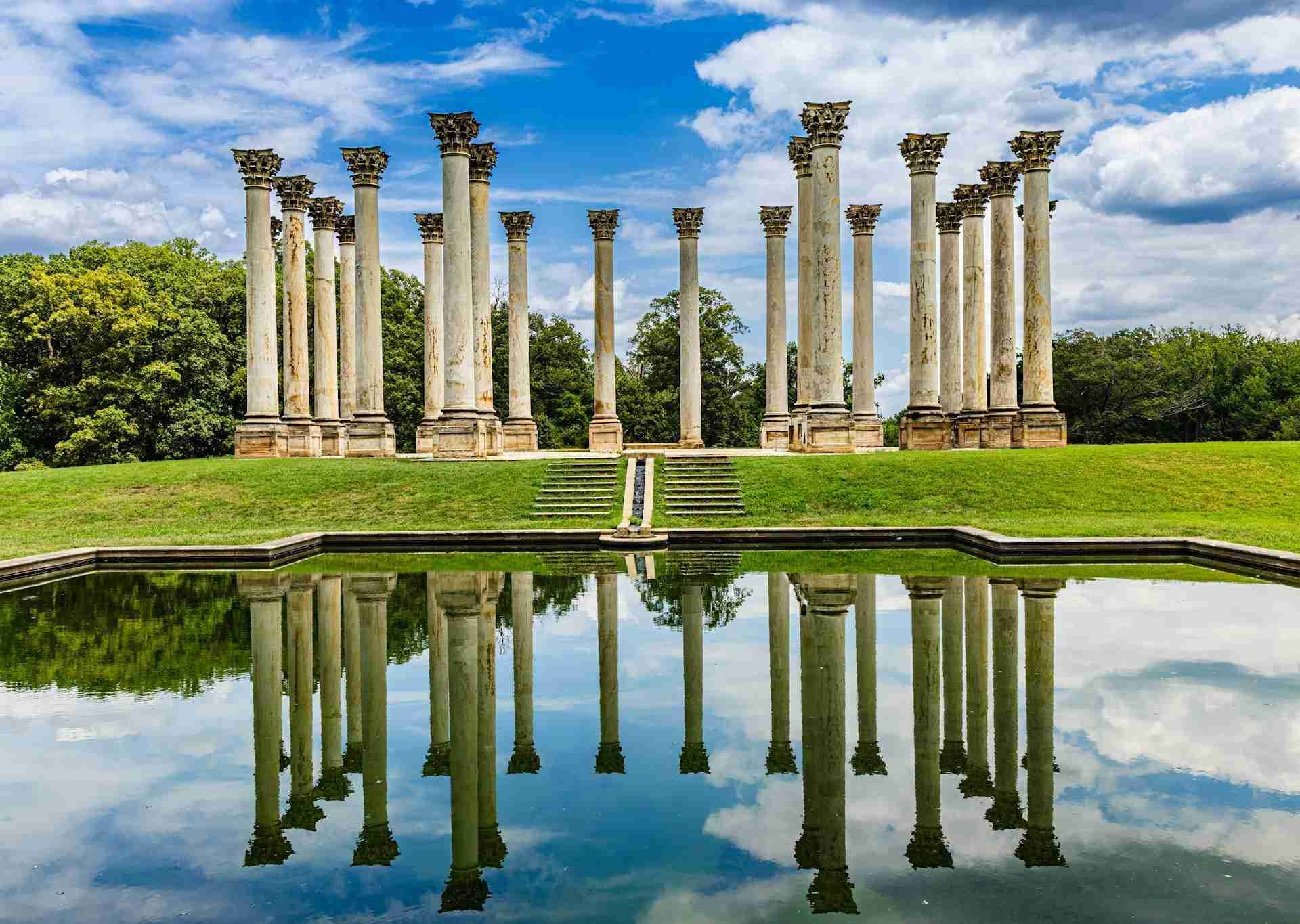
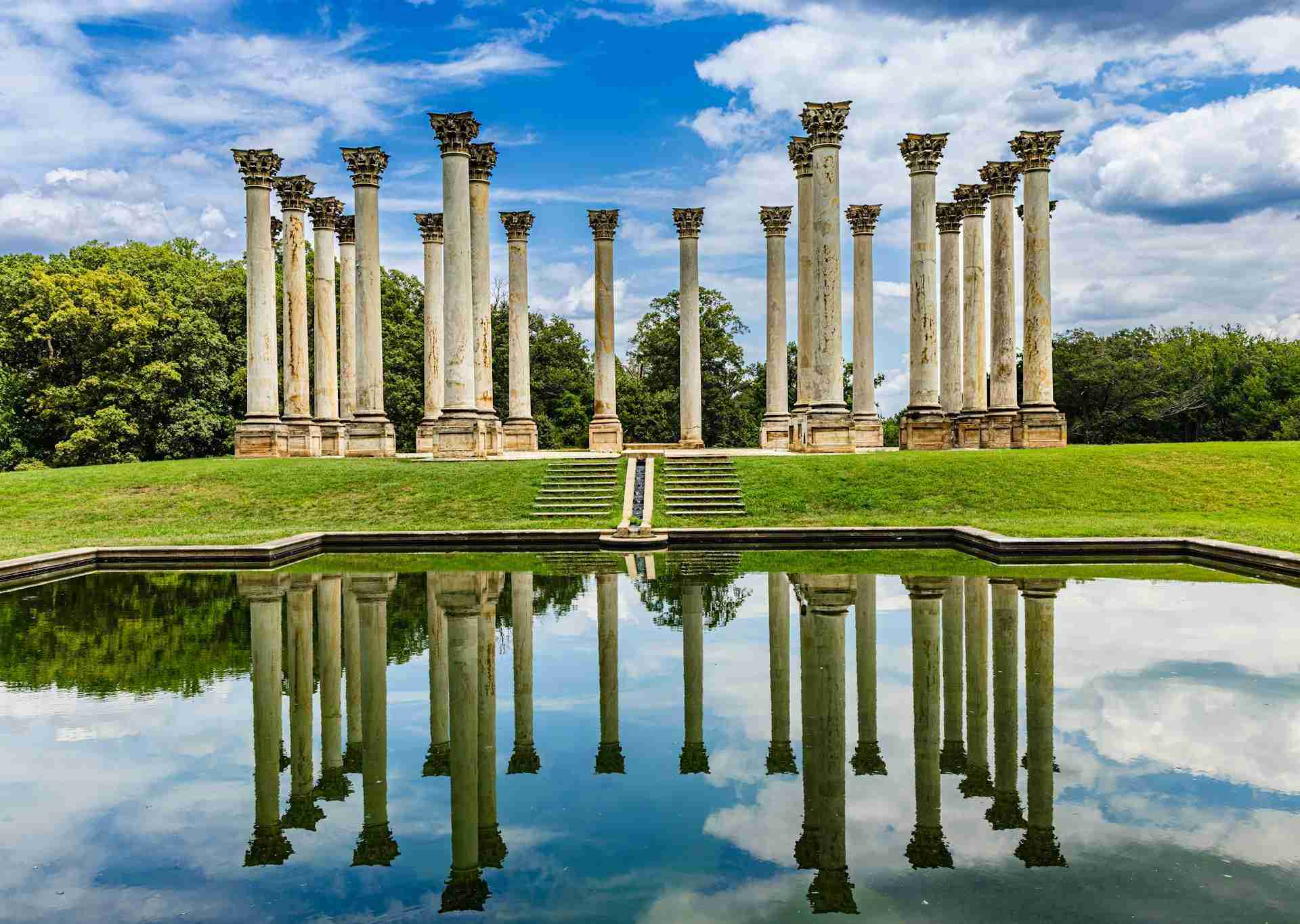
The National Capitol Columns are a striking installation located in the heart of the United States National Arboretum in Washington, DC. Set in an open meadow framed by low hills and tree lines, these sandstone columns originally supported the east portico of the U.S. Capitol before being relocated here in the 1980s. Their placement within a wide, grassy landscape creates a visually powerful contrast between classical architecture and natural surroundings. The scene feels intentionally quiet and spacious, allowing photographers to work with symmetry, scale, and atmosphere in a controlled environment. With no surrounding buildings to distract from the composition, the columns stand as solitary forms, exposed to changing light and weather throughout the day.
Best Photography Opportunities
Symmetrical compositions
One of the most straightforward but rewarding shots is a head on view from the walkway that leads directly toward the columns. This angle emphasizes balance, scale, and proportion, with the grass in the foreground and trees framing the background. The composition benefits from the natural symmetry of the columns themselves, giving photographers a chance to work with classical geometry in a natural setting. Early morning and late afternoon light cast long shadows across the lawn and warm the color of the sandstone, enhancing depth without requiring dramatic editing. A standard 35mm or 50mm lens is ideal here to keep the structure natural while avoiding distortion.
Low angle shots from the surrounding lawn
Photographing the columns from the grass, especially from a crouched or seated position, creates a stronger sense of monumentality. This perspective allows the columns to rise above the viewer and pull the eye upward into the sky. With a wide angle lens, you can exaggerate this sense of scale while also incorporating the surrounding meadow, hedges, and any seasonal blooms that happen to be planted nearby. Light cloud cover or a dramatic blue sky can enhance these images by adding shape and contrast overhead. This technique works especially well in the early evening, when the light is warm and shadows begin to stretch across the field.
Abstract studies of texture and detail
The columns show their age through layers of wear, erosion, and staining, all of which lend themselves to close up photography. Look for areas where water runoff has darkened the stone or where small cracks and surface imperfections add texture. A telephoto lens or macro option can isolate these elements cleanly, especially when the light is even and indirect. Shooting on overcast days helps avoid harsh contrast, allowing fine detail to come through more clearly. These kinds of shots work well as standalone studies or as part of a wider documentary approach to the site.
Reflections in the pool
A small reflecting pool sits directly in front of the columns and can be used creatively in compositions when the water is still. Early morning tends to offer the best reflections before the breeze picks up, but overcast days also help minimize glare. By positioning the columns so that they are mirrored in the water, photographers can create symmetrical images that feel calm and orderly. A polarizing filter may help control surface brightness, especially if the sun is strong. Consider moving slightly off center for a more dynamic frame while still capturing the reflection.
Framing the columns with trees and seasonal colours
The columns are surrounded by open space, but nearby trees and planted beds can be used to add framing elements or layers to the image. In spring, cherry blossoms and early blooms provide color and softness at the edges of the frame. In autumn, trees lining the back edge of the meadow turn shades of yellow and orange, giving a strong background tone. Using a standard or short telephoto lens can help compress these layers and make the columns feel more embedded in the setting. This approach is especially effective when the light is directional, creating depth between foreground and background.
Best Time to Visit
The National Capitol Columns are accessible throughout the year, and each season brings something different to the location. Spring is especially popular, with blooming trees and plantings in the surrounding meadow creating a fresh and colorful backdrop. Early spring also brings soft light and cooler temperatures, which are ideal for longer photo sessions. Summer offers strong morning and evening light, along with well-maintained landscaping around the columns, though mid-day heat and glare can be challenging. Fall introduces vibrant color in the surrounding trees and long shadows that work well with the vertical structure of the columns. Winter strips away most vegetation, giving a clean and minimal setting with stark contrasts on clear days and soft light during overcast conditions.
The best times of day are early morning and late afternoon. Morning light comes from behind the main walkway, casting directional light across the face of the columns. In the evening, the sun sets behind the treeline, creating a golden glow that wraps around the sides and adds a strong sense of depth. Mid-day can still be workable, particularly for detail shots or if cloud cover diffuses the light. The arboretum is typically quieter on weekday mornings, allowing for uninterrupted shooting and more freedom to compose without foot traffic in the frame.
How to Get There
The National Capitol Columns are located inside the U.S. National Arboretum at 3501 New York Avenue NE in Washington, DC. By car, the most direct route is via New York Avenue, with a dedicated entrance into the arboretum and free on site parking. Once inside, follow signs to the Ellipse Meadow area. The columns are a short walk from the parking lot along a paved path, and the surrounding area is level and accessible.
There are no fees to enter the arboretum or photograph the columns. The grounds are open daily except for certain holidays, and while casual photography is permitted without restriction, the use of tripods may be limited during special events or high traffic periods. Restrooms are available near the visitor center, and paved walkways connect the main features of the arboretum. Comfortable shoes are recommended, especially if you plan to explore the surrounding garden areas after visiting the columns.
Recommended Photography Gear
A standard zoom lens in the 24-70mm range will cover most compositions, from symmetrical wide shots to tighter details on individual columns. A wide angle lens is helpful for lower perspectives or when working close to the structure while still trying to fit it fully in frame. A telephoto lens is useful for isolating patterns, textures, or compressing background elements like trees and sky. A circular polarizer can help reduce glare from the stone and deepen the color of the sky, especially on clear days.
A lightweight tripod is recommended if you plan to shoot in early morning or late evening light. It also comes in handy for bracketing exposures or creating clean compositions with slower shutter speeds. Because the area is exposed and often experiences light breezes, a tripod with sturdy legs is more practical than a compact travel model. A lens cloth is also useful, especially in spring or summer when pollen and humidity may affect your gear. Carry only what you need, as the terrain is open and there are no covered areas for gear changes.
Nearby Photography Locations
Located nearby within the arboretum, this collection features miniature trees displayed in open-air pavilions. The scale and detail of each piece allow for thoughtful close up work, especially when the light is soft and indirect. Backgrounds are clean, and the museum offers a peaceful environment for deliberate compositions.
A short drive from the arboretum, this riverfront trail offers views of wetlands, boardwalks, and calm water. The area is especially good for sunrise or early morning photography, with fog often adding depth to wide scenes. Reflections and long exposures work well here with minimal foot traffic.
Roughly fifteen minutes northeast, this park is known for its lotus ponds and marshland paths. Summer mornings are ideal for flower photography, while fall and winter reveal quiet water textures and sparse vegetation. It's a strong location for macro work or layered compositions with water and reeds.
This urban neighborhood provides a contrast to the arboretum's natural themes. Murals, metal doors, signage, and food vendors offer colorful, textured backdrops for street photography or architectural detail. Late afternoon light creates strong shadows and dynamic angles along warehouse facades.
Best visited in late April or early May, this hillside garden offers dense plantings of blooming azaleas beneath tall trees. The curving paths and layered blooms create vibrant foregrounds, with filtered light adding dimension to compositions. It's a strong location for color work and seasonal photography.
The National Capitol Columns are a rare opportunity to photograph neoclassical architecture in a completely natural setting. With space to move, changing light, and a clear visual subject, this site rewards both quick visits and more patient, long form sessions. It's a quiet place to focus on form, light, and the relationship between built history and open landscape.
Comments
Loading comments…