
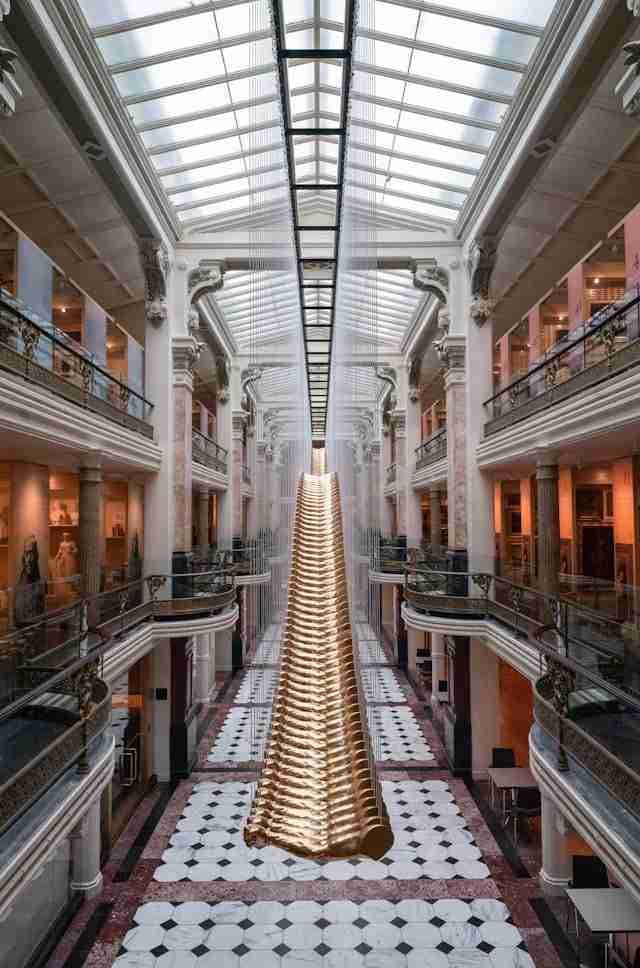
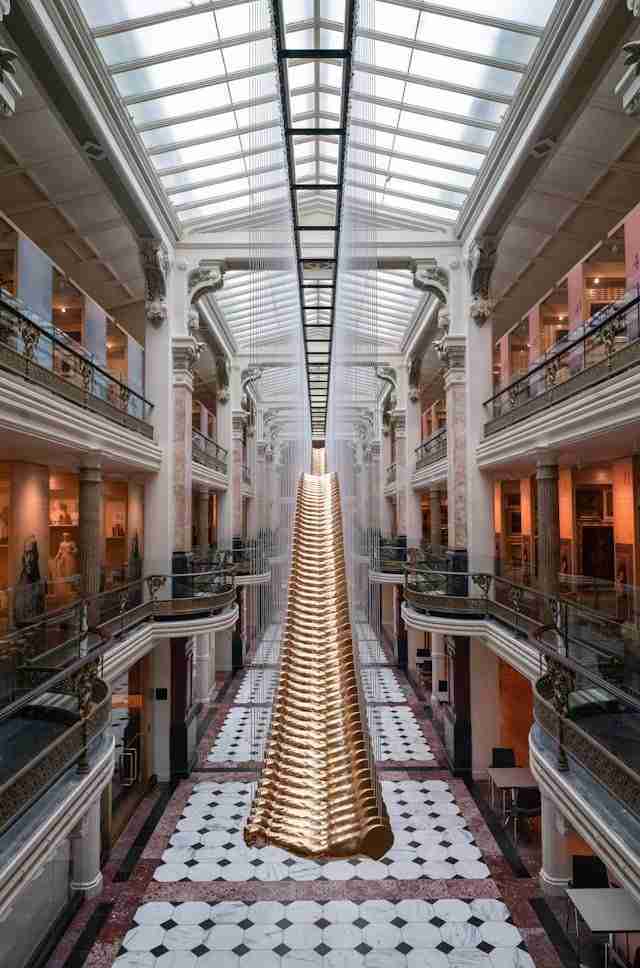
Housed in the historic Old Patent Office Building in Washington, DC's Penn Quarter, the National Portrait Gallery offers photographers a unique blend of neoclassical architecture, elegant interiors, and dynamic lighting. Beyond its art collections, the building itself—shared with the Smithsonian American Art Museum—is a visual gem featuring dramatic atriums, column-lined hallways, and the showstopping Kogod Courtyard. With both natural and artificial light playing across marble, glass, and cast-iron details, this is one of the city's most photogenic indoor spaces. Whether you're shooting architectural abstracts, moody gallery compositions, or capturing human interaction in a museum setting, the National Portrait Gallery delivers exceptional material in every room.
Best Photography Opportunities
• Kogod Courtyard with its Glass Canopy
– The undulating glass roof designed by Foster + Partners covers a vast public courtyard, casting rippling shadows across the stone floor and reflecting in the shallow water features. Wide-angle lenses work beautifully here to emphasize symmetry and scale, especially in early morning or late afternoon when soft light enhances the interplay of geometry and shadow. Including seated visitors adds scale and a human element to the vast space.
• Neoclassical Hallways and Archways
– The building's original 19th-century design includes long marble hallways, grand staircases, and arched doorways that create elegant leading lines and repetition. Shooting from low angles or directly down the corridors yields formal compositions with a sense of depth and rhythm. Early or late in the day, these halls are bathed in gentle ambient light that reveals the texture of the stone.
• Art-Gazing and Candid Portraits in the Galleries
– The museum's thoughtful lighting and wide wall spacing allow for well-composed shots of visitors interacting with portraits. Capturing guests pausing in contemplation creates layered compositions that highlight both the art and the space. Use a fast, quiet lens to avoid disturbing the museum atmosphere.
• Details in Ceiling Fixtures and Ironwork
– Decorative chandeliers, cast-iron railings, and molding along the upper walls offer fine architectural details. These elements are ideal for tight compositions or abstract studies that showcase the craftsmanship of the building. Using a telephoto lens or tilting upward from a corner can isolate and enhance these overlooked features.
• Reflections and Minimalism in the Courtyard Pools
– The reflecting pools in the Kogod Courtyard provide opportunities for minimalist photography, especially when the space is quiet. The shallow water mirrors skylights and architectural edges, creating abstract forms and soft patterns. These scenes work beautifully in monochrome or high-contrast color.
Best Time to Visit
The National Portrait Gallery is an indoor location with controlled lighting, making it photogenic year-round regardless of weather. However, natural light plays a significant role in the Kogod Courtyard, especially in the morning and late afternoon when the sun is low and shadows stretch across the floor. Visiting during these times enhances the drama of light and form in this central space.
Weekdays—particularly early or mid-morning—are best for quieter conditions and unobstructed shots, especially in popular galleries or long corridors. Evening visits offer a different mood, with the gallery's lighting becoming more prominent and the courtyard taking on a calm, atmospheric glow.
Special exhibitions and seasonal displays can influence the feel of the space, so checking the museum's schedule in advance may open new photographic opportunities. The museum is typically less crowded in winter or during non-peak tourist seasons.
How to Get There
The National Portrait Gallery is located at 8th and F Streets NW in Washington, DC, and shares the Old Patent Office Building with the Smithsonian American Art Museum. It is centrally positioned in the Penn Quarter neighborhood and easily accessible via Metro—take the Red, Green, or Yellow Line to Gallery Place-Chinatown station, which exits just a short walk from the entrance.
Street parking is limited, but multiple garages are available nearby. The museum is free to enter and allows photography for personal use throughout most of the building, though flash and tripods are not permitted. Signs will indicate any photography restrictions for specific exhibitions.
The Kogod Courtyard is accessible without entering the main galleries, making it a flexible option for photographers seeking a brief shoot or a quiet indoor setting during inclement weather.
Exploring the Gallery and the Surrounding Area
Beyond the photography within the museum, the surrounding Penn Quarter neighborhood offers additional visual interest. Just outside, you'll find historic brick façades, modern glass buildings, and DC's vibrant street life—ideal for street photography or architectural contrast.
Inside the museum, moving between the Portrait Gallery and the American Art Museum reveals shifts in curatorial style and lighting, giving photographers a chance to capture subtle variations in how art and space interact. The central staircases, often overlooked, offer spiraling views upward or downward for dynamic vertical compositions.
A café in the Kogod Courtyard provides an opportunity to shoot relaxed candid moments, while the transparency of the glass canopy overhead allows the weather and time of day to visually influence your images without needing to step outside.
Nearby Photography Locations
• National Building Museum
– A few blocks away, this Romanesque Revival building features a stunning Great Hall with massive Corinthian columns and patterned tile floors. Excellent for grand interior shots and geometric abstraction.
– Sharing the same building as the Portrait Gallery, this museum's exhibitions include contemporary installations, sculpture, and architectural vignettes perfect for abstract and artistic compositions.
• Chinatown Arch and 7th Street Corridor
– Just outside the gallery, the vibrant colors and intricate details of the Chinatown Friendship Archway offer bold street photography opportunities. Neon signs, murals, and historic storefronts enrich the urban textures of the neighborhood.
– Located just across the street, these historic sites are ideal for contextual documentary photography and offer a quieter, more intimate look at American history.
– A few blocks west, this sleek urban development features modern architecture, mirrored surfaces, and seasonally changing public art installations. A strong spot for clean lines, reflections, and minimalist urban scenes.
The National Portrait Gallery combines architectural elegance, visual variety, and a calm atmosphere that encourages careful, observational photography. Whether you're drawn to geometry, human expression, or the quiet play of light in interior space, it's a standout location in the heart of the nation's capital.
Comments
Loading comments…