
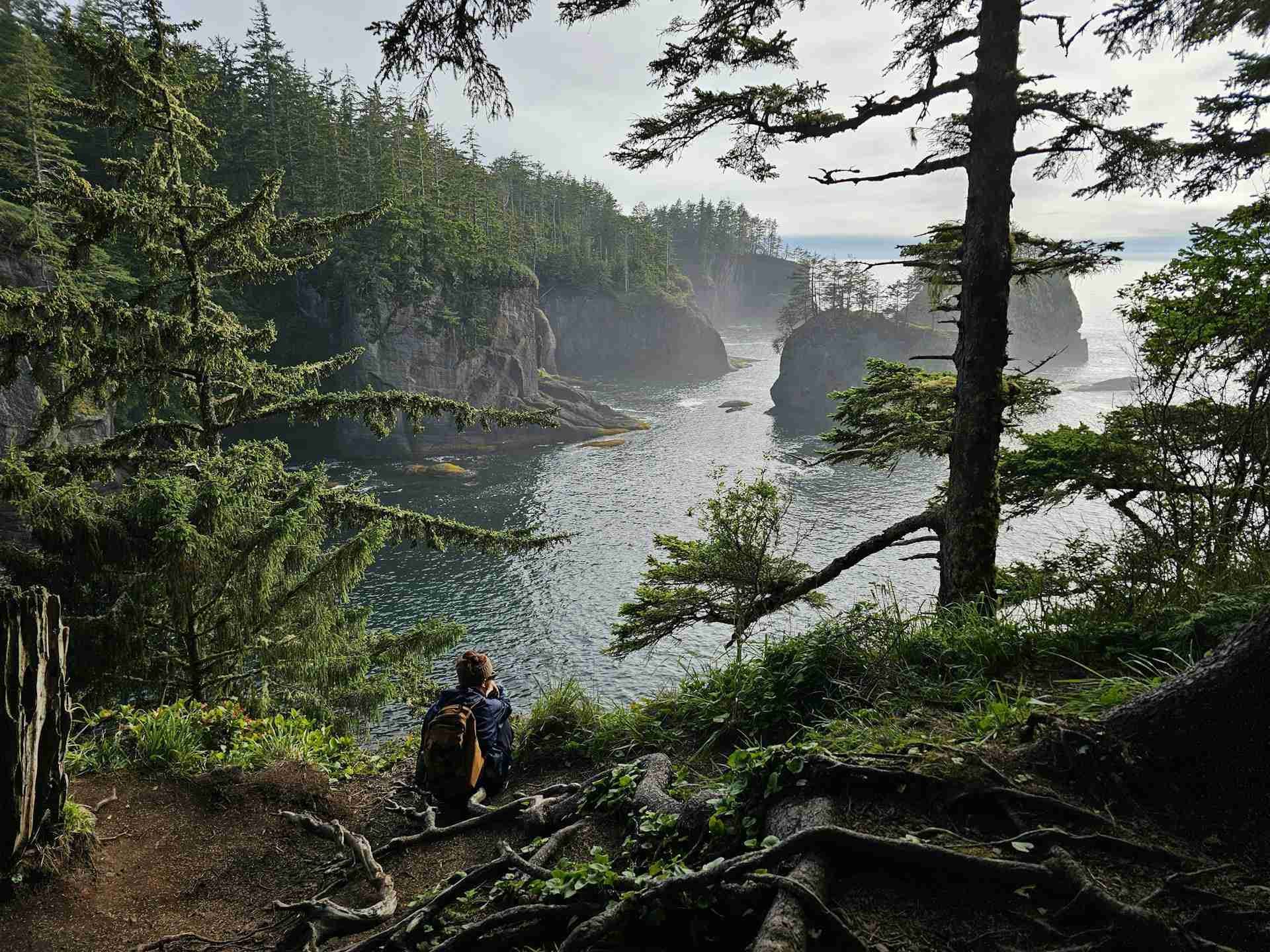
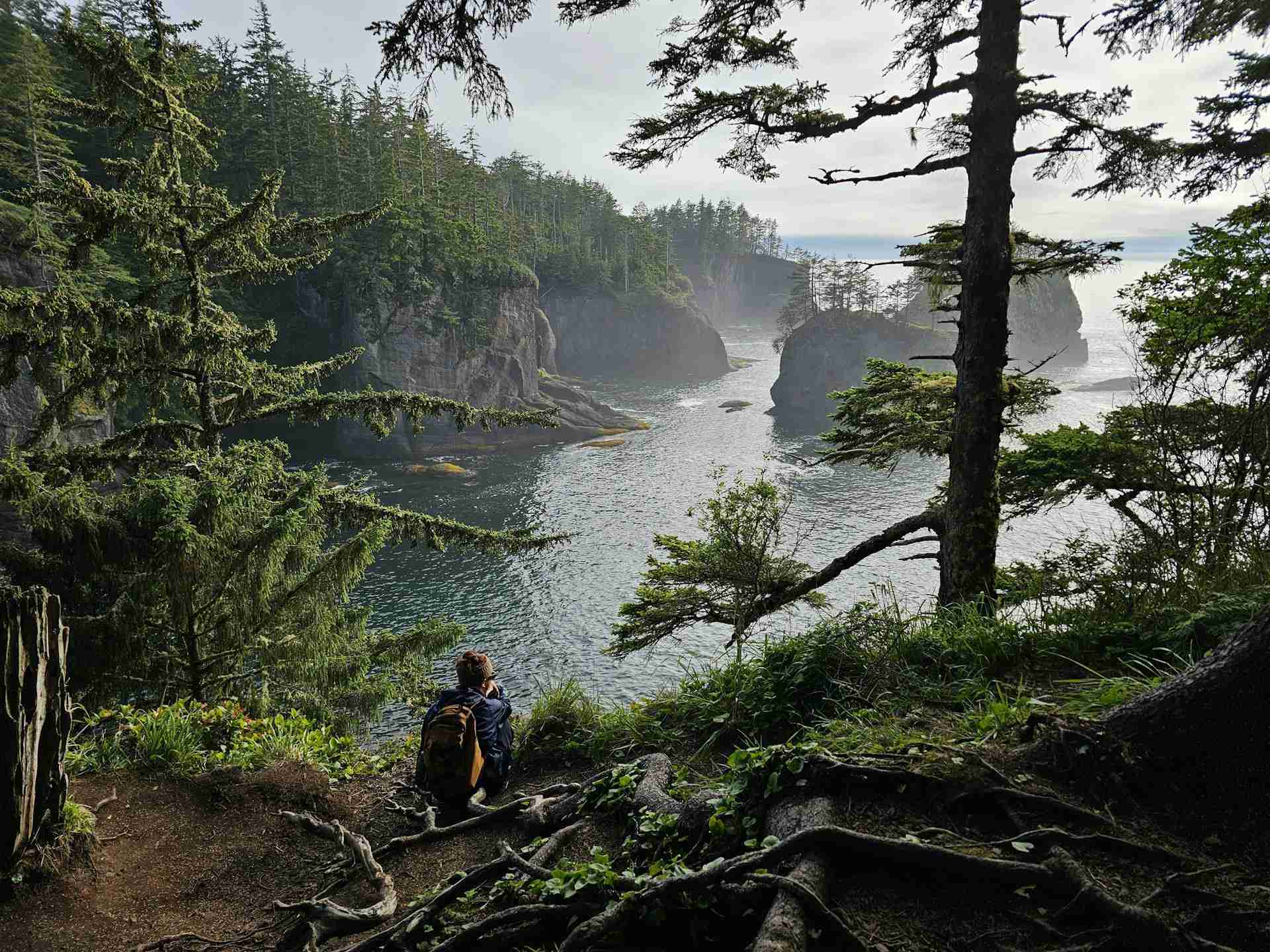
Cape Flattery marks the northwesternmost point of the contiguous United States, where rugged sea cliffs meet the Pacific Ocean in a series of sea stacks, caves, and swirling currents. Located on the Makah Reservation near Neah Bay, Washington, the cape offers some of the most dramatic coastal views in the Pacific Northwest. Weathered rock formations rise from the water just offshore, often shrouded in mist or lit by low, golden light. Photographically, this is overflowing with contrast between land and water, movement and stillness, shadow and color. The trail to the viewpoint is short but rewarding, delivering a layered, panoramic scene that shifts with the tides and weather. For coastal landscape photographers, Cape Flattery offers dependable compositions, atmospheric conditions, and a deep sense of place that's unique to this edge of the continent.
Best Photography Opportunities
• Observation Deck Overlooking the Sea Stacks
The primary viewing platform at the end of the Cape Flattery Trail delivers a wide, unobstructed view out toward Tatoosh Island and the sea stacks just offshore. These formations are shaped by constant ocean erosion and rise dramatically from the water, often with birds circling or perching on the upper ridges. In late afternoon, side light adds definition to the cliffs and texture to the surf. Long exposures work well here, especially when the tide is moving, allowing you to smooth the water surface while keeping the rock formations sharp. Framing with the forest in the foreground adds scale and leads the viewer through the frame.
• Cave Entrances and Inlets Below the Cliffs
Looking down from the trail's viewpoints, you'll find several narrow inlets and cave mouths carved into the base of the cliffs. These are particularly strong subjects when the tide is high or surf is active, as the water surges into the openings and churns in strong contrast against the dark rock. Shooting directly downward with a longer focal length compresses the scene and brings out the depth and motion of the ocean. The color difference between the dark rock, white water, and kelp beds creates natural contrast without the need for filters or extreme post processing.
• Tatoosh Island
Tatoosh Island sits just off the coast, topped by a weathered lighthouse and surrounded by strong currents. On clear days, it is visible in full from the main platform and works well as a subject when isolated with a telephoto lens. Compressing the island against the open ocean creates a simple, distant focal point, particularly in late afternoon when the low sun warms the structure and casts long shadows. In stormy weather, the island appears more stark and moody, which makes for strong black and white conversions with minimal editing.
• Silhouettes and Ocean Layers at Sunset
Cape Flattery faces generally west and northwest, which makes it a strong location for sunset photography throughout the year. When conditions are right, the sun drops directly into the ocean, casting orange and red tones across the water and silhouetting the cliffs and trees. This is the time to work with clean outlines, using the branches and headlands as graphic elements in wide frames. Even when the sun is obscured by clouds, the ambient light and shifting tones in the sky give you a full range of mood driven shots over a short period.
• Detail Work with Rock and Spray Patterns
Between wide scenes and long exposures, Cape Flattery also offers opportunities for tighter compositions using waves, spray, and surface texture. The meeting of water and rock creates foam patterns and edge detail that can be isolated with mid-range lenses. Shooting from the elevated trail gives you enough distance to work with natural geometry, and you can often find small compositions within larger scenes that reward a patient look. These images benefit from fast shutter speeds and clean light, which helps capture the precision of the water's motion.
Best Time to Visit
Cape Flattery is photogenic year round, though conditions shift dramatically with season and weather. Spring and summer offer clearer skies and longer days, with direct evening light casting warm tones across the cliffs and ocean. During these months, sunsets can be vibrant and last for long stretches, allowing time to shoot both wide landscapes and tighter scenes. Autumn brings more moody skies and richer colors, with afternoon fog often rolling in to soften the horizon and build atmosphere. Winter brings storm driven clouds and more dramatic surf, which pairs well with monochrome work and high contrast compositions. Because the trail faces west, the best light comes in the late afternoon and evening, especially during golden hour and into twilight. Wind is common along the headlands, so stable gear and low tripod setups are often necessary. Light changes fast here, and weather can shift from clear to overcast within minutes, so arriving early and planning to stay through changing conditions is recommended.
How to Get There
Cape Flattery is located on the Makah Reservation near the town of Neah Bay, on the far northwest corner of the Olympic Peninsula. Cape Flattery Road brings you directly to the trailhead parking area. A Makah Recreation Pass is required to access the trail and can be purchased in Neah Bay at local shops or the Makah Museum or online. The trail itself is an easy 0.75 mile walk through coastal forest, with sections of boardwalk and a few minor elevation changes. There are multiple viewpoints along the way, but the final platform at the end of the trail provides the clearest and widest view for photography. The parking area has limited space and no facilities, so plan ahead and be prepared to work without cell service in the area.
Recommended Photography Gear
A lightweight but sturdy tripod is essential at Cape Flattery, especially if you're shooting long exposures or dealing with wind near the cliff edges. A wide angle lens is useful for the full scene, particularly when framing the sea stacks and coastline in the same composition. A mid range zoom helps with flexibility from the viewpoints, while a telephoto is important for isolating Tatoosh Island or compressing cave and surf details. A circular polarizer is optional here, as the open ocean reflections are often minimal, but can help cut haze on clear days. A rain shell or waterproof cover for your camera is strongly advised year round, as weather is unpredictable and ocean spray can travel far inland on windy days. Comfortable footwear with solid grip is important, especially when moving between viewpoints on damp boardwalk or forest trail. If you plan to stay through sunset, bring a headlamp for the walk back, as the forest gets dark quickly once the sun dips below the horizon.
Nearby Photography Locations
• Shi Shi Beach and Point of the Arches
Just south of Cape Flattery, Shi Shi Beach is a more involved hike but offers stunning seascapes with sea stacks, tide pools, and layered cliffs. The beach is particularly strong at low tide and during sunset, with long exposures and strong silhouettes giving you very different images than at the cape.
The harbor at Neah Bay offers a quieter scene, with boats, docks, and distant hills forming layered compositions. Early morning light here reflects across the still water, and mist often hangs low across the landscape for softer frames.
A wide, open beach south of Neah Bay, Hobuck is excellent for surf photography, abstract sand patterns, and silhouettes of surfers in the late day light. The surrounding dunes and tree line give structure to horizon shots and work well for drone photography when permitted.
• Lake Ozette and the Cape Alava Trail
This inland lake leads to coastal access via a boardwalk trail that ends at Cape Alava, the westernmost point of the continental U.S. The forest, boardwalk, and shoreline offer a slower-paced alternative to the drama of the cliffs, with moody tree lines and soft ocean curves.
• Sol Duc River and Falls
On the way to or from Cape Flattery, Sol Duc offers a deep rainforest setting with flowing water, moss, and forest light. Sol Duc Falls is a compact but photogenic subject, particularly in overcast conditions that help control contrast in the narrow canyon.
Cape Flattery is a classic coastal location that lives up to its reputation without being overrun or overbuilt. The natural layering, consistent light, and accessible trail make it a reliable place to produce a range of images across styles and focal lengths. Whether you're drawn to sea stacks, ocean motion, or the slow rhythm of weather rolling in from the Pacific, this is a place that holds your attention and keeps giving you more to work with as the light shifts.
Comments
Loading comments…