
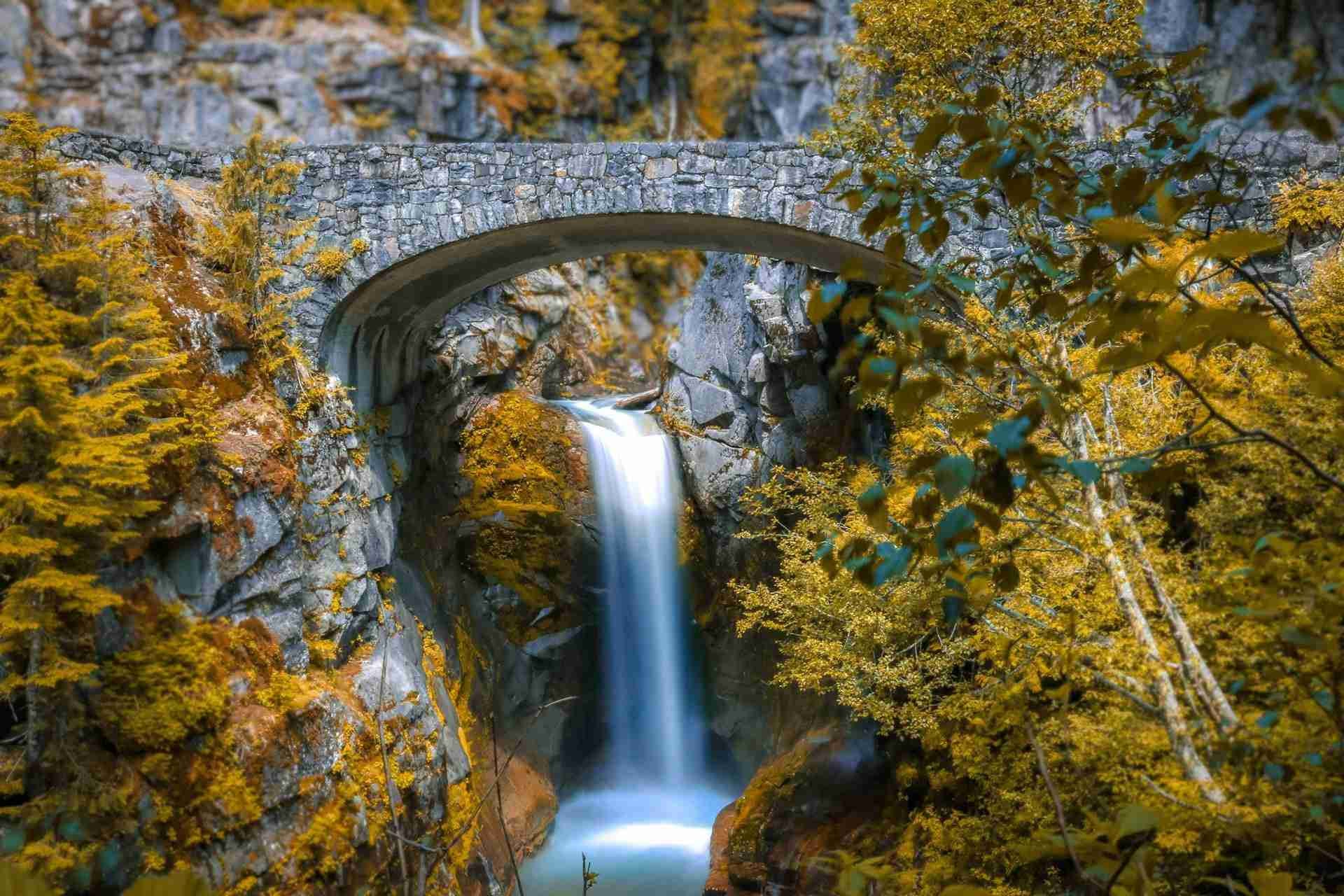
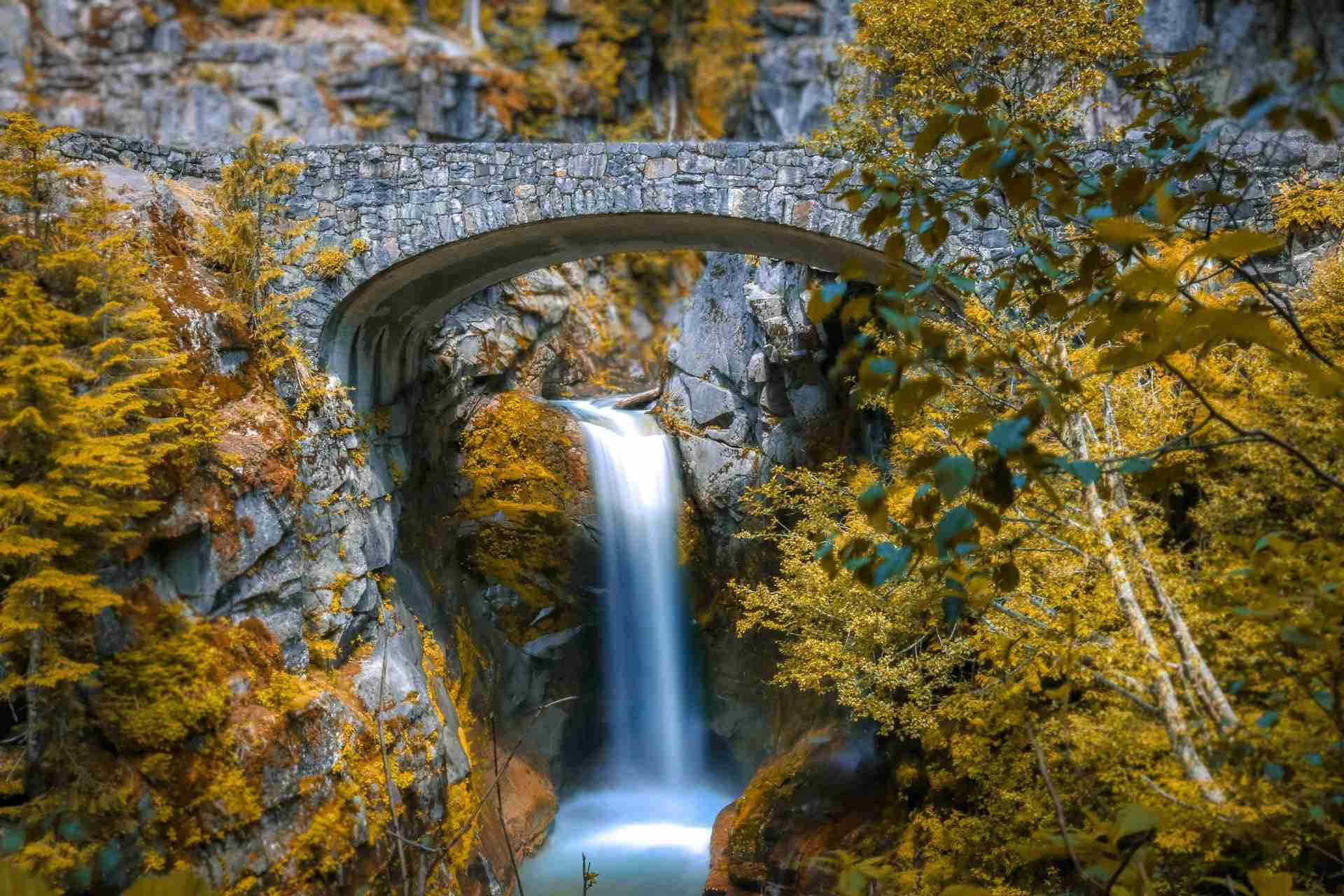
Christine Falls is one of the most visually composed and easily accessible waterfalls in Mount Rainier National Park. Located just south of Longmire, the falls cascade 69 feet in two tiers, with the upper drop perfectly framed beneath a graceful, arching stone bridge. Tucked into a gorge lined with moss-covered rocks and towering evergreens, Christine Falls blends natural elegance with manmade harmony. For photographers, it presents a rare opportunity to capture a scene that feels almost purpose-built for the lens: classic, symmetrical, and richly atmospheric in any season. Whether you're chasing long exposures in the mist or tight compositions of rock, water, and structure, this location delivers timeless Pacific Northwest drama.
Best Photography Opportunities
• Classic Frontal Composition from the Viewing Platform
: Just off the road, a small viewing area provides the signature postcard view of Christine Falls, where the upper cascade drops directly beneath the stone bridge. This is where the composition comes together effortlessly: the curve of the bridge, the plunge of the water, and the enveloping gorge all align in a natural frame. A mid-range zoom lens (24–70mm) is ideal here, allowing you to fill the frame without distortion. For silky water textures, use a tripod and shutter speeds of 1–4 seconds—ND filters may be necessary during bright conditions. Cloudy skies or early morning light produce the best balance of exposure, with even illumination across stone and water.
• Lower Angle at Gorge Level
: For a more dramatic take, hike a short, unofficial path to a lower point near the creek. This angle looks slightly upward at the waterfall and bridge, emphasizing their scale against the surrounding rock walls. Use a wide-angle lens (16–24mm) to exaggerate foreground elements like mossy boulders or flowing streamlets leading toward the base of the falls. Be mindful of slippery rocks and spray. This composition excels under overcast light or after rainfall, when the surrounding vegetation appears saturated and luminous. Including the base pool adds texture and a sense of energy to your frame.
• Detail Studies of the Bridge and Water Flow
: Christine Falls isn't just about the grand view—its close-up details are equally rewarding. Use a short telephoto (70–135mm) to isolate the water flowing beneath the arch or to zoom in on the chiseled stonework of the bridge. These tighter compositions work well in black and white, emphasizing tonal contrast and architectural form. Play with different shutter speeds to either freeze the waterfall's texture or transform it into a gauzy ribbon. The interplay of stone, light, and moving water lends itself to minimalist abstracts as well.
• Wide Environmental Shot from the Roadside Pullout
: A few steps back from the viewing platform or from just across the road, you can compose a wider environmental shot that places the bridge, falls, and canyon within the surrounding forest. This perspective emphasizes the waterfall's place within the rugged mountain landscape. Frame with tall trees or ferns at the edge of the image to create depth, and use a 24–35mm focal length to maintain proportion without too much distortion. This is an excellent place to capture fall color or snow-dusted branches in the colder months, adding seasonal character to your shot.
• Winter and Shoulder Season Variations
: In winter or early spring, Christine Falls takes on a more dramatic, almost monochromatic character. Icicles form along the gorge walls, the bridge is often dusted with snow, and the flow of water gains contrast against the subdued palette. A fast prime lens (35mm or 50mm) allows you to shoot handheld in low light, especially when tripods are impractical due to slippery surfaces or crowding. These conditions are ideal for exploring mood-driven compositions—tight crops, high contrast, and deep shadows that highlight the interplay between structure and natural force.
Best Time to Visit
Christine Falls is one of the most consistently photogenic sites in Mount Rainier National Park, and it offers strong photographic opportunities year-round. However, each season brings its own visual character.
Spring (May to June) sees the falls at their most powerful, fueled by snowmelt from the nearby glaciers. The surrounding forest glows with fresh greenery, and mist frequently rises from the gorge. Morning light is best for even exposure and minimal glare. This is an ideal time for long exposures and lush environmental shots.
Summer (July to September) brings clearer skies and easier trail conditions. While water flow diminishes slightly, the lighting becomes more consistent, and access is smooth. Expect more visitors during this season, so arrive early or late in the day to avoid crowds and harsh midday light. Golden hour brings rich side-light to the bridge and cliff walls.
Autumn (late September to early November) transforms the landscape with brilliant color. Vine maples and alders along the gorge turn golden and red, providing vibrant contrast to the evergreen backdrop and cool-toned water. Overcast days during this season offer the best control over dynamic range and help avoid highlight blowouts on wet surfaces.
Winter photography (December to March) is possible when roads are open, though conditions can be icy or snowy. The structure of the scene becomes more pronounced—snow on the bridge, frost on branches, and stark contrast between white snow and dark stone. Blue hour in winter is particularly moody, though you'll need fast lenses or longer exposures to balance light levels.
How to Get There
Christine Falls is located just off Paradise Road (also known as the Nisqually–Paradise Road) in the southwestern region of Mount Rainier National Park. From the Nisqually Entrance, drive approximately 4 miles east toward Longmire. Continue another 3.5 miles beyond Longmire, and you'll see signage for Christine Falls along with a designated roadside pullout and parking area.
The viewing platform is just steps from the parking area, making this one of the most accessible waterfall viewpoints in the park. There's no hiking required to reach the main overlook, though exploring lower angles near the creek may involve a short descent over uneven ground.
The area is open year-round, but road closures due to snow are common from late fall through early spring. Always check road conditions with the National Park Service before planning your visit in winter or shoulder seasons. An entry pass to Mount Rainier National Park is required, and while there's no separate fee to access Christine Falls, parking availability may be limited on busy weekends.
Recommended Photography Gear
Bring a wide-angle zoom (16–35mm) for full compositions of the falls and bridge, especially from the main platform or lower angles near the creek. A mid-range zoom (24–70mm) gives you flexibility for tighter framings or contextual environmental shots from further back or across the road.
A short telephoto lens (70–135mm) is excellent for detail studies of the bridge structure, water textures, or isolating sections of the rock face. If you enjoy capturing natural abstractions, a macro lens or extension tube can be useful for photographing wet stone textures, moss, or droplets clinging to ferns near the trail.
A sturdy tripod is crucial for long exposures, especially in low light or when shooting with ND filters. A circular polarizer helps manage glare on wet surfaces and brings out deeper greens in the surrounding forest. A 6- or 10-stop ND filter is valuable for controlling shutter speed during daylight hours.
Rain protection is important—mist is constant near the falls, and forest humidity can fog lenses quickly. Keep microfiber cloths handy and consider a lens hood to help with spray. If visiting in winter, bring extra batteries and dry storage, as cold conditions will shorten battery life significantly.
Nearby Photography Locations
: Just 5 miles further up the road toward Paradise, Narada Falls is one of the most powerful and visually dynamic waterfalls in the park. Its immense spray and dual-level drop make it ideal for long exposure work and rainbow-chasing in direct sunlight.
: A short drive past Christine Falls, this overlook provides expansive views of Mount Rainier and the surrounding valley—perfect for wide panoramas and late afternoon golden light.
: Near the park entrance, Longmire features historic stone-and-log buildings, a suspension bridge, and lush riverside trails. The Nisqually River here offers moody scenes with braided channels, driftwood, and alpine backdrops.
: Starting less than a mile from Christine Falls, this moderate hike leads to one of the tallest waterfalls in the park. Along the trail, you'll find smaller cascades, log crossings, and forested switchbacks that offer a wealth of composition options.
• Paradise Valley
: Drive further into the park and ascend to Paradise for grand alpine vistas, glacier views, and meadows filled with wildflowers or snow depending on the season. The contrast with Christine Falls' enclosed gorge makes it a compelling follow-up shoot.
Christine Falls delivers an elegant balance of drama and accessibility—ideal for photographers of all skill levels. Whether you're capturing its framed symmetry in soft light or seeking abstract details in stone and spray, it's a subject that invites both compositional precision and creative interpretation, surrounded by the quiet grandeur of the Cascades.
Comments
Loading comments…