
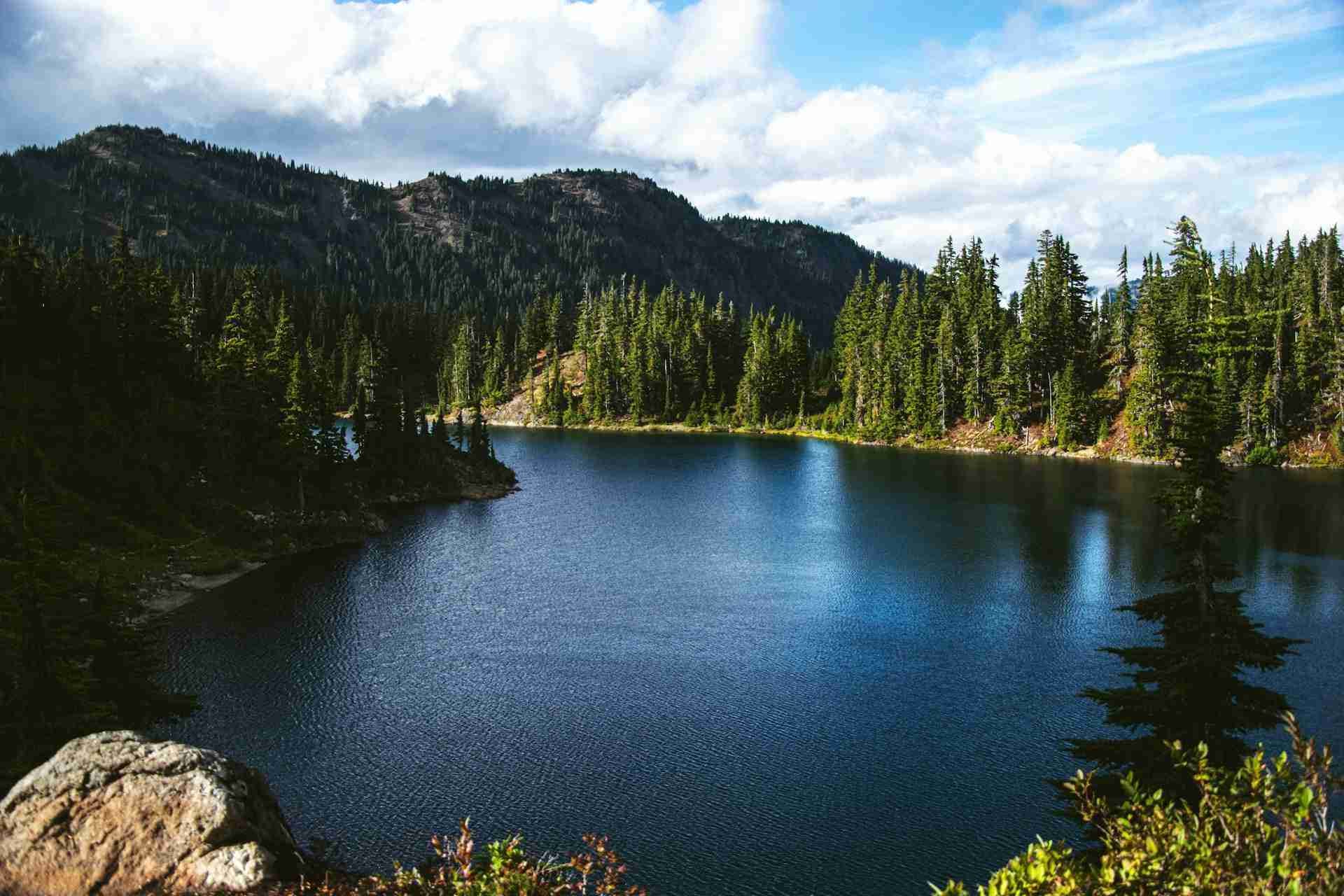
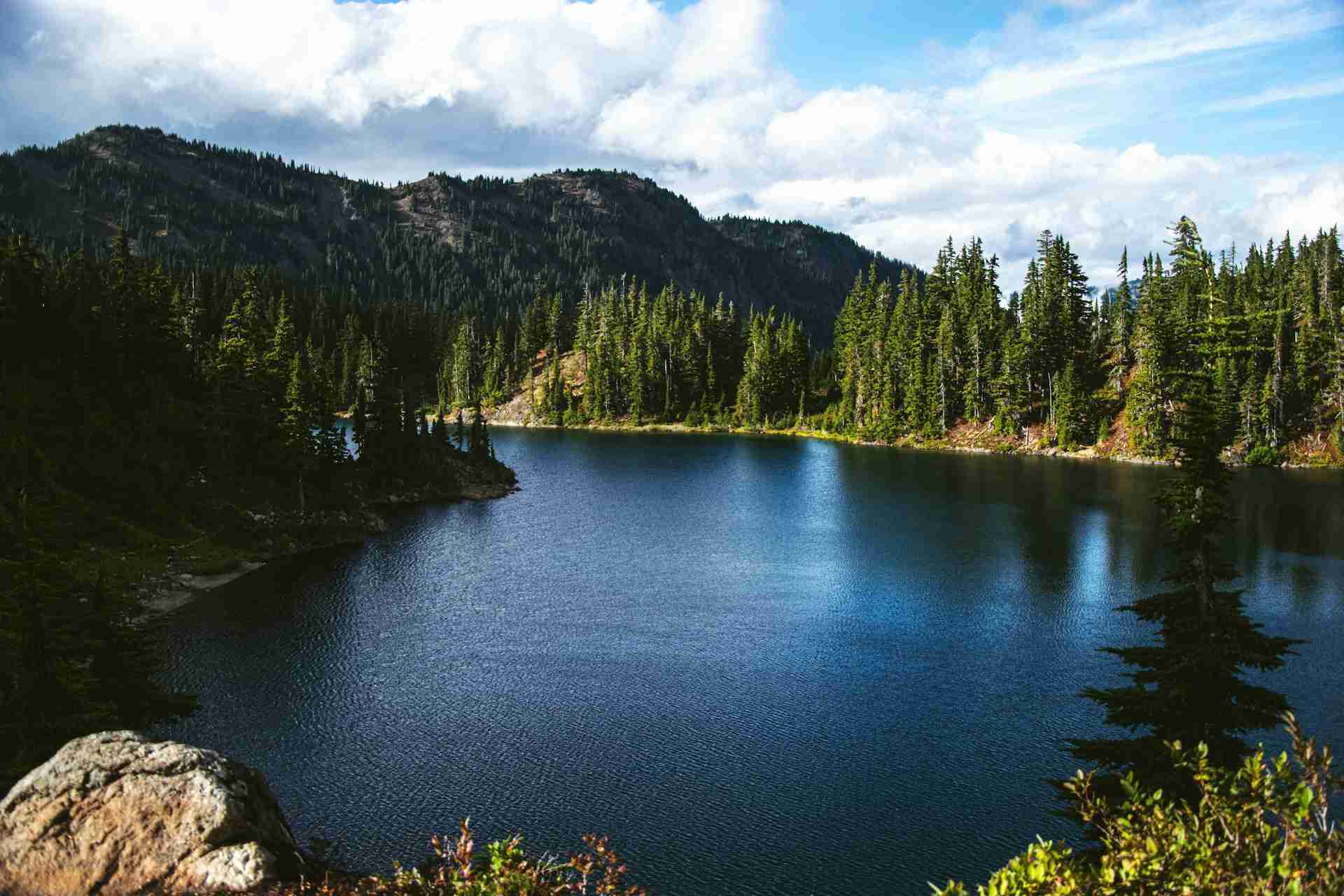
Hayes Lake sits quietly along the Chain Lakes Trail in Washington's North Cascades, nestled between the better-known Iceberg Lake and the Galena Chain Lakes. Unlike its neighbors, Hayes is more subdued in character, surrounded by sloping meadows, low rock shelves, and clusters of alpine evergreens. Its still waters reflect the surrounding ridgelines and shifting skies, offering a calm and intimate contrast to the more dramatic scenery along the trail. For photographers, Hayes Lake is a subtle but rewarding stop that offers wide compositions, gentle detail, and a place to pause and work slowly. It is a location best suited for thoughtful framing and natural light, with minimal distractions and strong compositional opportunities in every direction.
Best Photography Opportunities
Reflections of Sky and Slope
The surface of Hayes Lake is often still, allowing for clean reflections of the surrounding ridgelines and scattered trees. Shooting from the shoreline just after sunrise or before sunset produces a near-perfect mirror that includes both land and sky. A wide angle lens helps balance the open water with surrounding vegetation, while a longer lens is useful for isolating tighter bands of reflection. Look for pockets of light where the sun breaks through clouds and touches the far slope or surface of the lake. These quiet moments are ideal for symmetrical compositions or layered scenes with strong foreground contrast.
Alpine Wildflowers and Shoreline Detail
In late summer, the meadows around Hayes Lake are filled with alpine wildflowers that make excellent foreground subjects. Shooting from a low angle near the lake's edge allows you to frame the water with soft color and natural texture. These images work best under soft light when colors are full and shadows are gentle. Including rock outcroppings or tree clusters in the background helps build visual depth. A macro or short zoom lens gives you flexibility in shifting between tight flower detail and wider landscape views as you move along the trail.
Fog and Early Morning Light
Morning often brings low mist or fog to Hayes Lake, softening the landscape and muting colors in a way that suits a more minimal style. These conditions work well for shooting from higher ground or framing through tree branches to suggest depth and distance. Waiting for the light to filter through the fog adds shape to the scene and can highlight surface texture on the water. A tripod and slow shutter speed will help manage exposure and reduce noise in low light. These are excellent conditions for black and white photography or building a series of calm, tonal frames.
Passing Weather and Sky Drama
The Chain Lakes area is known for fast-changing mountain weather. Cloud movement and patches of sunlight can transform the look of the lake within minutes. Watching the light break across the slope behind the lake or catching moving shadows across the surface allows you to build dynamic compositions with natural contrast. These scenes benefit from a midrange lens that captures the relationship between land and water while allowing fast adjustments to changing conditions. Using a polarizer helps manage reflections and brings out structure in the clouds when the sky becomes active.
Trail View With Lake Below
Approaching from the east or climbing the trail above Hayes Lake provides elevated views that frame the water with a gentle curve of shoreline and the surrounding ridges. These scenes offer context and scale, especially when you include a distant hiker or cairn along the path. Shooting in the late afternoon works well here, when the light side-lights the trail and brings warmth to the rocks and vegetation. These compositions work best with a wide to midrange zoom lens that allows you to react quickly as clouds and light move across the landscape.
Best Time to Visit
The best time to photograph Hayes Lake is during the summer and early fall, when the trail is clear of snow and the surrounding alpine meadows are accessible. July through September offers the most reliable conditions, with long daylight hours and manageable temperatures at elevation. During this time, the lake is fed by snowmelt and remains full, while flowers and grasses add color to the shoreline. Clear mornings are common, and midday clouds often build into dramatic afternoon skies that reflect across the water.
In early summer, patches of snow may remain near the trail and add a bright visual contrast to the surrounding greenery. Late summer brings deeper tones, golden grasses, and clear air that gives sharp visibility to distant peaks. Autumn is quieter and cooler, with shifting light and the first signs of frost on the rocks and trail. While colors are more muted, the air is crisp and the light is often warmer and lower throughout the day.
Sunrise is ideal for reflections and soft color across the surface of the lake, while late afternoon and early evening provide strong side light and more defined contrast on the surrounding hills. Cloudy or misty days bring a sense of calm and offer excellent opportunities for more contemplative and texture-based compositions. Because of the lake's sheltered position, even subtle changes in light can shift the mood of a scene quickly, making return visits during different conditions especially rewarding.
How to Get There
Hayes Lake is located along the Chain Lakes Trail in the Mount Baker Wilderness, part of the Mount Baker-Snoqualmie National Forest in Washington State. The trail begins near the Artist Point parking area, which can be reached via Mount Baker Highway (State Route 542). The road is paved and well maintained in summer but typically closes during winter due to snow. From the Artist Point lot, the Chain Lakes Trail loops through several alpine lakes, with Hayes Lake situated between Iceberg Lake and the Galena Chain Lakes.
The trail is well marked and includes gradual elevation changes, with clear signage pointing to each lake. Reaching Hayes Lake from Artist Point requires a moderate hike of about three to four miles, depending on the direction of the loop. The trail passes through open meadows, rocky outcrops, and occasional snowfields, so sturdy footwear and weather-appropriate clothing are recommended. There are no fees to hike the trail, but a Northwest Forest Pass is typically required for parking. Restrooms are available at Artist Point, but there are no facilities on the trail itself.
Tripods, drones, and professional camera gear are allowed on the trail, but care should be taken not to disturb vegetation or block the narrow path. The trail is popular during peak summer months, especially near Iceberg Lake, but Hayes Lake tends to be quieter and less crowded, offering space for uninterrupted shooting and peaceful observation.
Recommended Photography Gear
Photographing Hayes Lake requires gear that is light enough for a moderate hike but versatile enough to adapt to shifting mountain conditions. A 24 to 70 millimeter lens will handle most general scenes, from shoreline reflections to elevated views along the trail. For wider compositions that emphasize sky, ridgeline, and water, a 16 to 35 millimeter lens is a strong addition, especially when shooting in close to the lake's edge. This lens also helps when working with foreground elements like flowers, grasses, or rocks.
A short telephoto lens in the 70 to 200 millimeter range is useful for compressing distant layers, isolating cloud movement, or focusing on details along the far shoreline. A polarizing filter is helpful in reducing glare on the water and deepening sky tones, particularly in early or late light. A lightweight travel tripod is important for long exposures, low light, or bracketed shots when the light changes rapidly.
Weather in the North Cascades can shift quickly, so a weather resistant backpack and lens cloth are essential. Pack a lens hood to reduce flare and a microfiber cloth for handling moisture or dust. Extra batteries and memory cards are recommended, as there are no power sources nearby and long sessions in cool conditions can drain equipment faster than expected. Footwear should offer grip and support for mixed terrain, and a small waterproof ground cloth can help when shooting from low angles or waiting in damp meadows.
Nearby Photography Locations
Just east of Hayes Lake, Iceberg Lake features dramatic cliffs, turquoise water, and lingering snowfields that create striking high contrast compositions. Reflections, trail shots, and close studies of ice and rock make this one of the most dramatic stops on the trail.
Galena Chain Lakes
To the west, the Galena Lakes offer a quieter, more open setting with long views toward the surrounding peaks. These lakes are especially photogenic in early morning or late day light, when long shadows and warm tones fall across the water.
Accessible from the same parking area as the Chain Lakes Trail, this short but steep hike leads to sweeping views of Mount Baker and Mount Shuksan. It is a good option for sunset photography and for capturing wide vistas from high ground.
Located just below Artist Point, this small but well-known lake reflects Mount Shuksan and is best photographed in calm conditions at sunrise. Boardwalks and open shoreline make it easily accessible and suitable for a quick stop before or after the hike.
Near the trailhead, these lower elevation alpine lakes and meadows offer gentle trails, wooden bridges, and stream-fed scenes with clear water and dense vegetation. They are excellent for early season flower photography and for practicing slower compositions with natural detail.
Hayes Lake may not have the fame of its neighbors, but it offers a quiet strength and clarity that many photographers will appreciate. The calm surface, shifting light, and open shoreline create an atmosphere where small changes make a big difference. For those willing to walk a little farther and look a little longer, Hayes Lake delivers moments that feel both still and full of possibility.
Comments
Loading comments…