
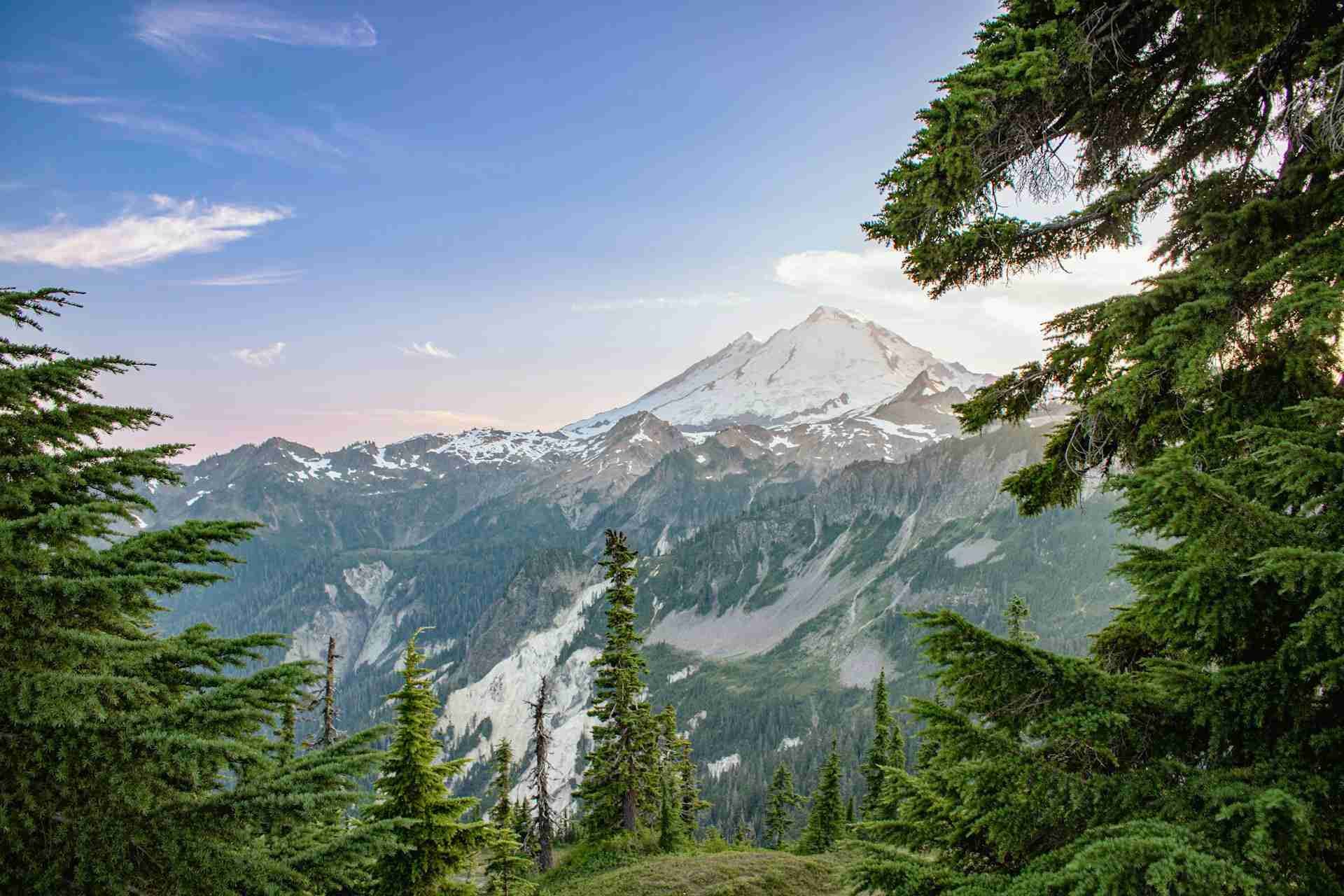
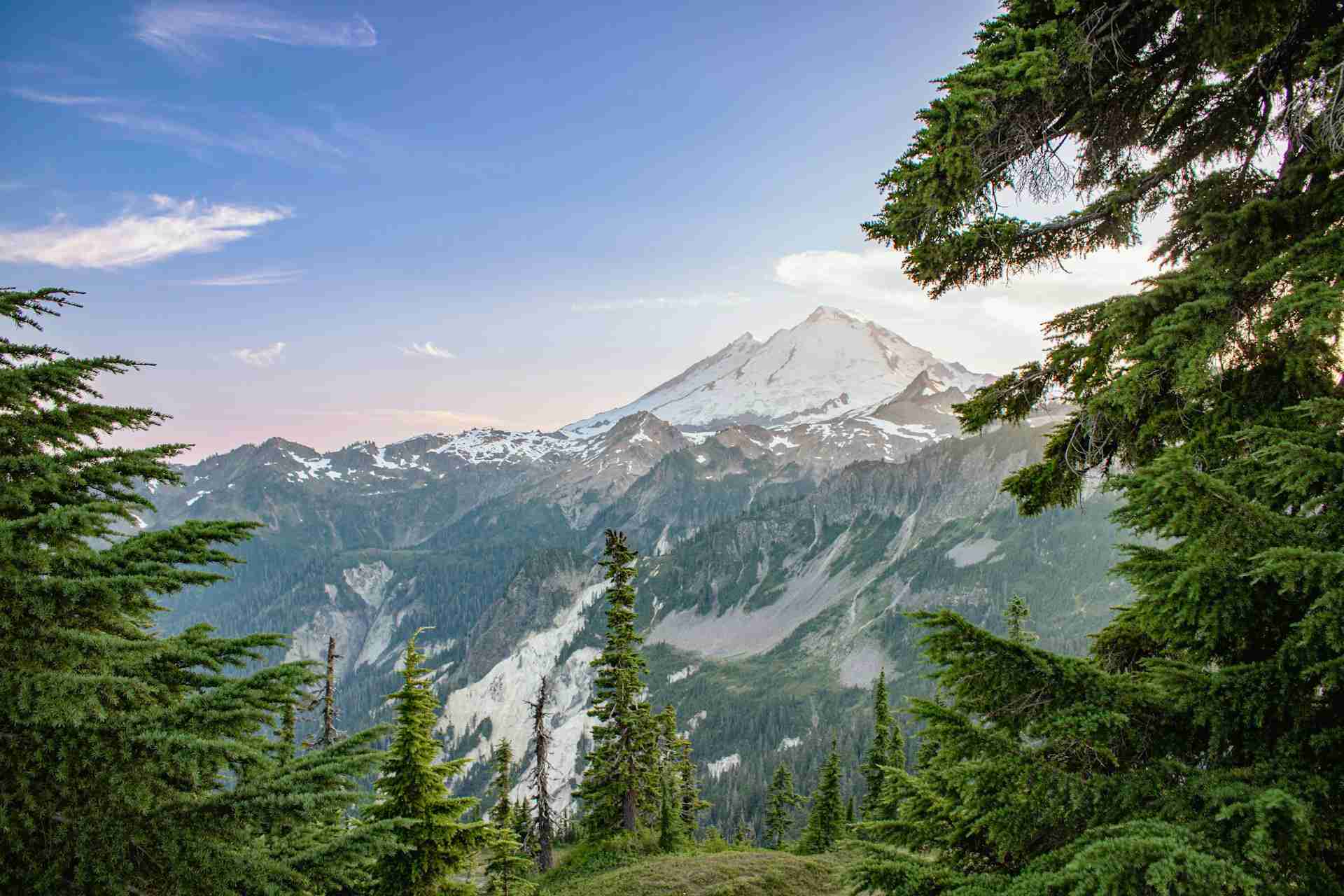
Perched high in the Mount Baker Wilderness of northern Washington, Huntoon Point is a rocky promontory at the end of Artist Point's trail network, offering one of the most dramatic viewpoints in the North Cascades. Surrounded by expansive alpine ridges, the site delivers sweeping views of Mount Shuksan's jagged profile to the east and the snow-capped dome of Mount Baker to the west. The combination of stark volcanic rock, lingering snowfields, wildflower meadows, and shifting clouds makes Huntoon Point a location where the light and mood change constantly. For photographers, it is a place where every direction holds a new composition, from intimate alpine textures to grand panoramas that capture the scale of the wilderness.
Best Photography Opportunities
• Panoramas of Mount Shuksan
: One of the most celebrated compositions from Huntoon Point is the view toward Mount Shuksan. Its sharp spires and glaciers dominate the eastern skyline, with ridges and snowfields creating layered foregrounds. A wide-angle lens emphasizes the vastness of the scene, while a telephoto isolates the dramatic summit against the sky. Sunrise often casts the first light directly onto Shuksan, painting the mountain in warm tones while the surrounding valleys remain in shadow. Including alpine ponds or lingering snow in the foreground adds scale and contrast.
• Mount Baker at sunset
: To the west, Mount Baker rises as a massive volcanic dome that glows brilliantly in the last light of day. From Huntoon Point, you can capture the mountain framed by ridges and meadows, often with delicate alpine flowers in the foreground during midsummer. Golden hour light transitions into alpenglow, when Baker's snowy slopes take on deep pink and orange hues. A tripod is essential for long exposures that capture subtle tonal changes as daylight fades. Clouds frequently gather around the summit, adding drama and movement to the composition.
• Alpine meadow details
: In summer, the meadows surrounding Huntoon Point fill with lupine, paintbrush, and heather, creating carpets of color beneath towering peaks. These wildflowers provide excellent foregrounds for wide-angle landscapes, leading the viewer's eye toward distant mountains. Macro or close-up lenses allow you to isolate individual blossoms against blurred backgrounds of snow or rock. Morning light illuminates the flowers with gentle, diffused tones, while backlighting in the evening highlights their delicate forms. These meadow studies add variety to a portfolio dominated by grand mountain views.
• Snow and ice formations
: Snowfields linger well into late summer around Huntoon Point, offering unique opportunities to photograph sculpted drifts, overhanging cornices, and meltwater patterns. Low-angle light casts long shadows across textured snow, creating abstract compositions. A polarizer reduces glare and deepens contrast in the crystalline surfaces. Close-up shots of meltwater channels or ice layering can provide intimate studies, while wide shots show the snowfields flowing down toward the valleys. Winter access transforms the entire area into a snowscape of soft forms and pastel light, ideal for minimalist compositions.
• Night sky over the peaks
: At nearly 5,000 feet in elevation with limited light pollution, Huntoon Point is a superb location for astrophotography. Mount Shuksan and Mount Baker provide dramatic silhouettes for Milky Way or star trail compositions. A wide, fast lens captures the galactic core above the peaks in summer, while winter nights reveal crisp constellations over snowy ridges. Including reflective snow or ice in the foreground enhances luminosity in the frame. A sturdy tripod and intervalometer are essential for long exposures in alpine conditions.
Best Time to Visit
Huntoon Point offers strong photography potential year-round, though access varies with the seasons. Summer, from July through September, is the most popular time, when trails are clear, meadows bloom, and skies are often stable. This is the best season for alpine flowers, reflective ponds, and sunrise or sunset compositions of both Baker and Shuksan. Autumn brings brilliant foliage in huckleberry bushes and golden tones in meadow grasses, with crisp air and low sun angles that enhance texture in the landscape.
Winter and early spring transform the area into a snowbound wilderness accessible primarily by snowshoe or ski. Photographers willing to make the effort are rewarded with dramatic snowscapes, corniced ridges, and the possibility of alpenglow on snow-covered peaks. These seasons are challenging but yield minimal crowds and pristine conditions. The best times of day are sunrise, when Mount Shuksan glows in warm light while valleys remain in shadow, and sunset, when Mount Baker dominates the western horizon in alpenglow. Midday is less favorable due to harsh light but can be used for detail studies of snow or wildflowers. Overcast days produce moody conditions that highlight form and texture rather than color.
How to Get There
Huntoon Point is reached from the Artist Point trailhead at the end of the Mount Baker Highway (Highway 542), about 60 miles east of Bellingham. The final stretch of the highway is typically open only from July through late September, depending on snow conditions. From the parking area at Artist Point, the trail to Huntoon Point is short and easy, less than a mile round-trip along a well-marked path that traverses alpine terrain. In summer, the trail is accessible to most visitors, though snow patches may linger. In winter, the road is closed several miles below Artist Point, requiring a longer snowshoe or ski approach. There are no fees specifically for accessing Huntoon Point, though seasonal passes may be required for parking. Tripods are permitted throughout, and the broad viewpoints provide ample room for setting up gear safely away from cliff edges.
Recommended Photography Gear
A wide-angle lens in the 16 to 35 millimeter range is indispensable for capturing panoramic views of Mount Shuksan and Mount Baker, as well as for framing wildflowers against distant peaks. A mid-range zoom such as a 24 to 70 millimeter provides versatility for trail perspectives, meadow scenes, and balanced mountain compositions. A telephoto lens up to 200 millimeters is valuable for isolating mountain details, compressing layers of ridges, and capturing alpenglow on distant peaks.
A sturdy tripod is essential for sunrise, sunset, and night photography, especially in windy alpine conditions. A polarizer helps deepen skies and reduce glare on snow and alpine lakes. Neutral density filters allow for longer exposures of moving clouds or snowmelt streams, while graduated ND filters balance bright skies with darker foregrounds. In winter, weather-sealed gear and lens cloths are vital for dealing with snow and condensation. Proper alpine footwear, layers, and sun protection are necessary year-round, as conditions can change quickly at elevation.
Nearby Photography Locations
: Just below the Mount Baker Ski Area, Picture Lake offers one of the most famous reflections in Washington, with Mount Shuksan mirrored in its still waters. Sunrise and autumn foliage make this location particularly rewarding.
: Starting from Artist Point, this trail leads past a series of alpine lakes surrounded by ridges and meadows. Each lake provides unique foregrounds for photographing both Mount Baker and Shuksan.
: Accessible via a short but steep trail from Artist Point, Table Mountain offers elevated views across the entire Mount Baker Wilderness. Its flat summit is excellent for panoramic shooting at both sunrise and sunset.
: Located along the Mount Baker Highway, this 88-foot waterfall plunges into a rocky gorge, providing a dramatic subject on the approach to the alpine area. Overcast days are ideal for capturing the falls with long exposures.
: A short walk from Artist Point, these alpine lakes are surrounded by wildflowers in summer and provide strong reflections of Mount Herman and nearby ridges. Early morning is best for calm water and soft light.
Huntoon Point is one of those rare alpine locations where access is easy but the photographic potential feels boundless. Surrounded by glaciers, meadows, and shifting skies, it delivers compositions that reward both quick visits and long, patient sessions. For photographers seeking to capture the essence of the Mount Baker Wilderness, Huntoon Point provides a perfect balance of drama and intimacy at the edge of Washington's high country.
Comments
Loading comments…