
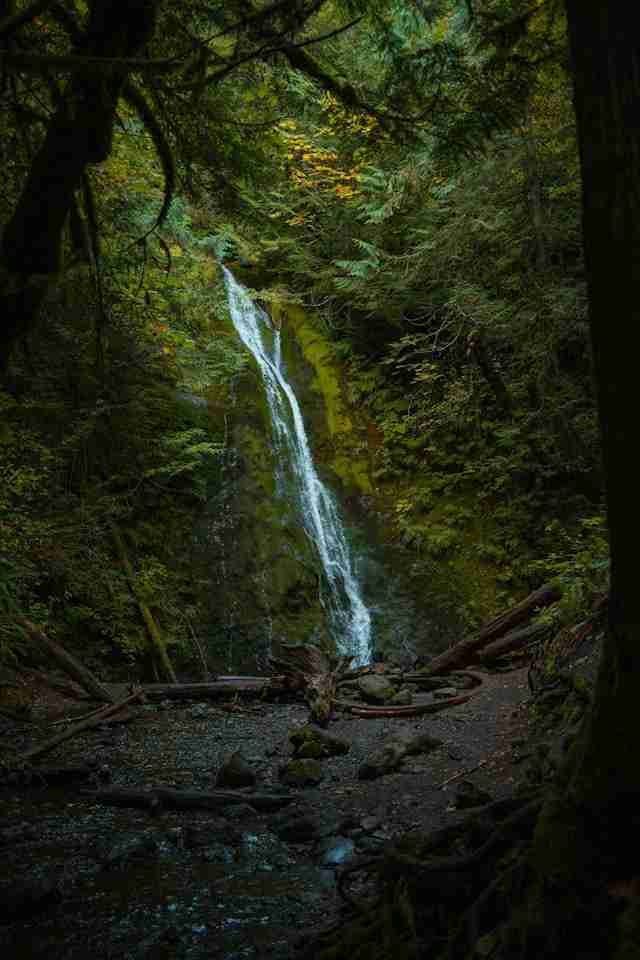
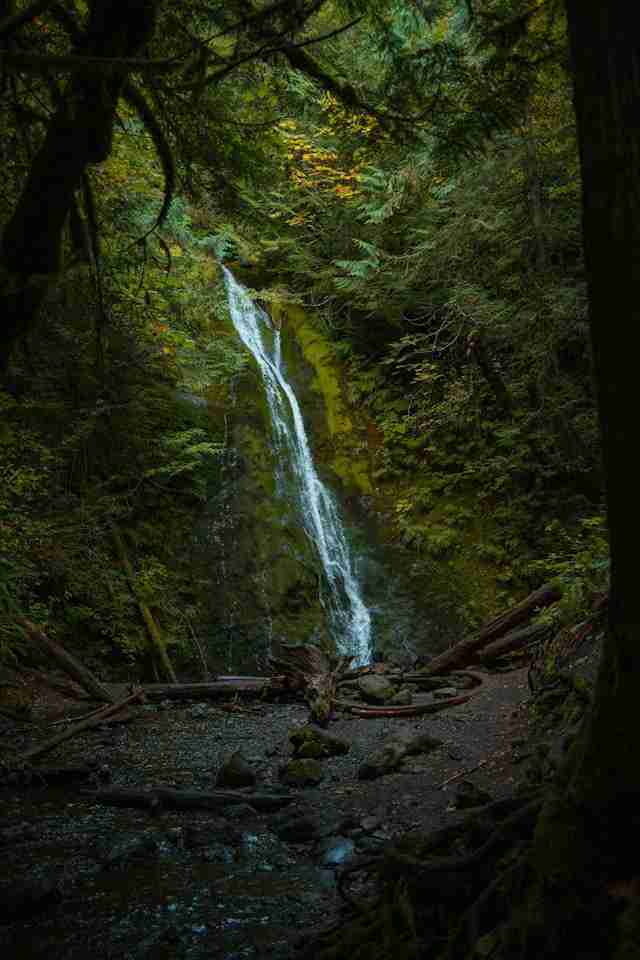
Madison Creek Falls is one of the most accessible and rewarding waterfalls in Olympic National Park, located just outside Port Angeles in Washington State. Tucked into a lush ravine, the falls drop nearly fifty feet in a narrow white ribbon framed by ferns, mossy boulders, and towering bigleaf maples. Unlike many waterfalls that require long hikes, Madison Creek Falls is only a short walk from the parking area, making it possible to bring a full set of gear without worrying about the trek. What it lacks in height it makes up for in setting: the falls are surrounded by vibrant green vegetation for much of the year, and the soft mist of the cascade adds atmosphere to photographs. Its location on the northern side of Olympic National Park means it is also an ideal first or last stop when traveling through the region, providing photographers with both an easy subject and a scene rich in detail.
Best Photography Opportunities
• Long Exposures of the Falls
The main draw of Madison Creek Falls is, of course, the cascade itself. Long exposure photography smooths the water into silky ribbons that contrast beautifully with the rough textures of mossy rocks. Using a tripod and neutral density filter is essential, as the surrounding ravine can be surprisingly bright when sunlight filters through. Wide-angle lenses allow you to capture both the falls and the lush greenery framing them, while tighter compositions focus on the play of water against stone. Because the waterfall is narrow, experimenting with different shutter speeds gives you distinct results, from fine strands of white to more painterly flows.
• Seasonal Vegetation Around the Ravine
The forest surrounding the falls changes dramatically with the seasons, giving photographers fresh opportunities throughout the year. In spring, ferns and mosses are at their greenest, providing vivid contrast against the cascade. Summer adds dense foliage overhead, filtering sunlight into dappled patterns across the rocks. Autumn brings golden tones to the bigleaf maples, creating warm frames around the waterfall. Even in winter, the ravine holds interest, as bare branches reveal more of the rock walls and occasional snow dusts the edges. Each season adds a different frame to the same subject.
• Detail Work in Moss and Ferns
Beyond the main waterfall, Madison Creek Falls rewards attention to smaller details. Mosses, lichen-covered stones, and the patterns of ferns provide endless subjects for close-up or macro photography. Water droplets on leaves after rainfall sparkle in soft light, while textures of bark and stone create abstract compositions. These details are best shot with a macro lens or telephoto zoom, allowing you to isolate small patches of green or highlight the contrast between wet surfaces and flowing water. Such images make excellent companions to wider shots of the falls, building a complete photographic study of the location.
• Rain and Mist in the Ravine
Rain is common on the Olympic Peninsula, and while it may make conditions damp, it transforms the ravine into a photographic treasure. Wet surfaces glow with richer colour, mist lingers in the air, and droplets highlight every leaf. This is the best time to photograph Madison Creek Falls for mood, as the diffuse light eliminates harsh shadows and creates a sense of depth. Waterproof protection for both gear and clothing is essential, but the rewards are striking images filled with texture and atmosphere.
• Wildlife and Surrounding Forest
The area around the falls is home to songbirds, small mammals, and deer that occasionally wander near the trail. A telephoto lens makes it possible to capture these subjects without disturbing them. Even when wildlife is scarce, the trail leading to the falls provides excellent photographic material, with mossy trunks arching overhead and the creek winding beside you. These approach shots are useful for storytelling, adding context to the main waterfall images.
• Evening and Low Light Photography
Though the falls are often photographed in daylight, low light conditions can be equally rewarding. At dusk, soft tones settle into the ravine, and long exposures capture smooth water framed by gentle shadow. Even overcast days provide workable light, as the diffuse canopy eliminates blown highlights. For photographers who enjoy moody compositions, these conditions are often more productive than direct sunlight, which can create harsh contrast.
Best Time to Visit
Madison Creek Falls is accessible and photogenic year-round, but the character of the location changes with the seasons. Spring brings lush vegetation and strong water flow from snowmelt, making it one of the most rewarding times for vibrant, colourful images. Summer keeps the waterfall active, though water levels may drop slightly, and dappled sunlight can be challenging but rewarding for those who work with it carefully. Autumn transforms the ravine with golden and orange tones, providing natural frames of colour around the falls. Winter is quieter, with bare trees that open views of the surrounding cliffs, and occasional snow that adds stark contrast to the greenery and water.
Time of day also matters. Mornings often provide softer light, especially when fog lingers in the ravine, while afternoons may bring shafts of sun that filter through the canopy. Overcast days are particularly productive, as they soften the light and saturate colours, making it easier to balance exposure. For photographers focused on long exposures, cloudy conditions are preferable to direct sun, which creates bright highlights on the cascade.
How to Get There
Madison Creek Falls is located about ten miles west of Port Angeles, Washington, within the northern section of Olympic National Park. From Port Angeles, take U.S. Highway 101 west and turn onto Olympic Hot Springs Road, which leads into the Elwha River Valley. The trailhead parking area for Madison Creek Falls is well signed and located only a short distance from the road. From the parking lot, it is a flat, paved path of less than a quarter mile to reach the falls, making it one of the most accessible waterfalls in the park. Parking is available, though spaces can fill during summer weekends. Access to the falls is included in the park entry fee, which covers all areas of Olympic National Park. Facilities near the trailhead include restrooms and picnic areas, making it a convenient stop even on a longer day of shooting in the park.
Recommended Photography Gear
A tripod is essential at Madison Creek Falls for long exposures of the water. A wide-angle lens works best for capturing the entire cascade framed by mossy cliffs, while a mid-range zoom such as a 24 to 70 millimetre lens is useful for balanced compositions that include surrounding vegetation. A telephoto lens can isolate patterns in the water or frame details in the surrounding forest. A circular polariser is highly recommended, as it reduces glare on wet rocks and enhances the saturation of greens. Neutral density filters are also valuable, allowing longer exposures even in brighter conditions. A macro lens or close-focusing zoom adds another layer of opportunity, as moss, ferns, and wet textures make excellent intimate subjects. Waterproof protection for camera gear is strongly advised, especially during rainy months, and microfiber cloths for wiping moisture from lenses should always be carried.
Nearby Photography Locations
Just beyond the falls, the Elwha River winds through a wide valley with numerous pull-offs for photography. Since the removal of the Elwha dams, the river has been reshaping itself, creating new channels and gravel bars that make for fascinating landscape studies.
Located near Lake Crescent, Marymere Falls is another accessible waterfall within Olympic National Park. Surrounded by old-growth forest, it offers a taller and more dramatic drop than Madison Creek, and the trail provides multiple vantage points.
This glacially carved lake offers stunning reflections and deep blue water, framed by forested ridges. Sunrise and sunset are especially rewarding, as calm conditions often create mirror-like surfaces that double the surrounding scenery.
For a complete contrast to waterfall photography, Hurricane Ridge offers alpine views of the Olympic Mountains. Panoramas at sunrise and sunset are particularly striking, and wildlife such as deer and marmots add additional subjects.
Located along the Strait of Juan de Fuca, this coastal area features tide pools, sea stacks, and rocky headlands. Long exposures of waves and dramatic sunsets over the strait make it a rewarding companion to a visit to Madison Creek Falls.
Madison Creek Falls may be small in scale compared to some of Olympic National Park's larger cascades, but its accessibility, lush setting, and year-round flow make it one of the most rewarding waterfalls to photograph. Whether you are experimenting with long exposures, focusing on the details of moss and ferns, or framing the falls in autumn colour, it delivers images that are both intimate and dramatic. Its location just outside Port Angeles also makes it one of the easiest and most convenient stops for photographers exploring the northern reaches of the park.
Comments
Loading comments…