
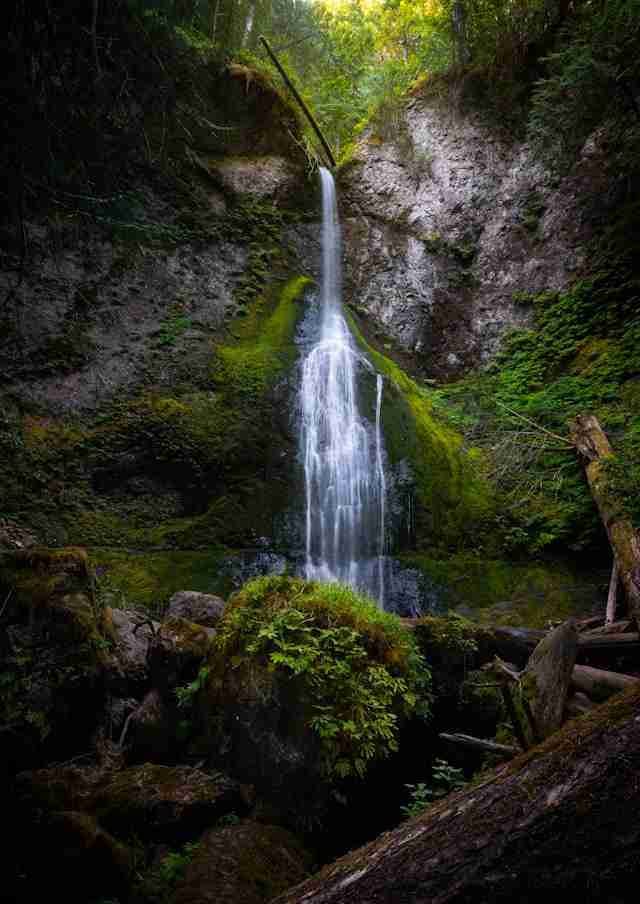
Hidden within the moss-draped temperate rainforest of Olympic National Park near Lake Crescent, Marymere Falls is a dreamlike subject for nature photographers. The waterfall drops 90 feet in a narrow, delicate stream that slices through a cathedral of old-growth firs, maples, and ferns. The scene is both intimate and grand—light filters softly through the canopy, and mist clings to moss-covered branches, adding a mystical ambiance that shifts with every step along the trail. It's a place where the interplay of motion, texture, and filtered light invites both dramatic compositions and quiet, contemplative frames.
Hidden within the moss-draped temperate rainforest of Olympic National Park near Lake Crescent, Marymere Falls is a dreamlike subject for nature photographers. The waterfall drops 90 feet in a narrow, delicate stream that slices through a cathedral of old-growth firs, maples, and ferns. The scene is both intimate and grand—light filters softly through the canopy, and mist clings to moss-covered branches, adding a mystical ambiance that shifts with every step along the trail. It's a place where the interplay of motion, texture, and filtered light invites both dramatic compositions and quiet, contemplative frames.
Best Photography Opportunities
• Frontal View from the Lower Viewing Platform
: This is the classic perspective that most visitors encounter first, but with the right timing and technique, it can be far more than a snapshot. From this wooden platform, you're looking straight at the waterfall as it spills in a narrow ribbon over a fern-draped cliff face. To capture the full height and context of the falls, use a wide-angle lens (16–24mm) and compose vertically to include the surrounding forest canopy above and the splash basin below. Early morning or late afternoon provides the softest light, reducing glare from wet rock surfaces. A tripod is essential for long exposures (2–5 seconds), which transform the narrow water stream into a silky veil while preserving the intricate moss texture on the rock face. Including a foreground element—such as a branch or railing—can add depth and context to the composition.
• Side Perspective from the Upper Trail Spur
: This viewpoint, accessed by a short, steep climb above the main platform, offers a more dramatic and layered composition. From this angle, you can photograph the waterfall as it falls diagonally away from your position, cutting through the narrow ravine. Use a mid-range zoom lens (24–70mm) to frame the waterfall off-center and include vertical tree trunks or sloping rocks to enhance the sense of scale and elevation. Because this spot is slightly more enclosed, light here is often dappled or diffused, giving you an opportunity to balance motion and shadow with thoughtful exposure. A polarizer is helpful to reduce glare on wet foliage and rocks. The composition works best after rainfall when the water flow is strongest and the greenery surrounding the ravine is rich and saturated.
• Trail Approach through the Forest Corridor
: The half-mile trail leading to Marymere Falls is a photographic journey in its own right. Old-growth Douglas firs tower above, while vine maples and sword ferns form a dense understory that glows emerald under filtered light. Use a wide-angle lens (14–24mm) and place the path as a leading line through the center of your frame to draw the viewer into the scene. Early morning is best, when mist hangs in the air and sunbeams occasionally pierce through the canopy, creating shafts of light that highlight individual trunks and patches of foliage. Shooting in overcast or foggy conditions enhances the mood and reduces dynamic range, allowing for balanced forest exposures. Bring a small tripod or monopod for longer handheld exposures in low light, and be ready to react quickly to shifting atmospheric conditions, which can change minute by minute.
• Bridge Crossing over Barnes Creek
: Just before the final ascent to the falls, the trail crosses Barnes Creek via a rustic wooden footbridge. This area offers two strong compositional opportunities: one that frames the bridge itself as a lead-in subject, and another that looks downstream to capture the flow of the creek through the forest. For the first, shoot from the trail just before the bridge, placing it diagonally across the frame to lead the eye through the image. Use a mid-range zoom (35–70mm) to control perspective and minimize distortion. For the second composition, stand on the bridge and point your lens downstream. Long exposures (4–8 seconds) smooth the current, while a polarizer reveals the rocks and details beneath the water's surface. Fallen logs and low-hanging moss create a natural frame for the scene, especially when shot at a slightly elevated angle. This spot is ideal during wet conditions, when the creek runs high and the surrounding foliage gleams with moisture.
• Close-Up Textures and Abstracts near the Falls
: The area surrounding Marymere Falls is rich with small, expressive details—dripping ferns, lichen-covered bark, wet rock faces, and fine mist clinging to leaves. These textures lend themselves to more abstract or intimate photography, where you isolate visual elements rather than frame a full scene. A macro lens or telephoto in the 85–135mm range allows you to focus tightly on the contrast between soft foliage and the jagged stone, or the play of light on water droplets and moss. Consider using a wide aperture (f/2.8–f/4) to blur the background and highlight a single subject, such as a glistening fern frond or the trail of water cutting down a stone face. On rainy or foggy days, moisture adds a layer of sheen that enhances color saturation and increases tonal range, making these quiet, close-up studies as compelling as the wider landscapes.
Best Time to Visit
The best time to photograph Marymere Falls is from late spring through early autumn, when trail conditions are most reliable and vegetation is at its most lush. From May to July, the forest is saturated with new growth, and the falls run strongest due to snowmelt from the surrounding Olympic peaks. The air is often cool and humid, which enhances mist effects and brings out deep greens in the foliage.
Early mornings are ideal for both lighting and solitude. The forest canopy diffuses the sun, preventing blown highlights on the waterfall and allowing for long exposures without filters. This time of day also increases the chance of encountering mist along the trail or sunbeams cutting through the trees—adding a dynamic, atmospheric element to wide forest compositions.
Autumn, from September to early October, brings a shift in tone. Vine maples and alders near the trail develop golden and reddish leaves, offering seasonal color contrast to the evergreens. The water flow remains moderate, and the lower sun angles provide longer periods of usable light. Avoid mid-afternoon visits in summer, when the trail is most crowded and sunlight may filter directly into the waterfall's ravine, causing high contrast that's difficult to balance.
Overcast days are especially favorable here. The soft, shadowless light enhances tonal detail in both the waterfall and surrounding vegetation, making it easier to achieve even exposures without sacrificing contrast. Rain should not deter you—wet conditions make the forest colors richer and more vibrant, and the added water volume intensifies the falls' visual presence.
How to Get There
Marymere Falls is located in Olympic National Park near the south shore of Lake Crescent. From Port Angeles, drive west on Highway 101 for approximately 20 miles to the Storm King Ranger Station, just past Lake Crescent Lodge. Free parking is available at the ranger station, which also offers restrooms and trail information.
The trailhead is clearly marked and begins from the parking lot, winding through second-growth forest before transitioning into old-growth terrain. The round-trip hike is about 1.8 miles (2.9 km) and is mostly flat, with a brief but steep climb to the viewing platforms near the falls. The trail is well-maintained, but it can be muddy and slippery after rain—wear sturdy hiking shoes and protect your gear with weather-sealed bags or covers if conditions are damp.
There is no entrance fee for this specific area of Olympic National Park, and photography is welcome throughout the trail and falls area. However, tripods can be cumbersome on narrow sections of the trail—so plan to carry a lightweight, collapsible model and be courteous when other hikers are present.
Recommended Photography Gear
A wide-angle zoom (16–35mm) is essential for both the forest approach and the main waterfall composition, allowing you to work in tight quarters while including the full scene. Pair this with a mid-range zoom (24–70mm) for capturing layered forest compositions, side views of the falls, and trail vignettes.
A lightweight tripod is crucial for long exposures of the waterfall and creek. Because you'll be shooting under a dense canopy, slower shutter speeds will often be necessary even in daylight. Bring a circular polarizer to reduce glare on wet rocks and foliage, and to help manage reflections in the creek and waterfall pool.
Consider packing a macro lens or a telephoto in the 85–135mm range for texture studies, especially if you enjoy detail shots of leaves, bark, and water droplets. ND filters (6- to 10-stop) can be useful for smoothing water flow, though in low light they may not be necessary. A microfiber cloth is essential for keeping your lens clean in the misty air near the falls.
Lastly, wear waterproof boots or hiking shoes with good grip, and bring a rain cover or pack liner for your gear—Olympic National Park's rainforests live up to their name, and wet weather often brings out the most photogenic conditions.
Nearby Photography Locations
: Just minutes from the trailhead, this glacial lake offers crystal-clear reflections of surrounding forest and mountains. Early morning brings mirror-like conditions and soft fog that floats above the surface, making it a prime spot for tranquil, moody landscapes.
: For sweeping aerial views of Lake Crescent and the surrounding valleys, this steep trail rewards photographers with dramatic vistas. The climb is strenuous and includes rope-assisted sections, but the golden hour light from the summit is unmatched.
• Sol Duc Falls
: A short drive west into the park, this powerful multi-stream waterfall is nestled in another lush rainforest setting. The viewing platform offers excellent angles for wide and mid-range waterfall photography.
: Located closer to Port Angeles, this coastal location features tide pools, dramatic sea stacks, and sunsets over the Strait of Juan de Fuca. It's a great contrast to the forested scenes of Marymere.
: For alpine landscapes, drive southeast to this high ridge offering panoramic views of the Olympic Mountains. Sunrise and sunset are exceptional here, with golden light catching the snow-covered peaks and meadows in bloom during summer.
Marymere Falls is more than a waterfall—it's an immersive forest experience, a quiet pocket of visual poetry within the larger grandeur of Olympic National Park. For photographers willing to move slowly and tune into the light, it offers a range of moods and textures that change with the season, the weather, and even the hour.
Comments
Loading comments…