
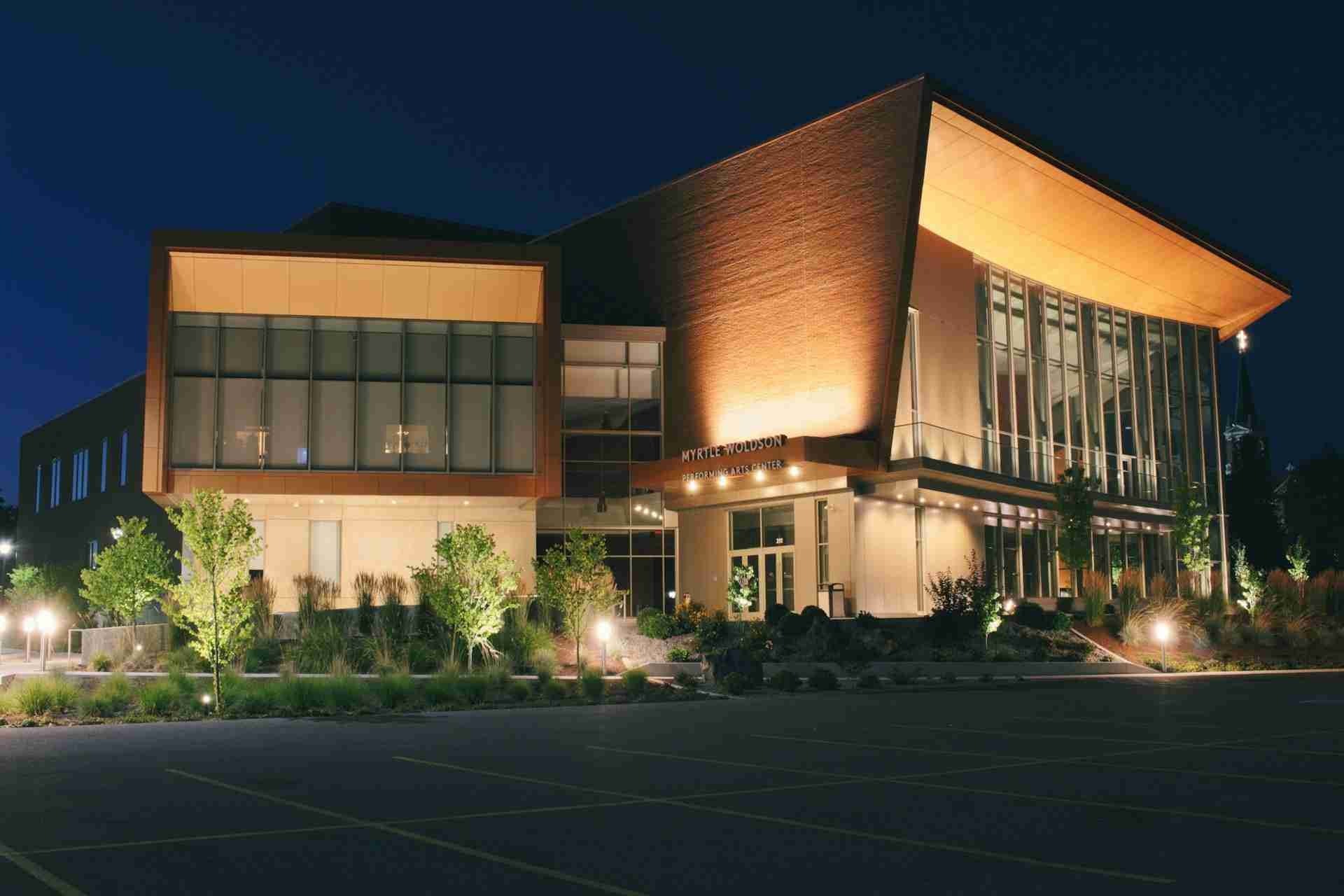
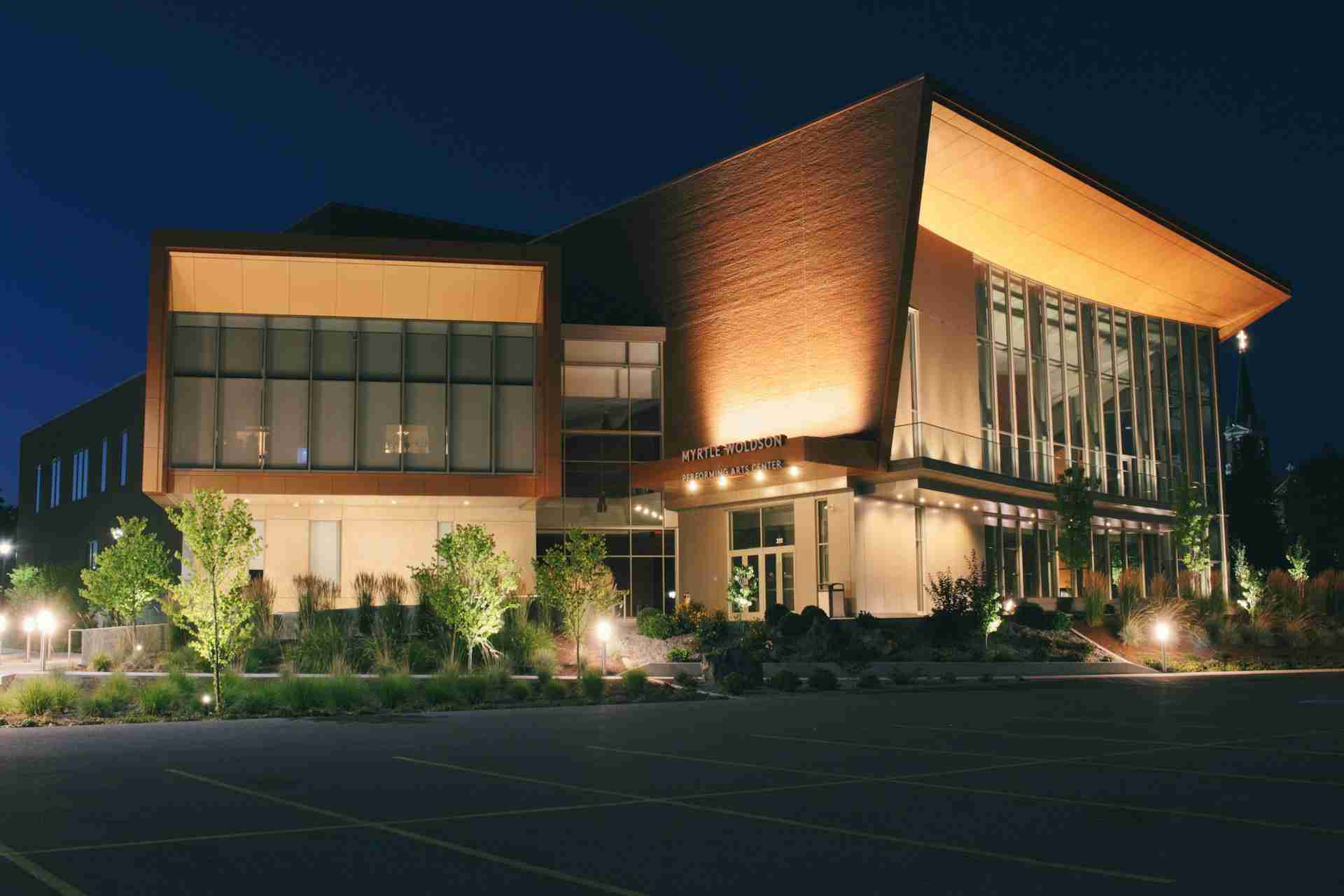
The Myrtle Woldson Performing Arts Center in Spokane, Washington, is a modern architectural gem on the Gonzaga University campus. Opened in 2019, it combines clean contemporary lines with warm materials, making it a strong subject for photographers interested in both design and light. The building's glass façades, patterned metalwork, and surrounding landscaping provide plenty of opportunities to experiment with reflections, symmetry, and contrasting textures. Its position along the Spokane River also makes it easy to integrate natural elements into your compositions, giving you more variety than a typical urban cultural venue. Whether you are working with dramatic sunset skies, night lighting, or subtle overcast tones, this location has the flexibility to deliver striking images in multiple styles.
Best Photography Opportunities
• Wide Architectural Portraits from the Front Plaza
: The main entrance of the Performing Arts Center faces a landscaped plaza with open space that allows for clear, uninterrupted views of the entire façade. From here, you can use a wide-angle lens to capture the building's clean geometry while incorporating foreground elements like planters, pathways, or the water features. Late afternoon is particularly good, as the setting sun reflects off the glass panels and warms the stonework. Overcast days also work well from this position, as they reduce glare and let you focus on the structure's form. Shooting from slightly off-center rather than straight on adds a sense of depth and makes the composition feel more dynamic.
• Evening Lights and Reflections in the Glass
: After sunset, the building's interior lighting spills through the large glass panels, creating a warm, inviting glow against the cooler tones of the evening sky. Position yourself at an angle where you can also capture reflections of nearby trees, pathways, or the sky in the glass surfaces. Using a tripod allows for slower shutter speeds to capture rich color in both the building and the sky. The combination of interior stage lighting and exterior architectural lighting can create a layered effect that feels both lively and elegant.
• Detail Studies of Materials and Design Features
: The Myrtle Woldson Performing Arts Center uses a combination of metal, glass, and stone, along with intentional patterning in its exterior panels. Close-up compositions that focus on these textures and their intersections can create strong graphic images. Look for repeating lines, shadow patterns, and reflections that change with the sun's angle. A medium telephoto lens works well for isolating these design elements without distortion. Early morning or late afternoon light enhances the textures and brings out the subtle color variations in the materials.
• Integration with Campus and the Spokane River
: The Performing Arts Center is close to both Gonzaga's green spaces and the Spokane River, which makes it possible to create context-rich images that link the building to its surroundings. Shooting from further back and including nearby trees, paths, or water features provides a sense of place. In spring and summer, blooming trees add color, while in autumn, the golden leaves contrast beautifully with the modern architecture. Over the river, you can also find positions where the building peeks through foliage, creating a frame-within-a-frame effect.
• Performance Nights and Event Atmosphere
: On evenings when performances are scheduled, the plaza fills with guests arriving, lights brighten, and the building becomes an active, living subject. Capturing long exposures of people moving in and out of the building creates a sense of motion that contrasts with the stillness of the structure. You can also focus on candid moments of interaction in the warm glow of the entrance lights. These sessions work best with a fast lens that allows you to shoot handheld in low light without losing sharpness.
Best Time to Visit
The Myrtle Woldson Performing Arts Center is photogenic year-round, but the timing of your visit affects both light quality and subject matter. Spring offers fresh greenery and blossoms that soften the building's clean lines. Summer brings long golden hours in the evening, giving you more time to work with warm, directional light. Autumn is particularly rewarding for color, as the surrounding trees turn rich shades of yellow and orange. Winter's snow adds a clean, minimal contrast to the darker materials of the building and can create elegant high-key compositions.
Morning light is softer and can be good for detail work, especially on overcast days when the glass and metal reflect subtle tones without harsh glare. Late afternoon through blue hour is the most versatile window for shooting the whole building, as you can transition from golden light to the glow of interior lighting. Night sessions work best in the hour after sunset, when there is still some color in the sky to balance the artificial lighting. If you want to capture people and event activity, plan your visit for a scheduled performance evening, as the building will be lit more fully and the atmosphere more dynamic.
How to Get There
The Myrtle Woldson Performing Arts Center is located on the Gonzaga University campus at 211 East Desmet Avenue in Spokane, Washington. If you are arriving from downtown Spokane, it is a quick five-minute drive or a pleasant 15-minute walk along the Spokane River Centennial Trail. From Interstate 90, take the Hamilton Street exit and follow signs toward the Gonzaga campus. Street parking is available nearby, though it can be limited during events. Several university parking lots also allow visitor parking outside of peak hours; check Gonzaga's parking guidelines before your visit.
The building is fully accessible, and the surrounding plaza provides multiple clear sightlines for photography without obstructions. There is no fee to photograph the exterior of the Performing Arts Center from public spaces. Tripods are generally allowed outdoors, though you should be mindful of pedestrian flow during busy times. Access to the interior for photography is restricted to ticketed events or special arrangements, so plan accordingly if you want to shoot inside.
Recommended Photography Gear
A versatile lens kit is ideal for this location. A 16 to 35 millimeter wide-angle lens allows you to capture the full building in tighter spaces and work with architectural perspective. A 24 to 70 millimeter lens is excellent for general coverage, while a 70 to 200 millimeter telephoto helps isolate design details or capture candid moments from a distance. A tripod is highly recommended for blue hour and night shots, as well as for precise compositions in architectural work.
A polarizing filter is useful for controlling reflections in the glass and deepening the sky, particularly in midday light. A lens hood will help control flare when shooting into the sun, especially in late afternoon. For evening and event photography, a fast prime lens such as a 35mm or 50mm f/1.8 allows you to work handheld in low light without sacrificing sharpness. Weather in Spokane can be variable, so a rain cover for your gear is a good idea, especially in spring and fall. Comfortable shoes are helpful, as you may be walking between multiple vantage points on campus and along the river.
Nearby Photography Locations
: Just steps from the Performing Arts Center, this riverside trail offers scenic views of the Spokane River, footbridges, and seasonal foliage. It's a great spot for incorporating water and greenery into urban compositions.
: The campus itself is worth exploring for photography, with a mix of historic brick buildings, modern facilities, and landscaped gardens. In spring and autumn, the colors are particularly strong.
: A short walk or drive from Gonzaga, this downtown park includes the Spokane Falls, pedestrian bridges, and public art installations. It's especially photogenic in spring during high water flow and in winter when holiday lights decorate the area.
: Located downtown, this historic cathedral provides a striking contrast to the modern lines of the Performing Arts Center. Its stonework and stained glass are excellent for architectural detail studies.
One of Spokane's most recognizable landmarks, this historic concrete arch bridge offers dramatic views of the Spokane River and the lower falls. Sunset and blue hour are ideal times to shoot from here.
The Myrtle Woldson Performing Arts Center offers a balance of strong architectural form and an attractive setting, making it a rewarding subject for photographers who enjoy modern design, controlled lines, and the interplay of natural and artificial light. Whether you visit for the clean geometry in daylight, the glow of evening performances, or the seasonal changes along the river, it is a location that adapts well to multiple styles and approaches.
Comments
Loading comments…