
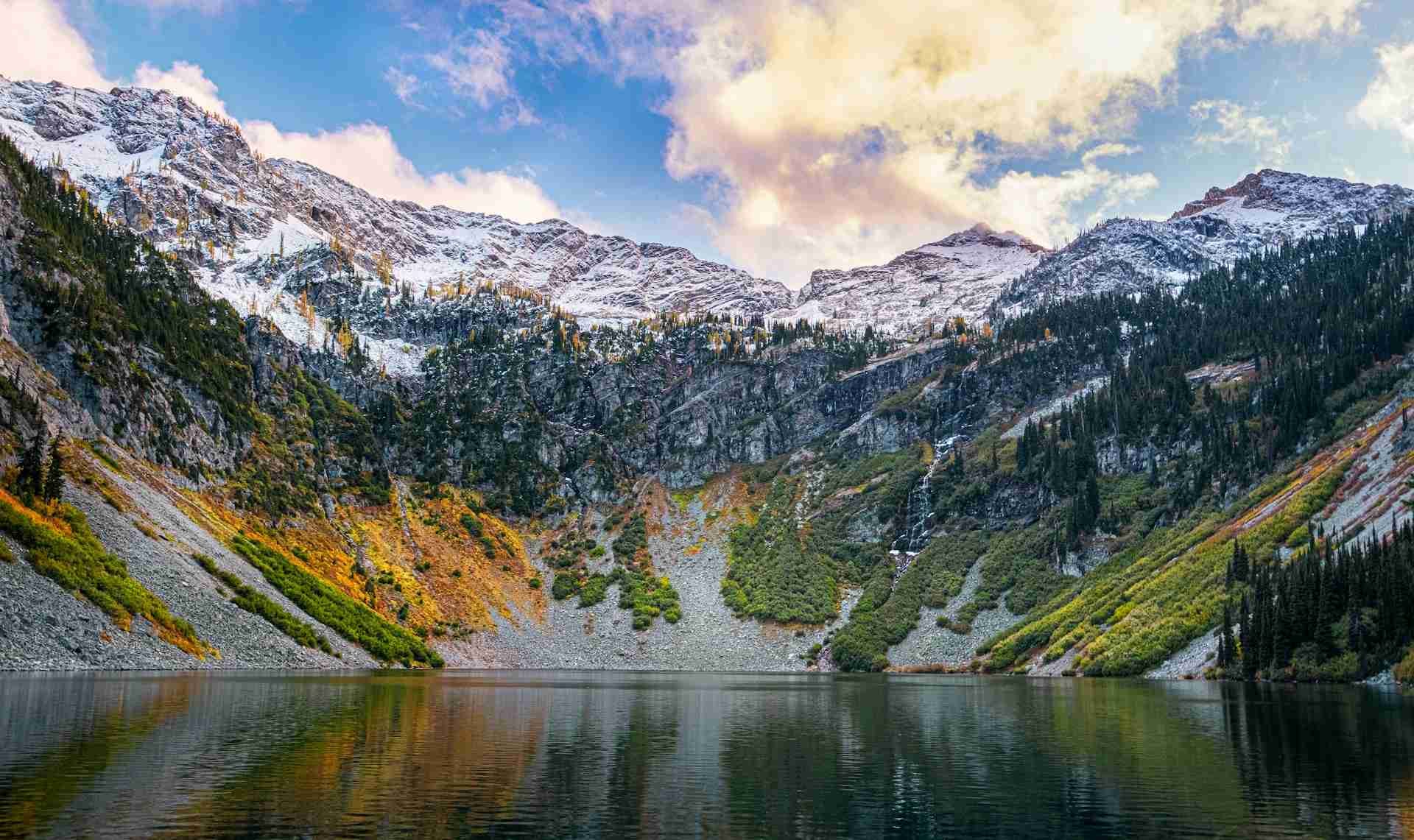
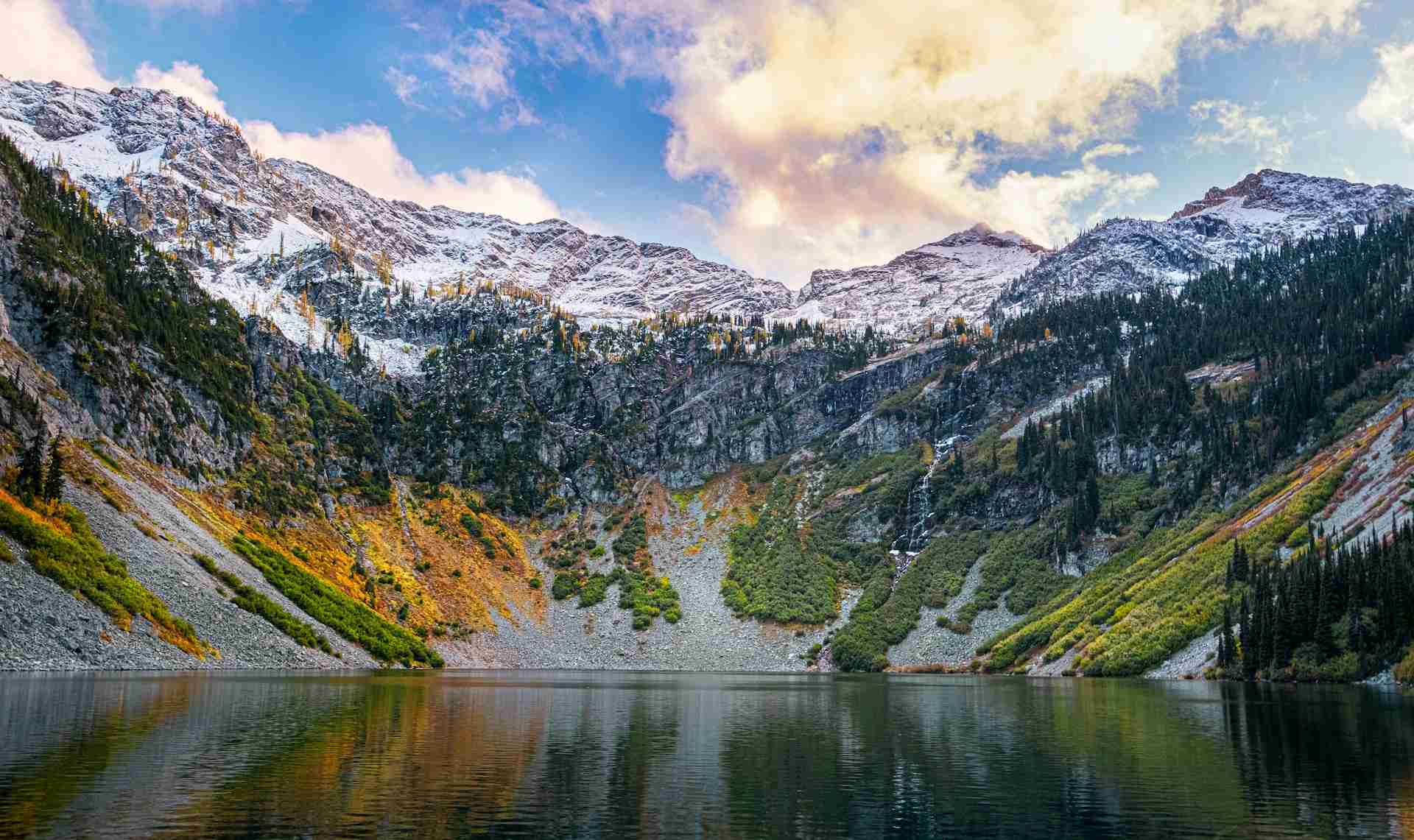
Rainy Lake is one of the most accessible alpine lakes in the North Cascades, yet it feels far removed from the road once you step onto the trail. Located just off the North Cascades Highway near Rainy Pass, the lake sits in a basin surrounded by granite slopes, forest, and jagged peaks. The trail to the lake is short and paved, which makes it easy to carry a full kit without worrying about a long hike. Once at the shoreline, the scene opens into clear water, scattered boulders, and layered mountain backdrops. On calm days, the lake reflects the surrounding peaks with surprising clarity. For photographers, it's a location built around clean lines, natural symmetry, and quiet alpine atmosphere rather than dramatic scale.
Best Photography Opportunities
• Shoreline Reflections
One of the strongest compositions at Rainy Lake comes from working the shoreline for reflections. When the water is still, the surrounding granite slopes mirror almost perfectly on the surface. Positioning yourself low near the water helps strengthen that symmetry and gives the foreground more presence. Scattered rocks along the edge can serve as anchors, but it's important to place them carefully so they don't disrupt the reflection. Early morning offers the calmest conditions and the cleanest water surface. This is the kind of location where subtle adjustments in tripod height can significantly improve balance.
• Boulder Foreground With Mountain Backdrop
Large granite boulders sit around parts of the lake and make excellent foreground elements. By placing a rock close to the lens, you can create depth and scale against the distant peaks. A wide lens works well here, but care must be taken to avoid distortion that makes the mountains feel too distant. Angled light helps bring out texture in the stone and prevents the foreground from appearing flat. This approach adds structure to what can otherwise be a simple reflection scene. It's particularly effective when clouds add interest to the sky.
• Forest Framing Along the Trail Edge
Sections of the trail near the lake offer natural framing opportunities through trees. Including branches or trunks along the edge of the frame can help guide the viewer's eye toward the water. This works especially well when there is light mist or subtle haze in the basin. Overcast conditions soften contrast and preserve detail in both foliage and rock. These compositions feel more intimate and grounded compared to open shoreline views. They are useful when the lake surface is too disturbed for clean reflections.
• Autumn Color
In early fall, the greenery around Rainy Lake begins to shift color. Patches of yellow and muted orange can contrast nicely with dark green forest and pale granite. Shooting slightly elevated compositions allows you to include bands of color between shoreline and peaks. Soft light enhances these tones without oversaturating them. This seasonal variation adds depth to otherwise neutral mountain scenes. Timing a visit for peak color can significantly change the mood of your images.
• Drone or Aerial Perspective Over the Lake
Aerial photography reveals the full shape of Rainy Lake within its granite basin. From above, you can see how the shoreline curves and how forest and rock meet the water's edge. The contrast between deep green trees, pale stone, and blue water becomes more graphic from this angle. Flying slightly off center rather than directly overhead adds depth and dimension. Calm conditions produce the cleanest reflection patterns from above. Always confirm current drone regulations within North Cascades National Park before flying, as restrictions may apply in protected areas.
Best Time to Visit
Early morning is the strongest time to photograph Rainy Lake. The water is typically calmer, winds are lighter, and light is softer across the basin. Morning sessions increase your chances of capturing clean reflections without surface disturbance. Late afternoon can also work, especially when angled light defines texture in granite slopes.
Midday light often feels flat and can wash out detail in pale rock. Cloud cover can improve tonal balance and preserve detail across the scene. Late summer and early autumn offer stable weather and clearer air, while fall introduces color variation in surrounding vegetation. Because the lake sits at higher elevation, weather can shift quickly, so planning for changing conditions is important.
How to Get There
Rainy Lake is accessed via a short paved trail from the Rainy Pass parking area along the North Cascades Highway. The trail is approximately two miles round trip and is well maintained, making it one of the more accessible alpine lake hikes in the park. Elevation gain is moderate but steady, and the paved surface allows for stable footing.
Parking is available at Rainy Pass, though it can fill quickly during peak summer months. A national park pass or entrance fee is required for vehicle access in the area, and fees can change over time. Facilities are limited at the trailhead, so arriving prepared is important. Because the hike is relatively short, carrying a tripod and additional lenses is manageable without overexertion.
Recommended Photography Gear
A standard zoom lens will handle most compositions, from shoreline reflections to moderate compression of mountain layers. A wide lens is useful for emphasizing foreground boulders and depth. A short telephoto helps isolate sections of peak and forest across the water.
A tripod is highly recommended for low light conditions and precise reflection work. A polarizer can reduce glare on the water when needed, though removing it may strengthen reflections in certain angles. Since the hike is short, carrying a slightly fuller kit is realistic, but weather protection for gear is wise given the elevation and shifting mountain conditions.
Nearby Photography Locations
A scenic hiking loop offering elevated views of alpine lakes and layered ridgelines. It provides broader panoramic compositions compared to the enclosed basin of Rainy Lake.
An easily accessible roadside viewpoint with dramatic granite spires and sweeping valley views. It offers a stronger sense of scale and rugged terrain.
Known for its striking turquoise color, Diablo Lake provides expansive reservoir views framed by steep mountain slopes. It contrasts with the quieter, more intimate feel of Rainy Lake.
Another alpine lake reached by a moderate hike. It offers similar reflection opportunities with slightly different peak formations and shoreline character.
• Cutthroat Pass
A higher elevation trail offering open alpine meadows and wide mountain vistas. It expands your itinerary beyond lake scenes into broader landscape photography.
Comments
Loading comments…