

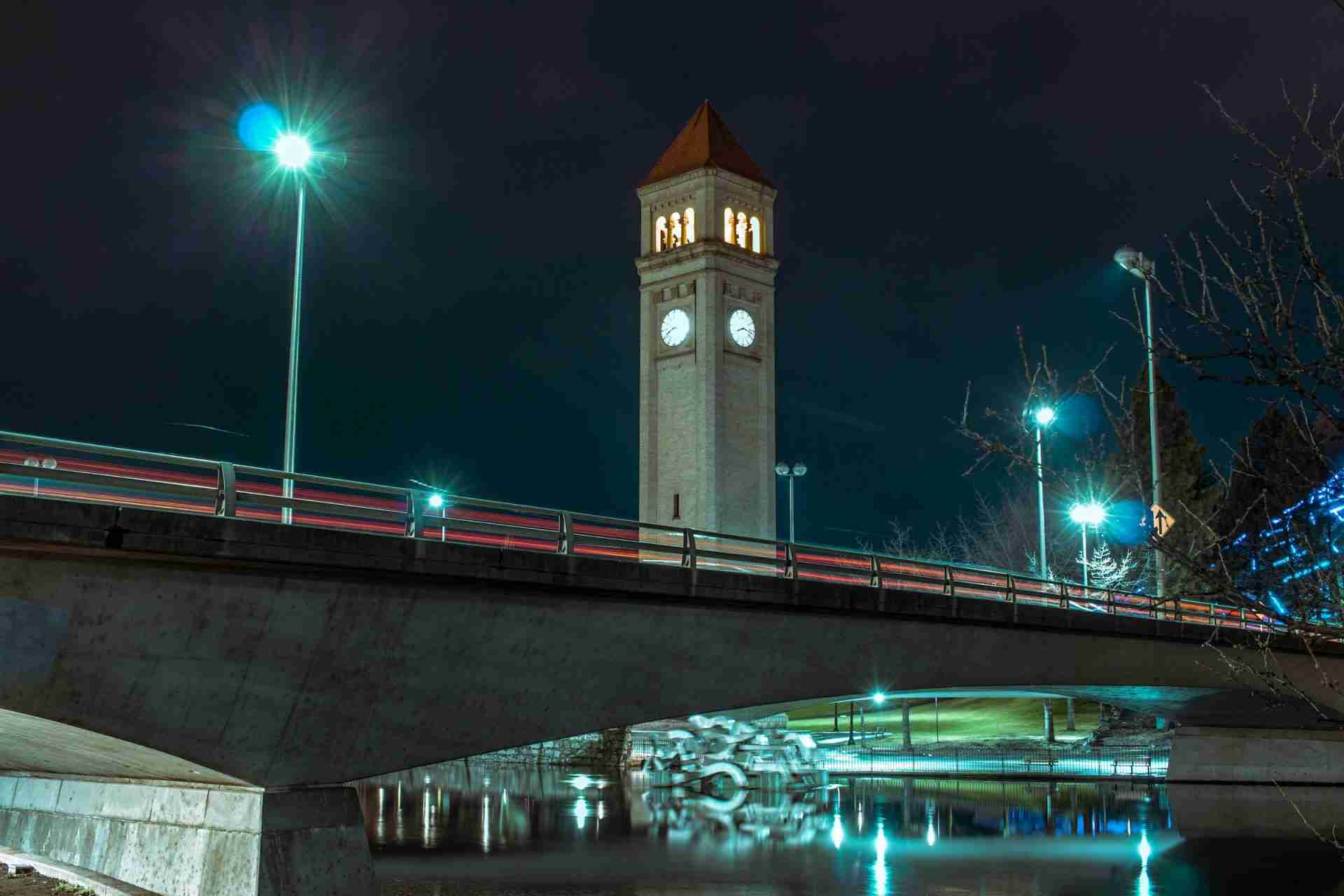
Standing in the heart of Riverfront Park, the Great Northern Clocktower is one of Spokane's most recognizable historic landmarks and a rewarding subject for photographers who enjoy blending architecture with urban landscapes. The tower is the last remaining part of the Great Northern Railway Depot that once stood on this site in the early twentieth century. Today it rises above open meadows, walkways, and the rushing Spokane River, creating a scene where history and everyday city life overlap naturally. The tower's tall brick structure, large clock faces, and surrounding park environment make it an adaptable subject that works equally well for documentary images, architectural studies, and travel photography. Because it sits within Spokane's central park rather than a dense street corridor, photographers can easily experiment with multiple angles, foreground elements, and lighting conditions throughout the day.
Best Photography Opportunities
• Clock Tower Meadow Compositions
The open lawn surrounding the tower provides one of the most reliable places to photograph the structure from a distance. From this area you can capture the entire height of the tower without major visual obstruction, making it ideal for clean establishing shots that show the structure against the sky. Early morning light can add gentle shadows along the brickwork while keeping the scene quiet and uncluttered with visitors. Photographers who enjoy including people in their frames will find that this area works well for environmental portraits, travel images, or candid scenes of park activity. By adjusting your distance across the lawn, you can easily shift between tight compositions focused on the tower and wider frames that include pathways, trees, and park life.
• Architectural Details
The four large clock faces near the top of the tower provide strong graphic elements for photographers interested in architectural detail. Each face is large enough that a moderate telephoto lens allows you to isolate the numerals, hands, and surrounding brickwork. When the light hits the tower from the side, subtle texture appears in the masonry that adds depth to close up images. Cloudy days can also work surprisingly well because the soft light reduces contrast and highlights the structure itself rather than dramatic shadows. These tighter images often tell the story of the building more effectively than distant shots because they emphasize craftsmanship and scale.
• Spokane River Perspectives
Moving closer to the river allows photographers to frame the tower within a larger landscape scene. From certain pathways and bridge viewpoints you can combine flowing water, trees, and park features with the tower rising in the background. This layered composition adds visual movement and depth compared to photographing the structure alone. Long exposures of the river during lower light can create a smooth water surface that contrasts nicely with the solid brick tower. This approach works especially well when you want to produce travel photographs that show Spokane's natural and urban elements in the same frame.
• Blue Hour and Night Photography
The tower becomes especially striking as evening approaches and the park lighting begins to glow. During blue hour the sky deepens in color while the tower remains visible as a strong silhouette within the park. This time of day often brings a calm mood as daytime crowds begin to thin and the city lights start reflecting on nearby surfaces. Photographers working with tripods can experiment with longer exposures that capture motion from passing pedestrians or cyclists along the park pathways. These subtle movements add life to the scene while the tower remains the central subject anchoring the frame.
• Capturing Daily Life Around the Clocktower
Because the tower sits within one of Spokane's busiest public parks, it provides excellent opportunities for storytelling images that include people interacting with the space. Families walking through the lawn, visitors relaxing on benches, and seasonal events can all become part of the composition. Including human activity helps communicate the scale of the tower while also documenting how the park is used today. This approach works well for editorial travel photography and documentary style projects focused on city life. With thoughtful framing, the tower remains the visual anchor even when people become part of the scene.
Best Time to Visit
Early morning is often the most practical time for photography around the clocktower. The park tends to be quieter, which makes it easier to work with tripods and capture clean compositions without large crowds moving through the frame. Morning light can illuminate the tower from the side depending on the season, which helps reveal the texture in the brick and the shape of the structure.
Late afternoon and evening provide warmer light and a more active atmosphere in Riverfront Park. As the sun lowers, the tower gains stronger contrast and the surrounding park environment begins to glow with softer tones. Blue hour after sunset can be particularly rewarding because the sky retains color while the park lighting creates a gentle balance between natural and artificial illumination.
Seasonally, autumn often offers some of the most interesting color and contrast in the park. Trees add warmth to the scene and create useful framing elements around the tower. Winter simplifies the landscape and can produce clean compositions when snow covers the lawns and walkways. Spring and summer bring greener scenery and more visitors, which can be useful for photographers interested in capturing the energy of the park.
How to Get There
The Great Northern Clocktower stands within Riverfront Park in downtown Spokane, Washington. Most photographers will approach through the main entrances to the park from nearby downtown streets such as Howard Street or Spokane Falls Boulevard. The park is easy to reach on foot if you are staying in downtown hotels, and it is also accessible by car with several public parking areas located around the park perimeter.
Parking garages and street parking are available nearby, though availability can vary depending on events and time of day. Arriving early in the morning usually makes parking much easier and allows photographers to work without the heavier visitor traffic that builds later in the day. The park itself is open to the public and does not typically require an entrance fee to access the clocktower area, though certain attractions inside the park may charge separate admission. Paths throughout the park are paved and easy to navigate with camera gear, making this location convenient even when carrying tripods or larger lenses.
Recommended Photography Gear
A full frame camera body paired with a versatile zoom lens works well for most situations around the clocktower. A lens in the range of about 24mm to 70mm allows photographers to capture both the tower itself and broader park scenes without constantly changing equipment. Bringing a telephoto lens in the range of 70mm to 200mm is helpful for isolating the clock faces and architectural details higher on the structure.
A tripod becomes particularly useful during evening and blue hour sessions when longer exposures are needed. It also helps when photographing the river or working with layered compositions that include moving water in the foreground. A circular polarizing filter can improve images during bright daylight by controlling reflections and deepening sky color above the tower. Photographers interested in travel storytelling may also want a small prime lens for capturing candid moments of people enjoying the park while keeping the tower visible in the background.
Nearby Photography Locations
Located just steps away from the clocktower, Spokane Falls is one of the most powerful natural subjects in the city. The rushing water creates dramatic movement and mist that can add energy to landscape images. During spring runoff the flow becomes even more intense, giving photographers an opportunity to capture powerful scenes within the city center.
The pavilion structure inside Riverfront Park introduces a modern architectural element that contrasts with the historic clocktower. Its sweeping design and open framework create interesting patterns and shapes that respond well to changing light. Photographing both the pavilion and the clocktower during the same visit provides a visual story that connects Spokane's past with its more recent development.
The historic carousel building in Riverfront Park offers a completely different photographic subject. Inside, hand carved animals and decorative details provide colorful opportunities for close up photography. The contrast between the lively carousel interior and the quiet presence of the clocktower nearby can add variety to a photography session.
A short walk from the park, Monroe Street Bridge offers elevated views over the Spokane River and the surrounding cityscape. From certain positions you can frame the falls and parts of downtown in the same composition. The bridge is particularly effective during sunrise or sunset when the river below reflects changing light.
The blocks surrounding Riverfront Park offer additional perspectives that place the clocktower within a broader urban setting. Street scenes, storefront lighting, and city activity can create compelling travel images that show Spokane as a lived in place rather than just a park landmark. Exploring a few streets beyond the park often leads to unexpected compositions that combine city architecture with glimpses of the tower in the distance.
Comments
Loading comments…