
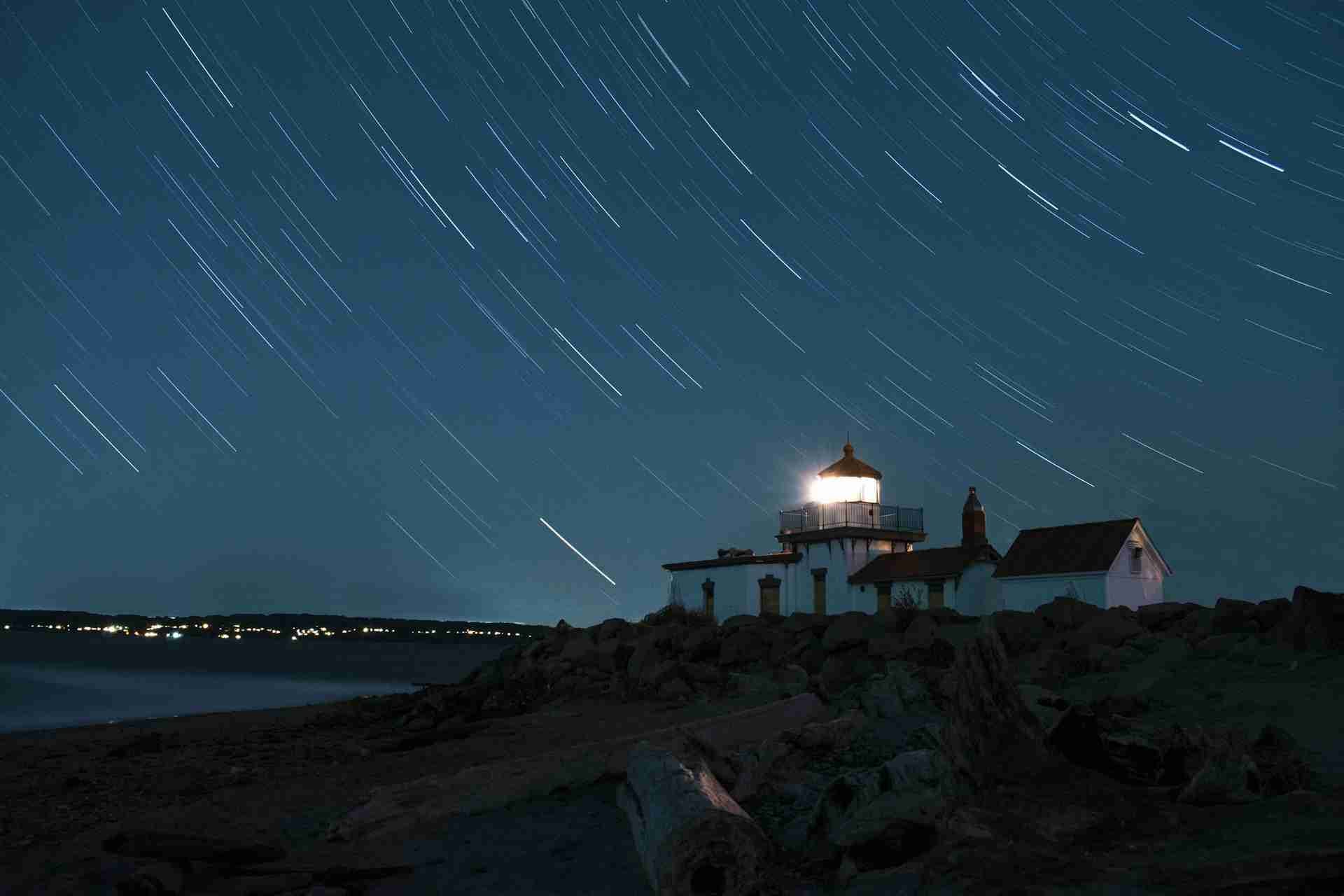
Situated at the tip of Discovery Park, the West Point Lighthouse marks a quiet yet commanding corner of Seattle's Puget Sound shoreline. Flanked by driftwood-strewn beaches and backed by expansive views of the Olympic Mountains, this squat, square lighthouse is one of the most photogenic maritime features in the Pacific Northwest. Its modest height and classic red-roofed structure contrast beautifully with the shifting water, open sky, and distant mountain silhouettes. For photographers, West Point offers a chance to work with light in its purest form—filtered by fog, caught in golden hour glow, or diffused through coastal clouds—while anchoring every composition with the symmetry and charm of a working lighthouse.
Best Photography Opportunities
• Sunset Across the Sound
The lighthouse faces west across Puget Sound, making it a natural canvas for sunset photography. On clear evenings, the sun drops behind the Olympic Mountains, creating a layered silhouette that becomes a dramatic backdrop to the red-roofed tower. Use a wide-angle lens to include shoreline curves or foreground driftwood that leads into the frame. The low angle of sunlight warms the lighthouse façade and adds a golden shimmer to the water. As twilight deepens, subtle blues and purples take over the sky, and long exposures can smooth the water for a tranquil finish. Positioning yourself slightly south of the lighthouse allows for balanced framing with both mountains and structure in view.
• Long Exposure with Driftwood and Surf
The beaches around West Point are littered with sculptural driftwood, bleached and worn by the elements. These natural forms make excellent foreground subjects for long exposure photography, especially on days with gentle surf and passing clouds. Set your tripod close to the shoreline and use a neutral density filter to allow for multi-second exposures. This smooths the motion of the water while keeping the lighthouse and foreground sharp. Position driftwood diagonally to lead the eye toward the structure. Overcast days work especially well, giving you even light and soft contrast across the scene.
• Fog and Low Cloud Atmosphere
Seattle's maritime climate frequently brings fog and low-hanging clouds that transform West Point into a moody and subdued landscape. The lighthouse, with its pale color and defined edges, stands out well in such conditions. Shoot from a mid-range distance using a 50 to 85 millimeter lens to compress the lighthouse against the gray tones of sea and sky. These conditions are ideal for black-and-white imagery or muted color palettes that highlight contrast and shape rather than hue. Subtle reflections in puddles or wet sand can add further interest, and mist often clings to the structure's roof, adding to the sense of place.
• Tide Line and Reflection Studies
At low tide, pools form along the beach and the sand flattens into a reflective surface that mirrors the lighthouse and sky. Arrive an hour before low tide and scout areas where water remains in shallow pockets. Using a low angle, you can capture symmetrical images with the lighthouse appearing twice, once above and once in the reflection. Mid-range lenses work well here, and shooting during golden hour adds color to both the sky and the reflection. This is one of the most serene compositions available at the site and benefits from calm weather and gentle light.
• Night and Astrophotography with Maritime Foreground
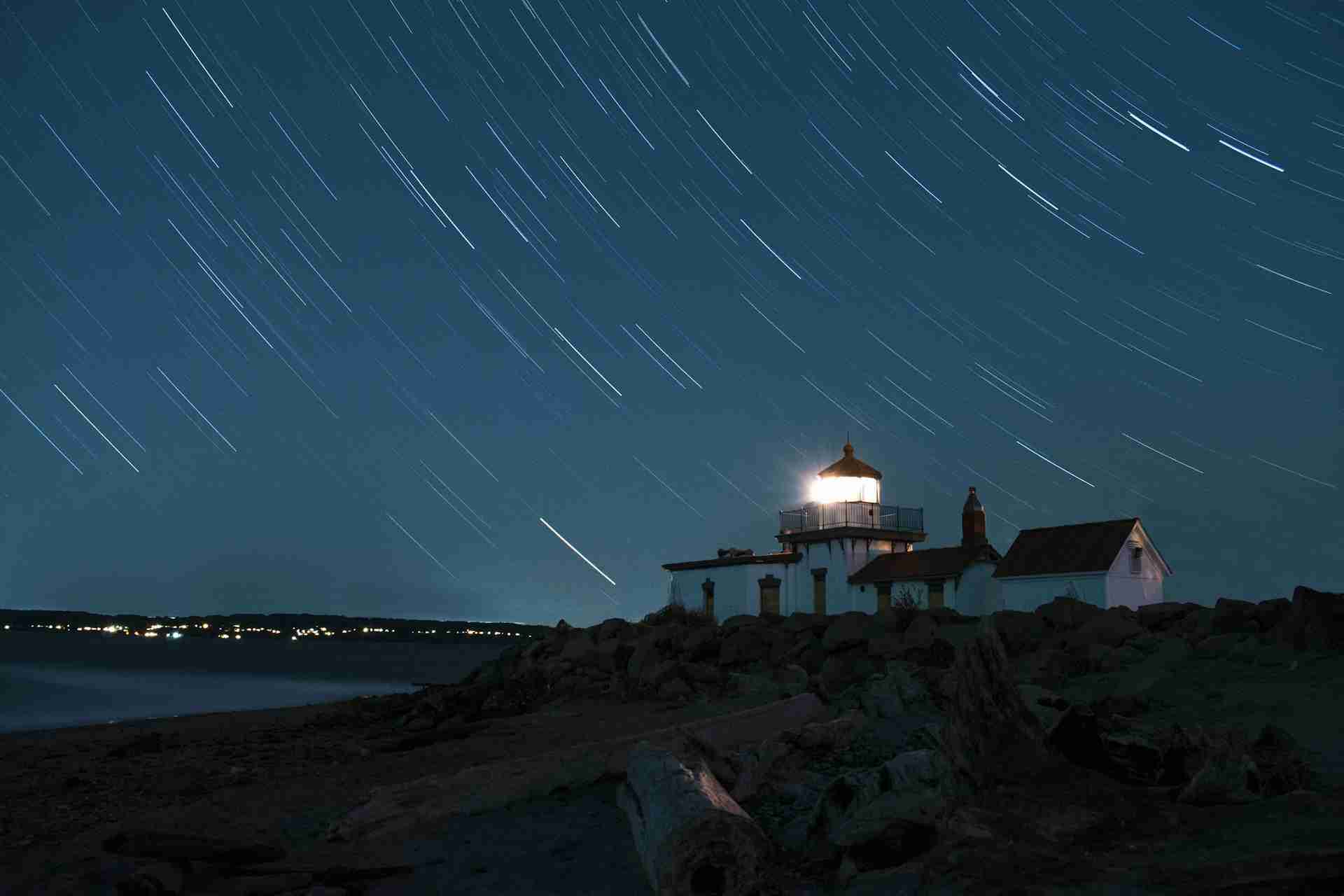
The location's relative distance from urban lighting makes West Point Lighthouse a rare opportunity for night photography within city limits. On clear nights, the lighthouse becomes a quiet focal point beneath a field of stars or the arc of the Milky Way in late summer months. Position your tripod well before twilight ends, and compose with the lighthouse in the lower third of the frame to allow sky to dominate the composition. A wide-angle lens with a fast aperture works best to pull in starlight while keeping the structure in focus. Light painting the lighthouse with a dim LED or relying on ambient glow from Seattle can help maintain detail without overpowering the stars. Star trails are also possible with longer exposures or stacked sequences, especially when oriented northward where the lighthouse remains still beneath circular motion. This location excels during new moon phases or clear winter nights when atmospheric clarity is highest.
Best Time to Visit
Golden hour in the late afternoon is the most visually rewarding time to photograph West Point Lighthouse, especially during spring and autumn when the sun sets at an angle that illuminates both the building and the backdrop. Winter sunsets can also be excellent, often combining low light with atmospheric conditions like mist or cloud inversions. Because of the westward orientation, sunset light is warmer and more direct, adding definition and color to both the water and the lighthouse.
Morning visits offer solitude and soft, even light, particularly on overcast days when fog is more likely. Early summer mornings can be misty with clearings by mid-morning, giving you two distinct looks in one session. Low tide typically occurs twice daily and rotates with the lunar cycle, so check tide charts in advance to plan your timing for reflection shots or beach access.
Midday light is often too harsh for subtle compositions, but it can work for graphic, high-contrast black-and-white imagery or detailed shots of the lighthouse structure itself. Wind can stir up waves or shift sand and driftwood, so calmer days are best for long exposures and reflection photography. Winter brings fewer visitors and a more dramatic palette of gray, blue, and soft white.
How to Get There
West Point Lighthouse is located within Discovery Park in the Magnolia neighborhood of Seattle. Driving to the park is straightforward from central Seattle, with several designated parking areas near the visitor center. From there, reaching the lighthouse requires a hike of approximately two miles round-trip along the Loop Trail and then the paved access road that descends to the beach. The walk is moderately graded and suitable for most visitors, though it includes a downhill return that can be strenuous with gear.
A limited number of parking permits are available at the visitor center for those with mobility needs, allowing direct vehicle access to the lighthouse via a restricted service road. Biking is also permitted along the main trail, and bike racks are available near the beach entrance. There is no fee to access Discovery Park or the lighthouse area, and the park remains open daily from early morning to dusk.
Tripods are allowed, and there are no restrictions on personal photography. Drones are not permitted within Discovery Park boundaries due to wildlife and public safety concerns. Be prepared for changing weather and wind along the shore, especially during winter and early spring.
Recommended Photography Gear
A full-frame camera with strong dynamic range will help handle the high-contrast conditions common near water and sunset. A wide-angle lens between 14 and 24 millimeters is essential for capturing full compositions that include the lighthouse, beach, and sky. A 24 to 70 millimeter standard zoom provides flexibility for both wide scenes and tighter detail work. A 70 to 200 millimeter telephoto lens is useful for compressing foreground driftwood against the structure or isolating architectural features.
A sturdy tripod is necessary for long exposures, especially when working with reflections, low light, or moving surf. Neutral density filters are essential for controlling exposure time during daylight, and a circular polarizer will help manage glare from the water and deepen skies. A lens hood and microfiber cloth are helpful for dealing with sea spray or mist.
Weather-sealed gear is highly recommended, as sudden shifts in weather are common. Wear waterproof or water-resistant footwear, as beach access often involves walking through wet sand or tidal pools. A small towel or blanket can be helpful for setting up low-angle shots close to the ground. Spare batteries, a remote shutter, and a protective backpack will keep your session running smoothly even if the weather changes.
Nearby Photography Locations
Offering wide views of Puget Sound, the Olympic Mountains, and the surrounding forest, this trail provides elevated perspectives that contrast nicely with beach-level compositions. Sunset light is particularly good here for layered landscape shots.
Located northeast of the park, this area offers industrial textures, moving boats, and occasional wildlife like herons and seals. It's a good location for documentary-style or urban nature photography.
North along the shore, Golden Gardens provides a broad beach, tall grasses, and a strong sunset position. Use driftwood, silhouettes, and low tide reflections to build warm, dramatic compositions.
This marina features geometric dock lines, moored sailboats, and the Seattle skyline in the distance. Early morning light is best here, with soft water and occasional fog adding atmosphere.
Though not coastal, Kerry Park offers a classic postcard view of downtown Seattle with Mount Rainier in the background. It is best photographed at blue hour when the city lights begin to glow beneath a fading sky.
Photographing West Point Lighthouse is as much about quiet observation as it is about timing. With patient planning and an eye for changing conditions, this coastal spot rewards photographers with compositions that blend simplicity, atmosphere, and Pacific Northwest character. Whether you are chasing golden light, fog-laced horizons, or the peaceful rhythm of the tide, this small lighthouse offers a big sense of place.
Comments
Loading comments…