
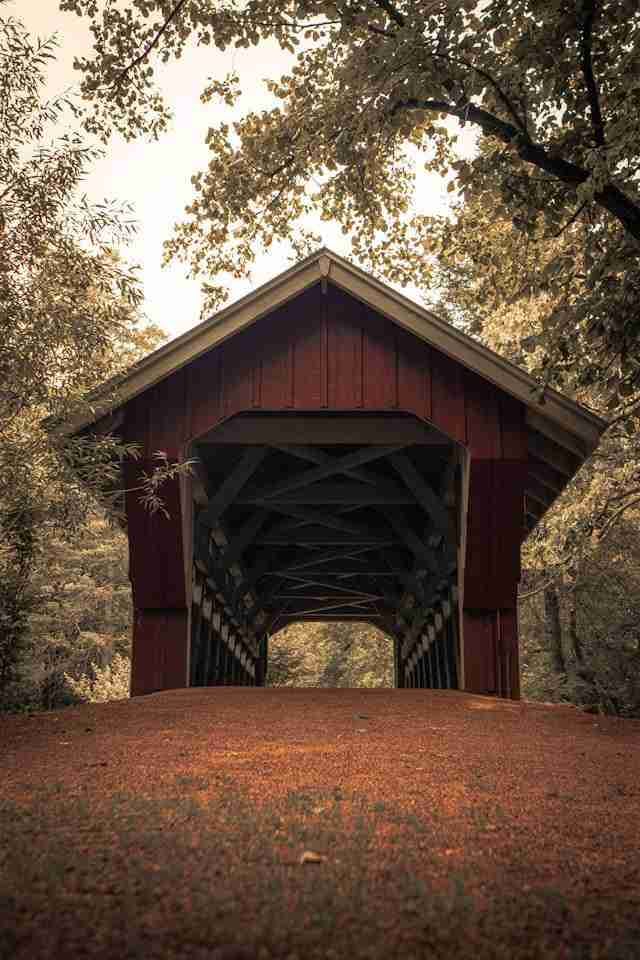
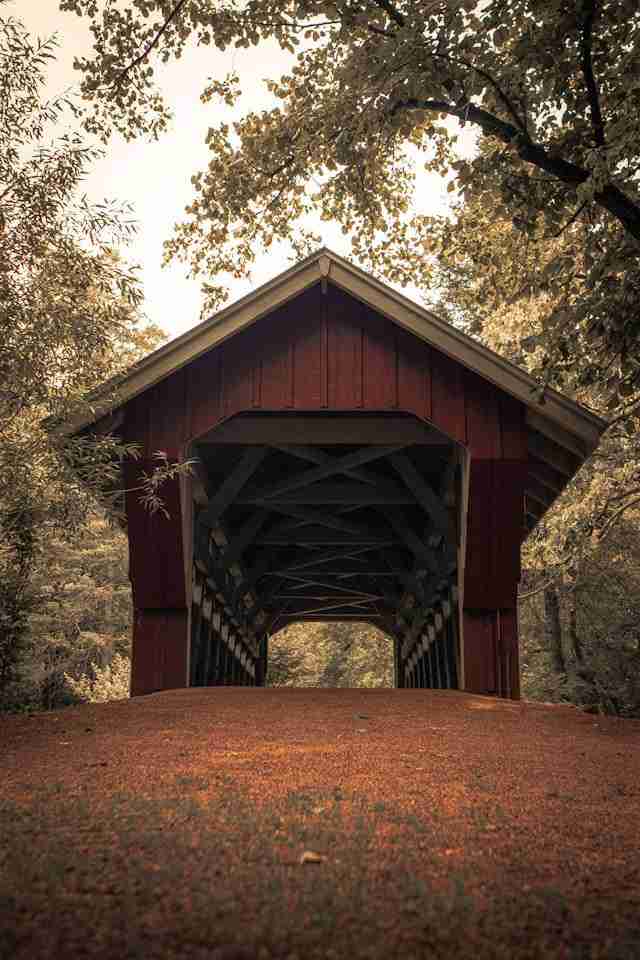
The Historic Red Mill Covered Bridge is a classic piece of Americana that pairs rural charm with rich photographic texture. Set along the banks of the Crystal River, the bridge connects the historic Red Mill site with a peaceful stretch of forested land and water. Built in a traditional covered bridge style, it features deep red siding, exposed wooden beams, and a gabled roof that stands out beautifully against the natural greens and browns of its surroundings. Reflections in the slow-moving water, seasonal changes in foliage, and the weathered surfaces of the bridge itself all offer strong photographic material. With easy access and a quiet setting, this location invites a variety of creative approaches from wide environmental shots to focused architectural studies.
Best Photography Opportunities
Reflections Across the Crystal River
One of the strongest compositions at this site comes from the far bank of the Crystal River, where you can frame the full length of the bridge reflected in calm water. Early morning is best when the surface is undisturbed and the light is soft, creating a near-perfect mirror image. Including overhanging branches, river grasses, or fallen leaves in the foreground adds depth and seasonal character. A wide lens allows you to include more of the surrounding environment while still placing the bridge as the central feature. This view works particularly well in autumn when the red bridge contrasts with orange and gold foliage.
Inside the Covered Bridge
Stepping inside the bridge reveals beautiful patterns of crisscrossed beams, textured floorboards, and shafts of light entering through small gaps in the siding. These interior elements offer great opportunities for abstract compositions and perspective shots. Shooting from a low angle emphasizes the repeating lines and leads the viewer's eye into the frame. Early morning or late afternoon light coming in at an angle gives shape to the interior without overwhelming the shadows. A standard zoom or fast prime lens will allow you to work in the narrow space while adjusting for changing exposure.
Close Studies of Wood and Color
The bridge's aged red paint, exposed bolts, and wooden planks provide rich textures that work well for tight compositions. You can frame around these elements to create detail-focused images that highlight the material quality of the structure. Overcast skies are helpful here, softening shadows and making colors more saturated. Look for areas where the paint has faded or where light falls across weathered surfaces to find contrast within the scene. These shots are especially useful for building a visual set that complements wider landscape views.
Mill Site and Waterwheel Framing
Adjacent to the bridge is the restored Red Mill building with its large wooden waterwheel. Together, these structures form a nostalgic rural scene with multiple framing options. Positioning the bridge in the background and the wheel in the foreground creates layered storytelling images. Including flowering plants, split rail fences, or signage in the frame helps add context. Morning light from the east casts soft light across both structures, while afternoon light backlights the trees behind the mill. A tripod helps with careful composition and small adjustments when working around foot traffic or reflective water.
Bridge in Seasonal Transitions
The bridge sits in a setting that changes dramatically throughout the year. In spring, budding trees and wildflowers create a gentle palette that contrasts well with the red of the bridge. Summer brings full foliage, active birds, and dappled light that filters through the trees and across the river. Autumn is arguably the most popular season, with brilliant colors reflecting in the water and framing the bridge naturally. Winter transforms the scene into something quieter and more minimal, with snow on the roof and frosted branches adding contrast to the saturated red wood. These seasonal changes allow photographers to revisit the same compositions with completely different mood and tone.
Best Time to Visit
The Historic Red Mill Covered Bridge is accessible year round, and its setting makes it especially rewarding during transitional light and changing weather. Spring through autumn are the most popular months for photography, offering color, clarity, and active movement in the landscape. Spring brings soft morning light and fresh green tones that photograph well against the bright red of the bridge. Wildflowers and newly leafed trees add texture to the riverbank and work well as natural frames.
Summer provides strong midday light filtered through tree cover, making it a good time for interior shots or photographing the bridge in shadow with bright background contrast. Morning hours in summer tend to be cooler, calmer, and less crowded. Autumn is the best time for broad color and deep contrast, with the trees around the river turning bright yellow and red. Reflections in the water are particularly strong during this season, especially in the morning when the surface is undisturbed.
Winter visits can be productive for snow-based compositions, especially after a fresh dusting when the bridge is outlined in white. Low sun and bare trees simplify the scene, making it feel more minimal and quiet. The best light for most compositions comes during the early hours of the day when the bridge receives side lighting from the east and the river is still. Late afternoon light can also work well, especially if clouds catch color or light fog lingers in the trees.
How to Get There
The Red Mill and its covered bridge are located just south of Waupaca, Wisconsin, in a small area known as Red Mill Estates. The site is easily accessed by car via County Road K, with clear signage from the highway and local roads. The property includes a small lot for visitor parking, located just steps from the bridge itself. The grounds are privately maintained but open to the public for walking, photography, and seasonal events.
There are no fees for general photography, but access may be limited during weddings or private gatherings held at the mill site. Visitors are asked to respect the grounds and avoid stepping into planted areas or blocking walkways. The bridge and mill area are walkable and mostly flat, with gravel paths and grassy areas that allow for repositioning. Restrooms, benches, and a small gift shop are also available on site, making it a comfortable location for longer sessions. The area is best visited in the morning for quiet conditions and soft light.
Recommended Photography Gear
A basic but flexible setup will allow you to work across different scenes at the Red Mill bridge. A 24 to 70 millimeter lens is ideal for general compositions, including wide views of the bridge, closer shots of the mill, and interior scenes with architectural framing. A wider lens in the 16 to 35 millimeter range helps when shooting from tight riverbank positions or trying to include more sky and reflection in the frame. This is especially useful when working near the water's edge or under tree cover.
A short telephoto lens is helpful for isolating elements of the bridge or compressing the background behind the mill. It also allows you to work from across the river or capture people walking through the bridge without distortion. A tripod is useful for long exposures or careful framing, especially in low light during morning or evening sessions. A circular polarizer helps manage water reflections and enhances color in foliage, siding, and sky. On overcast days, the polarizer is still valuable for controlling glare on wet surfaces.
Because the location is compact and walkable, you can carry a modest amount of gear and still cover a wide range of compositions. If you plan to shoot in the evening or during foggy mornings, a remote trigger and extra batteries are worth bringing along.
Nearby Photography Locations
Just west of Waupaca, this park includes quiet lakes, wooded trails, and gentle hills that work well for landscape photography. The park's many small bridges and natural clearings make it ideal for soft light sessions and seasonal color work.
This group of connected spring-fed lakes offers clear water, boathouses, and shoreline reflections, especially at sunrise or during still conditions. Canoe and kayak launches provide interesting low-angle perspectives and access to quieter parts of the lakes.
Crystal River Canoe Route
Downstream from the Red Mill, the Crystal River winds through farmland and forest with multiple small bridges and open meadows along the way. Paddling or walking sections of the route offers unique access to otherwise hidden viewpoints and close wildlife encounters.
Nelson Park and Mirror Lake
Located within Waupaca, this small park offers quiet walking paths and a lake with mirror-like reflections in the early morning. It is especially good for foggy sunrise photography or moody water compositions on calm days.
Rural Farm Roads and Barns
The countryside surrounding Waupaca is filled with well-kept barns, silos, and winding gravel roads. These backroads provide classic rural Wisconsin scenes with soft rolling hills, grazing cattle, and strong golden hour light in both directions.
The Historic Red Mill Covered Bridge is a location that combines story, texture, and calm in a single scene. Its classic design, changing seasonal surroundings, and reflections along the Crystal River offer photographers a wide range of creative possibilities. Whether you are shooting early morning light, weathered detail, or the sweep of red against a backdrop of trees, this site rewards return visits and a quiet, observational approach.
Comments
Loading comments…