
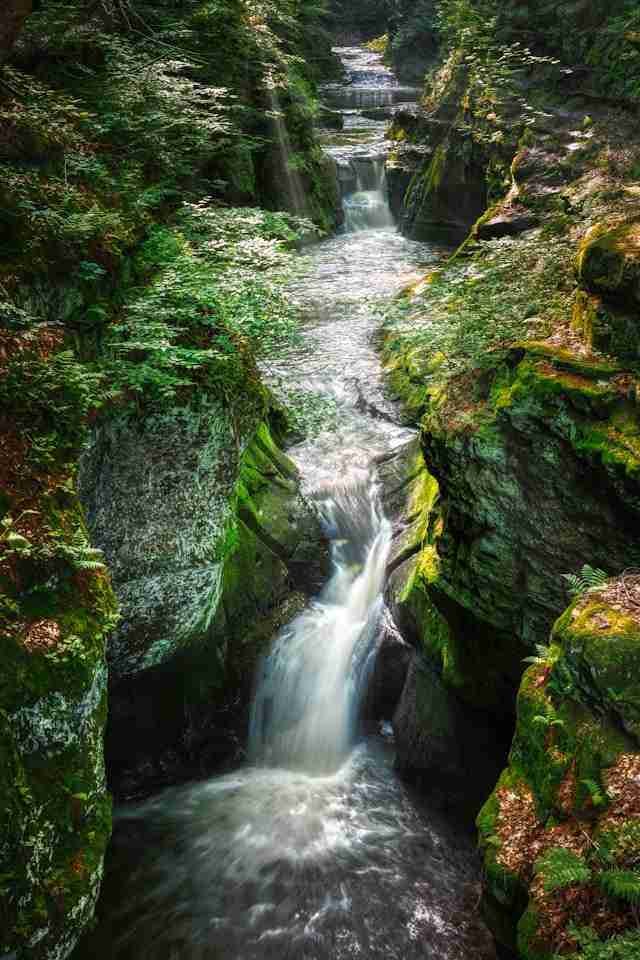
Pewit's Nest is a small gorge carved into sandstone just outside Baraboo, Wisconsin. Tucked between farmland and forest, it feels removed from its surroundings the moment you step down the path. The short trail ends in a narrow canyon filled with layered rock, shaded pools, and a small cascade that drops into clear water below. For photographers, Pewit's Nest offers a quiet, contained scene built around texture, water movement, and light filtered through trees. It's a place where small shifts in angle or timing can make a big difference. The stone walls create a natural corridor for light and shadow, and the mix of still water and gentle flow gives you the tools to slow down and build careful compositions.
Best Photography Opportunities
• Long Exposures of the Waterfall and Pool
At the end of the gorge, a small waterfall drops into a round pool framed by curved rock walls. This is the clearest focal point in the entire area and responds well to long exposures. Use a tripod and a 6-stop ND filter to smooth the water while keeping the texture in the sandstone walls sharp. Shoot from a low angle to emphasize the curve of the canyon and include both water and surrounding rock. Early morning or overcast conditions are ideal for this shot, as they remove hotspots and keep contrast manageable.
• Layered Stone Walls with Side Light
The gorge walls are formed from Cambrian sandstone, layered in visible horizontal lines that catch light differently depending on the time of day. Use a mid-range lens to frame sections of the wall where light moves across the surface, creating depth through alternating shadow and brightness. These compositions work best in the first or last two hours of daylight when the sun hits the stone from the side. A polarizer helps manage glare on wet surfaces and brings out the earthy tones in the stone.
• Reflections in the Still Water
In quieter sections of the gorge, water collects in small basins that reflect the surrounding trees and canyon walls. These mirror-like scenes are strongest on windless mornings or after rainfall when the surface is clean and glassy. Use a standard zoom lens and frame tightly to isolate the reflection, or shoot wider to include part of the canyon's edge. These compositions benefit from a clean sky and soft overhead light, which keeps the water from becoming too dark or flat.
• Vertical Compositions with Overhanging Trees
The shape of the canyon and the way trees hang over its rim allow for strong vertical compositions that include both canopy and rock. Look for spots where branches lean in over the top of the gorge and where filtered light comes down in soft patches. A wide-angle lens helps fit the full vertical range into a single frame, while a narrower lens can help you compress tree branches into a frame anchored by stone and water below. Overcast light helps here, as strong sun can create distracting hot spots in the upper third of the frame.
• Detail Shots of Moss, Roots, and Water Marks
In the shaded areas along the gorge walls, you'll find moss-covered rock, root systems growing through cracks, and subtle water stains from seasonal flow. These tight compositions offer a more abstract approach and work well for photographers who want to build a secondary set of textures and quiet scenes. Use a macro or short telephoto lens, and shoot under even light to control contrast and preserve surface detail. These shots pair well with the broader compositions and help tell a fuller visual story of the location.
Best Time to Visit
Pewit's Nest is at its best from early spring through late autumn. In spring, water flow is higher, and the mosses and new plant growth add color to the shaded stone. Early summer brings clearer skies and filtered light through the forest canopy. Autumn is arguably the most photogenic season here, with leaves adding yellow and orange color to both the tree line and the water reflections below.
Early morning is the ideal time to shoot, especially before the site fills with visitors. The gorge is narrow, and midday sun can be harsh, flattening textures and creating difficult contrast between bright rock and deep shade. Overcast days are especially useful, giving soft, even light across both the water and the stone. After light rain, the surfaces darken and reflections improve, making long exposure work more effective.
The site sees heavy foot traffic during weekends and warmer months, so timing your visit for a weekday morning can make a noticeable difference in both access and shooting conditions.
How to Get There
Pewit's Nest is located just west of Baraboo, Wisconsin. From downtown Baraboo, take County Road W to Pewit's Nest Road, where a small parking area marks the entrance to the natural area. The trail from the parking lot is short and flat, leading directly to the gorge in under ten minutes. No entrance fee is required to access the site, but parking may be limited during peak seasons.
The trail is informal and can become muddy or slippery after rain, especially as you approach the water. Wear solid footwear and be prepared to carry your gear by hand or in a backpack. Tripods are manageable here due to the short approach and relatively flat trail, but be cautious near the edge of the gorge, where footing can be uneven. Swimming and climbing in the gorge are prohibited to preserve the natural environment, which helps keep the area visually intact for photography.
Recommended Photography Gear
A 24–70mm zoom lens will cover most of the shots here, from waterfall compositions to detail work along the canyon walls. Bring a 16–35mm wide-angle lens if you want to shoot vertical frames that include both canyon and canopy, or if you're working close to the waterfall. A macro or short telephoto lens is useful for isolating texture, roots, and surface detail on the rocks.
A tripod is essential for long exposures and careful framing in low light. Bring a 6-stop ND filter for smoothing water flow, and a polarizer to manage glare and reflection on wet stone and still water. The gorge is shaded, so you won't need heavy ND filters unless you're working with brighter skies or shooting toward midday. Carry a lens cloth and small towel to keep gear dry and clean in damp conditions.
Nearby Photography Locations
Located southeast of Baraboo, this sandstone gorge offers a similar visual experience with more elevation and tighter canyon walls. A stream runs through the gorge, and the trail includes small waterfalls, overhanging stone, and moss-covered rock. It's excellent for long exposure work in soft light.
Just south of Pewit's Nest, Devil's Lake offers expansive views, high bluffs, and boulder fields that contrast well with the enclosed feel of the gorge. Hike the East Bluff or West Bluff trails for panoramic views over the lake, especially during sunrise or early morning.
This quiet site features Wisconsin's largest natural sandstone arch and is best photographed in side light or under cloud cover. The trail is short, and the surrounding forest gives opportunities for seasonal color and clean understory compositions.
West of Baraboo, this geological site combines vertical stone cliffs with exposed quarry walls and a winding stream below. It's an excellent spot for working with scale and contrast in stone, especially during the low-angle light of early morning or late evening.
This park features calm water framed by sandstone cliffs and forest, making it a good location for quiet reflection photography. Paddle-in access allows for more creative angles from the water, and early morning brings soft mist and balanced light.
Pewit's Nest is a small space, but it's one that asks you to work with care. It's not a place for dramatic views or fast compositions. Instead, it invites close attention to shape, texture, and the way light touches stone and water over time. With the right timing and a deliberate approach, this short gorge gives you all the tools you need to make thoughtful images that hold their own long after you leave the path.
Comments
Loading comments…