
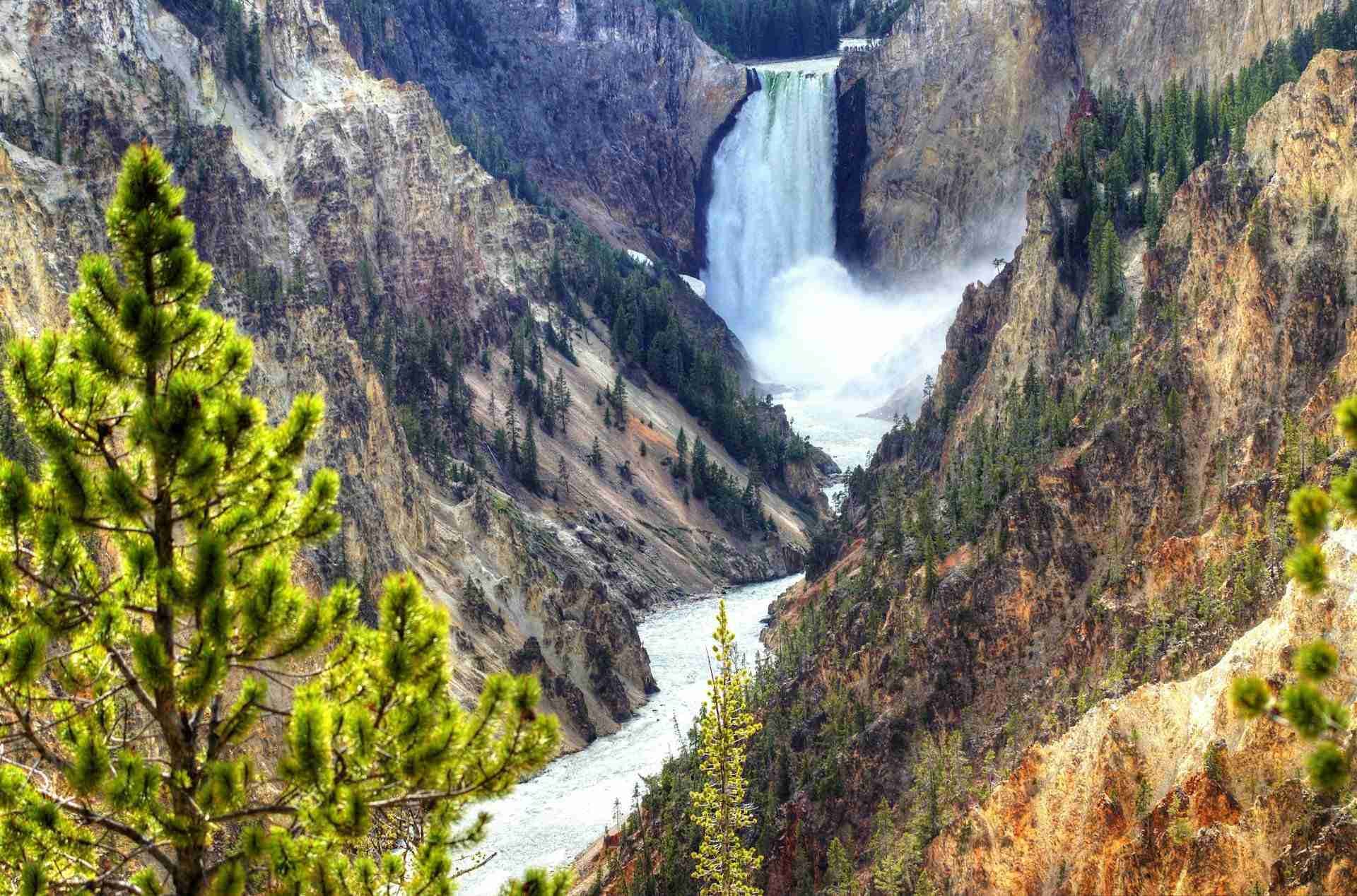
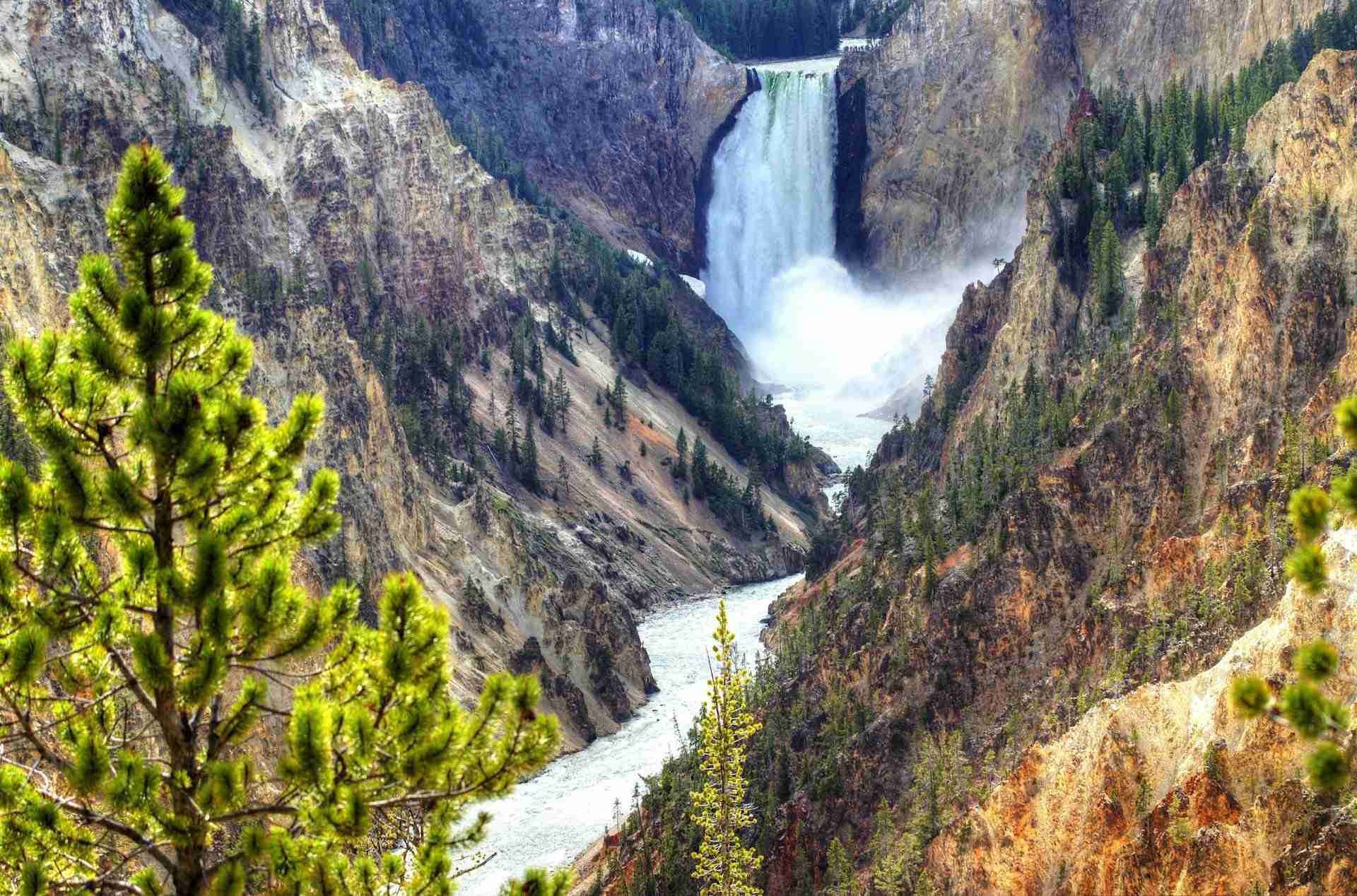
Set high above the Yellowstone River in the park's eastern expanse, Artist Point is one of the most iconic and frequently photographed viewpoints in Yellowstone National Park—and for good reason. Overlooking the Grand Canyon of the Yellowstone, this promontory offers a head-on view of Lower Falls, the park's largest waterfall, plunging 308 feet into a chasm of golden, pink, and rust-colored rock. It is a location defined by vertical scale, geological complexity, and constantly shifting light, making it a dream setting for landscape photographers looking to capture both the grandeur and subtle tonal interplay of Yellowstone's terrain. Whether framed in mist or bathed in sunset glow, the scene from Artist Point never fails to deliver images of enduring power.
Best Photography Opportunities
• Lower Falls in Morning Light
The most iconic composition is the view straight up the canyon toward Lower Falls. At sunrise, warm directional light enters the canyon from the right, grazing the sculpted rock walls and catching the mist rising from the base of the falls. This soft, angled light enhances the texture and tonal gradients in the rhyolite cliffs and reveals the deep greens and blues of the river winding below. A standard zoom lens captures both wide and mid-range compositions, offering flexibility as the light shifts. This is the time to photograph the classic shot—symmetrical, powerful, and painterly.
• Canyon Wall Textures and Mineral Color
The Grand Canyon of the Yellowstone is famous for its sulfur-stained walls, where minerals have leached through rock and produced a palette of golden yellows, iron reds, and soft whites. Zooming in on these cliffs with a telephoto lens allows you to create abstract images that focus on erosion patterns, color contrasts, and vegetative growth in seemingly impossible locations. These compositions work especially well when side-lit in the early morning or late afternoon, which emphasizes depth and natural layering.
• Mist and Atmospheric Conditions
Cool mornings often bring rising mist from the river below or low clouds hanging in the canyon. These conditions can transform a static scene into something moody and ephemeral. When mist is backlit, it glows softly, creating diffusion across the falls and softening the hard lines of the canyon. Arriving well before sunrise and setting up early increases your chance of capturing these fleeting conditions. Use long exposures to draw out motion in the mist, or shoot faster to freeze the layered forms drifting between the cliffs.
• Foreground Framing with Trees and Rock
Though the view is expansive, incorporating foreground elements like pine branches, gnarled roots, or the stone railing itself can help frame your composition and add scale. Shooting low and wide with a lens in the 16–24mm range allows you to include these elements while keeping the canyon and falls central. In golden hour, pine needles may catch the sun's edge light, adding warmth and contrast to the cooler tones of the rocks and water beyond. These layered compositions help balance the grandeur of the scene with something grounded and tactile.
• Changing Weather and Dramatic Skies
Artist Point is a rewarding location even under heavy clouds or after storms. Overcast skies often desaturate the canyon and allow mineral tones to stand out more subtly, while post-rain light may break through the clouds in dramatic shafts. With the right timing, cloud cover and moving weather systems add energy to the scene, especially when combined with the roaring sound of the falls below. Bracketing exposures or using graduated filters can help balance the brightness of sky and shadow in these variable conditions.
Best Time to Visit
Late spring through early fall provides the best access and lighting conditions for photographing Artist Point. In May and June, the Yellowstone River runs high with snowmelt, and Lower Falls is at its most powerful. The canyon is vibrant, and vegetation begins to reappear along the rim. July and August offer stable weather, clear sunrises, and the opportunity to shoot the canyon in early morning without obstruction, provided you arrive before the crowds.
September and October bring lower visitor numbers and dynamic weather conditions. These months are ideal for moody, mist-filled canyon shots and more nuanced lighting throughout the day. In autumn, the slanting light enhances the ridgeline textures, and occasional frosts may dust the higher elevations.
Sunrise is the best time to visit for optimal light on the falls and canyon walls. The overlook faces northeast, meaning the early hours provide side and backlighting that reveal depth and amplify color. Midday light tends to flatten the scene, while evenings offer indirect lighting on the cliffs but do not directly illuminate the falls.
South Rim Drive is typically open from mid-May to late October, weather permitting. Winter access is generally closed, and reaching the overlook during that time would require snowshoeing or skiing from the nearest plowed road—conditions that make photography possible but logistically complex.
How to Get There
Artist Point is located on South Rim Drive in the Canyon area of Yellowstone National Park. From Canyon Village, follow the Grand Loop Road south and watch for signs marking the turnoff to South Rim Drive. This one-way loop road leads directly to a dedicated parking area for Artist Point, which is clearly marked and includes ample signage.
From the parking lot, a short paved path leads to the overlook. The walk is easy and takes just a few minutes. The viewpoint itself is a wide stone platform with railings and enough room to accommodate multiple photographers, though it can become crowded during peak daytime hours. Arriving before sunrise is highly recommended to avoid crowds and secure a stable position for your tripod.
There are no services directly at the viewpoint, so bring everything you need for the session, including water, warm layers, and backup camera batteries. Restrooms and food options are available at Canyon Village, approximately ten minutes away by car. Cell reception is limited in this area, so offline maps and weather forecasts should be downloaded in advance.
Recommended Gear and Shooting Tips
A wide-angle zoom lens, such as a 16–35mm, is essential for capturing the full scope of the canyon and including foreground elements in your compositions. A standard 24–70mm zoom is ideal for tighter views of Lower Falls and mid-range canyon scenes, while a 70–200mm or longer lens will allow you to isolate cliff textures, rock bands, and atmospheric layers with greater precision.
A sturdy tripod is necessary for pre-dawn and long exposure work, especially if you're shooting with low ISO or using ND filters. A circular polarizer can help reduce haze and deepen sky contrast, but use it carefully to avoid uneven results across the wide field of view. Graduated ND filters or exposure bracketing can help manage the dynamic range between the bright sky and the shadowed canyon interior.
Pack extra batteries, as the cold morning air can deplete them quickly, and bring a lens cloth to manage condensation or mist from the falls. A remote shutter release is useful for eliminating vibration during long exposures. If you're shooting handheld, rely on image stabilization and burst mode to maximize your chances of sharp results.
Scout different positions along the overlook and consider returning at multiple times of day. Even slight shifts in light or cloud cover can dramatically change the visual tone of the canyon, and varied focal lengths can help you tell a more complete visual story of the location.
Nearby Photography Locations
Located across the canyon on the North Rim, Lookout Point provides a direct view of Lower Falls from a higher elevation. The added height offers a different perspective on the waterfall and its mist plume, and it's particularly good in early morning when light hits the spray from behind.
A North Rim viewpoint that looks deep into the canyon from a distance, offering more abstract compositions of the canyon walls, rock formations, and dramatic light. This location is excellent for telephoto work, especially in the afternoon when light scrapes across the jagged textures.
Just south of the canyon, Hayden Valley is a vast expanse of open plains, riverbanks, and wildlife habitat. It's best visited at dawn when bison, elk, and even wolves may be active, and fog often settles above the water, creating soft and moody sunrise scenes.
Located further east, Lamar Valley is ideal for wildlife photography and sweeping landscape compositions. Bring a long lens for bison, pronghorn, and potential wolf sightings. The open skies and ridgelines here also lend themselves to atmospheric wide-angle landscape work.
Artist Point remains one of the most consistently rewarding photography destinations in Yellowstone. The drama of the falls, the color of the canyon, and the shifting light conditions come together to offer photographers a scene that is not only iconic but endlessly varied. Whether your interest lies in traditional landscapes, abstract rock textures, or atmospheric conditions, this overlook delivers a moment where elemental beauty and photographic possibility meet in perfect balance.
Comments
Loading comments…