
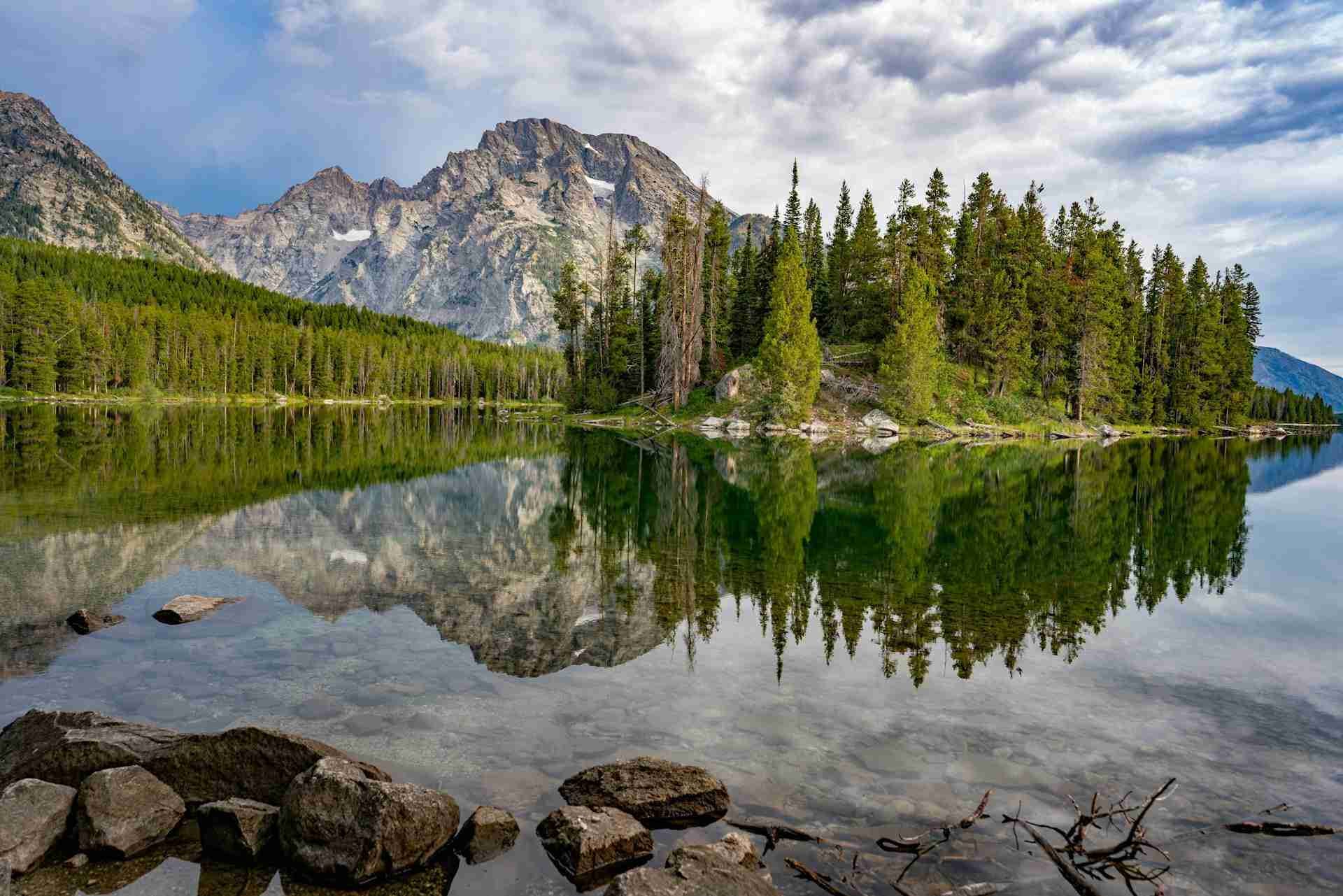
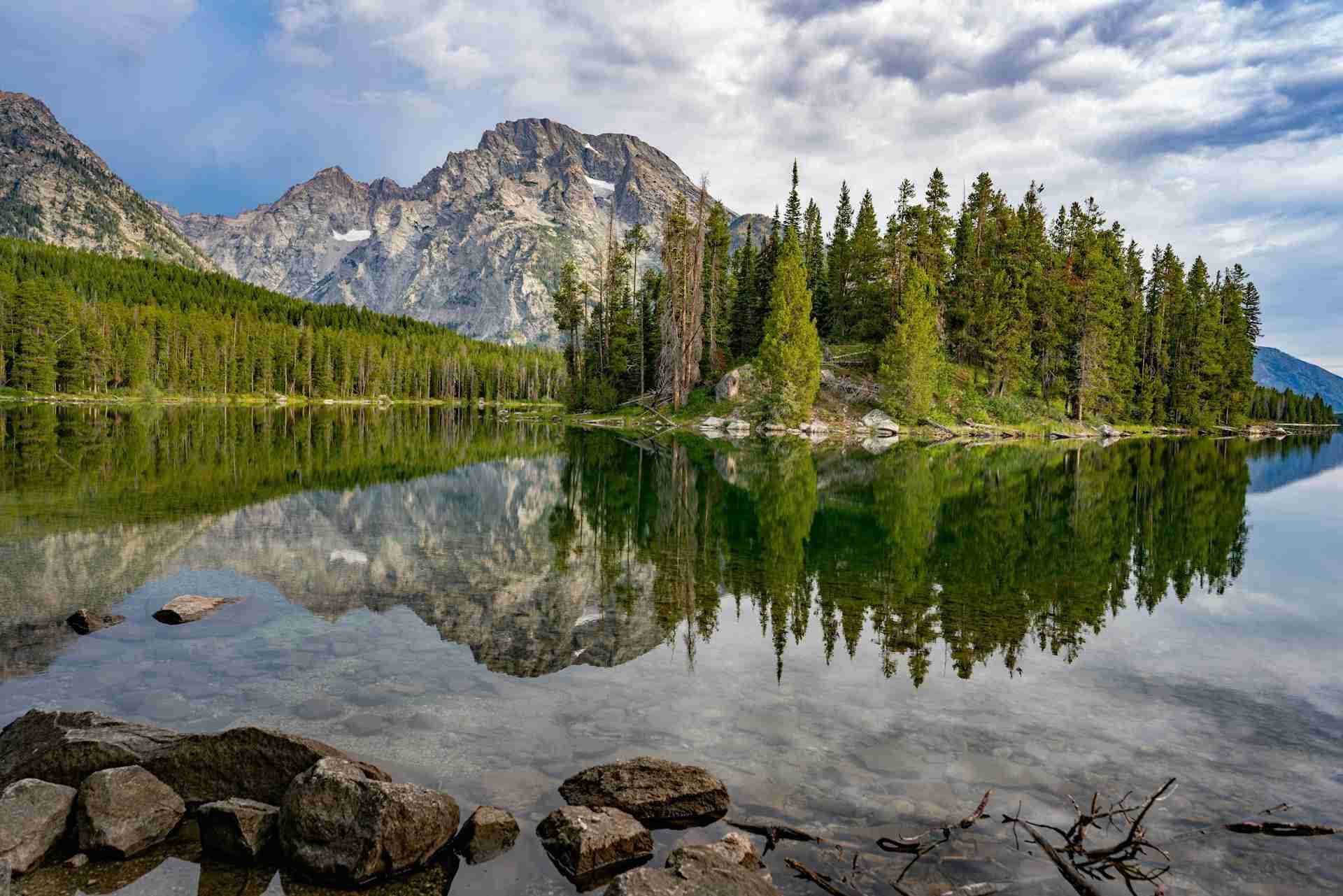
Leigh Lake sits quietly at the base of towering granite peaks in Grand Teton National Park, offering one of the most tranquil and photogenic lake scenes in the American West. Located just north of Jenny Lake, it is larger, quieter, and often overlooked by casual visitors, making it a favorite among landscape photographers looking for clean reflections, clear air, and uninterrupted mountain lines. The lake's broad shoreline provides access to wide compositions with Mount Moran rising sharply in the background, often mirrored perfectly in still morning water. With minimal development, consistent alpine light, and a dramatic mountain backdrop, Leigh Lake is a place where simplicity and scale work in harmony. Whether you're hiking in for golden hour or spending time capturing textures and transitions along the shore, it rewards both patience and visual clarity.
Best Photography Opportunities
• Reflections of Mount Moran from the Southeast Shore
One of the most iconic views in the park can be captured from Leigh Lake's southeast edge, where Mount Moran rises directly across the water. On calm mornings, the surface often acts as a mirror, doubling the dramatic rock face and its snowfields. Use a wide-angle lens to include foreground elements such as driftwood or low foliage for depth. A tripod and remote shutter release will help stabilize longer exposures during the blue hour or just after sunrise. The light here moves quickly from soft ambient tones to bright side light, so plan to arrive early to adjust as conditions change.
• Long Exposure Studies along the Tree Line
The lake's eastern shore is lined with lodgepole pine and spruce, offering strong vertical contrast against the water and sky. In low light or under overcast conditions, these scenes lend themselves well to long exposures that blur the water while holding texture in the trees. A six-stop neutral density filter can help extend shutter times even after sunrise. Watch for gentle ripples or fog lifting off the lake in the early morning, which can add subtle movement and mood to a quiet frame.
• Midday Color and Clarity from the Northern Shore
Leigh Lake's clarity becomes a compositional feature under strong daylight, especially from the north shore where the water deepens and shifts from green to blue. These views are more about tone and structure than atmosphere, making them ideal for clean, color-driven landscapes. Use a polarizer to manage glare and control surface reflection, allowing submerged rocks or tree trunks to show through. A mid-range zoom lens works well here for balancing foreground details with the open lake and the distant Tetons.
• Side Light on Rock and Water Textures
During late afternoon, sunlight moves along the western ridges and hits parts of the shoreline with angled warmth. These moments are best for isolating shapes and textures where rock meets water. Look for shadow patterns, edge light on boulders, or backlit vegetation along the trail that borders the lake. These compositions often benefit from a tighter frame and a shallow depth of field to highlight a specific transition between light and surface.
• Evening Glow on the Tetons from the Southern Trail
As the sun sets behind the peaks, the entire Teton range catches the last warm light of the day. From the trail leading toward Leigh Lake's southern end, you can find several clearings where the full ridgeline is visible. This is a good time to switch to a telephoto lens and compress the mountain layers into a strong graphic form. The reflected light on the lake may soften as the wind picks up, but the warm tones on the peaks remain until just after sunset. Pack a headlamp and give yourself time to return along the trail safely if staying for twilight.
Best Time to Visit
Leigh Lake is best photographed between late May and early October, when trail access is reliable and the lake is free of ice. In spring, the mountains still hold snow, and early foliage adds a bright layer of green to the scene. Morning fog is common during May and June, especially after cold nights, which enhances atmospheric depth. Water levels are high during this time, and the lake's surface remains calm through much of the morning.
Summer offers long daylight hours and easy trail conditions, but also increased foot traffic. Still, Leigh Lake sees fewer visitors than Jenny Lake, and sunrise sessions often remain quiet. July and August bring warmer air and clearer skies, which is helpful for reflections and strong contrast. Afternoon thunderstorms are common in late summer and can lead to dramatic sky conditions if you're prepared to work quickly between bursts of light and shadow.
Autumn begins early in the Tetons, often by mid September. Tree color around Leigh Lake is subtle but shifts toward golden tones in the undergrowth and along the shoreline. Air clarity improves in fall, and the light softens throughout the day. Mornings remain the best time to shoot, though colder temperatures mean you'll need to prepare for frost or thin ice in shaded areas. The lake usually remains accessible until early October, depending on snow.
How to Get There
Leigh Lake is located within Grand Teton National Park, just north of Jenny Lake. From the park entrance near Moose, drive north along Teton Park Road to the String Lake trailhead. Parking is available near the lakeshore and is usually accessible between May and October. From the trailhead, it's a flat and easy 1.8-mile hike along String Lake's western edge to reach the southern end of Leigh Lake. The trail is well maintained and suitable for carrying photography gear by backpack or shoulder strap.
There are no additional permits required for day photography at Leigh Lake, though standard park entrance fees apply. Tripods are allowed, and there are several large clearings along the trail where you can set up without obstructing the path. Bear activity in the area is common, so carry bear spray and stay alert, especially in early morning and evening hours. Drone use is prohibited within Grand Teton National Park.
Recommended Photography Gear
A wide-angle lens in the 16 to 35 millimeter range is essential for capturing full reflections and broad landscapes from the shoreline. A mid-range zoom such as a 24 to 70 millimeter lens allows flexibility as light changes, especially when shooting along forest edges or including mid-ground elements. A 70 to 200 millimeter telephoto lens is useful for compressing the mountain range or isolating detail in the peaks and clouds.
Bring a sturdy tripod for long exposures and twilight shooting. A circular polarizer helps manage surface glare and brings out color in the water and sky. A neutral density filter in the six-stop range is helpful for extending exposure time when working in brighter conditions. Extra batteries and memory cards are essential for full-day shooting, especially if you plan to stay into the evening.
Waterproof footwear is recommended, as parts of the shoreline can be damp or soft in spring. A light jacket and weather protection for your gear are useful during early starts or in case of afternoon storms. A microfiber cloth and air blower will help manage mist and dust from wind along the lake.
Nearby Photography Locations
Just south of Leigh Lake, String Lake offers easier access and strong reflections of the lower Tetons. Its narrow shape creates good leading lines, and the still water holds mirrored compositions well at sunrise.
A classic location for wide views across the water toward Cascade Canyon. Best photographed in early morning when the mountains are front lit and the lake is calm. Telephoto lenses work well here for isolating mountain textures.
Accessible from the Jenny Lake ferry or via a longer hike, this trail offers steep walls, forest textures, and occasional wildlife encounters. Morning light filters in through the canyon and illuminates the river.
Though not located on Leigh Lake, Mount Moran can be photographed from several angles, and Oxbow Bend is one of the best. Reflections of the peak in the Snake River are strongest at sunrise, especially in autumn.
Located farther north, this shoreline provides wide views of Jackson Lake and the Tetons behind. The light is best here in early morning, and the area offers a more open horizon for shooting large sky scenes.
Leigh Lake offers a different rhythm than the more trafficked spots in Grand Teton National Park. It gives you space to work, clean compositions to build from, and light that moves with clarity across water, stone, and air. For photographers willing to carry in gear and wait for the right conditions, it remains one of the most rewarding lakes in the region.
Comments
Loading comments…