
Located at the intersection of Codrington and Abercrombie Streets in Sydney's Inner West, the Abercrombie Building is the flagship facility for the University of Sydney Business School. Completed in 2016, this modern structure stands out with its geometric façade, expansive glass walls, and sharply defined angles that reflect and absorb light in striking ways throughout the day. Designed by Woods Bagot, the building blends contemporary architectural lines with materials that echo the industrial history of the surrounding precinct. For photographers, the Abercrombie Building offers a constantly changing play of light, reflection, and shadow across surfaces that range from concrete and steel to wood and glass. Whether you're exploring abstract geometry, strong vertical lines, or soft diffused interiors, this location delivers high-impact visuals with plenty of room for creative interpretation.
Best Photography Opportunities
• Angular Geometry and Facade Patterns from Street Level
The main attraction of the Abercrombie Building is its detailed façade, which features sharp-edged overhangs, repeating vertical fins, and complex layering that casts interesting shadows throughout the day. Street-level shooting along Codrington Street offers strong compositions using perspective lines that lead the eye across the façade or upward toward the angular cantilevers. A wide-angle lens allows you to exaggerate these angles and emphasize the architectural rhythm. Late afternoon light works best here, when the western sun creates deep contrast and the play of shadow and highlight becomes more pronounced across the exterior textures.
• Reflections and Minimalist Composition with Glass Surfaces
Large sections of the Abercrombie Building's exterior are covered in reflective glass, offering dynamic opportunities for layered compositions that include passing clouds, adjacent buildings, or people in motion. These reflections create a shifting second skin across the structure that can be used to create minimalist or abstract images. Shooting at different times of day changes what the building reflects, which allows for a diverse series of images from a single angle. A polarizing filter can help control or enhance these reflections, depending on your intent.
• Symmetry and Structure in the Interior Atrium
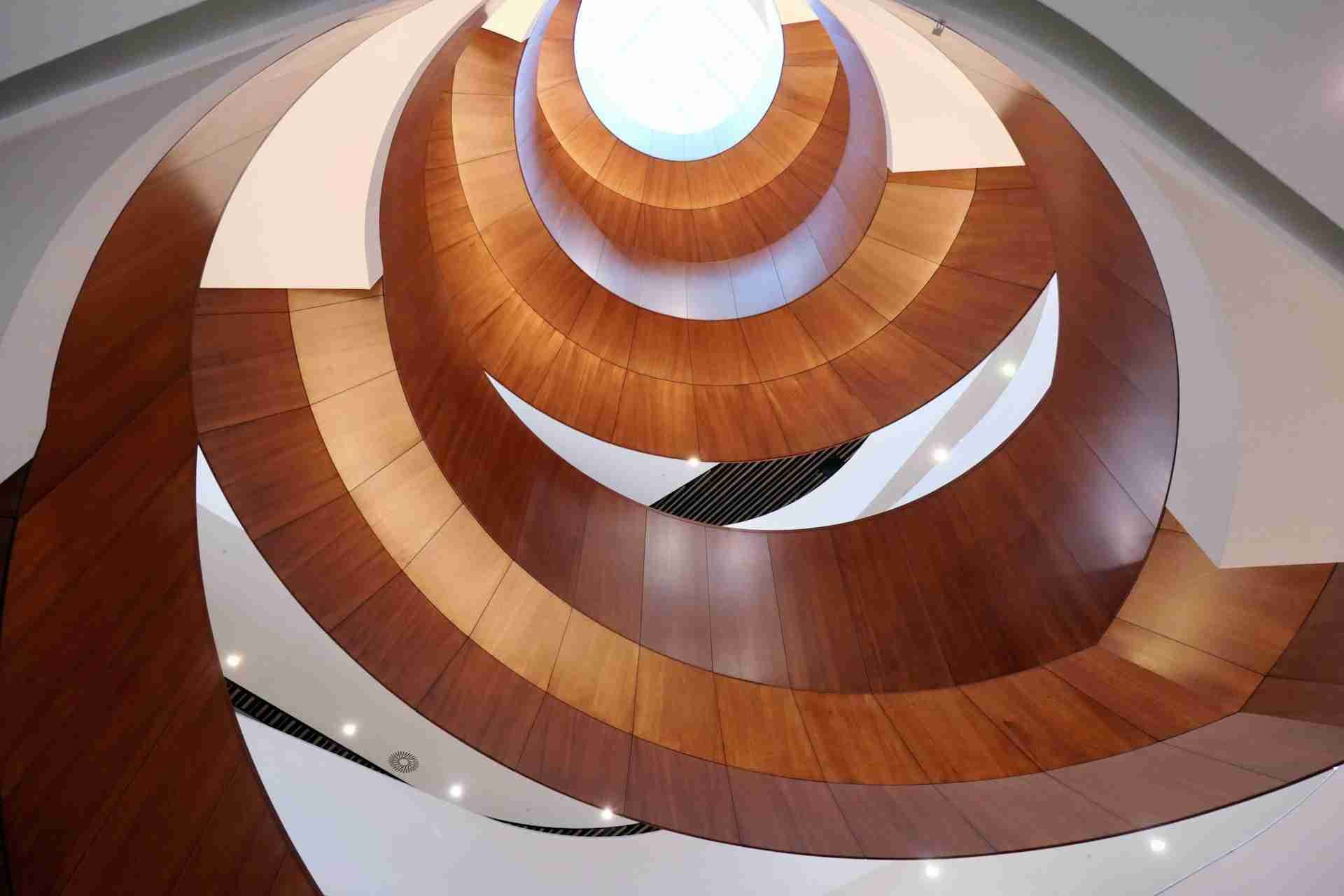
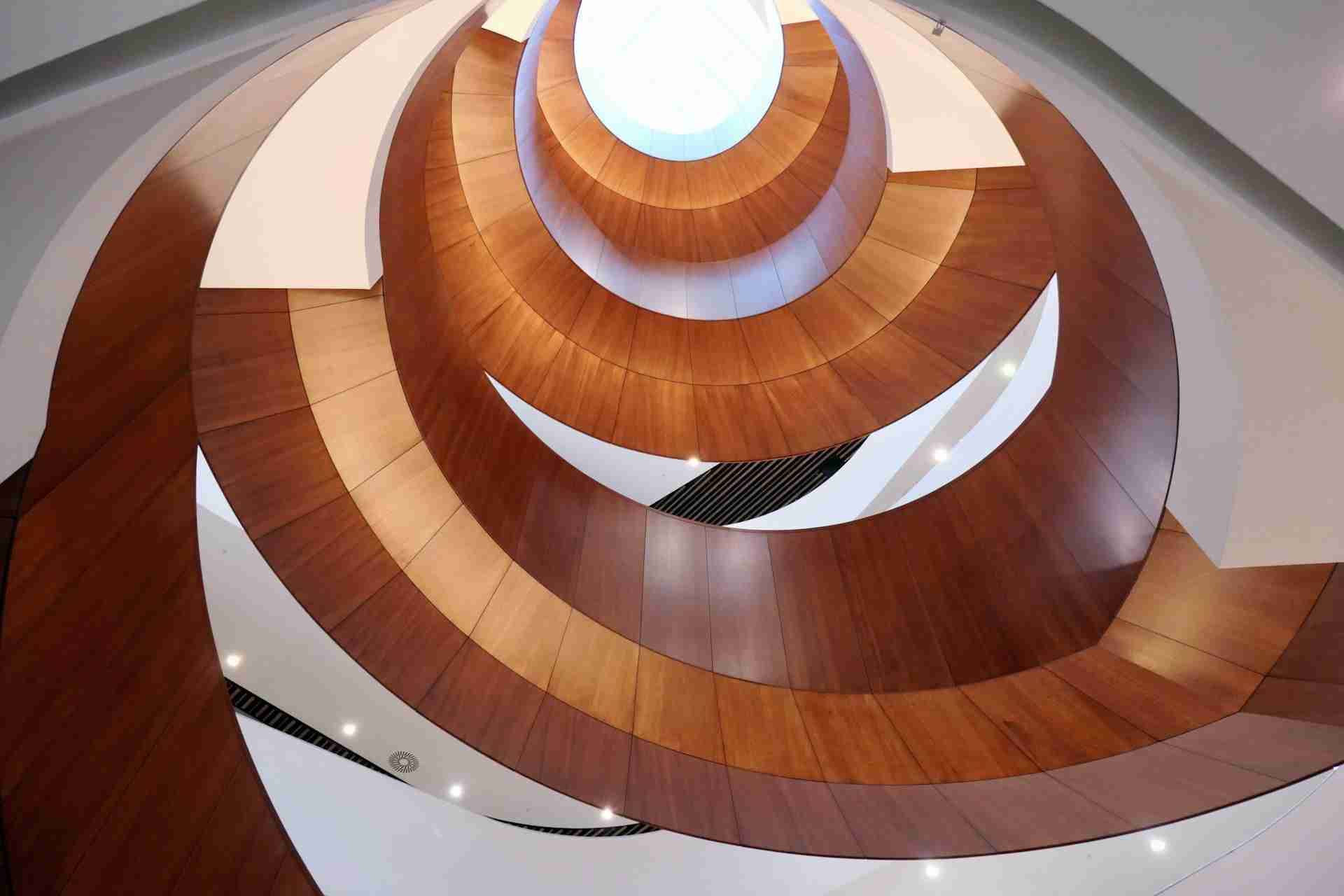
Inside the building, a central atrium rises through multiple levels with exposed staircases, timber accents, and floor-to-ceiling windows. The space is filled with natural light and features a clean, modern aesthetic that lends itself to balanced, symmetrical compositions. From the upper levels, you can look down into the open space and work with patterns formed by seating areas, walkways, and structural lines. The warm-toned wood contrasts beautifully with the polished concrete and metal finishes. Early morning offers soft ambient light, while late day sessions may capture beams of directional sunlight entering through upper windows.
• Architectural Abstraction in Shadow and Detail
For photographers interested in architectural detail and abstraction, the Abercrombie Building offers dozens of opportunities to isolate materials, patterns, and junctions between different surfaces. Look for where concrete meets glass, where beams cross over light wells, or where shadows fall at odd angles across walkways and landings. These small scenes can be shot with longer focal lengths to compress detail or with macro lenses to focus on surface texture. Overcast days are particularly useful for this kind of work, as they flatten light and reduce distractions caused by highlight glare.
• Night Photography with Structural Lighting
At night, the building remains active with interior lights spilling through glass walls and soft exterior illumination highlighting architectural lines. Shooting from the sidewalk or nearby raised platforms allows you to capture the glowing interior structure framed by the cool exterior tones of the city. Use a tripod for long exposures and aim to arrive during the blue hour for a balance of sky detail and artificial lighting. Reflections off nearby wet pavement or metallic railings can add foreground interest, especially during or after rain.
Best Time to Visit
The Abercrombie Building can be photographed throughout the year, but different times of day and season offer distinct lighting conditions that suit different styles of photography. For exterior work, early morning provides clean, soft light from the east, which illuminates the building's eastern façade and creates long shadows on the western side. Afternoon sessions benefit from stronger directional light and deeper contrast, which brings out the structure's angular elements more clearly. For glass and reflection photography, mid-morning or late afternoon typically offers the best balance of light and surface contrast. Interior spaces are consistently well-lit by natural daylight, though early morning tends to be the quietest time for shooting with fewer students or staff moving through the building. Night photography is productive year-round but works best in cooler months when the sun sets earlier and interior lights remain active during twilight. Weather conditions can add unique qualities to each visit—clear skies create sharp lines, while cloudy or wet days enhance the building's reflective and textural surfaces.
How to Get There
The Abercrombie Building is located at 1 Codrington Street in Darlington, on the southern edge of the University of Sydney campus. The location is easily accessible by public transport, with Redfern Station just a 10-minute walk away and several city bus routes stopping near the campus entrances. For those driving, paid street parking is available in the surrounding neighborhood, though spaces can be limited during the academic term. Bicycle racks are located directly outside the building. The surrounding area is pedestrian-friendly, with wide sidewalks, open plaza space, and several elevated viewpoints from nearby stairs and footpaths. There are no restrictions on casual photography of the exterior, and the building is open to the public during regular business hours. Interior photography is generally allowed in public areas such as the atrium, stairwells, and hallways, but professional shoots or commercial projects may require university permission. Tripods are permitted, though you should be mindful of foot traffic and avoid obstructing paths during peak academic hours.
Recommended Photography Gear
To make the most of your time at the Abercrombie Building, a compact and versatile kit is ideal. A wide-angle lens between 14 and 24 millimeters will help capture the full scale of the building and exaggerate its angular design when shooting from close range. A mid-range zoom lens in the 24 to 70 millimeter range is helpful for interior compositions and general walkaround shooting. A longer lens such as a 70 to 200 millimeter is useful for isolating repeating patterns, reflections, or small architectural details from a distance. A sturdy tripod is essential for night photography and any long exposure work with reflections or interior light trails. A polarizing filter is helpful for managing reflections and improving contrast when working with glass or metallic surfaces. A graduated neutral density filter can be useful during strong afternoon light to balance exposure across the sky and structure. For detail work, consider a macro lens or use the close-focus capabilities of a zoom lens to explore surface textures and material transitions. Pack a microfiber cloth to keep your lens clean, especially when working close to reflective surfaces or during damp conditions. If shooting indoors, a lightweight bag and silent shutter mode will help maintain discretion in quiet academic spaces.
Nearby Photography Locations
Just a short walk north from the Abercrombie Building, the historic sandstone quadrangle offers gothic revival architecture with pointed arches, intricate carvings, and ivy-covered facades. Best photographed in the early morning or late afternoon when light rakes across the stone, it provides a sharp contrast to the modern lines of the business school.
Located nearby in Eveleigh, Carriageworks is a converted industrial railyard turned arts venue. Its steel beams, old brickwork, and vast interior halls are excellent for industrial-style photography, especially during exhibitions or events when natural light filters through high windows.
Directly adjacent to the campus, this public park features open green space, a large reflecting pond, and city skyline views. Sunrise light often creates colorful skies over the water, and long exposures at dusk smooth out the surface for clean reflection shots.
• Redfern Street Urban Detail
The surrounding neighborhood of Redfern offers a mix of modern mural art, Victorian terrace houses, and urban textures that reward a slower, street-focused photographic walk. Look for shadow patterns on old brick, contrasting signage, and textures on alley walls.
A few blocks east toward Broadway, this vertical garden skyscraper includes suspended mirror panels and greenery-covered facades. The building reflects and distorts surrounding architecture and sky, making it ideal for abstract compositions or high-contrast urban photography.
The Abercrombie Building offers a rare blend of modern architecture, thoughtful design, and dynamic light that rewards repeated visits and experimentation. Whether you are working with bold lines at golden hour, isolating reflections in glass, or capturing quiet moments inside its open atrium, this part of the University of Sydney campus invites photographers to explore structure, symmetry, and change.
Comments
Loading comments…