
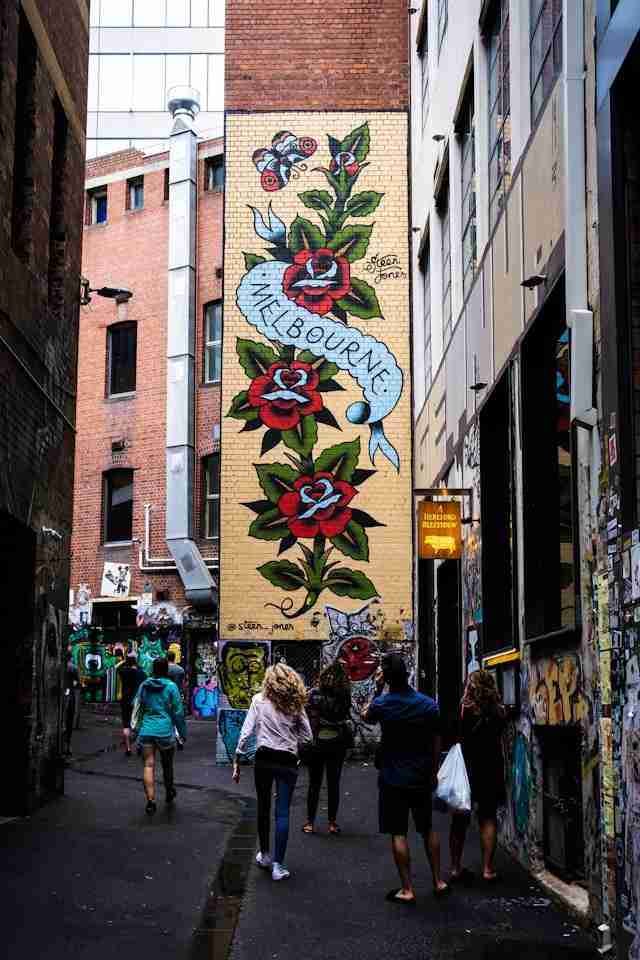
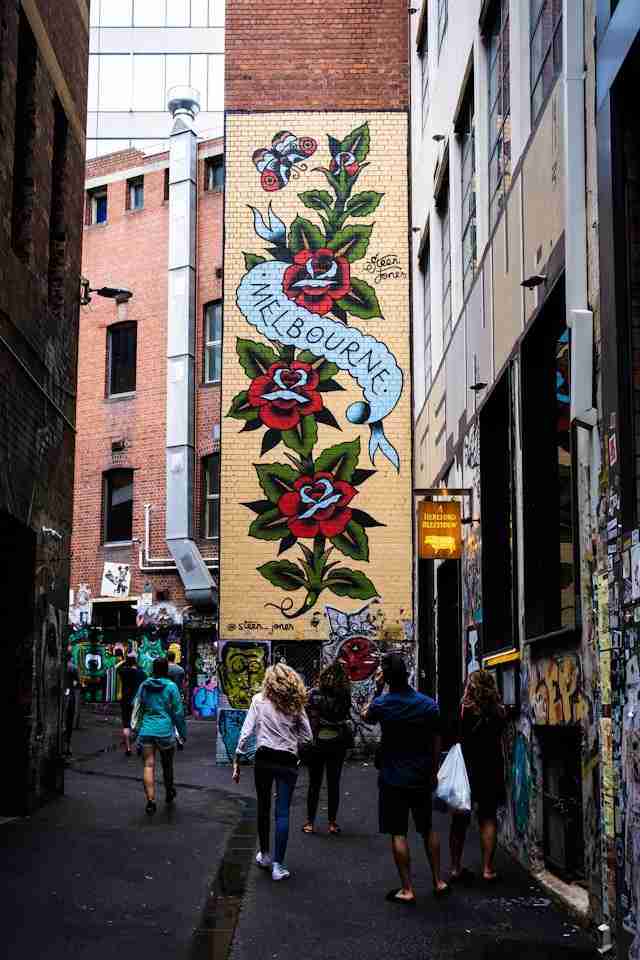
Hidden within the grid of Melbourne's Central Business District, AC/DC Lane pulses with color, line, and energy. A narrow backstreet dedicated to the legendary rock band, it has evolved into one of the city's most visually intense graffiti sites. The street is alive with murals, stencil work, stickers, tags, and ever-changing layers of street art applied to walls, doors, dumpsters, and utility boxes. The confined space, often lit with bouncing urban light and the occasional glow of nearby businesses, creates dynamic photographic opportunities at all times of day. While many locations in Melbourne embrace street art, AC/DC Lane stands out for its constant transformation and visual density, challenging photographers to find structure and rhythm within the chaos.
Best Photography Opportunities
• Full-Lane Perspective from the Entrance
The best way to begin is by stepping just inside the lane and photographing the entire corridor as it narrows toward the distance. Use a wide-angle lens to emphasize the sense of enclosure and the layering of artwork down both walls. Early morning or late afternoon offers the softest directional light, which enhances textures without overexposing bright wall sections. Shooting from a low angle allows more of the buildings to enter the frame and adds depth to the composition. Waiting for a single person or small group to walk through can add scale and narrative tension.
• Close-Ups of Layered Graffiti
The lane is full of dense overlaps where murals blend with posters, paste-ups, and tags, creating rich texture and color interactions. A standard or short telephoto lens helps isolate sections without distortion. Overcast days are excellent for these close-ups, reducing glare and bringing out paint detail. These shots are strongest when you focus on color contrast, repeated shapes, or juxtapositions between older and newer work. Look for areas where weathering has peeled or revealed multiple generations of graffiti beneath.
• Portraits with Painted Backdrops
The alley provides an expressive, urban backdrop for environmental portraits. Position your subject slightly off-center with a shallow depth of field to soften the background while retaining enough detail to suggest place. Side-lighting from natural windows or shop signs creates highlights on the paint and adds dimension. Because the lane is narrow, work quickly and remain aware of pedestrians. A standard 50mm or 85mm lens works well for this kind of controlled, context-rich portraiture.
• Night Photography with Ambient Glow
After dark, AC/DC Lane takes on a different character, with light spilling in from nearby bars, street lamps, and shop signs. Use a tripod and shoot with a slower shutter speed to capture the glow on painted surfaces and create subtle motion blur from passing people. The limited light levels reveal new color tones and add a cinematic quality to the space. Be mindful of shadows cast by parked cars or dumpsters, and adjust white balance manually to retain color accuracy in mixed lighting.
• Detail Studies of Texture and Object Integration
Some of the most interesting images in the lane come from photographing small objects — painted pipes, utility boxes, or rusting door frames — that have been fully absorbed into the graffiti landscape. These are best approached with a standard zoom or macro lens. Angle your composition to emphasize contrast between metal, brick, and paint, and use side light to highlight surface texture. These studies offer quiet moments amid the chaos and often reveal the more personal side of street art creation.
Best Time to Visit
AC/DC Lane can be photographed at any time of year, but conditions vary throughout the day. Morning light is soft and directional, casting interesting shadows along one wall, while late afternoon introduces warm tones that enhance red and orange paintwork. Midday can be harsh in summer, though the high walls provide partial shade. Overcast days are particularly useful for close-up detail work and texture studies.
Evenings and nighttime offer more dramatic light, especially in winter when surrounding shops and bars illuminate the lane with neon and warm interior spill. Early morning is also quieter, allowing more freedom to set up shots without interruption from foot traffic.
Because the artwork is constantly changing, repeat visits at different times of year or day yield entirely new scenes and compositions. Weather has less impact here than in open landscapes, though wet days bring added color saturation and reflections in puddles.
How to Get There
AC/DC Lane is located just off Flinders Lane, between Exhibition Street and Russell Street in Melbourne's CBD. The lane is clearly signed and easily accessed on foot. From Flinders Street Station, it's about a ten-minute walk north through the city grid.
There are no entrance fees or access restrictions, and the lane is open 24 hours a day. Photographers should note that while tripods are permitted, the narrowness of the lane and its popularity may limit tripod use during peak hours. Be respectful of businesses and foot traffic, especially near the entrances and bar areas in the evenings.
Nearby street parking is extremely limited, but paid garages and public transport options are plentiful within a few blocks. Bike racks are available at nearby intersections, and mobile service is strong throughout the area.
Recommended Photography Gear
A wide-angle lens is essential for full-lane perspectives and working in tight spaces. A standard zoom such as a 24–70mm lens offers versatility for both detail work and environmental portraits. A fast prime lens in the 50mm or 85mm range is useful for low-light scenes and capturing shallow depth of field for focused compositions.
A lightweight tripod is helpful for nighttime work or long exposures, though handheld shooting is preferred during busy hours. A circular polarizer can help manage reflections off glossy paint and glass. A lens cloth is essential for cleaning smudges in a gritty, urban environment.
A compact, well-organized camera bag will make movement through the narrow lane easier. Bring extra batteries if shooting into the evening, as mixed lighting and frequent composition adjustments can drain power quickly. Keep gear secure and close to your body during busy hours.
Nearby Photography Locations
Melbourne's most well-known graffiti street is just a few blocks away and offers a wider layout with more monumental murals. It is busier than AC/DC Lane but rewards early visits and frequent returns for updated work.
A narrow cut-through connecting Bourke Street Mall to Little Collins, Union Lane is lined with graffiti and poster work, often layered in dense, expressive forms. It's excellent for close-up texture studies and less crowded than more famous spots.
This small street features curated street art installations including mini galleries, framed pieces, and interactive objects. It's ideal for photographers interested in the crossover between street art and urban storytelling.
Just a few minutes' walk from AC/DC Lane, Federation Square offers angular architecture, illuminated structures, and crowds that make for engaging long exposures and night portraits.
A vibrant street filled with cafes and tiled facades, Centre Place offers a mix of human interest, signage, and artistic detail. Its blend of food culture and design makes it perfect for storytelling compositions.
AC/DC Lane is a space where creativity spills beyond walls, inviting photographers to capture not just static images, but the pulse of a city in constant visual evolution. Every visit reveals something new, and every frame reflects the energy of a place shaped by hands, spray cans, and shifting public expression.
Comments
Loading comments…