
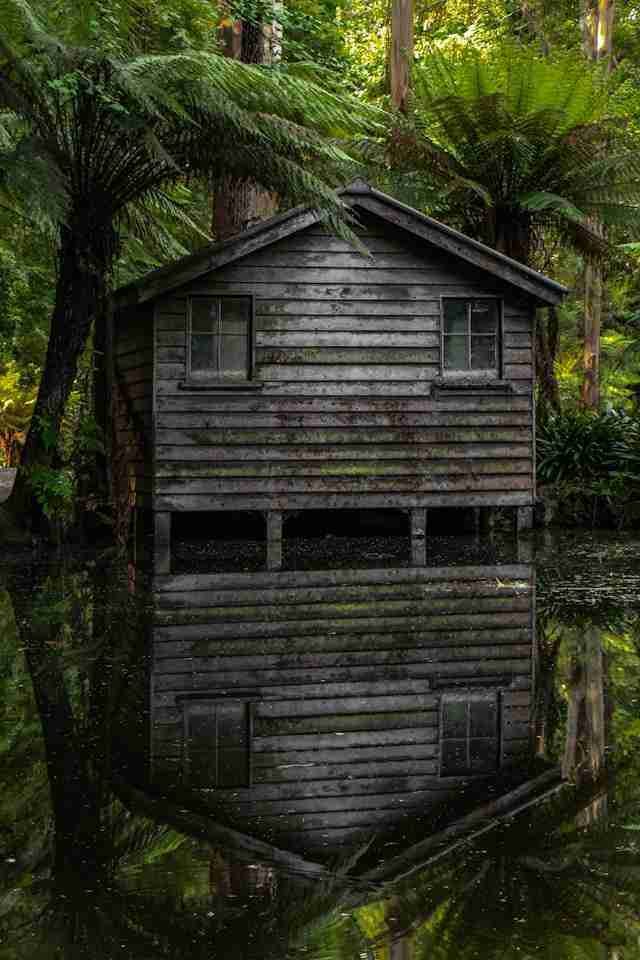
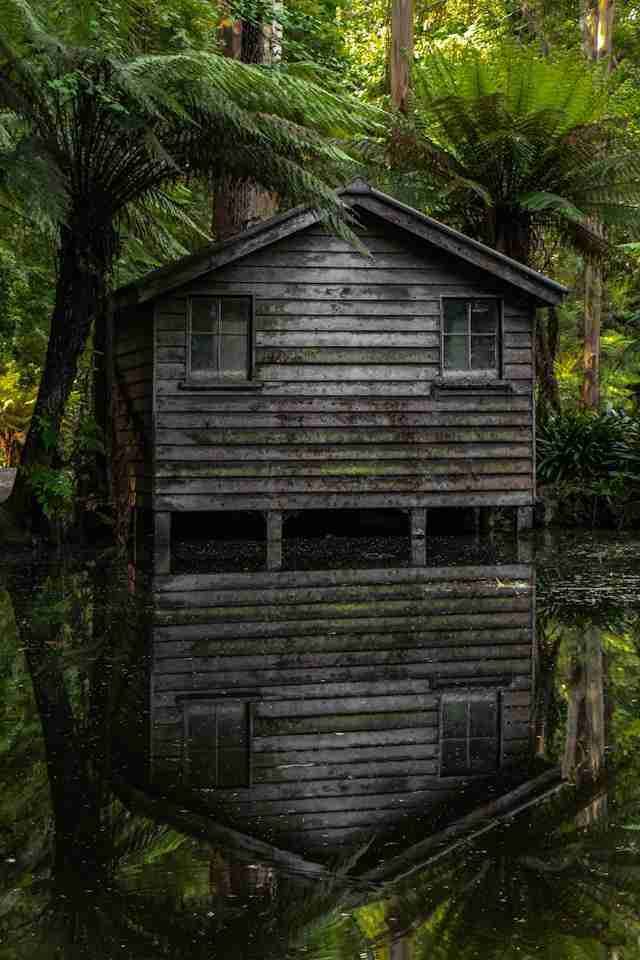
The Alfred Nicholas Memorial Garden sits tucked beneath the towering canopy of the Dandenong Ranges, where carefully curated garden paths lead to still water, stone bridges, and bursts of seasonal color. Built around ornamental landscaping and a flowing water system that winds through gullies and down into a central lake, the garden is a haven for photographers working with form, reflection, and diffused light. It offers an intimate kind of landscape photography, where composition relies less on grand scale and more on subtle alignment of elements: a leaf floating in a quiet pool, a frame of tree ferns catching morning mist, or the symmetry of the iconic boathouse mirrored in still water. This is a location that rewards precision, patience, and a deep sensitivity to changing light.
Best Photography Opportunities
The Boathouse and Still Reflections on the Lake
The boathouse is the most photographed element in the gardens, and with good reason. Nestled at the water's edge and surrounded by tree ferns and tall canopy, it reflects cleanly into the lake during calm conditions, especially at sunrise when the garden is empty and the air is still. Frame the structure with overhanging foliage or let it stand alone, perfectly mirrored. Use a tripod and low ISO to maximize sharpness and detail. A polarizing filter will let you control reflection intensity, and overcast mornings are ideal for soft, even exposures without harsh contrast.
Autumn Color and Leaf Patterns
In late April and early May, the garden becomes one of the most colorful locations in the Dandenongs, with rich reds, golds, and oranges from maples, oaks, and liquidambars. Fallen leaves collect in quiet corners of the lake or float across the surface, creating delicate foreground elements. A 50mm or short telephoto lens works well here for isolating textures and finding structure in the chaos of fallen foliage. Shoot during golden hour or under light fog to enrich color contrast. Working handheld allows for quick adjustment and closer proximity to ground-level details.
Winding Paths Framed by Tree Ferns and Canopy Light
The paths that lead down from the upper gardens into the lower lake area are framed by towering tree ferns, arching branches, and pockets of filtered light. These paths are ideal for depth-focused compositions using wide-angle lenses and low apertures. Morning light often breaks through in beams, especially after rain, creating contrast between light and shadow that pulls the viewer's eye into the frame. Shoot from a low angle to exaggerate scale and lead lines. A tripod helps in darker areas where longer exposures are required to preserve clarity without raising ISO.
Stone Bridges and Water Flow in the Upper Gardens
Above the lake, a series of stone-edged water channels and small bridges weave through dense plantings and mossy banks. These quieter spots are perfect for detail work and slower-paced shooting. Capture gentle water movement with exposures between one and three seconds using an ND filter to smooth flow and isolate form. A macro or telephoto lens allows you to work with layered textures like water, moss, and fern, especially in wet conditions when color saturation and contrast improve. Overcast skies are ideal for avoiding blown highlights on water surfaces.
Mist and Low Fog After Rain
Due to its elevation and forest cover, the garden often holds low fog or rising mist on damp mornings. These conditions transform the entire space into a soft, layered environment where depth is emphasized by subtle gradients in light. Tree trunks, bridges, and paths fade naturally into the background, creating painterly compositions with minimal post-processing required. Use a longer lens to compress layers or a wide-angle lens to include more environmental context. The key here is to shoot early and be ready, as fog tends to lift quickly once the sun reaches the tree line.
Best Time to Visit
Autumn is the most visually dramatic season in the Alfred Nicholas Memorial Garden, particularly from mid to late April when deciduous trees reach peak color. Early morning visits offer the best light, calmer conditions for reflections, and fewer visitors on the paths. Spring also delivers strong photographic potential, especially in September and October when the garden comes alive with rhododendrons, azaleas, and lush undergrowth. Water flow is higher in spring, which helps animate the upper garden channels and ponds.
Winter brings mood and structure, with bare branches, mist, and subtle light quality that emphasizes form. Summer can be more challenging due to harsher midday light and heavier crowds, but early morning still offers quality shooting conditions, especially in shaded sections of the garden. Rainy or foggy days are ideal for maximizing tonal range and atmosphere, particularly for forest compositions and close-up work. Regardless of the season, arrive early to avoid foot traffic, and allow time to work slowly through the landscape.
How to Get There
The Alfred Nicholas Memorial Garden is located in Sherbrooke, approximately one hour east of Melbourne by car. From the city, follow the Burwood Highway to Upper Ferntree Gully, then take the Mount Dandenong Tourist Road through Sassafras to Sherbrooke Road. The entrance to the gardens is clearly marked, with a dedicated parking lot located just off Sherbrooke Road. Entry to the gardens is free and they are open daily, though opening hours vary slightly by season.
The main path into the gardens leads gradually downhill toward the lake. Most areas are accessible by well-maintained gravel or paved trails, but some of the steeper sections can become slippery after rain. Wear appropriate footwear and carry your gear in a backpack for easier movement. There are no commercial facilities inside the garden itself, so bring water and snacks if planning an extended shoot. Public toilets are available near the car park, and mobile reception is generally reliable throughout the site.
Recommended Photography Gear
A tripod is essential for shooting in low light or with long exposures, particularly in the early morning and under the canopy. A standard zoom lens, such as a 24 to 70 millimeter, offers flexibility for framing both tight compositions and wide scenes of the lake or forest. A wide-angle lens is ideal for path shots and layered forest work, especially in misty conditions where you want to exaggerate perspective. A telephoto lens helps isolate details and compress distance when working with trees, leaves, or soft light in fog.
A circular polarizer is especially useful for controlling glare on water and wet foliage, while a three- to six-stop ND filter enables longer exposures when shooting moving water or softening reflections. A weatherproof lens cloth and rain cover will protect your gear from moisture, which is often present in the form of mist, light rain, or dew. Sturdy footwear is a must, especially after rainfall when paths become slick. A small LED light or headlamp is also useful for setting up in pre-dawn light.
Nearby Photography Locations
Immediately adjacent to the garden, Sherbrooke Forest offers tall mountain ash trees, moss-covered gullies, and abundant birdlife. The light here is soft and cool throughout much of the day, ideal for vertical compositions and subtle textures. Early morning mist enhances depth and separation among the trunks.
Just a few minutes away, this area combines open forest, walking trails, and frequent sightings of native birds such as lyrebirds and cockatoos. The trails through the ferns and tall eucalypts are ideal for quiet, layered compositions using both wide and telephoto lenses.
Located in nearby Olinda, Cloudehill is a more structured botanical garden with strong compositional lines, flower borders, and tiered terraces. It is especially appealing in spring and early summer, offering a different kind of controlled visual rhythm compared to the wilder Sherbrooke environment.
This expansive area offers long views over the ranges and dense plantings of exotic trees. It is particularly striking in autumn when species planted for their foliage shift into full color. Sunset light across the distant hills can add atmosphere to wider landscape compositions.
A short drive up the road, Olinda Falls provides small but photogenic cascades surrounded by dense bush. The area is best photographed after rain, when water flow is higher and wet foliage creates contrast and saturation. Narrow paths and low light make a tripod essential.
The Alfred Nicholas Memorial Garden is a place that rewards attention to rhythm, light, and reflection. It is not a landscape of grand gestures but of subtle movement and harmony. The shifting interplay of water, foliage, and stone offers an ongoing study in balance and timing. For photographers who are willing to slow down and look closely, every bend in the path holds the potential for something quietly composed and deeply considered.
Comments
Loading comments…