
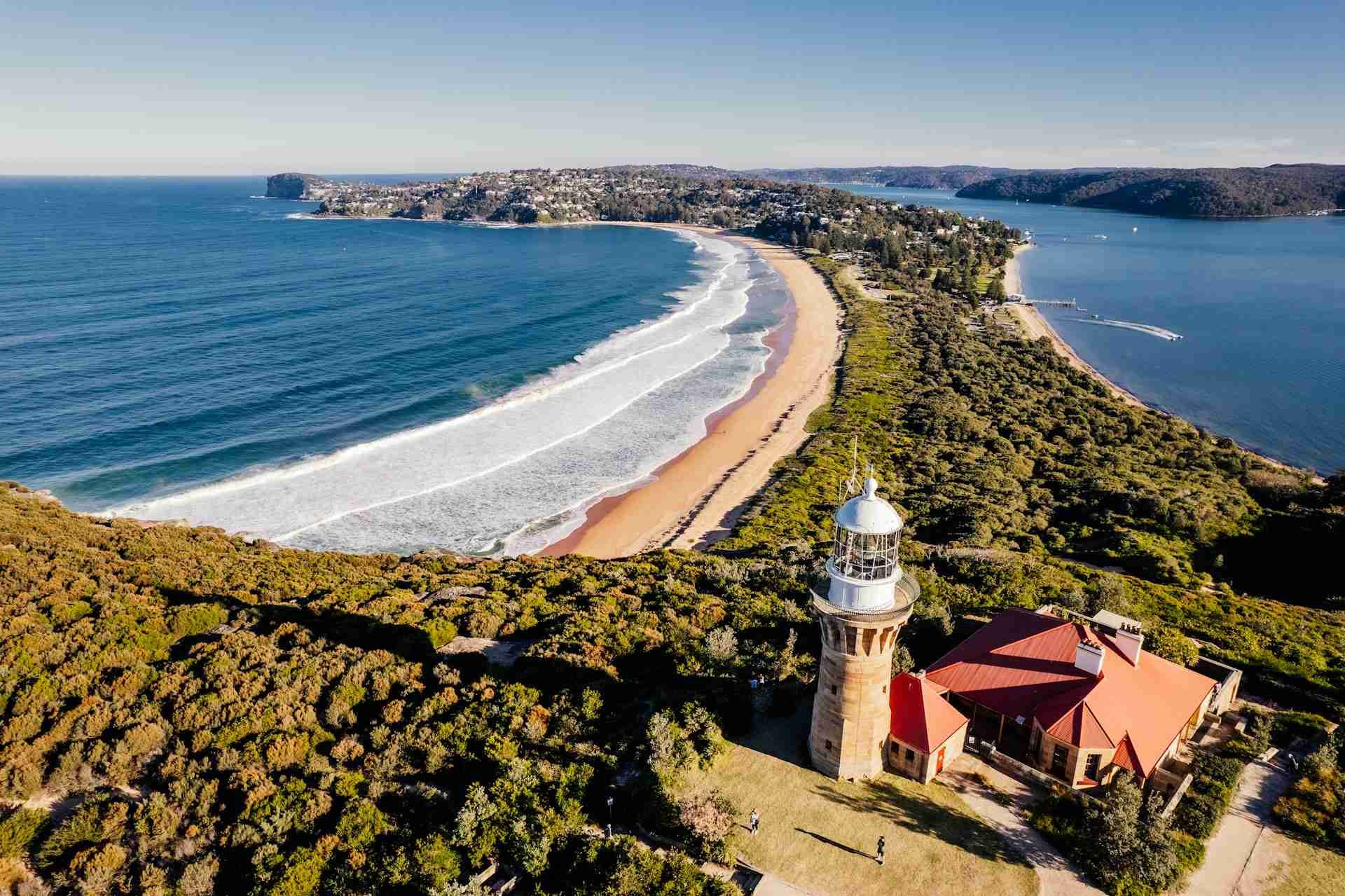
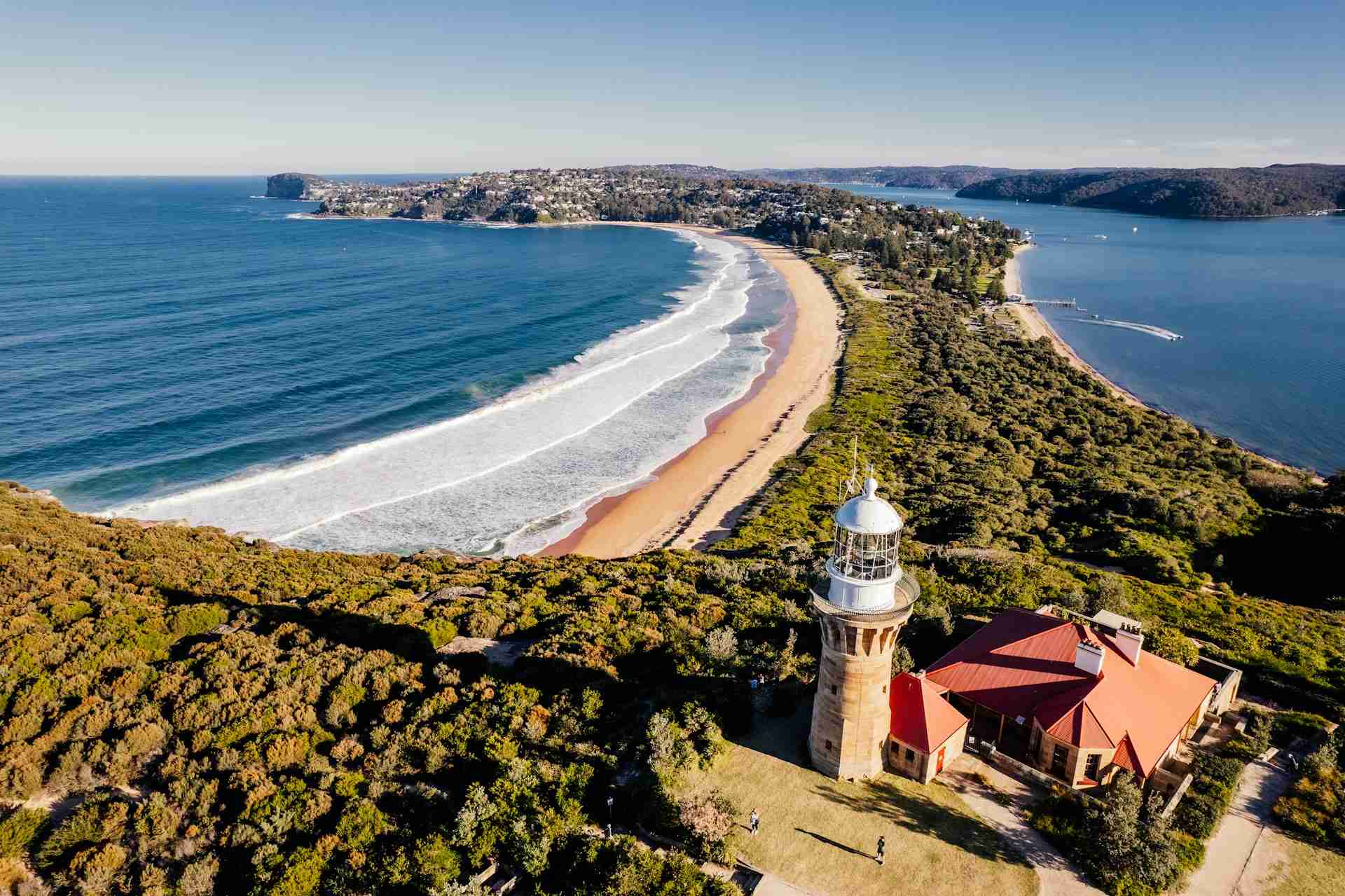
Barrenjoey Lighthouse stands high above the northern end of Palm Beach where a steep sandstone headland rises between the Pacific Ocean and the calm waters of Pittwater. The historic lighthouse sits at the summit, surrounded by open coastal views that stretch across beaches, bays, and distant headlands. For photographers, the location offers an appealing mix of rugged coastline, historic architecture, and elevated vantage points that reveal the geography of Sydney's northern shoreline. Walking tracks climb the headland from the base to the lighthouse, gradually opening wider perspectives of Palm Beach and the ocean beyond. Whether photographed from the summit, the walking trails, or from the air, Barrenjoey Headland offers a variety of compositions that highlight both the landscape and the lighthouse that has watched over this coastline for more than a century.
Best Photography Opportunities
• Barrenjoey Lighthouse from the Summit – The summit of Barrenjoey Headland provides the closest and most direct view of the historic lighthouse itself. From this elevated point, photographers can frame the sandstone tower against the open sky while including the surrounding cliffs and ocean in the composition. The lighthouse sits on a gently sloping grassy plateau, which makes it possible to experiment with different angles and foreground elements as you move around the area. Shooting slightly lower along the slope can help position the lighthouse above the horizon line, creating a stronger sense of height and isolation. Early morning and late afternoon light add texture to the stone walls and produce softer shadows that highlight the structure's shape.
• Palm Beach Views – The walking tracks that climb Barrenjoey Headland provide several viewpoints overlooking Palm Beach below. From these positions the long curve of sand stretches along the coastline with waves rolling steadily toward the shore. Photographers can use the winding trail or sections of the rocky slope as foreground elements to lead the viewer toward the beach and distant ocean horizon. These viewpoints are especially effective during sunrise when the sun rises over the Pacific and lights the water and shoreline. The changing elevation along the trail means photographers can find slightly different perspectives with only a short walk between viewpoints.
• Drone Photography – Drone photography reveals the full geography of Barrenjoey Headland in a way that is difficult to capture from the ground. From the air, the narrow peninsula separating Pittwater from the Pacific becomes clearly visible, with the lighthouse positioned dramatically on the summit. Aerial images can show the contrast between the calm waters of Pittwater on one side and the open ocean waves on the other. Flying slightly offshore allows photographers to frame the lighthouse with the cliffs and surrounding coastline extending behind it. Always check local aviation regulations and park restrictions before flying, as conditions and rules may change and safety should remain the priority.
• Cliffs and Coastal Rock Formations – The lower slopes of Barrenjoey Headland reveal layers of weathered sandstone that form rugged cliffs above the ocean. These rock formations provide excellent foreground textures for coastal landscape photography. Waves break against the base of the cliffs, creating motion and energy that contrasts with the solid stone above. Shooting from slightly elevated points along the trail can help capture both the cliffs and the water in the same frame. These scenes often work well during lower sun angles when the light reveals the natural textures in the rock.
• Views Across Pittwater – On the western side of Barrenjoey Headland, the view changes completely as the landscape opens toward Pittwater. The calm water often contains sailboats and small vessels moving across the bay, adding scale and activity to the scene. Photographers can frame these boats with the shoreline and distant hills that surround the water. Sunset light often reflects gently across the surface of Pittwater, producing softer tones compared to the brighter ocean side. This side of the headland is particularly useful for capturing quieter coastal scenes that contrast with the dramatic ocean views.
Best Time to Visit
Barrenjoey Headland offers strong photography opportunities throughout the year, but lighting conditions play an important role in shaping the best images. Sunrise is often the most rewarding time because the headland faces the open Pacific Ocean. The first light of the day rises over the water and gradually illuminates Palm Beach and the lighthouse above.
Sunset can also be productive, especially for photographs looking toward Pittwater where the lowering sun reflects across the calmer water. Winter months often produce clearer air and softer directional light, which can help reveal detail in the cliffs and lighthouse structure. Early morning visits also help avoid the larger crowds that arrive later in the day, making it easier to photograph the summit and walking trails without distractions. Checking the weather forecast is useful since strong winds can affect both tripod work and drone photography on the exposed headland.
How to Get There
Barrenjoey Headland is located at the northern end of Palm Beach on Sydney's Northern Beaches in New South Wales, Australia. Most visitors begin their walk from the Governor Phillip Park area at the base of the headland where parking is available near Palm Beach. From there, two main walking tracks lead to the lighthouse. The Smugglers Track follows a shorter but steeper route up the headland, while the Barrenjoey Track provides a longer and more gradual climb that many photographers prefer when carrying camera gear.
The walk to the lighthouse usually takes between twenty and thirty minutes depending on the chosen route and pace. Access to the headland and lighthouse grounds is generally free, though parking regulations may apply in the surrounding area. Bringing water and comfortable walking shoes is recommended since the climb is exposed to the sun and wind.
Recommended Photography Gear
Barrenjoey Headland presents a mix of wide coastal views and architectural subjects, so carrying a flexible range of lenses is useful. A wide lens is ideal for capturing the lighthouse along with the surrounding coastline and expansive ocean views. A mid range zoom lens works well for isolating sections of the cliffs, boats in Pittwater, or waves along the shoreline below.
A sturdy tripod can be helpful for sunrise or sunset photography, especially when working with longer exposures of the ocean or when capturing changing light conditions. A circular polarizing filter is useful for reducing glare on the water and deepening the blue tones of the sky and ocean. Drone equipment can also be valuable for photographers interested in aerial perspectives of the headland and lighthouse, provided local regulations allow safe operation. Because the headland is exposed to wind and salt spray, bringing lens cloths and protective gear for camera equipment is a practical precaution.
Nearby Photography Locations
stretches south from Barrenjoey Headland and offers a long sweep of sand bordered by ocean on one side and Pittwater on the other. The elevated viewpoint from the headland provides great perspectives of the beach, but photographing directly from the shoreline reveals interesting wave patterns and coastal textures. Sunrise light often produces bright reflections across the wet sand and incoming surf.
• West Head Lookout sits across Pittwater within Ku ring gai Chase National Park and provides sweeping views across Broken Bay and the surrounding waterways. The elevated position allows photographers to capture layered landscapes where water, forested hills, and distant headlands meet. Early morning light often produces soft conditions that help reveal detail across the wide scene.
is a small and quiet beach within Ku ring gai Chase National Park that requires a short walk to reach. The secluded location provides a peaceful environment for coastal photography with clear water and rocky shoreline formations. The surrounding bushland and cliffs create a more isolated feeling compared to the busier beaches along the Northern Beaches.
• Avalon Beach
sits south of Palm Beach and is known for its strong surf and relaxed coastal atmosphere. The curved shoreline and surrounding headlands provide a variety of compositions that work well during sunrise or sunset. Photographers can capture both wave action and wider coastal views from the rocks at either end of the beach.
• Bilgola Headland Lookout
offers another elevated perspective along the Northern Beaches coastline. From the lookout photographers can capture sweeping views across Bilgola Beach with cliffs and ocean stretching toward the horizon. The higher viewpoint helps create strong layered compositions that highlight the rugged character of this section of coastline.
Comments
Loading comments…