
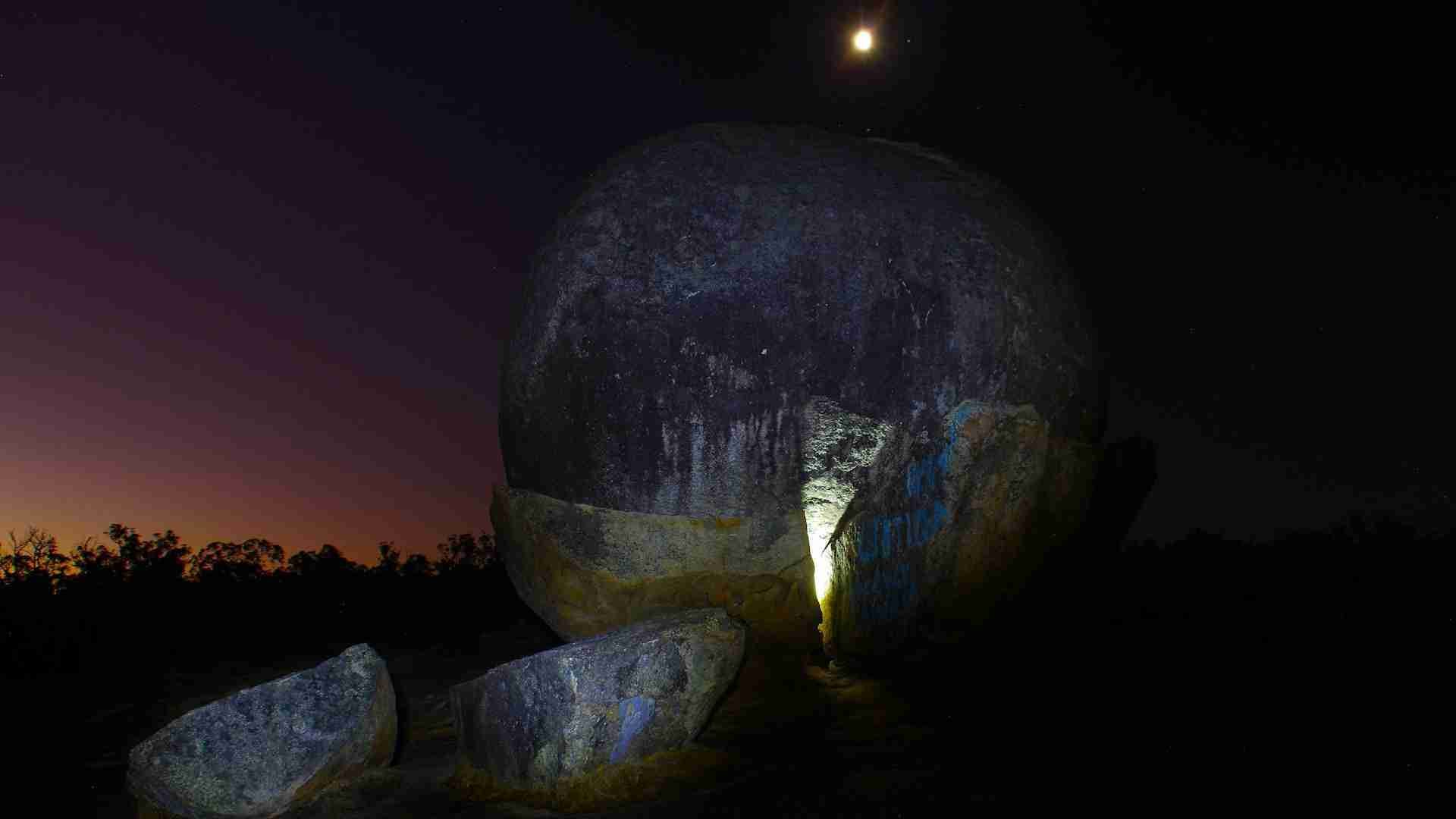
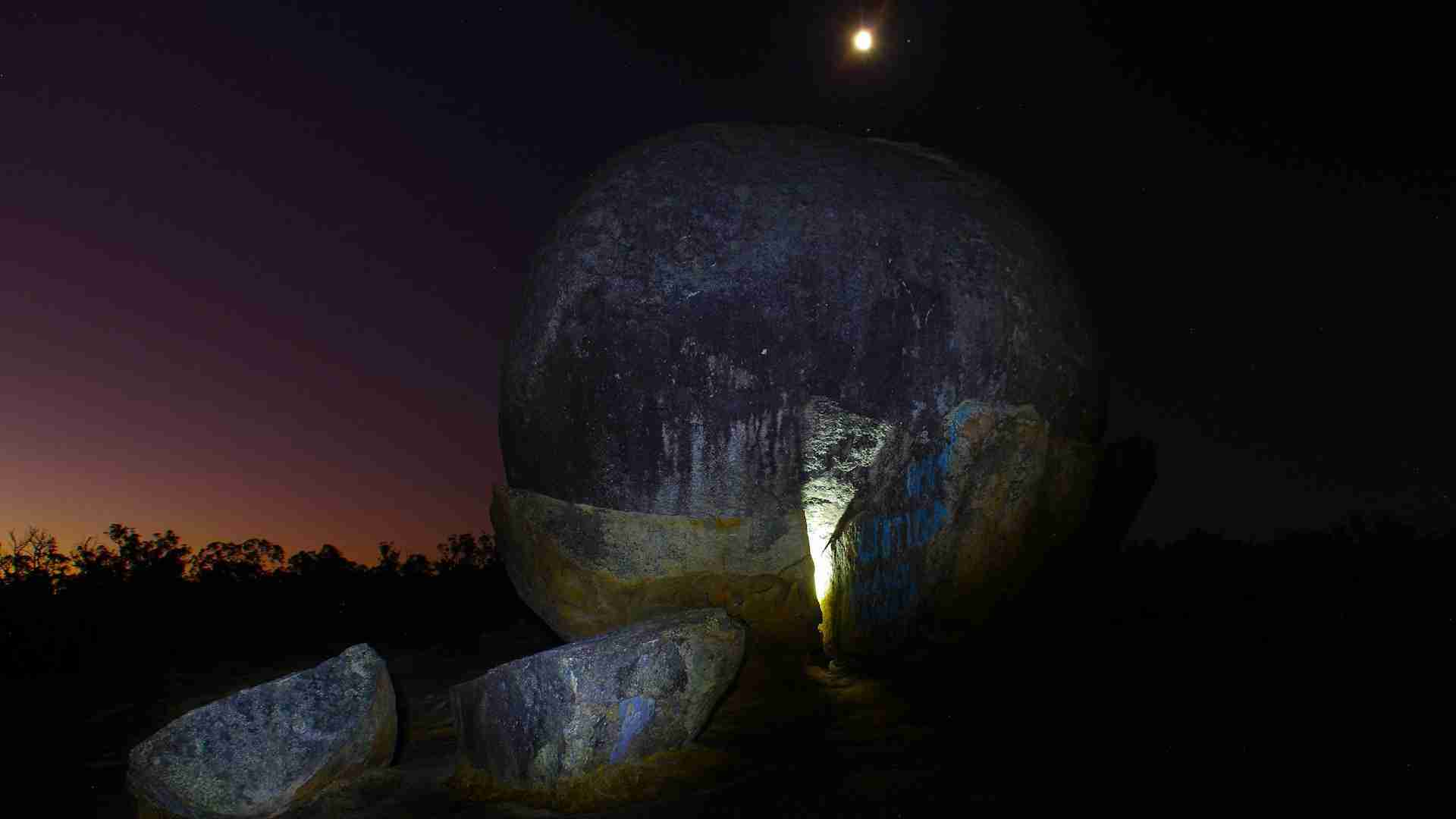
Boulder Rock sits quietly in the forested hills near Lesley, Western Australia, about an hour east of Perth. This large granite formation rises out of the surrounding Wandoo woodland with a smooth, exposed surface that curves gradually toward open sky. It is not a famous landmark, and that is part of its appeal. For photographers, Boulder Rock offers space to slow down and build strong, simple compositions from natural textures, low light, and subtle shifts in form. The landscape here is quiet and understated, with soft color changes, scattered trees, and a sense of isolation that rewards patient observation and steady shooting.
Best Photography Opportunities
• Wide Landscapes from the Summit
From the top of Boulder Rock, you get open views west toward the distant hills and forest. The summit is broad and gently sloped, making it easy to include both foreground rock and distant sky in your compositions. Use a wide-angle lens to exaggerate depth and give your viewer a strong sense of space. In the late afternoon, warm light runs low across the granite and creates a contrast between sunlit patches and cooler shadowed areas. Long exposures near sunset can help smooth any clouds overhead and add movement to an otherwise still frame.
• Minimal Foreground and Open Sky
The rock's surface is smooth in many places, with only small patches of moss or lichen to break it up. These areas are ideal for clean, minimalist compositions that balance simple textures against an open sky. Shooting low to the ground helps bring out surface variation and lets you guide the viewer's eye through the frame. Overcast conditions work especially well here by softening contrast and keeping the focus on shape and line. A standard or wide lens works best for these scenes, with tight framing that removes distraction.
• Cracks, Pools, and Surface Detail
After rain, shallow pools and drainage marks appear on the rock, forming temporary textures that shift throughout the day. These features are perfect for close-up or abstract photography. Use a short telephoto or macro lens to isolate lines in the stone or ripples in a puddle. Look for small plants growing in crevices, or patterns in the way the water cuts across the granite. Flat light works best for this style, helping you avoid hot spots and shadows that might distract from surface detail.
• Trees Framing the Rock Edge
On the eastern and southern sides of the formation, Wandoo trees rise near the base of the rock, forming natural framing elements. These light-colored trunks pair well with the darker granite surface, especially when side lit in the afternoon. Frame the rock low in the composition and let the trees fill the upper half to create balance. This scene works well with a standard zoom lens, which lets you move between wider context shots and tighter frames that highlight shape and structure in the trees.
• Night Photography Under Clear Skies
Boulder Rock is far enough from Perth to offer reasonably dark skies, making it a solid location for astrophotography. The open summit gives a full view of the horizon in all directions, and the smooth granite surface helps ground star-focused compositions. Use a wide-angle lens with a fast aperture, and arrive before sunset to scout your location in daylight. On moonless nights, the stars are sharp and distinct, while partial moonlight can add gentle fill light to the foreground. Bring a headlamp for safety and focus adjustment during longer sessions.
Best Time to Visit
The best time to photograph Boulder Rock is from late autumn through early spring. These months bring cooler temperatures, better air clarity, and more varied sky conditions for both sunrise and sunset shooting. After light rain, surface pools and darker stone textures appear across the rock, adding more detail to work with.
Sunrise offers soft, angled light that touches the summit from the east and lights up the forest behind you. Sunset is more direct, with stronger color across the horizon and warm highlights on the rock. In summer, midday sun creates harsh contrast and heat radiating from the granite, which can make it difficult to shoot or spend much time on site. Early morning and late evening are the best windows for both comfort and image quality. For night photography, check moon phase and forecast before planning your trip, as cloud cover moves quickly in this region.
How to Get There
Boulder Rock is located near the Lesley townsite, east of Perth. From the city, take Great Eastern Highway toward Mundaring, then turn south onto Ashendon Road. Follow this route until it connects with Brookton Highway. From Brookton Highway, turn onto Helena Road, then continue onto Boulder Rock Road. The final stretch is gravel but is usually passable with a standard vehicle during dry weather.
There is a small informal parking area near the base of the rock. From there, it is a short walk uphill across solid granite. The slope is steady but not difficult, with a few loose patches of gravel along the edges. There are no restrooms, water sources, or facilities, so come prepared with supplies, especially if you plan to shoot sunrise, sunset, or after dark. The area is free to access and generally quiet, especially during the week or outside of holiday periods.
Recommended Photography Gear
A wide-angle lens in the 16 to 35 millimeter range is essential for capturing summit views, sky-heavy frames, and minimalist landscape scenes. Pair it with a 24 to 70 millimeter zoom for more flexible work, especially when shooting near the base of the rock or working with tree-framed compositions. A short telephoto lens is helpful for surface details and isolating features like cracks, lichen, or standing pools of water.
Bring a tripod for long exposures, blue hour shots, or night photography. A circular polarizer is useful after rain for cutting glare on wet surfaces and boosting contrast. A 6 or 10 stop neutral density filter will allow you to blur clouds or flatten sky detail during longer daytime exposures. Carry a headlamp or flashlight if you plan to work in low light, and wear shoes with good grip, especially if the rock surface is damp or dusty. A small backpack is all you need to carry your gear across the short approach to the summit.
Nearby Photography Locations
North of Boulder Rock, Mount Dale provides open summit views across the Helena River valley and surrounding forest. The lookout area is easy to reach and gives you sunrise and sunset options from a higher elevation. Mist and low cloud often settle in the valleys, creating layered morning scenes.
To the northwest, this open woodland area features scattered wandoo trees, wide fire trails, and clearings that fill with light during the first and last hours of the day. The white trunks photograph well in soft side light, and spring wildflowers add foreground interest in wider compositions.
South of Boulder Rock, this park includes similar granite outcrops like Sullivan Rock and Mount Cuthbert. These areas offer more rugged climbs, longer hiking trails, and a variety of tree and rock compositions that suit slow, intentional photography.
• Helena River Crossing (Brookton Highway)
This river valley area offers moody forest scenes with streamside compositions, especially after recent rainfall. Early morning often brings fog or low cloud, creating soft transitions and more subdued contrast for long lens work.
• Bannister Forest
Located southeast of Lesley, this forest area is known for dense undergrowth, tall eucalypt stands, and long gravel roads that cut through changing layers of light. It is an excellent secondary location for quiet shooting and day-long exploration.
Boulder Rock is not a place built to impress at first glance. It is quiet, open, and low to the ground. But with time, light, and the right framing, it offers more than enough material for strong photographs. Whether you are building a wide composition from granite and sky or isolating a crack filled with last night's rain, this location rewards a slower, more focused approach. It is a spot where less becomes more the longer you stay.
Comments
Loading comments…