

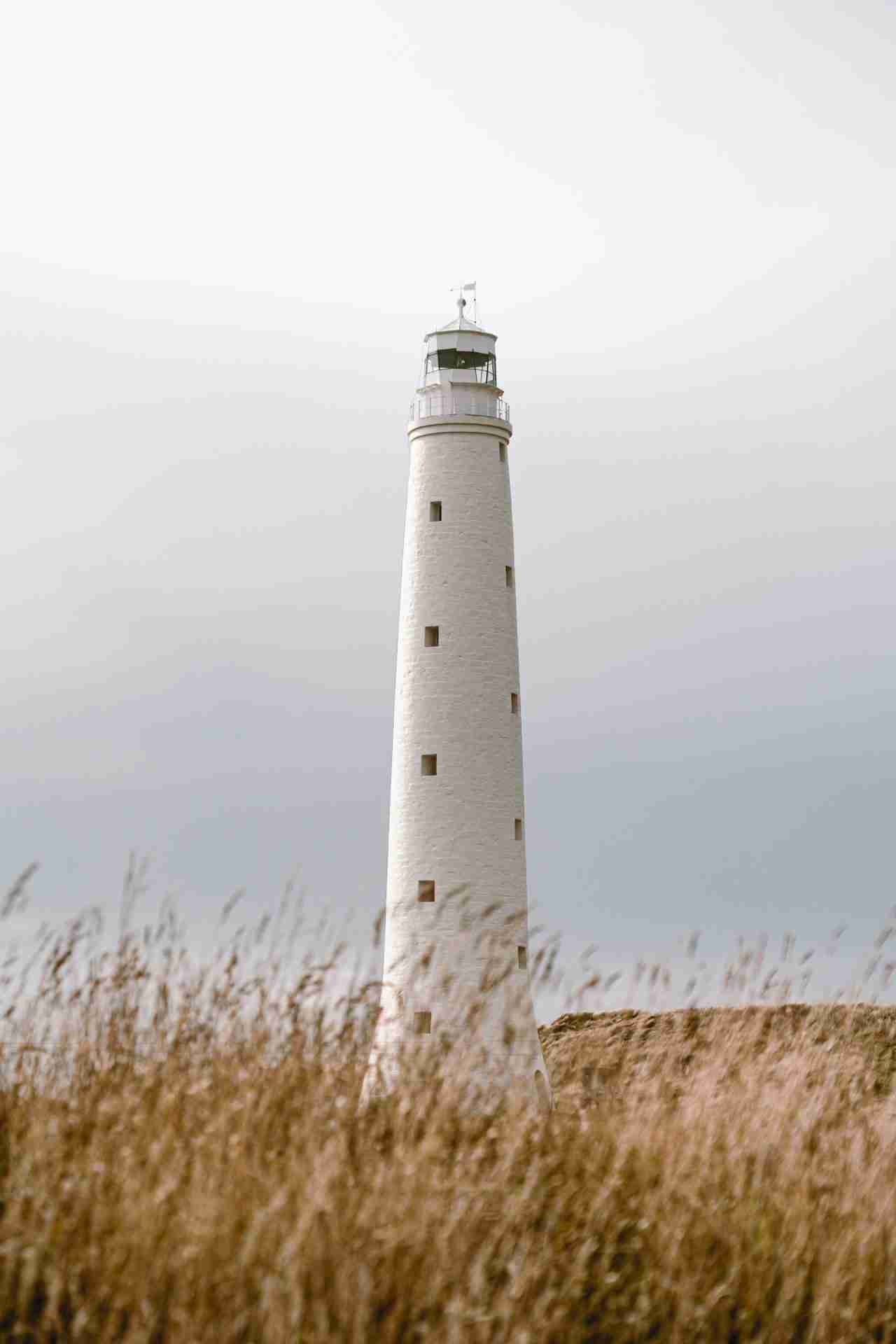
Cape Wickham Lighthouse stands on the northern tip of King Island, facing out into open ocean with very little between it and the horizon. The lighthouse itself rises clean and white against a rugged coastline, surrounded by low grass, scattered rocks, and constant exposure to wind and weather. The setting is simple but photogenic at every turn, shaped by the meeting of land, sea, and sky. The area around the lighthouse is open and easy to move through. This makes it easy to explore different angles without needing to travel far. The coastline curves gently, giving you multiple perspectives on the lighthouse as you move around.
Best Photography Opportunities
• Lighthouse As A Strong Focal Point
The lighthouse itself provides a clear and dominant subject that works well in both simple and more layered compositions. Its clean shape stands out against the surrounding landscape, making it easy to isolate within the frame. Positioning it slightly off centre can create a more natural balance, especially when including the coastline or sky. Shooting from lower angles can emphasize its height and give it more presence. The simplicity of the structure allows you to experiment without over complicating the scene. It is a reliable anchor for almost any composition here.
• Coastal Foreground And Leading Lines
The rocky shoreline and grassy terrain provide natural foreground elements that help build depth. By placing rocks or textures in the foreground, you can guide the viewer's eye toward the lighthouse. The gentle curves of the coastline can also act as leading lines, pulling attention through the frame. Changing your position slightly can alter how these elements interact. This approach works well when you want to move beyond a simple subject shot. It helps create a more complete landscape image.
• Wide Seascapes And Open Horizon
The open ocean surrounding the lighthouse offers clean, uncluttered compositions with a strong sense of space. You can frame the lighthouse within a wider seascape or step back and let the horizon dominate the scene. This works particularly well when the sky has subtle variation or cloud movement. Keeping the composition simple helps maintain the feeling of openness. Small changes in framing can shift the balance between land, sea, and sky. This is a good approach for more minimal images.
• Long Exposure And Water Movement
The exposed coastline makes this a strong location for long exposure photography. Using longer shutter speeds can smooth the movement of the water, creating contrast with the solid structure of the lighthouse. Positioning yourself near the rocks allows you to include more dynamic water movement in the foreground. Timing your shots with wave patterns can improve the result. This technique works best when conditions are not too rough but still active. It adds another layer to your compositions.
• Changing Weather And Light Conditions
Weather plays a major role at Cape Wickham, with conditions shifting quickly due to its exposed position. Light can change rapidly, bringing in cloud, clearing skies, or dramatic contrast across the scene. Early and late light soften the landscape and add more depth to the lighthouse and surrounding terrain. Wind can affect both your shooting conditions and the look of the water. Being prepared to adapt is important here. Some of the most interesting images come from unpredictable conditions.
Best Time to Visit
Early morning and late afternoon are the most effective times to photograph Cape Wickham Lighthouse. The lower angle of the sun helps bring out texture in the landscape and adds depth to the scene. Morning often provides calmer conditions, while late afternoon can introduce warmer tones across the coastline.
Midday light can be harsh and reduce contrast, especially under clear skies. Overcast conditions can work well by softening the scene and allowing the structure to stand out more clearly. The location can be photographed year round, but weather conditions will have a strong influence on your results. Checking forecasts and allowing flexibility in your timing is important.
How to Get There
Cape Wickham Lighthouse is located on the northern tip of King Island in Tasmania. It is accessible by car, with a road leading close to the site, followed by a short walk to reach the best viewpoints. The drive itself passes through open landscapes, reinforcing the remote feel of the location.
There are no fees required to access the surrounding area, as it is open and publicly accessible. The terrain is relatively easy to navigate, though wind and weather conditions can affect your experience. Once you arrive, you can move freely around the site to explore different angles. It is important to be mindful of conditions, as the exposed location can change quickly.
Recommended Photography Gear
A standard zoom lens in the range of 24 to 70mm works well for most compositions, allowing you to capture both wider scenes and more focused shots of the lighthouse. A wider lens can help emphasize the scale of the landscape and include more of the foreground. A longer lens can be useful for isolating details or compressing the scene.
A tripod is highly recommended, especially if you plan to shoot long exposures or work in lower light conditions. Neutral density filters can help manage exposure and smooth the movement of the water. A polarizing filter can reduce glare and enhance contrast. Because of the wind and coastal conditions, keeping your gear protected is important.
Nearby Photography Locations
Disappointment Bay offers a rugged coastal setting with strong wave action and dramatic rock formations. It is a good location for capturing more dynamic seascapes compared to the calmer views near the lighthouse. The open exposure to the ocean creates constantly changing conditions.
• Christmas Island Nature Reserve
This reserve provides a quieter environment with coastal vegetation and wildlife. It offers a different perspective on the island's landscape, with more focus on natural detail. It is a useful contrast to the open coastline at Cape Wickham.
Porky Beach is known for its wide sandy shoreline and clean, open views of the ocean. It works well for minimal compositions and softer coastal scenes. The simplicity of the beach contrasts with the more rugged lighthouse area.
Currie Harbour offers a working harbour setting with boats and built structures. It introduces a more human element into your photography. The combination of water and activity creates different compositional opportunities.
Grassy Harbour features a mix of industrial elements and coastal scenery, including remnants of the island's mining history. It provides a more textured and layered environment. This adds variety to a photography trip around King Island.
Comments
Loading comments…