
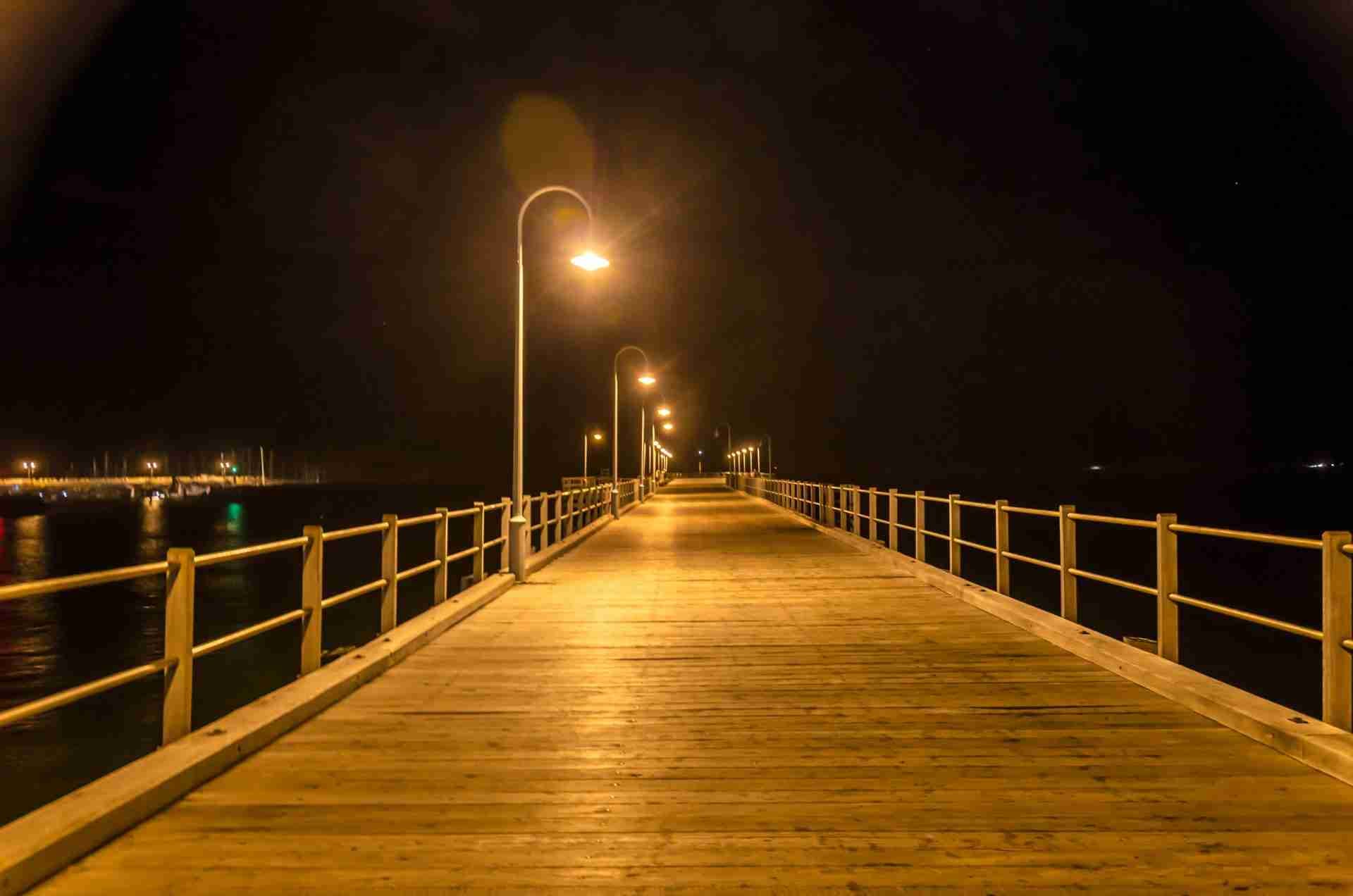
Coffs Harbour Jetty extends confidently into the Pacific Ocean, where wood, steel, and water meet beneath shifting skies. This historic structure, once a working port, now serves as a public walkway and a dynamic subject for photographers. Its long, linear form offers bold perspective lines, while the ever changing conditions of the coast provide constant variation in light, motion, and mood. The nearby marina, breakwater, and open beaches frame the jetty with natural and man made textures, creating a wide range of compositional options. Whether you're drawn to the symmetry of the structure, the stories unfolding along its length, or the quiet drama of ocean light, the jetty is a dependable and deeply photogenic location.
Best Photography Opportunities
• Leading Lines and Symmetry
The design of the jetty creates natural perspective lines that pull the viewer's eye toward the horizon. Centered compositions work especially well here, emphasizing balance and simplicity, particularly when paired with a wide angle lens. The repeating posts, wooden planks, and railing shadows add a strong visual rhythm that shifts throughout the day. Try capturing the walkway at different times to see how the light alters these patterns, especially in low morning or evening sun. Minimalist framings are effective, but adding a lone figure walking or fishing introduces a sense of narrative and scale.
• Golden Hour
Shooting toward the jetty from the adjacent beach allows you to frame the structure in warm light that glows across the water and wood. As the sun dips, reflections appear along the wet sand and shallow tide lines, offering chances to work with color and repetition. Position your camera low to the ground to pick up foreground texture and use leading lines in the surf to guide the eye toward the jetty. If conditions are calm, you can catch nearly perfect mirror reflections under the structure. Look for birds gliding through the frame or boats moving slowly offshore to add a dynamic layer to the composition.
• Long Exposure
The nearby breakwater gives a side on angle to the full length of the jetty and works well for long exposure photography. With the right filters, the motion of the sea becomes a smooth base beneath the rigid form of the pier. Cloud movement above adds drama, and the contrast between structure and motion becomes the core of the shot. Plan your session around late afternoon or twilight to get the best balance of light and longer shutter speeds. A sturdy tripod is necessary, as ocean wind and uneven footing can affect sharpness.
• Jetty Life and Human Stories
The public nature of the jetty means there's almost always something happening, from locals fishing to families strolling at sunset. These candid scenes offer a different type of image; less about the structure, more about the way people use it. A medium telephoto lens lets you work at a respectful distance, capturing natural gestures and interactions without intrusion. Moments like a child peering over the railing or someone pausing in the golden light at the far end of the walkway can carry surprising emotional weight. The key is to be patient and watchful, letting the right scene unfold rather than forcing it.
• Night Color and Reflections
After the sun has gone, artificial lights along the jetty cast a warm glow over the walkway and shimmer across the dark water. This is a great time for tripod mounted work, with slower shutter speeds pulling subtle detail from the shadows. Use the lights themselves as compositional anchors and balance them with the deep blues of the evening sky. If boats pass during a long exposure, their lights will create streaks through the frame, adding unexpected movement. Night shooting here also allows you to explore color contrast between the warm jetty lights and the cooler ambient light of the coast.
Best Time to Visit
The most productive seasons for photography on the jetty are late spring through early autumn, when skies are clearer and the light lasts longer in both directions. Mornings tend to be calmer, with less foot traffic and a gentler quality of light that works well for symmetry and quiet mood. Evenings are better for color and drama, especially when the sky holds high clouds that catch the last light and throw reflections down onto the water. Winter brings shorter days and stronger winds, but also dramatic skies and empty scenes that reward longer exposures and more deliberate compositions. Overcast conditions can still be useful here, particularly for soft, even lighting that reduces harsh contrast on the wooden structure. For the best results, time your visit with low tide if you want full access to the adjacent beach and reflective sand surfaces.
How to Get There
Coffs Harbour Jetty is centrally located and easy to reach by car, foot, or bicycle from most parts of town. Public parking is available nearby, and walking paths lead directly to the jetty itself. No permits or entry fees are required, and the structure is open throughout the day and well into the evening. With direct access and a flat walkway, it's simple to carry gear and set up in multiple locations. The area around the jetty includes beaches, grassy parkland, and the marina, all within a short walking distance, giving you a variety of scenes to work with in a single session.
Recommended Photography Gear
A lightweight but sturdy tripod is essential for both long exposure and night work on the jetty, especially during windy conditions. A wide angle lens helps capture full length structural shots and deep sky scenes, while a mid range zoom allows for tighter framing of figures, boats, and detail work. A polarizing filter will cut through glare on the water and deepen the blues in the sky, particularly in the middle part of the day. Neutral density filters are useful for controlling shutter speed and smoothing water and cloud movement during brighter light conditions. A weather resistant camera body and protective lens cloths are helpful in case of sea spray or rain. If you plan to shoot handheld during twilight or at night, fast prime lenses and higher ISO capability will keep you working without a tripod in lower light. Comfortable shoes and a lightweight gear bag will make it easy to move from the jetty to nearby viewpoints as the light changes.
Nearby Photography Locations
This small island just beyond the marina offers panoramic views of the jetty, harbor, and coastline. Sunrise is especially rewarding from the summit, where you can capture the full sweep of the bay under early light.
Adjacent to the structure, this sheltered beach provides a gentle curve of shoreline and calm water ideal for soft reflections and minimalist compositions. Early morning or low tide reveals textured sand and delicate surf lines.
The breakwall and surrounding harbor feature moored boats, strong angular forms, and open sea views that work well in both color and black and white. The area is especially good for golden hour and stormy weather photography.
• Park Beach Lookout
A short distance north, this elevated viewpoint allows wide vistas over the beach, jetty, and coastline. It's a great spot for capturing afternoon light or watching distant storms roll in from the sea.
A more tranquil setting south of the jetty, this reserve features tidal inlets, tree-lined banks, and still water ideal for quiet, reflective imagery. It's a good location to wind down after a long shoot or focus on intimate landscapes.
Comments
Loading comments…