
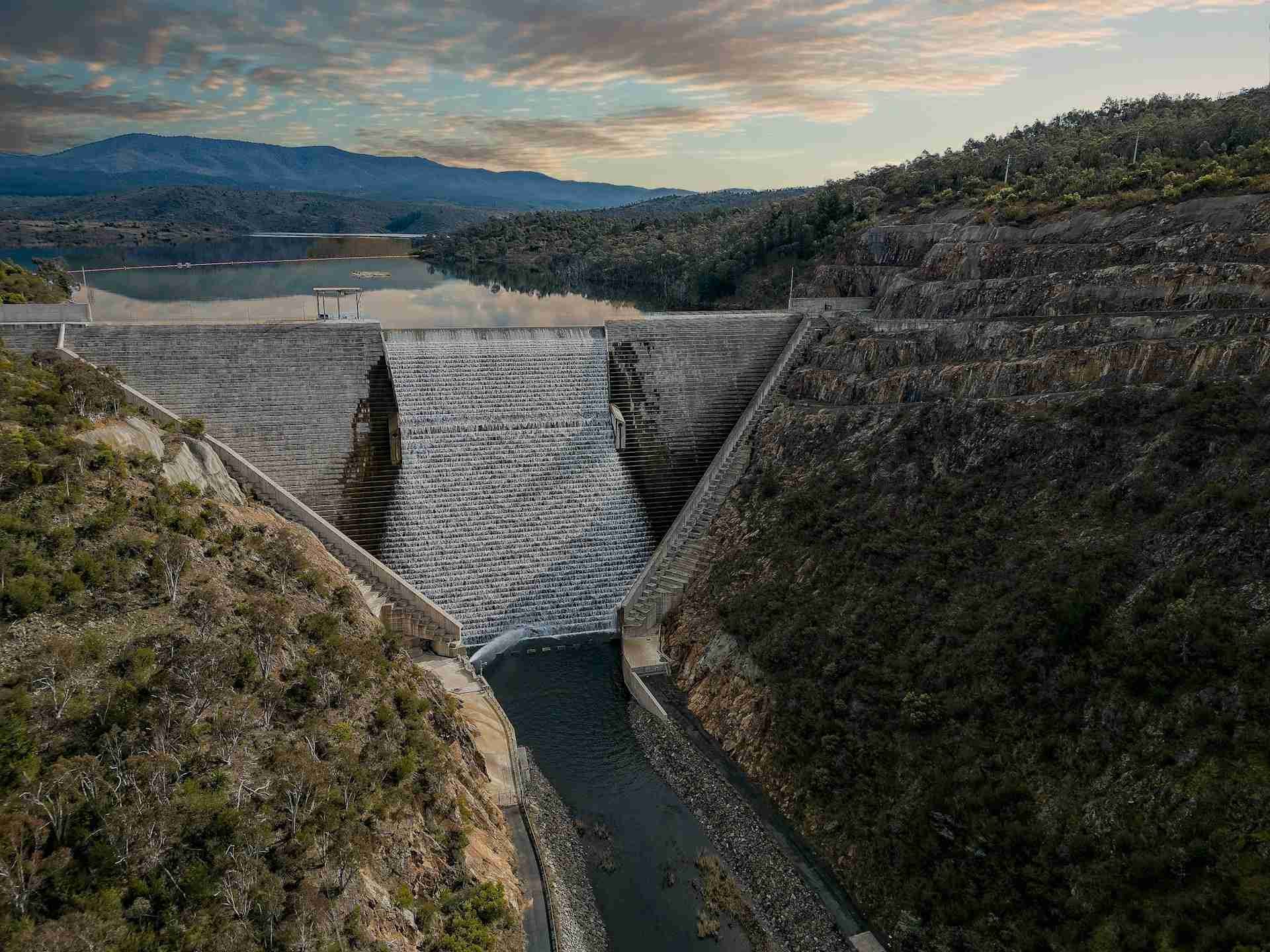
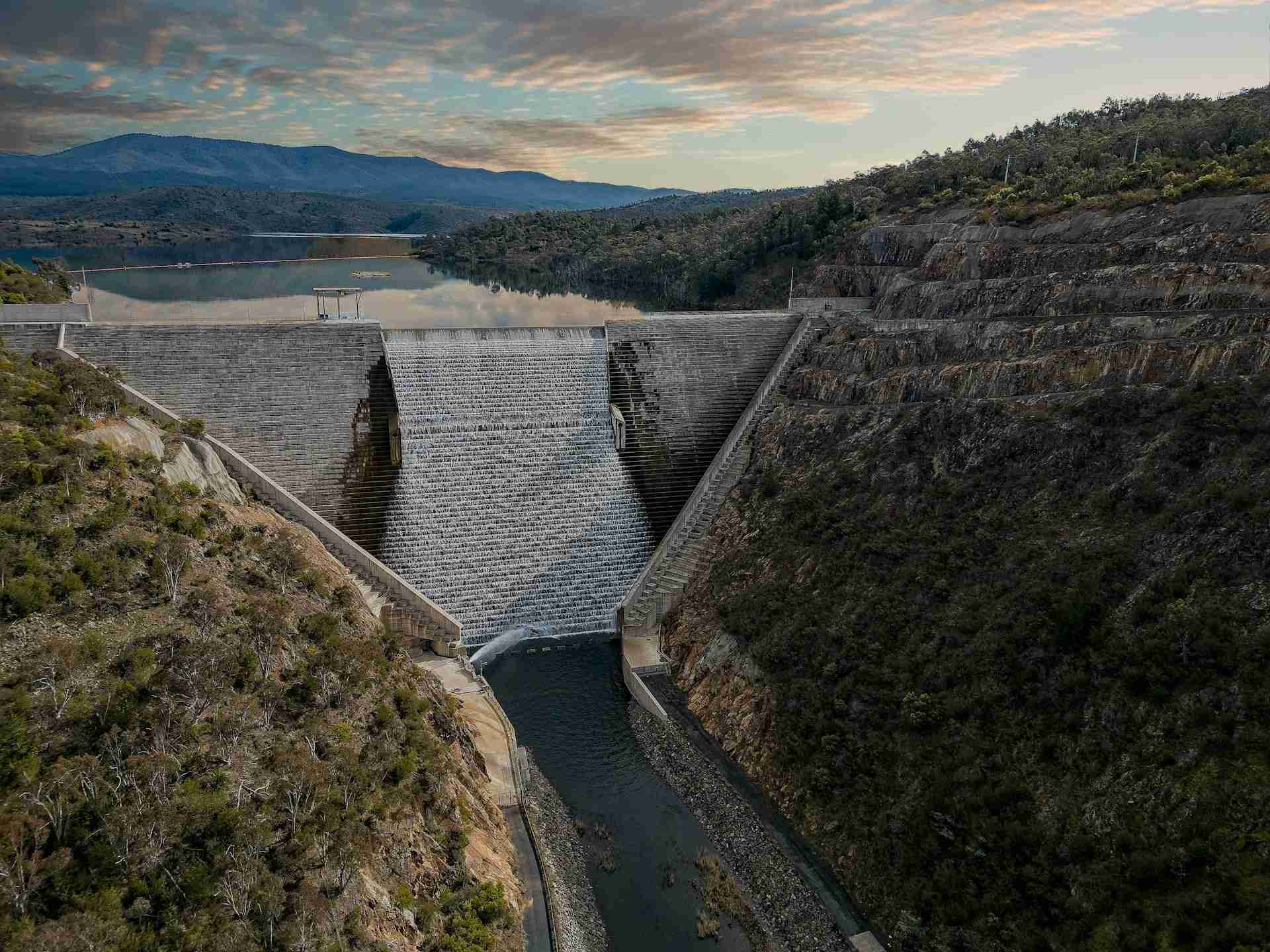
Just a short drive from Canberra, Cotter Dam combines bold engineering with a dramatic natural setting, making it one of the most photogenic structures in the Australian Capital Territory. Completed in 2013 as part of the region's water supply system, the current dam replaced an earlier structure and is among the largest roller-compacted concrete dams in Australia. Its sweeping curved wall rises from the narrow Cotter River gorge, framed by forested hills that shift with the seasons. For photographers, Cotter Dam is an ideal subject where human design and natural landscape meet in a single scene. The viewpoints around the dam allow for both wide environmental shots that emphasize its scale and close studies of its geometric surfaces, while the nearby reserve adds opportunities for softer landscape photography.
Best Photography Opportunities
• Wide Views from the Lookout Platforms
Elevated lookouts provide the most comprehensive perspective of the dam wall as it curves across the gorge. From here, you can capture the scale of the structure in context with the surrounding hills and Cotter River below. A wide-angle lens emphasizes the sweeping curve, while including foreground trees adds depth. Early morning or late afternoon light provides the best definition, as side illumination creates contrast between the concrete wall and the landscape. Panoramic stitches can also be effective, allowing you to capture the full breadth of the wall and valley in a single image.
• Geometric Studies of the Dam Wall
The dam's roller-compacted concrete construction creates strong geometric lines and repeating forms that lend themselves to abstract compositions. Telephoto lenses allow you to isolate sections of the wall, focusing on angles, patterns, and textures. Shadows cast across the concrete surface create additional visual interest, particularly in late afternoon when light cuts sharply across the wall. Black-and-white photography is especially effective here, emphasizing form and contrast while stripping away distraction. These images highlight the structural character of the dam and reward photographers interested in architectural detail.
• Water Flow and Downstream River Scenes
Below the dam, the Cotter River flows through a narrow valley, offering opportunities to photograph the interaction between water and stone. Long exposures with neutral density filters smooth the flowing river into clean lines, contrasting with the sharp edges of the dam wall. Foreground rocks and vegetation can be incorporated to add texture and depth to compositions. During times of high release, the water spilling from the outlet creates dramatic cascades, best captured with a tripod to balance motion blur with surrounding detail.
• Seasonal Context in the Surrounding Hills
The forested hills around Cotter Dam change character throughout the year and can be used to frame the structure in wider compositions. In spring, fresh greens dominate the slopes, while autumn brings patches of warm color in planted trees around the recreation area. Winter light is cool and clear, often producing crisp, high-contrast conditions that suit architectural compositions. Summer sunsets can bathe the valley in warm tones, balancing the cool greys of the concrete wall with golden light. These seasonal variations provide reasons to revisit the site across the year.
• Twilight and Night Photography
While less frequently photographed at night, Cotter Dam can be a strong subject for twilight compositions. As the last light fades, long exposures capture the curve of the dam silhouetted against the sky, with stars emerging above the surrounding hills. A tripod and wide fast lens are essential for this work, and including reflections in the river below adds atmosphere. On clear nights, the relatively low light pollution makes it possible to capture the Milky Way rising above the hills, with the dam wall anchoring the frame as a man-made counterpoint.
Best Time to Visit
Cotter Dam can be photographed year-round, but each season offers distinct qualities. Spring and autumn are the most rewarding, with mild temperatures and shifting colors in the surrounding trees. Summer provides strong golden hour light in the evenings, though mid-day can be harsh. Winter offers clarity and often dramatic skies after cold fronts pass. For daily timing, early morning offers calm conditions and soft light on the eastern-facing slopes, while late afternoon provides warm illumination across the dam wall. Overcast days are excellent for detail photography of the concrete structure, as even lighting reduces glare and reveals surface texture. Stormy days can add drama, with cloud formations and turbulent light enhancing the overall atmosphere.
How to Get There
Cotter Dam is located about 25 kilometers west of Canberra's city center. The site is easily accessible by car, with paved roads leading directly to the Cotter Avenue recreation area. From the car park, a short walk on a well-maintained path brings you to a series of lookouts with clear views of the dam wall and river valley. The walk is easy and suitable for all visitors, taking around 10 to 15 minutes to reach the primary platform. There are no fees for entry or parking, and the reserve includes amenities such as picnic areas, barbecues, and restrooms. While drones are restricted in some parts of the ACT, it is important to check current regulations before flying. Tripods are permitted and easily accommodated at the spacious viewing platforms.
Recommended Photography Gear
A wide-angle lens in the 14 to 24 millimeter range is essential for capturing the full curve of the dam wall and its setting in the gorge. A mid-range zoom such as 24 to 70 millimeters is useful for balanced compositions that include both structure and surrounding hills. A telephoto lens up to 200 millimeters allows you to isolate geometric patterns and surface textures in the concrete. A sturdy tripod is indispensable for long exposures of flowing water below the dam and for twilight sessions. Neutral density filters are particularly effective for smoothing water flow, while a circular polarizer reduces glare on both water and concrete surfaces. Weather protection for your gear is advisable, as conditions can shift quickly, especially in cooler months when showers move through the valley. Comfortable shoes, water, and sun protection are recommended, as much of the site is exposed to the elements.
Nearby Photography Locations
Just downstream from the dam, this riverside area includes picnic spaces, grassy fields, and easy river access. It offers softer, more pastoral compositions that contrast with the dam's industrial presence.
• Cotter River Corridor
Exploring further along the river provides opportunities for landscape photography with water, forest, and boulders as natural subjects. Long exposures of the river through shaded valleys are particularly rewarding.
Located a short drive south of Cotter Dam, Tidbinbilla is a haven for wildlife and landscape photography. Kangaroos, emus, and wetlands provide opportunities for both animal portraits and environmental scenes.
Situated on a ridge east of Cotter Dam, the observatory provides sweeping views across Canberra and the Brindabella Range. It is excellent for both daytime panoramas and night sky photography.
Driving further west into the Brindabellas reveals expansive mountain views, winding roads, and elevated vantage points that are perfect for sunrise and sunset sessions.
Cotter Dam is more than a feat of engineering—it is a subject that thrives on contrast, combining the clean lines of modern construction with the rugged beauty of the Australian bush. Its viewpoints, changing light, and seasonal atmosphere make it a rewarding location for photographers seeking both architectural precision and natural drama.
Comments
Loading comments…