
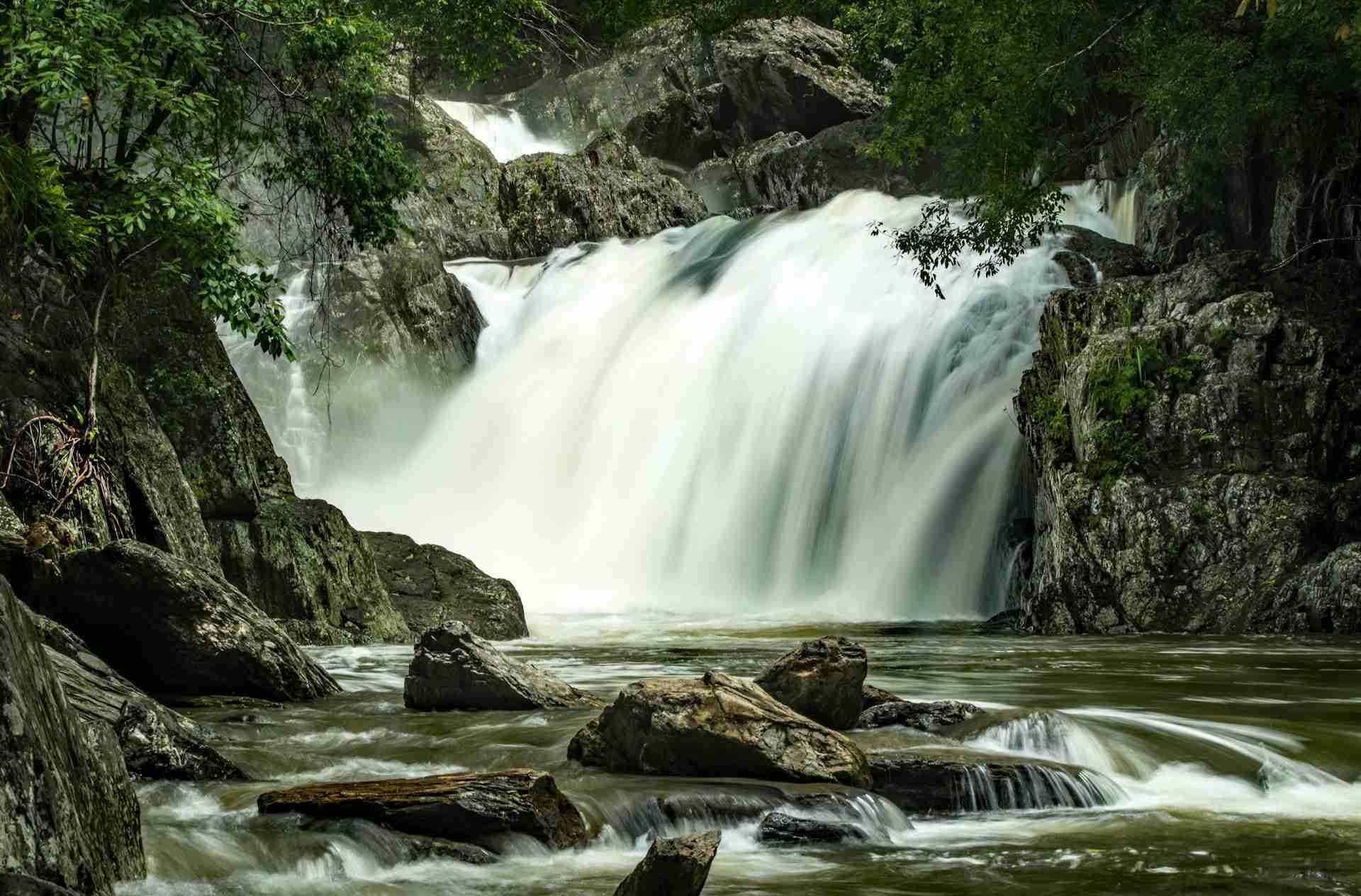
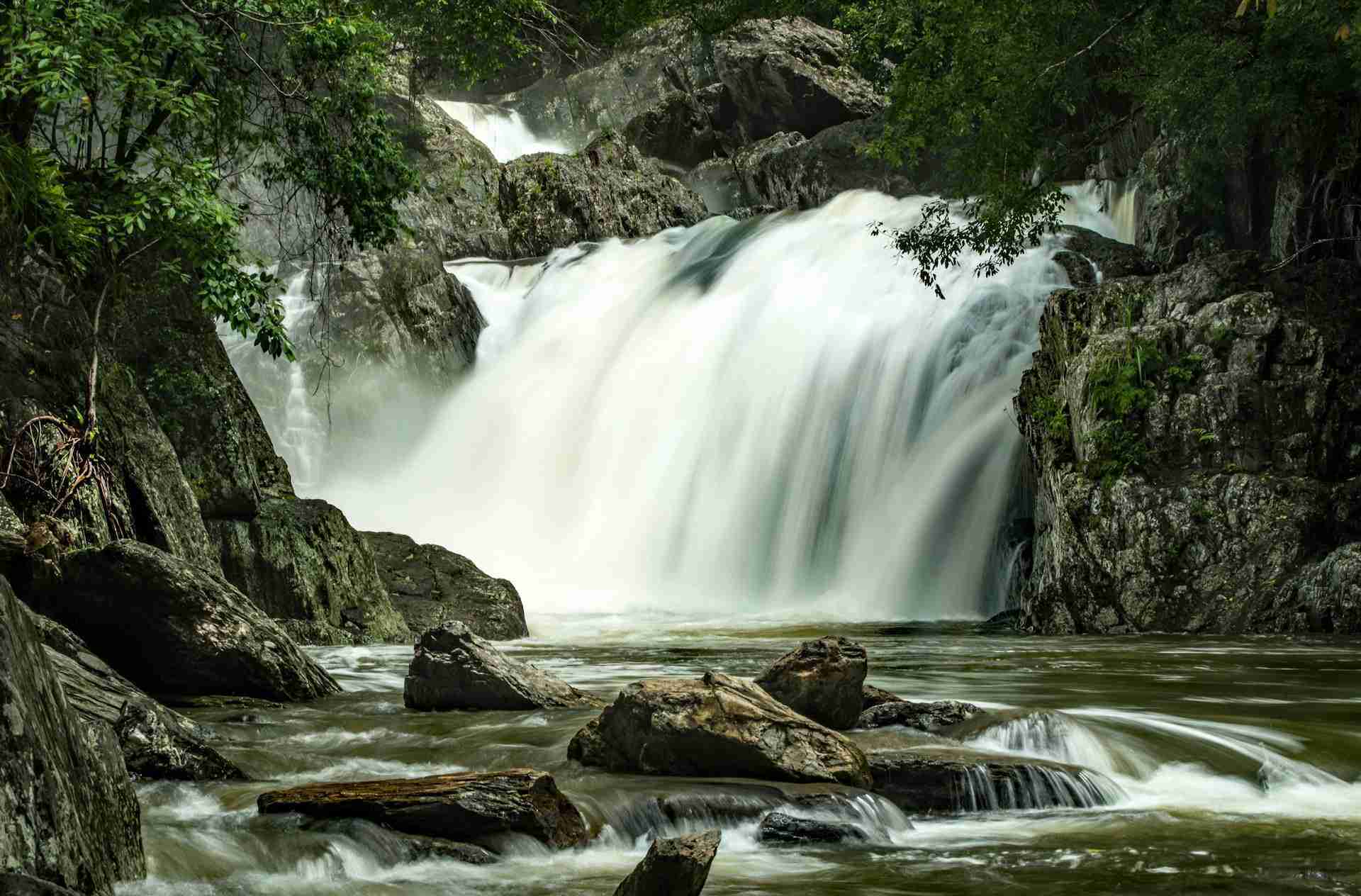
Hidden in the rainforest just outside Cairns, Crystal Cascades is a series of freshwater swimming holes and small waterfalls along Freshwater Creek. Shaded by dense tropical vegetation and flanked by boulders polished smooth by centuries of water flow, the cascades offer photographers a mix of intimate detail and broad natural compositions. The location is accessible yet feels remote, with a rainforest canopy that filters light into dappled highlights and deep green tones. From long exposures of rushing water to vibrant studies of foliage and rock textures, Crystal Cascades rewards patient exploration and creative framing.
Best Photography Opportunities
• Long Exposures of the Cascades
The main attraction is the flowing water itself. Along the trail, several small waterfalls spill into clear pools, perfect for long-exposure photography. A tripod and neutral density filter allow for slow shutter speeds that render the water as silky ribbons while keeping the rocks and foliage crisp. Early morning is best, when the light is soft and the pools are calm, free of swimmers. Wide-angle lenses capture the cascades in their rainforest setting, while tighter frames emphasize water patterns and rock textures.
• Boulder Pools and Reflections
The creek widens in several sections to form deep, still pools framed by massive granite boulders. These surfaces reflect the canopy overhead, especially during overcast or calm conditions. Shooting from a low angle emphasizes the reflections while including stones or vegetation in the foreground for depth. Polarizing filters are useful here, either to enhance reflections or to cut through glare and reveal the clarity of the water. These pools also provide excellent opportunities for minimalist compositions that focus on shape, tone, and calm.
• Forest Canopy and Dappled Light
The rainforest surrounding Crystal Cascades is thick with palms, vines, and tall trees, and the interplay of sunlight through the canopy creates dramatic lighting effects. Shooting upward with a wide-angle lens emphasizes the vertical sweep of the forest, while shallow depth of field isolates details like ferns or lianas. Overcast conditions reduce contrast and bring out the saturation of the greens, while strong midday light creates patches of illumination that can be used for spotlighting compositions. These forest scenes add variety to a waterfall-focused portfolio.
• Macro Studies of Flora and Rainforest Texture
The rainforest environment offers abundant opportunities for close-up photography. Drops of water clinging to leaves, moss growing on boulders, and colorful insects or fungi can all be isolated with a macro lens. Early morning or after rainfall is the most productive time, when moisture highlights texture and adds sparkle to details. Shooting with diffused light enhances clarity and keeps highlights under control. These smaller studies provide a strong complement to the broader waterfall and landscape shots.
• Wildlife Encounters Along the Trail
Though not the primary focus of most visitors, Crystal Cascades is home to a variety of wildlife, from tropical birds to freshwater turtles. A telephoto lens is useful for capturing wildlife without disturbing it. Birds can often be spotted in the canopy during the early morning, while dragonflies, butterflies, and small reptiles are common along the creek. These natural moments add another dimension to a photographic session in the cascades.
Best Time to Visit
Crystal Cascades is photogenic year-round, but conditions vary with the seasons. The wet season from December to April brings heavy rainfall, swelling the creek and creating powerful water flow. This is excellent for dynamic waterfall photography, though trails may be muddy and water clarity reduced. The dry season from May to October offers clearer pools, calmer flow, and more predictable light, making it ideal for reflections and detail work.
Time of day matters as much as the season. Early morning is the best overall time, with soft light, cooler air, and fewer visitors. Midday light is harsh but can be used creatively for contrast-heavy forest images. Late afternoon provides gentle directional light that filters through the canopy and often reflects warmly off wet boulders. Overcast or lightly rainy conditions are excellent for waterfall photography, as they provide even lighting and enhance saturation in foliage.
How to Get There
Crystal Cascades is located about 20 kilometers west of Cairns, a 30-minute drive along Redlynch Intake Road. The road is sealed and accessible by car, with a designated car park at the entrance to the park. From the car park, a paved walking trail of around 1.5 kilometers follows the creek upstream to the cascades, with side access points to swimming holes and viewing areas.
Entry is free, and the site is open daily. The walking trail is relatively easy, though it can be slippery after rain. Facilities at the car park include restrooms and picnic areas, but there are no shops or cafés on site, so it is best to bring supplies. Swimming is allowed in designated pools, though conditions can change after heavy rainfall, and caution is advised near the falls themselves.
Recommended Photography Gear
A sturdy tripod is essential for long-exposure waterfall shots. A wide-angle lens captures cascades within their rainforest surroundings, while a standard zoom offers versatility for mid-range compositions. A telephoto lens is useful for isolating details of cascades further upstream or for capturing wildlife. A macro lens is ideal for close studies of rainforest textures, plants, and insects.
A circular polarizer is highly recommended to reduce glare on wet rocks and water surfaces, and to deepen color in foliage. Neutral density filters are essential for long exposures of flowing water during daylight hours. A waterproof camera bag or dry bag is strongly advised, as sudden rain showers are common, and spray from the falls can reach your equipment. Sturdy footwear with good grip is also necessary for navigating wet trails and boulders safely.
Nearby Photography Locations
Just north of Cairns, Barron Gorge features a massive waterfall, rainforest walks, and elevated lookouts. It provides a grander, more dramatic counterpart to the intimate cascades of Crystal Cascades.
Located further up the mountains beyond Crystal Cascades, this reservoir offers calm water reflections, forested hills, and excellent bird photography opportunities. It is especially rewarding at sunrise.
A short drive away, this smaller waterfall and swimming area offers a quieter alternative to Crystal Cascades, with boulders, pools, and rainforest ambience.
For a change of scenery, the coastal village of Palm Cove combines palm-fringed beaches, long piers, and Coral Sea views. It is excellent for sunrise and sunset photography.
Closer to the city, the Botanic Gardens provide abundant macro and flora photography opportunities, with tropical plant collections and butterfly-rich areas.
Crystal Cascades is a place that blends accessibility with natural beauty. Its flowing water, shaded rainforest, and reflective pools make it a rewarding subject for both experienced photographers and those experimenting with new techniques. A slow, observant approach—balancing wide landscapes with intimate details—reveals the full character of this hidden gem in the Cairns hinterland.
Comments
Loading comments…