
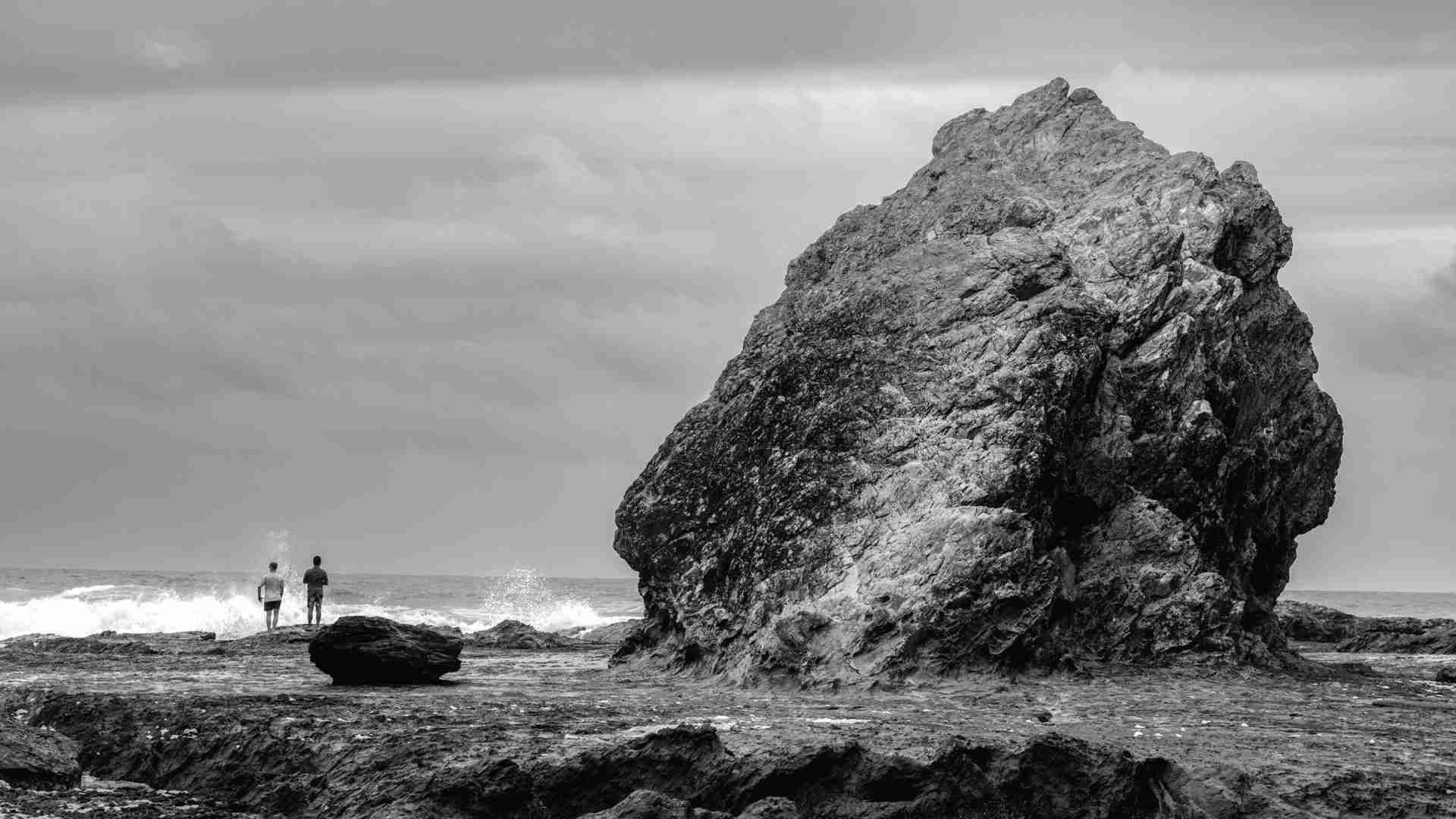
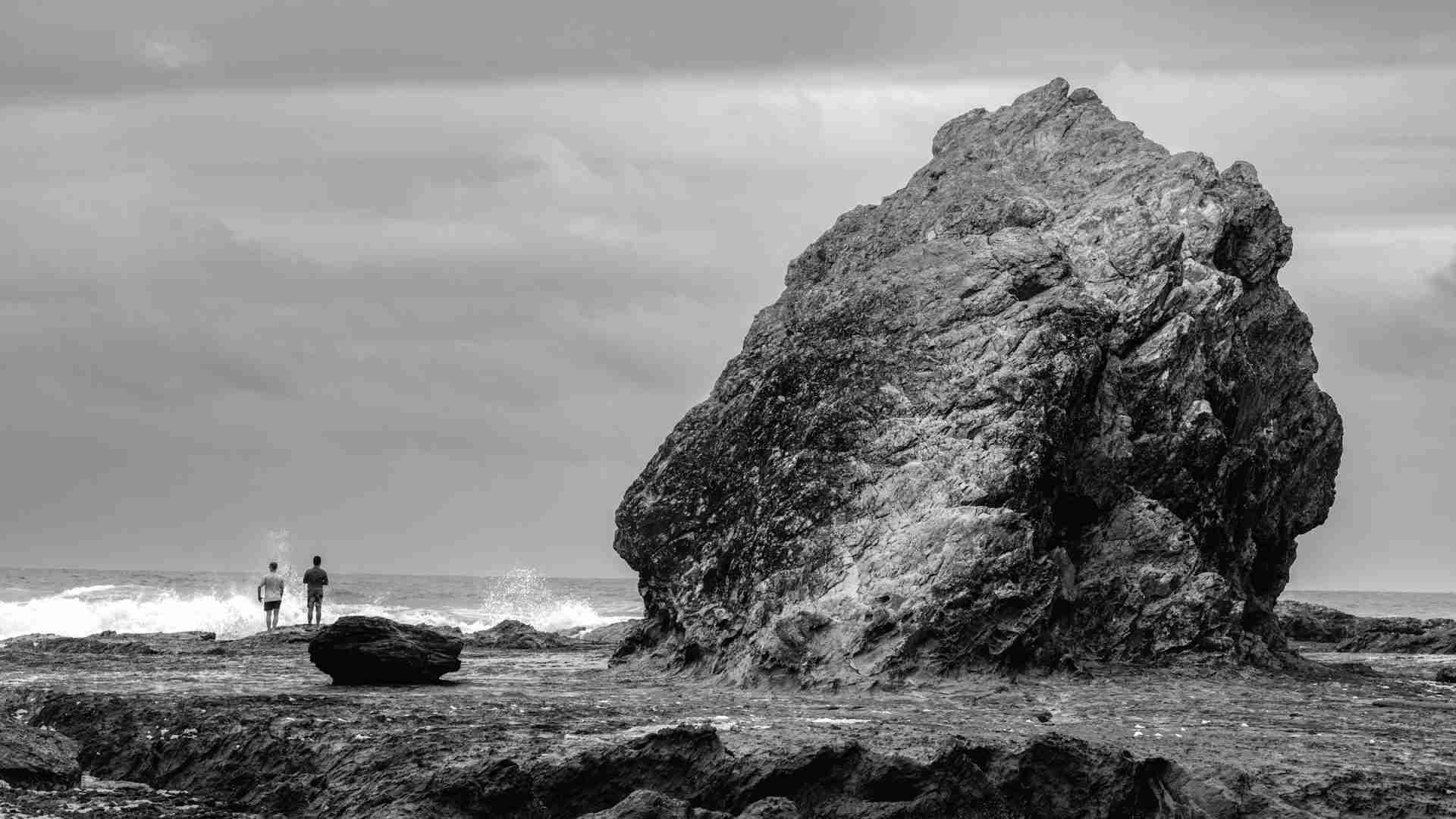
Currumbin Rock sits at the northern end of Currumbin Beach, where the broad stretch of sand narrows into a rocky point that juts into the Pacific Ocean. This large, weathered formation rises out of the shoreline like a natural anchor, constantly reshaped by tides, spray, and shifting light. Its rough textures and irregular shape stand in contrast to the smooth surf and flat beach. For photographers, it offers endless opportunities to explore light, motion, and scale from all directions, whether you're working on foot, framing the scene from nearby rocks, or shooting from above with a drone.
Best Photography Opportunities
• Dynamic Surf Around the Rock at High Tide
When the tide is high and swell is pushing in, waves break directly against the base of Currumbin Rock, sending up sprays and carving temporary channels in the water. These moments are ideal for short or long exposures, depending on how you want to handle motion. Shooting from the sand or nearby rocks lets you use the whitewater as foreground, with the rock towering behind. The light is best early or late in the day when shadows add shape to the surface. This scene suits both wide compositions and tighter frames focused on impact and flow.
• Backlit Silhouettes at Sunrise
Facing directly east, Currumbin Rock becomes a striking silhouette when framed against the morning sky. Arriving before first light gives time to set up for compositions that show the full rock shape with the sun rising behind it. Soft pastel skies or low clouds often add more interest than a clear horizon. Using a tripod helps with pre-dawn exposure, and a wide angle lens lets you include surf, beach, and sky in a single frame. This approach is clean, graphic, and especially effective for minimalist images.
• Tide Pools and Rock Detail in Soft Light
As the tide drops, smaller features around the base of Currumbin Rock begin to emerge like pools, channels, seaweed, and worn textures that are ideal for detailed shooting. Overcast skies or early light reduce glare and help maintain even exposure across textured surfaces. These scenes work best up close with a mid range zoom or short telephoto lens. They add variety to your photo set by shifting focus from the full landscape to the finer character of the site.
• Drone Photography
Aerial photography reveals the full relationship between Currumbin Rock, the curve of Currumbin Beach, the creek mouth, and nearby Elephant Rock. From above, patterns in the surf and sand become more pronounced, and the shape of the rock stands out clearly against the ocean. Flying low offers detail and texture, while higher angles let you build layered frames with coastline and estuary. The scene changes quickly depending on tide and swell, so planning a short flight during stable conditions can help make the most of light and colour. Be sure to follow CASA regulations and avoid flying over beachgoers or surf zones.
• Long Exposure Seascapes with Evening Colour
Although the sun sets behind the land, the afterglow often reaches across the sky and reflects off the ocean in soft gradients. Shooting long exposures from the southern side of the rock during twilight can give you calm, pastel toned seascapes with the dark shape of the rock holding the foreground. This is especially effective when clouds catch late light and stretch colour across the top of the frame. Use a neutral density filter to extend your shutter time and smooth water motion, and keep the composition simple to maintain balance.
Best Time to Visit
Sunrise is the most rewarding time to photograph Currumbin Rock, especially for silhouette work, golden light on the water, and calm conditions. The beach and rock face east, so colour and shape are strongest in the first 30 minutes of the day. Morning also brings fewer people, making it easier to shoot without interruptions or distractions in the frame.
Twilight and blue hour offer a softer look, especially when the light reflects off clouds or low tide reveals more surface area around the rock. Overcast days can be excellent for detailed shots, allowing you to work without harsh shadow or highlight. Tide plays a major role in composition here; high tide creates dynamic wave shots, while low tide reveals pools, walkways, and subtle patterns. Checking tide and swell charts before you go will help you choose the right conditions for your shooting plan.
How to Get There
Currumbin Rock is located on the Gold Coast in Queensland, at the northern end of Currumbin Beach and adjacent to the mouth of Currumbin Creek. It is easily accessible by car via Pacific Parade, with parking available at Wallace Nicoll Park or near the Currumbin Surf Life Saving Club. From there, it's a short walk along the beach or footpath directly to the base of the rock.
There is no entry fee or restriction, and the site is open year round. The surrounding beach is flat and easy to navigate, though the rocks around the base can be uneven or slippery, especially when wet. Nearby facilities include restrooms, cafes, and shaded seating. Mornings are quieter and offer better access if you want to avoid beach crowds.
Recommended Photography Gear
A wide angle lens is essential for framing the full rock and beach, especially during sunrise or high tide. A 24 to 70mm zoom gives flexibility for shifting between wider coastal scenes and tighter details. A short telephoto is useful for isolating smaller rock textures or capturing surf movement at a distance.
A tripod and neutral density filters are important if you plan to work with long exposures, especially around twilight. A polarising filter helps manage glare on wet rocks and water, though it may reduce reflection colour at certain angles. A drone adds value here by giving you clean, structural views of the coastline and headland. Be mindful of winds near the point and maintain line of sight with the drone during your flight.
Nearby Photography Locations
Just to the south, this smaller headland includes a public lookout and staircase for elevated views of the beach and ocean. It's excellent for sunrise and wide compositions that include both rocks and water.
A short walk west of the rock, the creek mouth offers still water, mangroves, and reflections, especially at high tide. This is a good place for contrast between calm water and open surf.
Further south toward Coolangatta, Snapper Rocks offers bold coastal forms and dramatic wave action, with strong potential for both drone and long exposure work.
A short drive north, Burleigh Head offers forest trails with ocean lookouts, large rock shelves, and a mix of high and low-angle shooting positions. Afternoon and golden hour are ideal here.
Nestled behind Burleigh Head, this calm inlet provides sandbars, tree-lined edges, and clear water, best photographed in bright morning light or when tides are low.
Comments
Loading comments…