
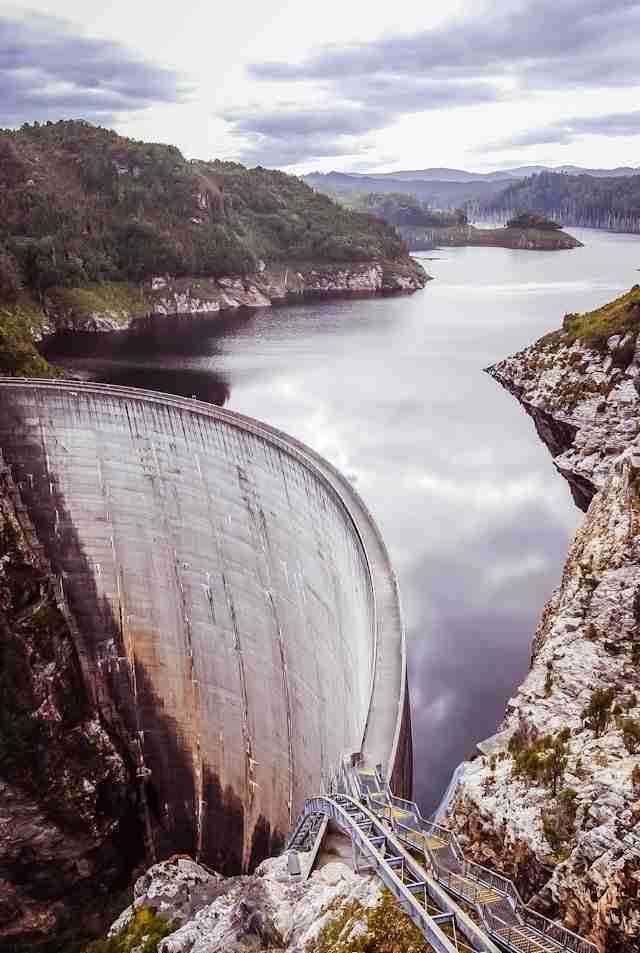
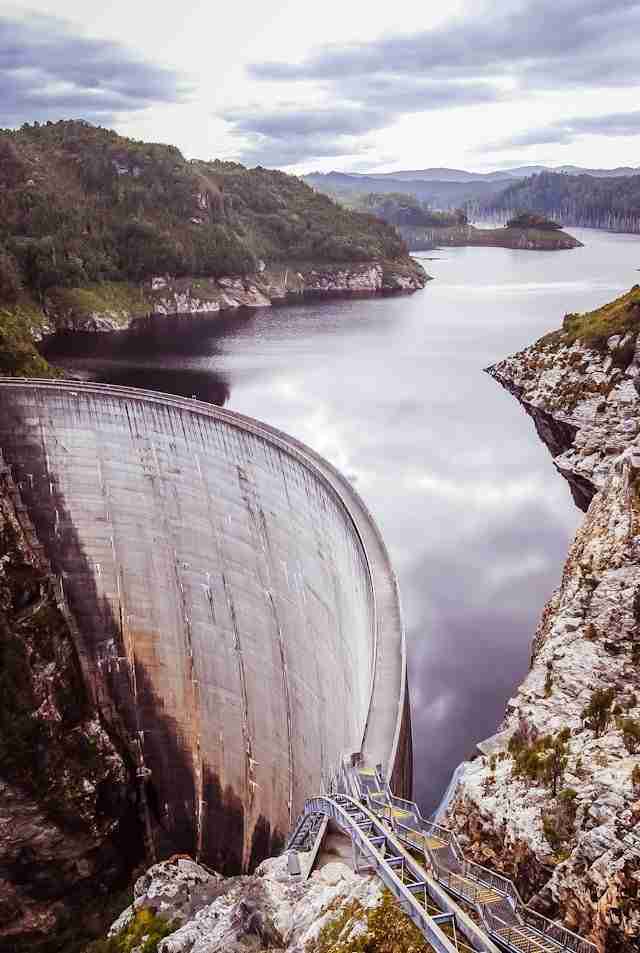
In the heart of Tasmania's remote and untamed southwest, Gordon Dam stands as a dramatic and imposing structure carved into the wild contours of a glacial valley. Towering 140 meters above the Gordon River and curving elegantly between two rocky escarpments, this monumental concrete arch dam is not only one of the tallest in the Southern Hemisphere but also one of the most photogenic. Surrounded by ancient rainforest, mist-shrouded ridgelines, and the dark, tannin-stained waters of Lake Gordon, the dam contrasts starkly with its raw natural setting—making it an ideal subject for photographers seeking to capture the tension between human engineering and wilderness. Whether you're drawn to symmetry, scale, or atmospheric landscape storytelling, Gordon Dam offers a rewarding and unforgettable visual experience.
Best Photography Opportunities
• Wide-Angle Symmetry from the Upper Platform
From the designated lookout at the top of the dam, photographers can capture the dramatic curve of the concrete structure framed by forested cliffs. This is the classic wide-angle composition that emphasizes the dam's monumental scale and the sweeping arc of its design. Early morning or golden hour light adds depth and warmth to the cool-toned concrete.
• Looking Down from the Walkway Rail
Standing on the dam's upper walkway and shooting straight down offers a dizzying view of the vertical drop into the Gordon River gorge. The visual contrast between the rigid concrete and the chaotic textures of the cliffside below creates tension and drama. Use a wide lens and lean into symmetry, or tilt for a more abstract, vertigo-inducing effect.
• Minimalist Abstracts of Concrete and Shadow
The dam's massive surface offers endless opportunities for minimalist studies—lines, curves, stains, and shadows playing across its fluted face. Late afternoon light grazes the concrete, revealing fine texture and creating bold geometric contrast. These shots benefit from longer focal lengths and tight framing for a more abstract result.
• Long Exposures of the River and Gorge
From vantage points near the base or downstream trail, long exposure photography captures the flow of the Gordon River beneath the dam. With clouds rolling over the cliffs and water smoothing out over long shutter speeds, the scene becomes otherworldly. Include ferns or moss-covered boulders in the foreground to add scale and organic detail.
• Drone Photography of the Curved Structure
If weather and permissions allow, drone photography reveals the full arc of the dam from a near-perfect overhead perspective. The interplay of curving concrete, dark water, and forested ridgelines is best captured from mid-level altitude, where the full drama of the location becomes clear. Morning mist over the lake can create ethereal aerial shots, while midday light brings out contrast between terrain and manmade form.
Best Time to Visit
Gordon Dam can be photographed year-round, but seasonal and weather considerations greatly influence the visual atmosphere. Late spring through early autumn (October to March) offers the most reliable weather and access, with long days and golden light in the early morning and late evening. During these months, forest greenery is lush, and the lake levels are often high, creating dynamic reflections and texture along the shoreline.
Winter and early spring (June to September) bring mist, rain, and colder conditions—transforming the dam into a moody, cinematic setting. Low-hanging clouds often drape over the surrounding peaks, and intermittent light through fog creates surreal, high-drama conditions for black-and-white or long exposure work. Be prepared for sudden weather shifts and slippery conditions on viewing platforms and trails.
The best light hits the face of the dam in early morning or late afternoon, when low sun reveals the shape of the structure through shadow and highlight. Overcast conditions are also excellent for eliminating harsh contrast and enhancing the moody feel of the setting, especially when combined with fog or light rain. Golden hour and blue hour are ideal for capturing the subtle color gradients in sky and concrete.
How to Get There
Gordon Dam is located at the end of Gordon River Road, approximately 2.5 hours southwest of Hobart. The drive takes you deep into the Tasmanian Wilderness World Heritage Area, passing through Mount Field National Park, the small township of Maydena, and the starkly beautiful terrain of the Southwest National Park. The final stretch of road is sealed but narrow, winding through forest and open alpine landscapes before terminating at the dam's car park.
There is no fee to access the dam or surrounding viewpoints, and the site is open year-round. A short walk from the car park leads to the upper viewing platform and dam walkway. A steep stair descent takes you down the face of the dam, offering additional angles and close-up views. While access is unrestricted, caution is advised—especially in wet or windy conditions, as the stairs and concrete surfaces can become slippery.
There are no services, shops, or fuel stations beyond Maydena, so ensure you're well-supplied before making the drive. Cell coverage is intermittent at best, and offline maps or GPS are essential for navigation. The remoteness of the location means you'll often have the dam to yourself, especially during early morning or midweek visits.
Exploring the Surrounding Area
The wilderness surrounding Gordon Dam is vast, raw, and remarkably untouched—part of Tasmania's largest expanse of protected land. Just beyond the dam lies Lake Gordon, a massive reservoir stretching into the wild heart of the southwest. Though not always accessible at close range, its shoreline provides opportunities for moody lake photography, particularly when windless conditions create mirror-like reflections of distant peaks and forest ridgelines.
Short walks near the dam lead into dense temperate rainforest, filled with myrtle beech, tree ferns, and moss-draped understory. These quiet trails are ideal for macro photography, soft forest compositions, and studies of light filtering through the canopy. After rain, the forest glows with saturated color and sparkling texture, especially along creek beds and mossy logs.
The nearby Scotts Peak Road branches off Gordon River Road and offers access to additional lakes and wilderness hiking trails—including the Port Davey and Western Arthur Range tracks—for those seeking multi-day photographic expeditions into some of Australia's wildest terrain. Even roadside stops along this route reveal glacial valleys, alpine plains, and pockets of reflective water that shift character with the weather.
Nearby Photography Locations
Just before reaching Gordon Dam, roadside pull-offs reveal expansive views over Lake Pedder's vast reservoir and surrounding mountains. Ideal for wide-angle landscape shots during golden hour or dramatic storm lighting. Early morning fog frequently rolls across the lake's surface, creating mysterious, minimalist compositions.
Located en route to the dam, Mount Field offers rainforest walks and iconic waterfalls like Russell Falls and Horseshoe Falls. These lush, shaded locations are perfect for long exposure waterfall photography and macro studies of moss, fungi, and ferns.
A short but steep hike near the entrance to Southwest National Park, The Needles offers panoramic views over the Florentine Valley and Lake Gordon in the distance. Best photographed at sunrise or sunset when the low light sweeps across ridgelines and valley mist.
An hour back toward Hobart, this industrial relic of Tasmania's hydroelectric history offers dramatic perspective lines, sweeping hills, and early 20th-century engineering—a thematic complement to Gordon Dam. Excellent for urban-meets-wilderness compositions.
• Sentinel Range Lookout
Located off Gordon River Road, this lesser-known viewpoint provides wide views of the dramatic, craggy Sentinel Range. It's particularly striking in early morning when mist lingers below the peaks, and light begins to break over the range.
Gordon Dam is more than just a feat of engineering—it's a stark, sculptural reminder of humanity's presence at the edge of the wild. Photographers drawn to symmetry, scale, and natural drama will find in this place a setting both visually powerful and emotionally resonant. From the echo of water on concrete to the stillness of the rainforest beyond, the dam marks a boundary—not just between river and reservoir, but between civilization and one of the last great wildernesses of the Southern Hemisphere.
Comments
Loading comments…