
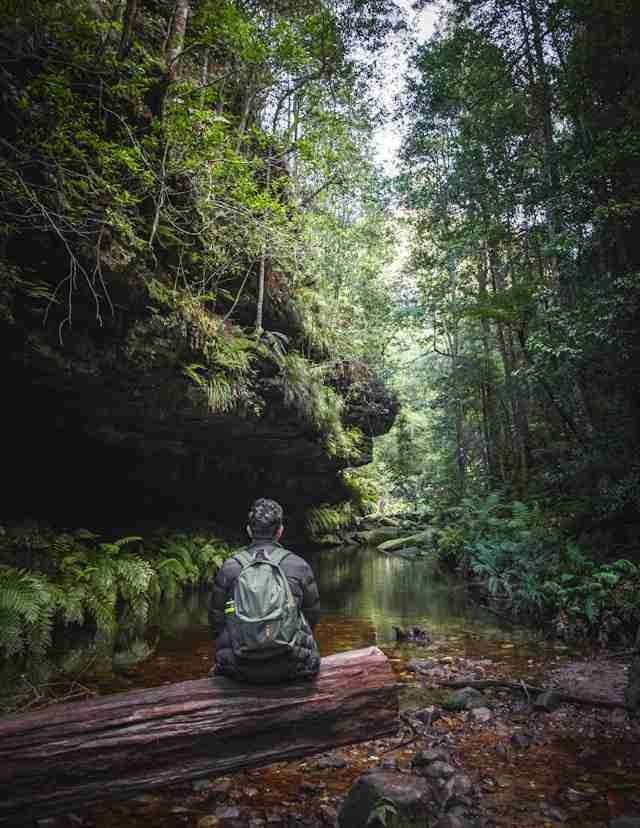
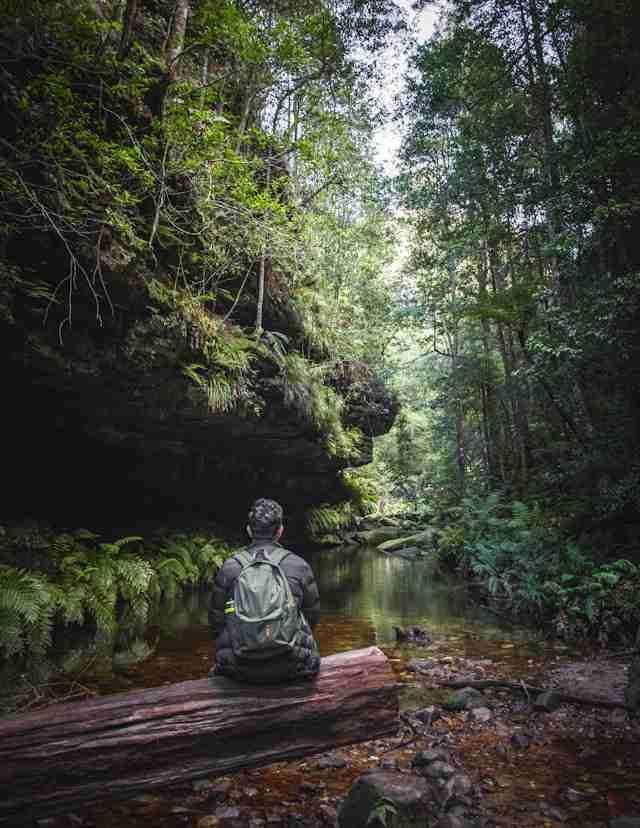
The Grand Canyon Walking Track in the Blue Mountains of New South Wales is one of the most photogenic trails in Australia. Winding through sandstone cliffs, slot canyons, fern-lined gullies, and shaded rainforest, this 6km loop offers constantly shifting terrain and lighting conditions that challenge and inspire photographers. Water drips from moss-covered ledges while filtered sunlight dances across narrow canyon walls, giving the landscape a textured, sculpted quality. The interplay of deep shadow and sudden bursts of golden light is a defining element of this track. With the right timing and gear, this is a location that rewards those who enjoy deliberate compositions and working with subtle tonal shifts.
Best Photography Opportunities
• Canyon Descent Near Neates Glen Entrance
The first descent into the canyon is steep and dramatic, with switchbacks carving along sheer sandstone walls. In the early morning, shafts of light pierce through the trees and reflect off the rock, creating a contrast between glowing highlights and dark recesses. A wide-angle lens is ideal here for capturing the sweeping curves of the trail against the cliff face. Try shooting downward from a higher switchback to emphasize depth. Framing the trail with overhanging ferns and tree branches adds scale and context to your composition.
• Slot Canyon Passage with Water Reflections
One of the most compelling sections of the walk passes through a narrow gorge where the walls tighten and light filters down in thin, diffused beams. In wetter months, shallow pools line the path, reflecting green foliage and golden rock. Long exposures work well here to smooth out water and enhance reflections, but light levels are low, so a fast lens or camera with good ISO performance is essential. The strong vertical lines of the canyon create a natural guide for the viewer's eye, and careful positioning allows you to work symmetry into these tight spaces.
• Rainforest Sections with Tree Ferns and Moss
Deeper into the loop, the environment shifts to cool, damp rainforest, with towering tree ferns and dripping mosses. The light here is often soft and indirect, giving photographers excellent conditions for capturing rich green tones without harsh contrast. A macro or short telephoto lens works well for isolating textures such as curled fern fronds or the delicate structure of moss-covered logs. The quiet in this section also makes it a good place for slow, methodical shooting with intentional framing.
• Creek Crossings and Water Cascades
The track crosses Greaves Creek multiple times, often near small waterfalls and moss-covered boulders. These crossings present excellent opportunities for long-exposure work. Neutral density filters are key here, especially on bright days when you want to smooth the motion of falling water. Use rocks or fallen logs to anchor your foreground and add depth to the image. In cooler months or after rain, mist clings to the water's edge and creates soft atmospheric layers that lend themselves to slow shutter photography.
• Exit Trail with Elevated Vistas
As you ascend back toward the trailhead, the vegetation thins and glimpses of the surrounding valley appear through breaks in the tree canopy. Late afternoon light slants across the ridge, catching the tops of eucalypts and illuminating distant cliffs. This section is well suited to handheld shooting with a mid-range zoom, especially if you are working with changing light. Consider including foreground elements like silhouetted tree trunks or branches to add dimensionality and tie your composition together.
Best Time to Visit
The Grand Canyon Walking Track is open year-round, but the best photographic conditions typically occur from late April through early October. Autumn offers crisp air, filtered light, and strong color separation between sandstone and greenery. Winter brings lower sun angles that extend the golden hours and deepen the shadows in the canyon, giving you more opportunities to work with contrast and layered composition. In spring, the rainforest sections come alive with moisture, and wildflowers begin to bloom along the upper track. Summer can be challenging due to harsh midday light and warmer temperatures, though early morning still offers excellent conditions. Early starts are essential regardless of season, both to capture the best light and to avoid hikers on the narrow track. Fog and light rain are not a disadvantage here—they often enhance the mood and help saturate the greens and browns of the landscape.
How to Get There
The trailhead for the Grand Canyon Walking Track is located at Evans Lookout near Blackheath, a town in the upper Blue Mountains. From Sydney, it is roughly a two-hour drive via the Great Western Highway. Blackheath is also accessible by train, with connections from Central Station. From Blackheath Station, you can take a short taxi ride or a longer walk to Evans Lookout Road, where parking is available near the start of the trail. The walking track is a loop and returns to this same point. Entry to the track is free, and no permits are required for photography. Allow two to three hours for a relaxed circuit with plenty of time to stop and shoot. Sturdy hiking shoes are essential, as the track can be slippery and uneven in places. Carry sufficient water and weather protection, especially in cooler months when conditions can change quickly.
Recommended Photography Gear
A lightweight kit with a mix of focal lengths is ideal for this trail. A wide-angle zoom such as a 16–35mm is excellent for canyon walls, trail scenes, and interior forest shots. Pair it with a mid-range zoom like a 24–70mm for more flexible work in changing terrain. A fast prime lens in the 35mm to 50mm range can be useful in low light, particularly in the darker canyon or rainforest areas. A compact travel tripod or monopod is essential for long exposures at creek crossings, especially if you plan to work with neutral density filters. Bring a polarizer to control reflections off wet rock and water surfaces. Extra batteries are recommended, as cooler temperatures and long exposure use can drain power quickly. Because of the damp conditions, it is also wise to carry a microfiber cloth and a rain cover for your camera.
Nearby Photography Locations
Just above the walking track, this lookout offers sweeping views over the Grose Valley. Early morning fog often clings to the tree canopy and slowly lifts as the sun rises, creating a layered composition of ridgelines and sky. It is also a strong sunset location, with warm light catching the faces of the cliffs in the distance.
A short drive from Evans Lookout, Govetts Leap provides another expansive view of the Blue Mountains, but from a different angle. The waterfall plunging from the opposite cliff is a strong focal point, and the surrounding plateau creates natural symmetry in wide compositions. This area is especially photogenic after rain.
Less visited and reached by a narrow road or hiking trail, Pulpit Rock offers multiple levels of viewing platforms that project into the valley. The angles here are ideal for shooting with a telephoto lens to compress cliffs, trees, and mist into layered scenes. It is a rewarding location for both sunrise and late afternoon light.
Near Hazelbrook, this quieter loop track features small waterfalls and moss-covered gorges. It is a good alternative for photographers looking to capture similar textures and water features without the elevation changes of the Grand Canyon Walk.
While more touristed, the rock formations of the Three Sisters offer unmistakable compositions, especially when photographed during the blue hour or in low cloud conditions. To avoid crowds, approach from one of the side tracks that offer less obvious but more personal viewpoints.
The Grand Canyon Walking Track is a space where natural design, shifting light, and quiet detail come together. For photographers willing to carry gear and wait for the right moment, it offers a range of challenges and rewards. Every corner of the loop reveals a new frame, a new contrast between rock and greenery, or a subtle glow where light filters through the trees. Whether you are building a portfolio or simply seeking a more immersive day behind the lens, this trail delivers a slow and steady kind of beauty that never feels rushed.
Comments
Loading comments…