
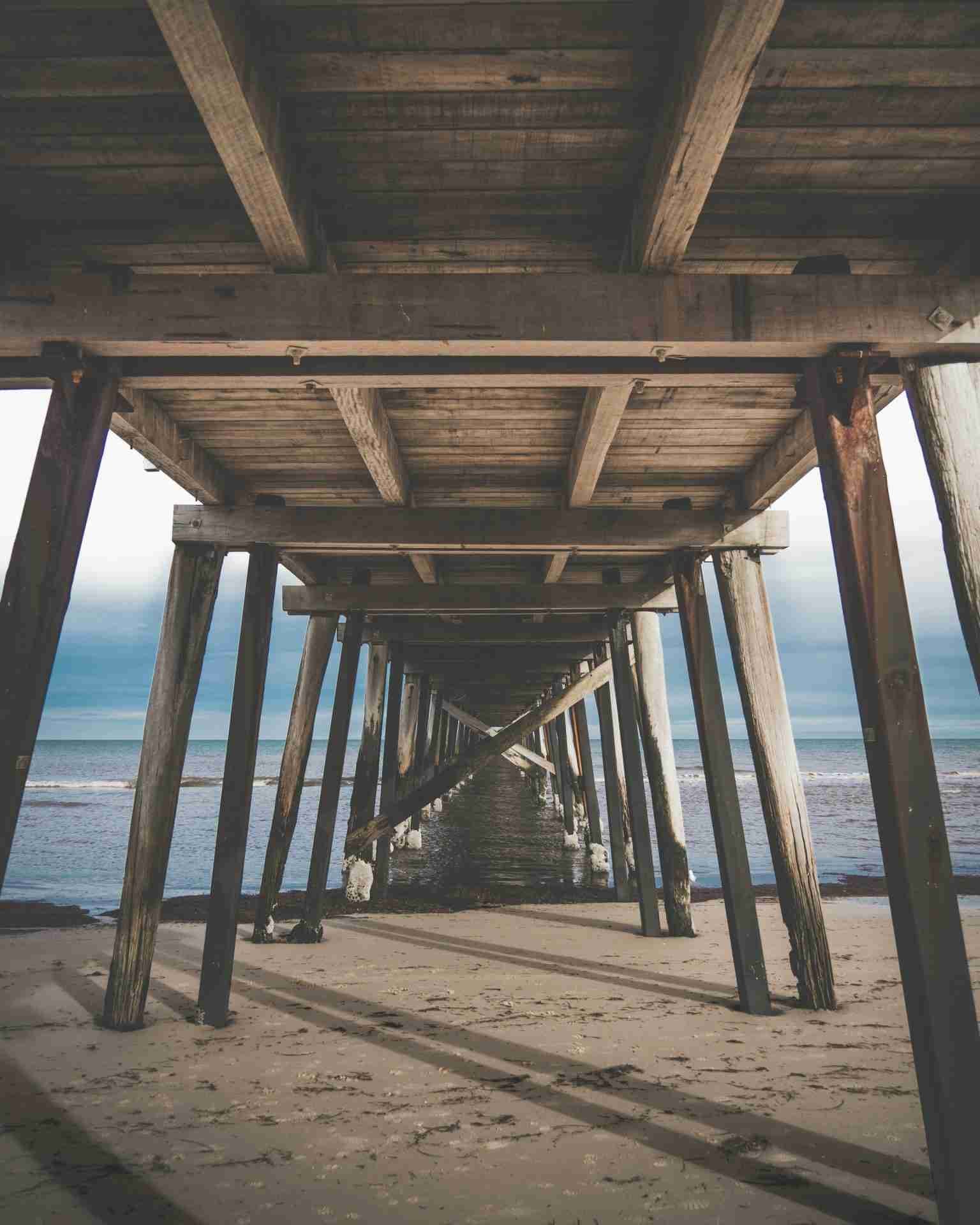
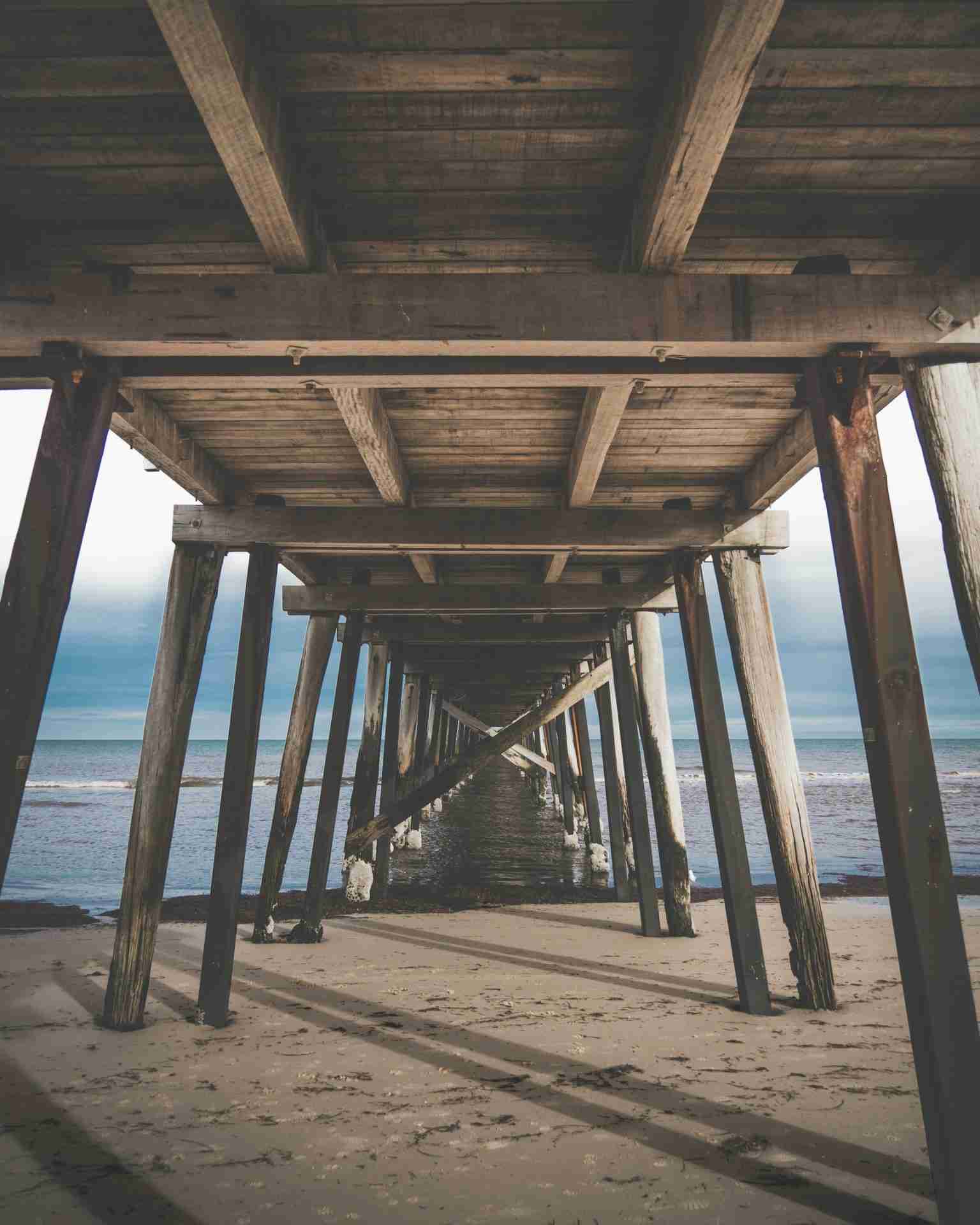
Grange Jetty is a long timber structure stretching out from the beach into the Gulf St Vincent on Adelaide's western coastline. Set in the quiet seaside suburb of Grange, this jetty is a favourite spot for both locals and visitors looking for calm ocean views and open skies. For photographers, it offers a clean, straightforward subject that changes with the light. The jetty's length, shape, and weathered textures make it ideal for long exposures, symmetry focused compositions, and layered seascapes. With open access from the beach and clear sunset views across the water, it's a rewarding place to shoot both quickly and patiently.
Best Photography Opportunities
• Leading Lines
The most classic composition here is from the beginning of the walkway, looking straight down the length of the jetty toward the sea. The planks, handrails, and light posts all work together to guide the eye, especially with a wide angle lens. At golden hour, the light moves across the timber and adds warmth to the scene. This is a good place to work with centered symmetry, or to shift slightly off to one side for a different balance. A tripod helps with slower shutter speeds as the light drops.
• Jetty Framed by Water and Sky
Stepping off to either side of the beach, you can photograph the jetty from an angle that shows its length and the movement of the sea. Shooting from a low position near the shoreline allows you to include waves, sand, or reflections in the foreground. These compositions work best when the tide is rising or falling, adding texture to the frame. Evening light from behind the beach creates long shadows and warm color on the supports. A polarising filter helps reduce glare on the water and darken the sky.
• Beneath the Jetty with Repeating Supports
The spacing of the timber supports beneath the jetty creates a tunnel like perspective that's strong for photos, especially when the sea is calm or the tide is low. You can walk beneath the structure to line up the vertical posts as they lead into the distance, framing either water or sky at the far end. This view changes dramatically depending on the light. Soft golden hour tones bring out the texture in the wood, while overcast skies make it easier to control exposure without harsh contrast.
• Long Exposures at Sunset
As the sun sets over the Gulf, the water and sky begin to soften, making this a great time for long exposures. Using a tripod and neutral density filter, you can stretch out shutter times to blur the water and clouds, turning the jetty into a static shape within a more fluid frame. This technique is especially effective from the beach, shooting alongside the jetty with the ocean filling the background. Sunset often brings pastel tones, and the open horizon means you can build a clean composition without too many distractions.
• Detail Shots of Timber, Bolts, and Grain
The jetty's materials are well worn, with weathered planks, rusty bolts, and aged railings that make for strong close up subjects. These textures are best photographed in soft light or when the sun is low enough to skim across the surface. Look for repetition in the boards, or small areas where the wear and tear tells a story. These detail shots work well as part of a larger set and help give your series a more complete sense of place.
Best Time to Visit
Sunset is the best time to photograph Grange Jetty. The view faces west across the Gulf, giving you a full range of color and changing light in the final hour of the day. Golden hour brings out warm tones in the timber, while blue hour adds softness to the sky and gives you a chance for longer exposures. The structure also casts long shadows across the sand and water, which adds more shape to your compositions.
Mornings can work, especially for softer light and fewer people, but the sun rises behind the land so the jetty is mostly backlit or in shadow. Cloudy days offer more control over contrast and are ideal if you're focused on texture or planning to shoot detail rather than sky. The jetty is open all year, and seasonal differences mostly affect sunset timing and sky patterns. Summer tends to bring clearer skies, while winter offers more cloud structure and drama.
How to Get There
Grange Jetty is located in the seaside suburb of Grange, about 25 minutes west of central Adelaide by car. Follow Jetty St until it ends, where you'll find parking and beach access points. Public transport is also available, with the Grange train line running from the city to a nearby station just a short walk from the water.
The jetty is free to access and open to the public at all hours. The walkway is flat and easy to navigate, with beach access via stairs and paths. The surrounding area includes benches, shaded spots, and a small café nearby if you're planning to spend more time.
Recommended Photography Gear
A wide angle lens in the 16 to 35mm range is perfect for shooting along or beneath the jetty and for including large sky and water sections in your frame. A 24 to 70mm zoom gives flexibility for medium range compositions, while a longer lens is useful if you're isolating detail or compressing the structure against the horizon.
A tripod is important if you plan to shoot in low light or work with long exposures at sunset. Neutral density filters allow you to slow your shutter for water and sky movement. A polarising filter helps cut reflections and add contrast to midday shots. Since you'll be walking across sand and damp timber, keep your gear packed light and bring a cloth to manage sea spray or dust.
Nearby Photography Locations
North of Grange, this jetty is slightly busier but offers similar long views and clean lines. The surrounding plaza and beachfront buildings can be used as structural elements in wide compositions, especially in evening light.
Further north, Semaphore has a longer stretch of beach and a more open shoreline. The jetty here is wider and includes more prominent handrails and light fixtures, giving you a stronger silhouette at sunset.
• West Lakes Shore
Just inland from Grange, this man made lake has calm water, reflective surfaces, and walking paths with views across the shoreline. It's a useful location for soft light and quiet framing on overcast days.
South of Grange, this protected dune area offers coastal textures, walking trails, and open views across native plants toward the ocean. It's a strong contrast to the structured lines of the jetty and pairs well with a longer photo session.
• Glenelg Jetty and Marina
A short drive south, Glenelg adds a more built-up waterfront and a mix of old and modern structures. The jetty here is well lit, and the marina offers clean reflections, especially during twilight and early morning.
Comments
Loading comments…