
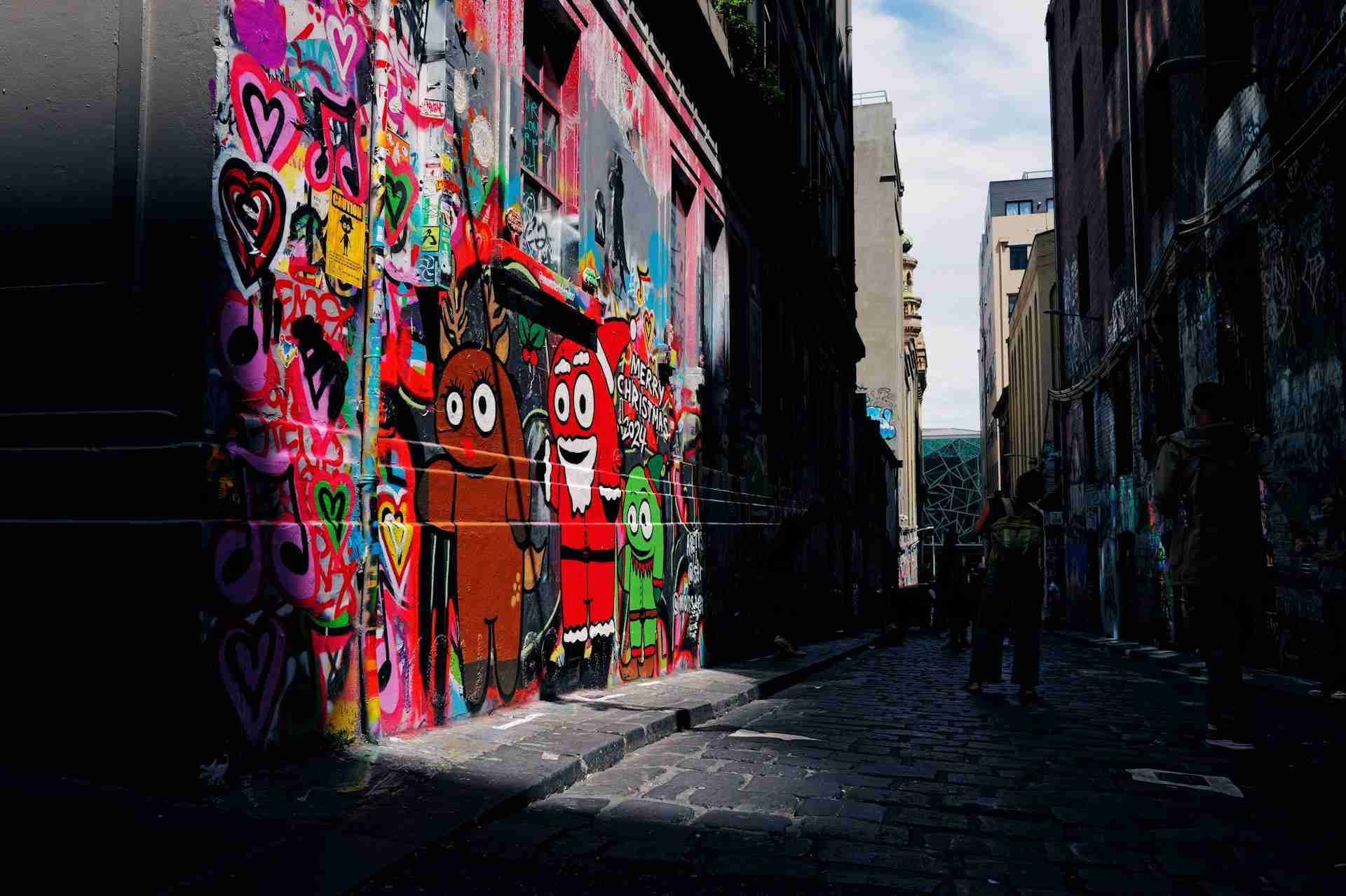
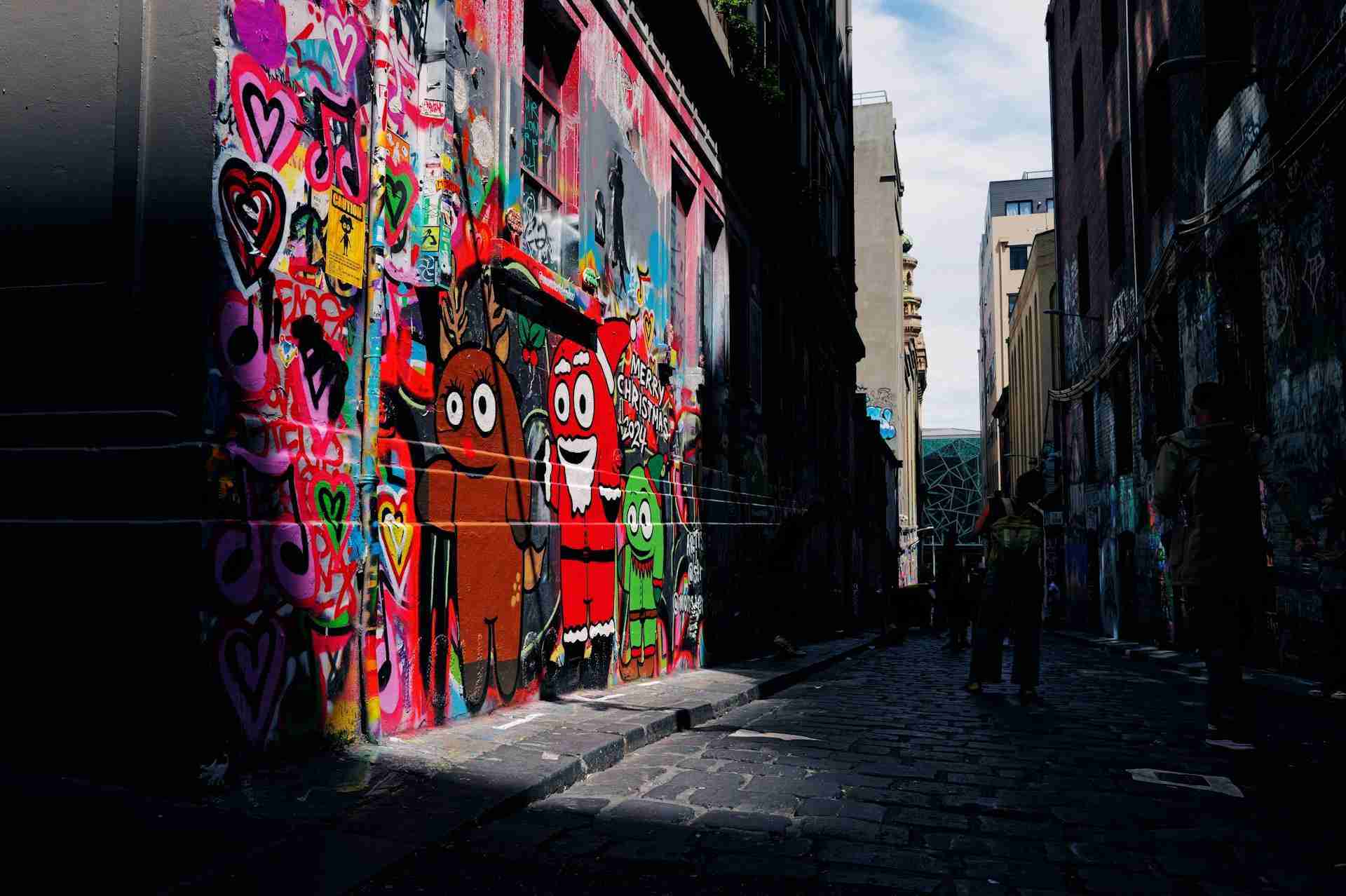
Tucked between the sleek lines of Melbourne's Central Business District, Hosier Lane
explodes with color, texture, and urban energy. Known globally as a mecca for street art, this narrow cobbled alley is a living canvas—every surface from doors to dumpsters covered in bold murals, intricate stencils, political tags, and abstract graffiti. The constantly changing work, combined with the lane's moody lighting, brick textures, and inner-city character, makes Hosier Lane one of the most photographically dynamic spots in Australia. For photographers seeking vibrant detail, shifting light, and the challenge of capturing impermanence, this location delivers shot after shot.
Best Photography Opportunities
• Full-lane perspectives from the Flinders Street entrance
The northern entrance to Hosier Lane, just across from Federation Square, offers a dramatic view into the full stretch of the alley. From this point, the lane's slight curve leads the eye through layered colors, murals, and cobbled texture toward the southern end. A wide-angle lens is essential for capturing the vertical sprawl of graffiti and the visual density of the environment. Early morning light entering from Flinders Street enhances the texture and offers clarity without crowding. This is the best time to photograph the lane in its most raw and undisturbed form, with fresh paint often added overnight.
• Close-up detail shots of layered surfaces and decayed textures
Every wall in Hosier Lane offers endless detail—from sprayed layers of color and decaying posters to tags over murals and splashes of texture that document the lane's organic evolution. These close-up compositions are ideal for a mid-range zoom or macro-capable lens, allowing you to isolate unique color juxtapositions, textures of weathered brick, or a stencil embedded beneath torn wheatpaste. Overcast light provides the best illumination for these shots, avoiding glare and highlighting the vibrancy of paint and paper. These details are often overlooked in wide shots but reveal the alley's true artistic complexity.
• Candid portraits and environmental street scenes
Hosier Lane is rarely empty, which provides constant opportunities for dynamic street photography and portraits. Musicians, dancers, tourists, and working artists move through the space, often unknowingly participating in compelling photographic narratives. By using a moderate focal length and standing back, you can frame interactions against vibrant art backgrounds that add both context and depth. Timing is key—late afternoon tends to offer dramatic, low-angle light and increased street presence without the full chaos of midday crowds. Including passerby movement also emphasizes the ephemeral nature of both the people and the art.
• Reflections and vertical symmetry in wet conditions
After rainfall, the uneven cobblestones of Hosier Lane collect puddles that mirror the vertical artworks with striking clarity. Shooting low to the ground allows you to capture reflections that double the visual impact of the walls and introduce symmetry and abstraction. These compositions are particularly effective at twilight or during blue hour, when fading light adds subtle tone to both surfaces. A tripod and careful manual focus help maintain precision, especially in shallow puddles or under rapidly changing lighting. These shots convey both mood and the temporal texture of Melbourne's laneway culture.
• Long exposure night photography capturing ambient light and shadow
At night, Hosier Lane transforms. Limited lighting from overhead fixtures and surrounding buildings creates pools of light and shadow that enhance the visual contrast of the alley's texture. Long exposures allow ambient glow to build up across the painted walls, while stillness in the alley emphasizes the starkness of its graffiti-covered architecture. A tripod is essential, as is manual exposure control to avoid blown highlights and retain color accuracy. Framing toward the south end often yields the most balanced compositions, especially if there's ambient light spill from Flinders Lane.
Best Time to Visit
Hosier Lane rewards photographers at any time of day, but each time window offers a distinct mood. Early morning is the quietest and cleanest time to shoot, both in terms of foot traffic and visual clarity. The indirect eastern light filters gently into the alley, highlighting surface texture and color without harsh shadows or glare. Morning visits also provide the rare chance to capture fresh, untagged work before crowds begin to arrive.
Midday light tends to be harsh and fractured by the high walls, but for photographers focused on human interaction or street performance, this is when the lane is most active. It becomes a dynamic stage of movement and personality—perfect for candid captures and layered compositions featuring people and art. Photographers who thrive on capturing energy will find this the most rewarding period for narrative scenes.
Late afternoon and golden hour offer the richest tones, especially in the summer months. Light bouncing off adjacent buildings creates a warm cast across the alley's central corridor, while shadows stretch to add dimensionality. In winter, the lane takes on a more subdued mood, perfect for monochrome studies or misty compositions. After rain, puddles transform the cobbles into reflective surfaces that amplify light and color. For night photography, the lane remains open and atmospheric into the evening, with enough ambient light to work without resorting to flash or heavy lighting gear.
How to Get There
Hosier Lane is located between Flinders Street and Flinders Lane in Melbourne's CBD, directly across from Federation Square and steps from Flinders Street Station. The entrance is unmistakable—framed by bold art and constant foot traffic. For those arriving by tram, any line that stops at Federation Square or along Swanston Street will leave you within one block of the lane.
The lane is pedestrian-only and easily accessible from both ends. The surface is made of cobblestone and can be slick after rain, so proper footwear is advised. The central location means the lane is always within walking distance of other major photography sites, including the Yarra River, graffiti-rich AC/DC Lane, and the laneways around Centre Place. There are no permits or access restrictions for street photography, though those planning commercial shoots may need to coordinate with the City of Melbourne.
Recommended Photography Gear
A wide-angle zoom (16–35mm) is indispensable for capturing full-wall scenes, vertical perspectives, and immersive frames within the tight laneway. This focal range allows you to emphasize height, density, and the overwhelming scale of detail present on every surface. When shooting from either end of the alley, it also helps compress the length of the space while maintaining visual clarity.
A mid-range zoom (24–70mm) offers flexibility for walking the lane and switching between detail work, candid portraits, and architectural studies. It performs well in changing light and allows you to stay nimble without switching lenses frequently. For those focused on texture and abstract layers, a fast prime lens (35mm or 50mm) adds precision, especially in lower light or when isolating small sections of wall or street-level interaction.
A tripod is essential for long exposures at night, shooting reflections, or composing deliberate frames in low light. ND filters can help extend exposures even in daytime, especially for motion blur involving people or shifting light conditions. A circular polarizer reduces reflections from glossy paint or wet surfaces and improves contrast in midday light. Bring a weather-resistant bag and lens cloths, as the lane often retains moisture and dust, particularly along the lower walls and cobbled pavement.
Nearby Photography Locations
A narrower and moodier laneway not far from Hosier, this alley is filled with grittier, music-themed street art and fewer tourists. It's excellent for low-light shots, atmospheric compositions, and detail-focused wall photography.
One of Melbourne's most iconic buildings, this grand old railway station offers ornate architecture, strong symmetrical lines, and excellent lighting at sunrise and sunset. Best photographed from across the street or nearby underpasses.
This bustling laneway is filled with cafés, alley murals, and hanging signage, offering a different kind of urban charm. Great for candid street photography and texture-rich, tightly framed compositions.
Just across the road from Hosier Lane, this modern architectural plaza features angular facades and strong geometric design. Ideal for wide shots and abstract urban photography, particularly in golden hour light.
• Birrarung Marr and the Yarra Riverfront
A few minutes' walk away, this riverfront space offers long views of the Melbourne skyline, the Evan Walker Bridge, and distant arts precinct landmarks. It's excellent for wide compositions and long exposure work, especially at blue hour.
Hosier Lane remains one of the most accessible yet artistically rich urban environments in Melbourne. Whether you're drawn to full-scene urban portraits, up-close graffiti textures, or reflective puddle compositions, it offers a rewarding and ever-changing visual experience. For photographers who thrive on atmosphere, movement, and detail, this laneway continues to deliver inspiration with every visit.
Comments
Loading comments…