
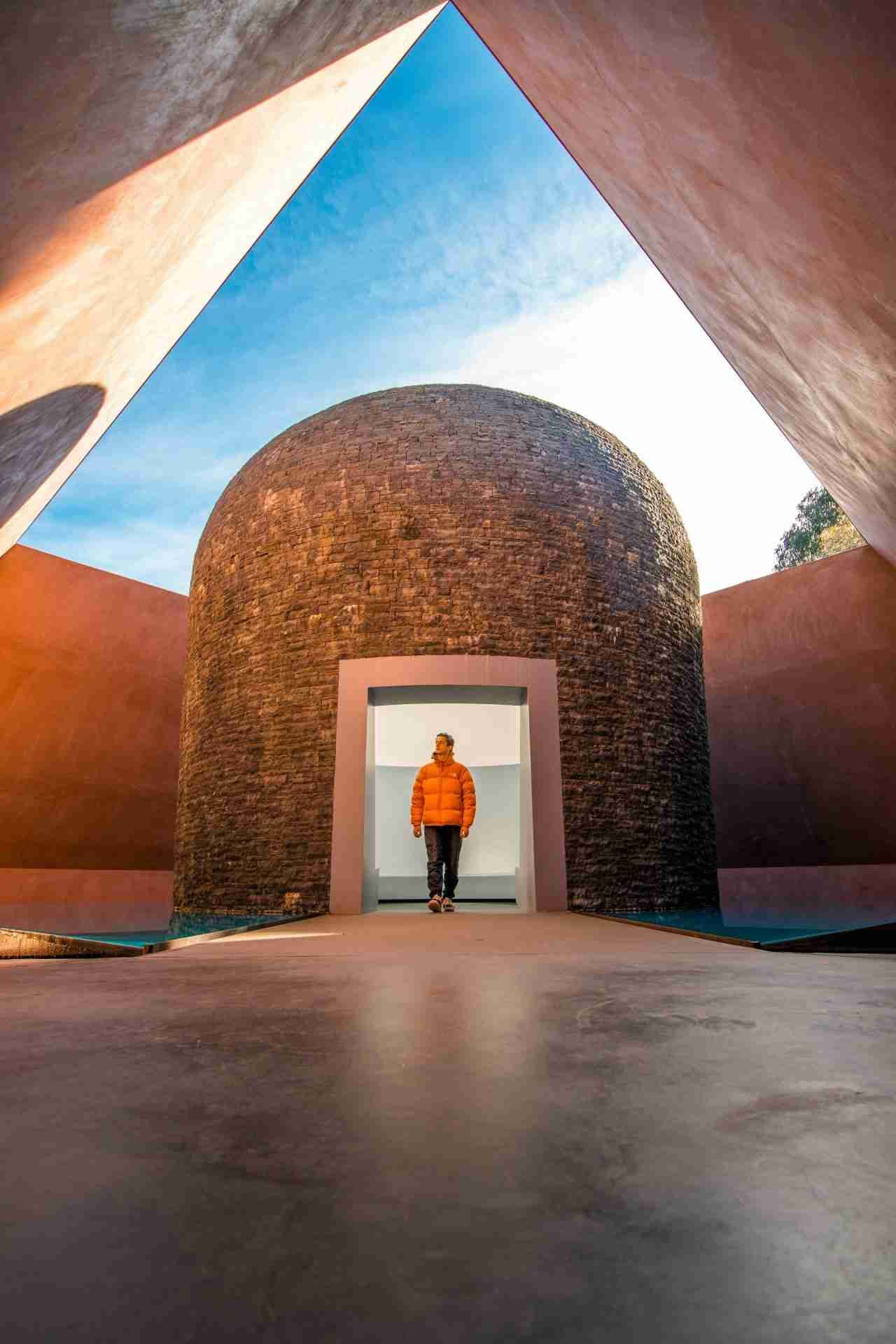
Tucked behind the National Gallery of Australia, James Turrell's Within Without Skyspace is a meditative space where architecture, light, and atmosphere meet. This installation is not just something to look at. It is something to sit inside, to explore, and to watch it change with the light. The experience centers around a domed chamber with a circular aperture in the ceiling that frames the sky like a living canvas. As natural light shifts, the color and intensity of the environment transform, making every moment within the space subtly different. For photographers, this is a location that rewards slow observation, careful timing, and an openness to minimalism and mood.
Best Photography Opportunities
• Sky Framed by the Oculus
The circular opening at the top of the skyspace is the focal point of the installation, and photographing through it allows you to isolate the sky in a way that feels both abstract and powerful. The aperture cleanly crops clouds, stars, or shifting tones of dusk and dawn into an almost painterly composition. Use a wide lens to include the edges of the dome for context, or go tighter for more graphic results. Twilight is especially effective, as the light inside the chamber contrasts with the cool blue or deep purple outside. Consider working from a seated or low angle for a perspective that mirrors the viewer's experience.
• Interior Geometry and Light Transitions
Inside the chamber, the sloping walls, water pool, and central stone pyramid offer rich possibilities for symmetry and texture based compositions. As the light outside changes, the color of the surfaces subtly shifts, affecting both white balance and emotional tone. Long exposures can enhance the stillness, while handheld work lets you adapt quickly to changing light. Try framing the pyramid against the walls or using the reflections in the shallow pool to introduce soft, organic shapes. Because the space is so quiet and minimal, small changes in composition carry a lot of weight.
• Twilight Color Shifts in the Dome
The moments just before sunrise and just after sunset are when Within Without comes alive. During these times, artificial lighting inside the chamber interacts with the fading natural light, bathing the walls in shifting hues. These transitions often happen quickly and unpredictably, so preparation is key. Use manual exposure and white balance settings to retain control over how colors are captured. A tripod is helpful, but the space's design encourages unobtrusive gear and a quiet shooting approach.
• Reflections in the Surrounding Pool
Outside the chamber, a wide moat encircles the main structure and reflects both the dome and sky above. Calm weather creates mirror like surfaces that are ideal for symmetry, especially when paired with the soft pastels of early morning or evening light. You can also incorporate parts of the natural landscape, like reeds or trees, into your frame to contrast the structure's precision. Watch how the reflected aperture shifts as you move around the edge. It opens up several creative variations without having to change your focal length.
• Minimalist Detail Studies
The textures of concrete, stone, and water offer opportunities for detail photography that moves beyond the obvious. The structure invites quiet, observational work, where you can explore how a single line, curve, or ripple might carry the image. Use a fast lens to isolate patterns in shallow depth of field, or stop down to emphasize graphic clarity. Overcast conditions are excellent for this type of shooting, as they eliminate harsh shadows and let form and texture take the lead. These images work especially well as part of a series or in black and white.
Best Time to Visit
The most rewarding times to photograph Within Without are during the transitions between night and day, specifically pre dawn and just after sunset. These periods provide the subtle interplay of natural and artificial light that the skyspace is designed to enhance. In the early morning, the site is often empty and peaceful, allowing for longer, uninterrupted sessions and cooler tonal palettes. Evenings tend to have more color contrast and warmer tones, especially as the inner walls begin to glow with interior lighting. Cloudy or overcast days should not be dismissed, as they provide soft, diffused conditions ideal for detail work and reflection shots. Summer mornings offer earlier access with fewer people, while winter's lower sun angle can cast longer, more sculptural shadows across the space. If you plan to photograph both inside and outside, arriving well before your ideal light window will allow time to scout compositions and adjust settings in the dimming or brightening environment.
How to Get There
The Skyspace is located within the sculpture garden behind the National Gallery of Australia in Canberra. It is accessible via footpaths from the gallery's main entrance and nearby public parklands. Public parking is available close to the gallery, and the site is within easy walking distance of other major cultural institutions in the Parliamentary Triangle. Entry to the Skyspace is free and it is open to the public from dawn until dusk. Because the space is part of an active art installation, tripods should be used respectfully and quiet behavior is expected while inside. No reservations are required, but the space is best visited when foot traffic is low for a more focused photographic experience.
Recommended Photography Gear
A mirrorless or DSLR camera with strong low light performance is ideal for working inside the skyspace, especially during twilight or early morning. A wide angle lens allows you to capture the full geometry of the dome, reflections, and the surrounding environment, while a fast prime in the 35mm to 85mm range is excellent for detail studies and tighter compositions. A small, lightweight tripod will help with long exposures, particularly during dawn or dusk color shifts, though handheld work is possible with image stabilization and fast lenses. Manual focus and exposure controls are useful for fine-tuning in the varying lighting conditions. Avoid bulky gear or large bags, as the space is intimate and best navigated with a minimal setup. Lens wipes and a clean cloth are handy when working around water or in humid conditions. Consider shooting with custom white balance settings to capture the unique hues of the installation without relying on auto adjustments.
Nearby Photography Locations
Just outside the Skyspace, this outdoor collection features a variety of large-scale works set among trees, lawns, and water features. The changing light creates dynamic shadows and highlights across the sculptures, offering both abstract and environmental compositions.
A short walk from the gallery, this manmade lake provides wide open views of water, sky, and Canberra's architectural landmarks. Early mornings are particularly beautiful when fog drifts across the surface and the water reflects pastel skies.
Located on a small island in Lake Burley Griffin, the Carillon is a striking vertical structure that photographs well from a distance or up close. The surrounding footbridges and shoreline trees offer strong compositional elements at sunset or in low light.
This ceremonial pathway features a mix of sculptural and symbolic installations along a gentle curve leading toward the lake. The combination of design, text, and open space works well for narrative and documentary style photography.
These areas provide strong architectural lines, open space, and views back toward Parliament House, especially effective under long shadows or dramatic skies. The minimal design and geometric layout create good opportunities for clean, modern compositions.
Comments
Loading comments…