
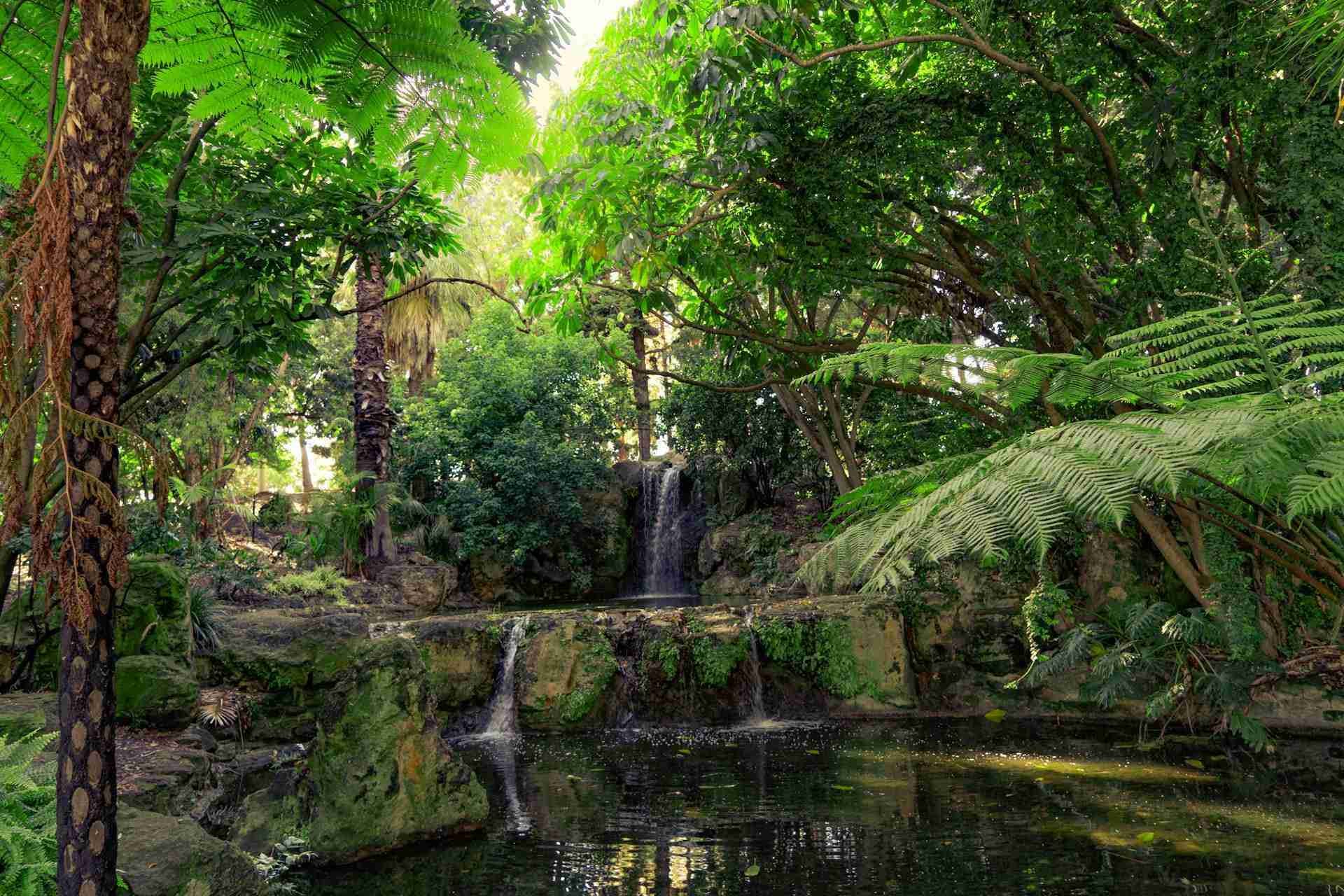
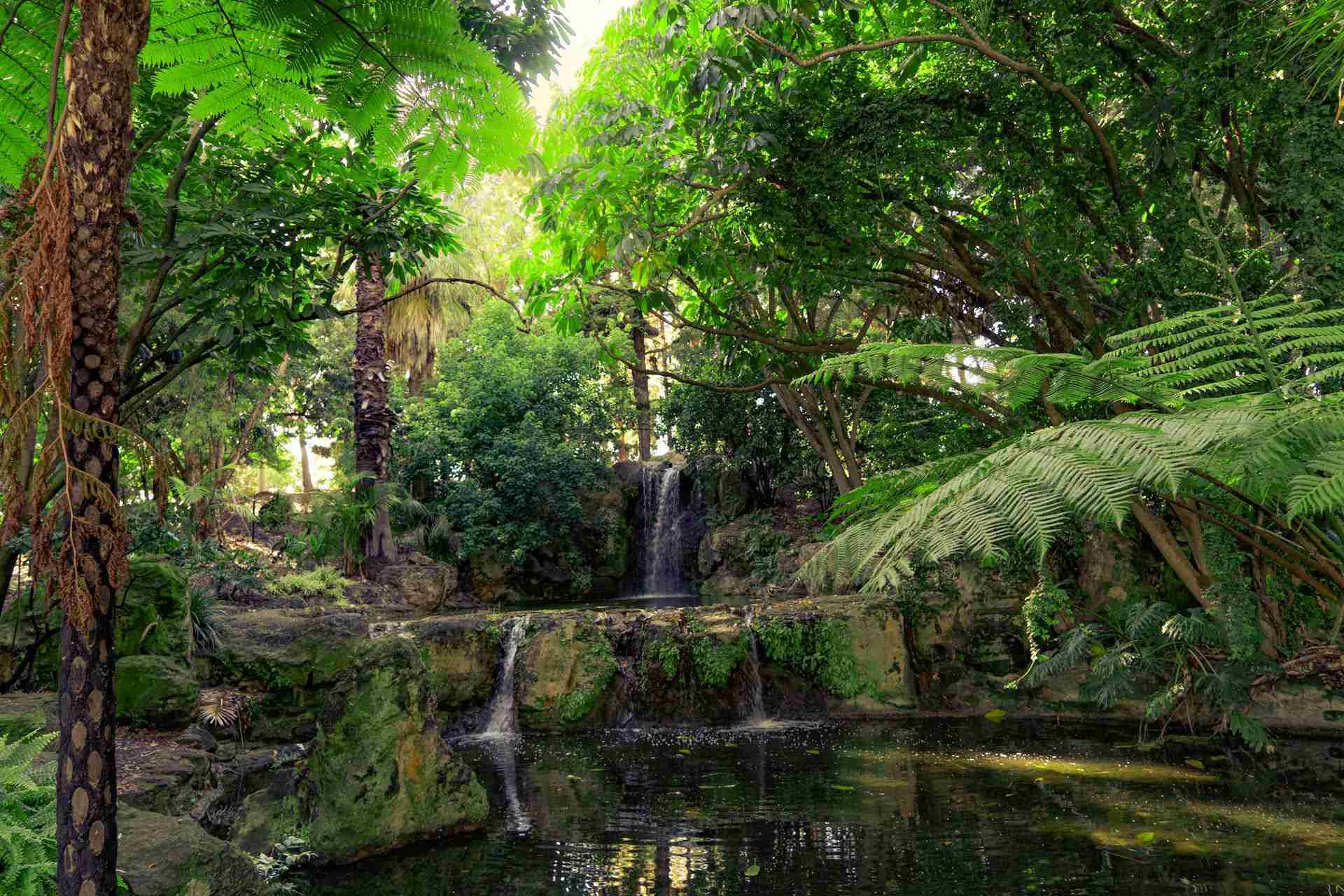
John Oldham Park is located along Mounts Bay Road on the edge of Perth's central business district, where it feels hidden between the Swan River and the skyline. Designed in the mid twentieth century by landscape architect John Oldham, the park combines landscaped waterfalls, reflective lakes, bridges, and shaded pathways in a compact setting. Photographers will find it offers a wide variety of subjects within walking distance of the city centre. Here you can set up for long exposures at the waterfall, capture birdlife along the lakeside, or frame the city skyline above the trees. It is a location that feels quiet and natural while still being surrounded by urban life, making it a versatile space for both nature and city photography.
Best Photography Opportunities
• Waterfalls and Rock Features
The waterfalls at John Oldham Park are the standout subject for photographers. While not dramatic in size, they are beautifully constructed with stone surrounds that frame the water in naturalistic ways. Long exposure photography is particularly rewarding here, as the steady flow of water becomes silky and ethereal against the rough surfaces of the rocks. During winter and spring, after seasonal rains, the falls are full and energetic, making them the best time to capture movement. In summer the flow slows, but this creates opportunities for tighter compositions, focusing on delicate trickles of water and the moss that grows along shaded surfaces. Tripod work is essential here, and polarising filters will reduce glare on wet rocks and deepen the surrounding greenery.
• The Central Lake and Its Reflections
The park's lake is a calm counterpart to the energy of the waterfalls, and it offers one of the best reflection opportunities in Perth. On still mornings the water surface mirrors the trees, footbridges, and sometimes even glimpses of the city skyline beyond. Wide compositions work beautifully, balancing water and sky, but the lake is also excellent for minimalist work. A single bird gliding across the water can break the reflection just enough to add movement and narrative. In the evenings the lake reflects the warm colours of sunset and the artificial glow of city lights, creating chances for twilight compositions that merge natural and urban light in a single frame.
• Bridges, Pathways, and Human Scale
The small bridges scattered across John Oldham Park are more than practical structures. They add rhythm and focal points to the landscape, giving photographers strong lines to incorporate into compositions. Shooting across a bridge with a wide-angle lens can create a sense of leading movement, while side views allow you to frame them as repeating geometric shapes. The pathways winding beneath tall trees are equally photogenic, providing vanishing point compositions that feel immersive. These walkways are also useful for portraiture, as the clean natural backgrounds of tree trunks and foliage create flattering and uncluttered frames.
• Wildlife and Bird Activity
For such a central location, John Oldham Park attracts an impressive range of birdlife. Ducks and swans are common on the lake, while smaller species flit through the canopy and reeds. Photographers with telephoto lenses will find plenty to work with, from birds landing on the water to reflections of swans crossing the lake in the stillness of morning. The park also supports reptiles and insects, which provide macro opportunities for photographers who like to get close. Wildlife photography here is most productive early in the day, when the park is quieter and the animals are more active.
• City Skyline Views Through the Trees
One of the unique aspects of John Oldham Park is the ability to frame Perth's modern skyline through natural greenery. From certain angles around the lake, high-rise buildings appear behind the tree line, allowing for layered compositions that combine city and nature. These shots work particularly well in the evening, when the city lights glow against twilight skies while the park itself falls into shadow. Long exposures are effective for smoothing the lake surface and capturing light trails from passing traffic on Mounts Bay Road, which adds an urban energy to the otherwise calm setting.
• Details and Seasonal Changes
Beyond its obvious highlights, John Oldham Park rewards attention to small details. Flowers bloom around the edges of the lake in spring, while autumn brings softer tones and quieter scenes along the pathways. The surfaces of rocks, the bark of trees, and the patterns of fallen leaves make excellent subjects for close-up or macro photography. Even the shadows cast by palms and tall trees create abstract compositions when photographed in strong sidelight. Each season changes the feel of the park, offering new textures and subjects for repeat visitors.
Best Time to Visit
The most productive time to photograph John Oldham Park is early morning. At this hour the air is calm, making the lake reflective, and golden light filters through the trees at low angles, creating depth and soft highlights. Morning is also when wildlife is most active, giving you better chances to capture birds and small animals. Evenings are another excellent time, particularly for skyline views as the city lights begin to glow and reflect across the water. Winter and spring are the best seasons for waterfalls and lush greenery, as rainfall keeps the streams full and the vegetation vibrant. Summer brings longer daylight hours, and while light can be harsh in the middle of the day, early and late hours still work well. Autumn is quieter, with fewer visitors and subtle shifts in colour that add variety to your compositions. Overcast days can also be advantageous, softening midday light and reducing harsh contrast, especially around the waterfalls and reflective water surfaces.
How to Get There
John Oldham Park is located on Mounts Bay Road, only minutes from Perth's city centre. On foot, it takes around ten minutes to walk from the central business district. By car, the park is accessible in a few minutes, with parking available near the entrance along Mounts Bay Road, although spaces are limited during peak hours. Cyclists can easily access the park as it connects directly to Perth's riverside cycle path network. Public transport options are available as well, with buses running along Mounts Bay Road and nearby stops within walking distance. Entry to the park is free and it is open year-round. While there are basic paths and open lawns, facilities are limited, so it is best to bring water and any supplies you need for a longer shoot. The compact layout means you can explore the whole park comfortably in a couple of hours, but its proximity to Kings Park and Elizabeth Quay makes it easy to extend your session into a full day.
Recommended Photography Gear
Photographing John Oldham Park is most rewarding when you bring a versatile kit. A wide-angle lens is essential for capturing waterfalls, bridges, and reflections in full context. A mid-range zoom such as a 24 to 70 millimetre lens provides flexibility for environmental portraits, pathways, and skyline views. A telephoto lens is important for isolating birdlife and compressing views of the city framed through trees. A tripod is essential for long exposure waterfall photography and for dusk cityscapes, while a polarising filter helps cut glare and bring out richer tones in the water and foliage. Neutral density filters are valuable for controlling exposure during long daytime shoots, particularly around the waterfalls. Macro lenses open up another world, allowing you to capture flowers, insects, and textures. Because the park is compact, it is easy to carry a full kit without difficulty, and being able to switch between gear types quickly will allow you to make the most of the park's variety.
Nearby Photography Locations
Rising above John Oldham Park, Kings Park is one of Perth's most famous green spaces, offering panoramic views of the city skyline, the Swan River, and the Darling Range. Its gardens and bushland provide opportunities for macro, landscape, and panoramic photography.
A short walk east along the river, Elizabeth Quay features striking architecture, bridges, and public art installations. It is especially photogenic at night, when the city lights are reflected across the water.
To the west of the park, Matilda Bay offers wide views across the Swan River with yachts, birdlife, and open water reflections. Sunset is particularly good here, with the skyline catching warm evening light.
Across the river, this location provides one of the best views of Perth's skyline. Long exposures at dusk capture shimmering reflections of the buildings and create dramatic cityscapes.
Close to John Oldham Park, Jacobs Ladder is a steep staircase that connects Mounts Bay Road with Kings Park. Its repeating steps and geometric design make for strong architectural compositions, and it works well in both wide and detail shots.
John Oldham Park is often overlooked in favour of larger spaces like Kings Park, but for photographers it is one of Perth's most rewarding small locations. It offers waterfalls, reflective lakes, wildlife, and city views all within walking distance of the centre, and its compact size means you can cover a wide variety of subjects in a short visit. Each season changes the look and feel of the park, making it a place worth returning to regularly. For anyone photographing Perth, John Oldham Park provides the perfect balance of natural calm and urban context.
Comments
Loading comments…