
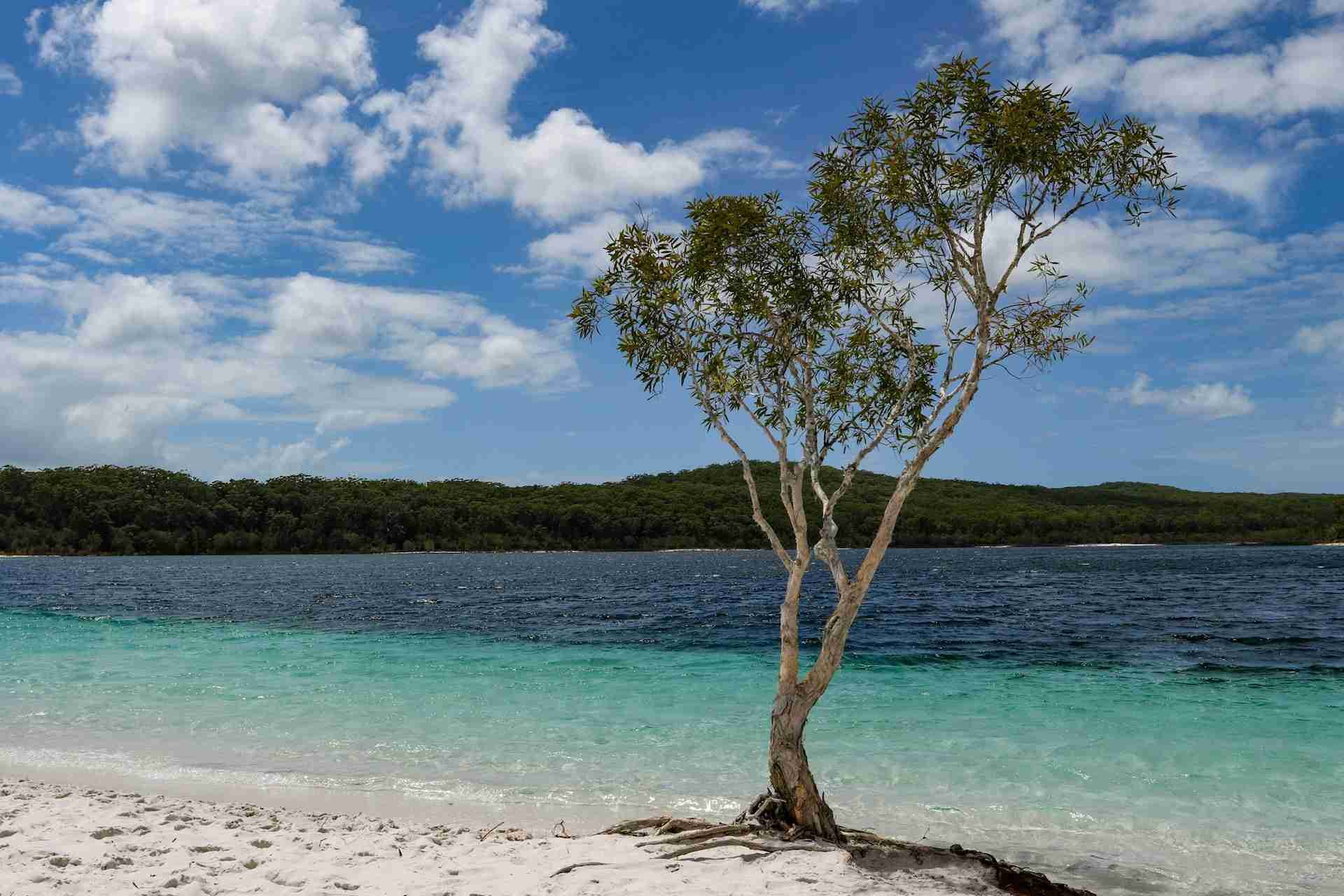
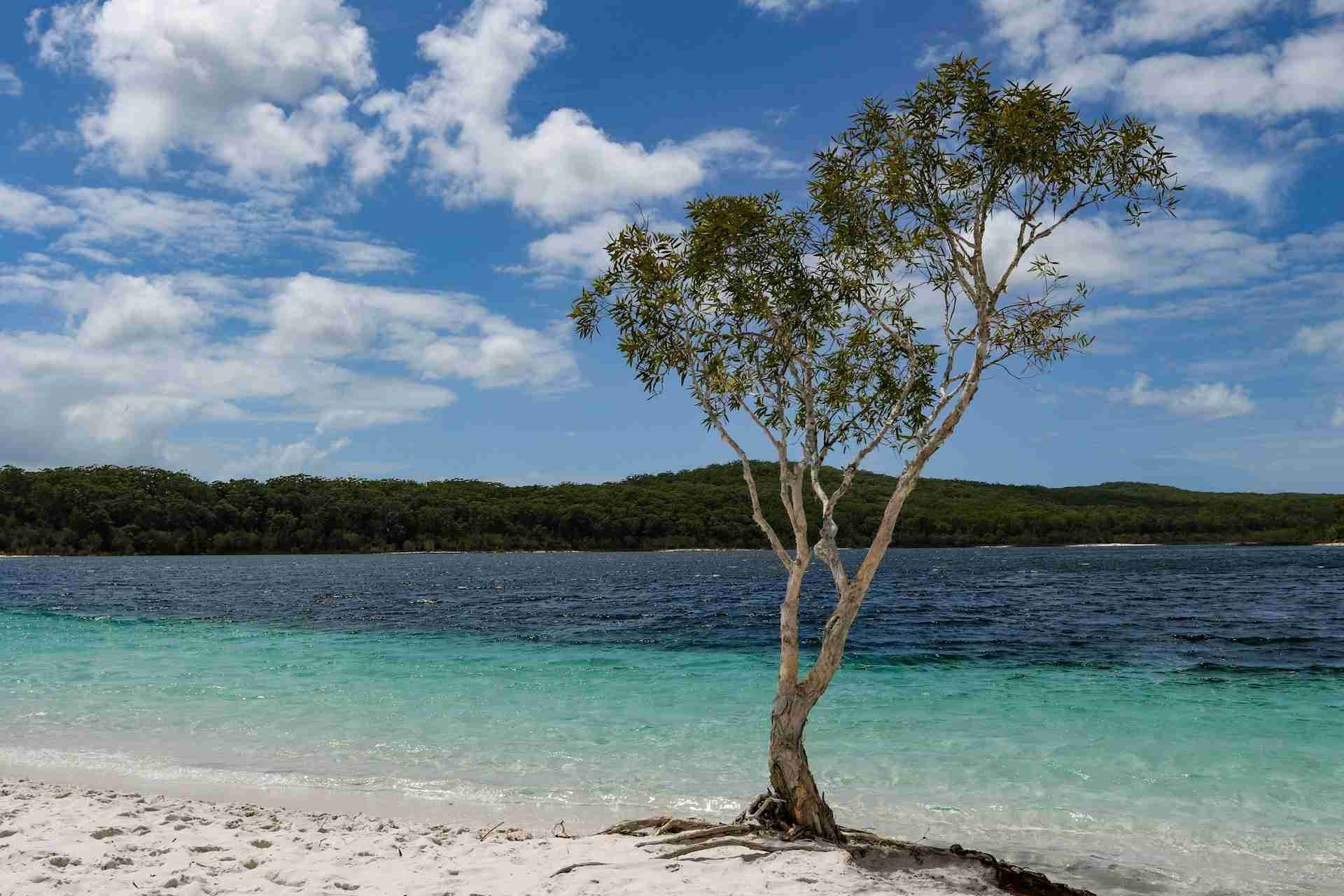
Lake McKenzie, traditionally known as Boorangoora, is one of the most visually captivating freshwater lakes in Australia, nestled at the heart of K'gari (Fraser Island)—the world's largest sand island. Revered for its pristine clarity, the lake features silica-white sand and pure rain-fed water that gives the shoreline a surreal contrast of bright turquoise shallows fading into deep cobalt blues. Surrounded by eucalyptus forest and ancient banksia, Lake McKenzie is both ecologically unique and photographically irresistible. The lake's shallow fringe acts as a perfect mirror in calm conditions, while the absence of inflow or outflow keeps the water incredibly still and reflective. This sacred site is not just a popular tourist destination—it's a serene, almost meditative landscape that rewards photographers seeking vibrant palettes, symmetrical reflections, and minimalist compositions shaped by water and sky.
Best Photography Opportunities
• Northern Shoreline Panorama with Curving Beach
: The gently arcing northern shoreline is a classic wide-angle opportunity, ideal for showcasing the transition from white sand to deep blue water. From this position, the curvature of the lake frames your shot naturally, leading the viewer's eye from the foreground beach into the expansive open water. The contrast between the chalk-white silica sand and the lake's tiered blue gradients—ranging from transparent aquamarine to deep navy—is particularly striking under a morning sun. Position your camera low to exaggerate the texture of the sand and use the wide frame to include sky reflections, creating a layered horizontal composition. This spot works beautifully for sunrise, when soft light enhances tonal transitions without introducing glare.
• Glass-Like Reflections at Dawn from Eastern Shore
: The eastern shoreline is sheltered and receives first light at sunrise, making it ideal for capturing clean, glassy reflections. On windless mornings, the water becomes a perfect mirror for the overhanging forest and pastel sky. Using a tripod, set up your shot with a balanced composition that includes trees, clouds, and mirrored elements. These conditions often last only an hour or two after dawn, so arriving early is essential. The slight mist that sometimes lifts from the water in cooler months adds atmosphere and softness to the background, especially when shooting with a longer exposure to gently smooth out any small ripples.
• Color Gradient Studies from Mid-Lake Trails
: Walk along the designated trails that run just above the lake's edge, particularly on the southern side where tree cover is more open. These higher viewpoints give you access to elevated compositions of the lake's optical gradient—clearly defined horizontal bands of color formed by sunlight hitting shallow vs. deep water. With a mid-range or telephoto lens, you can crop in tightly to create abstract images focused on just the transitions in tone and texture. These compositions work particularly well under full sun or slightly diffused midday light when the color saturation is strongest and the shadows minimal. Incorporating part of the beach in the lower frame adds context and a clean visual anchor.
• Framing Through Forest Canopy and Shoreline Contrast
: Move back slightly into the treeline that encircles the lake and photograph the beach and water through openings in the canopy. This layered framing creates a strong sense of depth, with branches and shadows in the foreground giving way to the bright blues of the lake. In the early morning or late afternoon, light filtering through the trees creates patterned shade across the sand, offering a great interplay between light and form. Using a telephoto lens to compress these layers adds visual intensity and balances the luminosity of the lake with the dark texture of bark, trunks, and shadow. These images feel more intimate and suggest the hidden, sacred nature of Boorangoora.
• Minimalist Silhouettes and Human Scale at Midday
: Though midday light is generally challenging, it can be used to your advantage for high-key, minimalist compositions. Silhouettes of visitors wading into the shallows or standing at the water's edge offer strong focal points against the stark white sand and saturated blue water. Use a fast shutter speed and shoot from a distance to reduce detail and emphasize human forms as graphic elements. Framing wide with empty space around the subject increases the visual impact and communicates scale. These images lend themselves well to black-and-white processing or creative overexposure for a clean, editorial style.
Best Time to Visit
Lake McKenzie is best photographed in the early morning, ideally between sunrise and 10 a.m., when the light is soft and the lake's surface is most reflective. The position of the sun during these hours ensures even lighting across the scene without deep shadows or blown highlights, allowing for true color rendition and balanced exposures.
From May through October, the weather is generally dry and clear, with mild temperatures that reduce heat haze and foot traffic. These months also tend to have lighter winds, which helps preserve the lake's mirror-like surface. Visiting on a weekday morning during this period offers the most peaceful conditions, often with the lake to yourself for an hour or two.
Summer (December to February) can be busy and intensely bright, with strong overhead sun creating deep shadows and reduced color separation. During this time, it's best to shoot during golden hour or return later in the day for backlit silhouettes and dramatic contrast. Afternoon light can also work well from the eastern shoreline, when the sun begins to rake across the lake and warm up the tones in sand and water.
Overcast days offer soft, even lighting that makes for excellent texture work and close-up compositions, though they reduce the vibrancy of the lake's color gradients. Rainy conditions are uncommon in the dry season but can add mood and variation to detail studies.
How to Get There
Lake McKenzie is located within the Great Sandy National Park on K'gari (Fraser Island), accessible only by 4WD vehicle or guided tour. To reach the island, take a vehicle barge from River Heads (just south of Hervey Bay) to either Wanggoolba Creek or Kingfisher Bay. From there, follow inland 4WD tracks to the central plateau of the island.
The road to Lake McKenzie from Kingfisher Bay Resort takes about 45 minutes via deeply rutted sand tracks that require a high-clearance 4WD and familiarity with off-road driving. Alternatively, you can join a day tour or photography-focused excursion, which includes transport, park fees, and limited visitor numbers during sensitive hours.
The lake itself has a designated parking area with restroom facilities and shaded picnic zones. From the lot, it's a short walk down to the beach via a sand path and boardwalk. Arrive early to beat crowds and preserve the tranquil, undisturbed water surface for reflection shots. Be aware that drones are not permitted in the area without a special permit, as the lake is a protected site within a World Heritage-listed ecosystem.
Recommended Photography Gear
A wide-angle lens (16–35mm) is key for capturing the full sweep of the shoreline, the curvature of the lake, and dramatic sky reflections. It's especially effective when shooting low to emphasize the meeting point between sand, water, and sky.
A mid-range zoom (24–70mm) is perfect for tighter compositions that highlight water gradients, beach textures, or contrast studies involving trees and shorelines. This lens also adapts well to changing light conditions and is flexible enough to handle most angles along the shore.
A telephoto lens (70–200mm) helps isolate reflections, silhouetted figures, or tonal transitions in the lake's surface. It's ideal for compressing elements in layered scenes or capturing abstract bands of color from a distance.
A polarizing filter will significantly enhance contrast and manage glare off the water, especially useful when trying to shoot through surface reflections to reveal sand patterns below. A sturdy tripod is optional but helpful for sunrise and long exposure work, particularly if you're shooting in low light or experimenting with ND filters.
Nearby Photography Locations
: This boardwalk trail leads through towering satinay and kauri trees beside crystal-clear Wanggoolba Creek. Early morning visits provide filtered light through the canopy and soft shadows for rainforest compositions.
: A shallow freshwater creek that flows directly into the beach, Eli Creek is perfect for capturing wading figures, clear water in motion, and minimalist sand and grass patterns. Shoot here in the late afternoon when golden backlight turns the water silver.
• Maheno Shipwreck
: Just north of Happy Valley on 75 Mile Beach, this rusted ocean liner has become an iconic photographic subject. Use long exposures at sunrise or sunset to blend surf movement with the decaying metal hull and distant clouds.
: A dune-fringed freshwater lake that contrasts strikingly with the golden sand blow behind it. The hike is more challenging, but the view from the ridge offers a powerful juxtaposition of color and terrain, ideal for wide landscape shots.
• Champagne Pools
: These natural tidal pools near Indian Head offer dramatic seascapes where waves crash over volcanic rock, creating effervescent sprays and tidal motion. Best photographed at high tide with a neutral density filter for dreamy ocean textures.
Lake McKenzie is a study in light, color, and purity—a sacred, surreal landscape that distills the essence of island stillness. Whether you're chasing reflections at dawn or capturing abstract textures in the midday haze, Boorangoora rewards both technical precision and quiet observation. This is not just a place to photograph—it's a place to pause, to reflect, and to truly see.
Comments
Loading comments…