

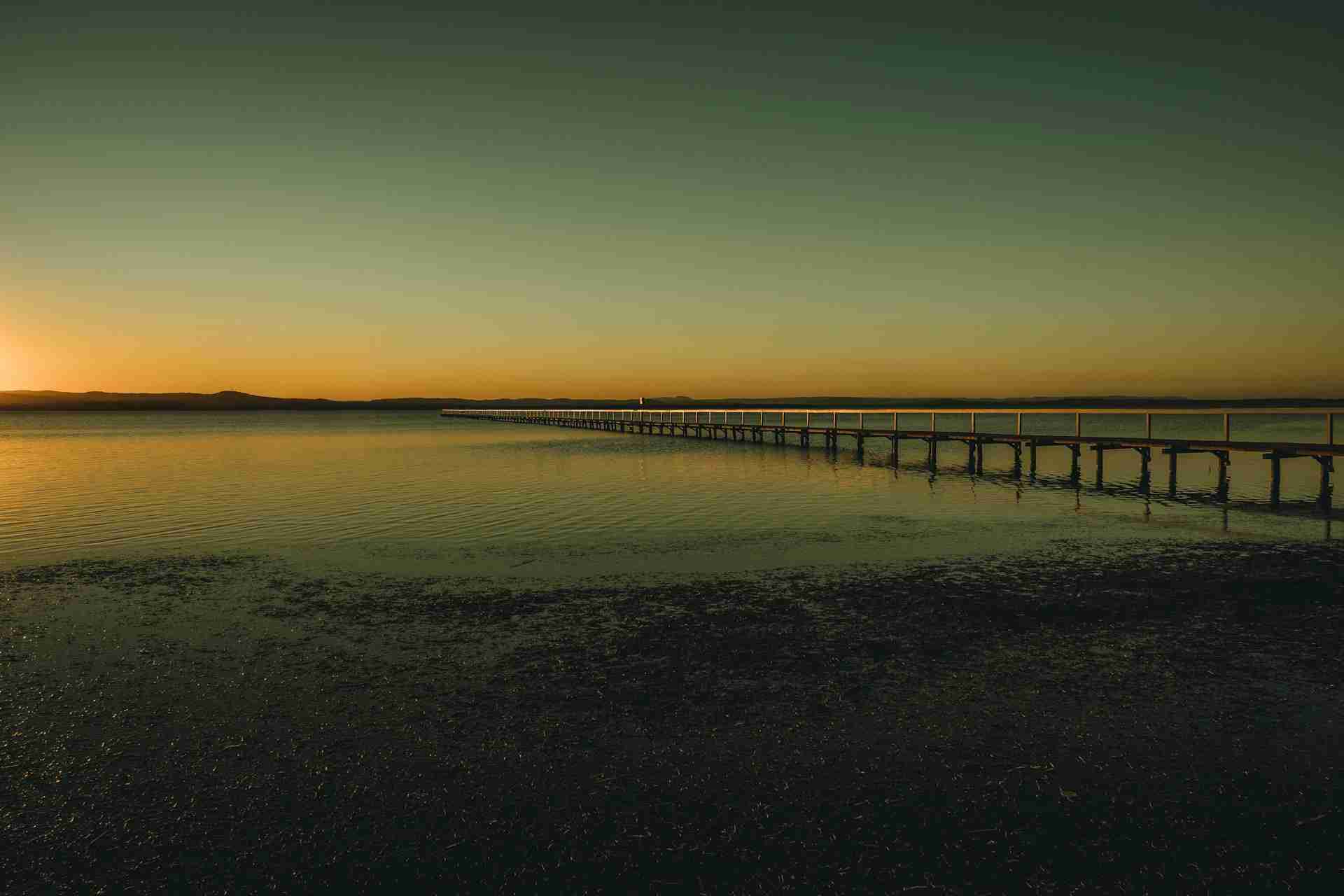
Stretching into the calm expanse of Tuggerah Lake, Long Jetty Wharf is a location defined by stillness, structure, and sky. This slender timber walkway has become a celebrated destination for photographers, not only for its symmetrical lines and minimalist form, but for the reflective quality of the lake and the drama of its sunsets. As one of the longest jetties on the Central Coast of New South Wales, it offers a powerful sense of scale and compositional control. The surrounding lake, distant shoreline, and shifting sky provide a broad canvas for creative experimentation, whether you're drawn to expansive landscapes, long exposures, or abstract studies in line and reflection.
Best Photography Opportunities
• Leading line compositions from the base of the wharf
Standing at the beginning of the jetty provides an ideal position to compose clean, symmetrical images. The timber planks lead the eye straight into the frame, drawing attention toward the horizon where lake and sky often merge in pastel tones. A wide-angle lens enhances the feeling of depth and exaggerates the perspective of the boardwalk. Early in the day or late in the afternoon, low-angle sunlight adds texture to the wooden surface and creates soft, directional shadows that emphasize structure without overpowering the scene. Composing from a low height amplifies this effect and reinforces the sense of balance.
• Reflections and layered sunsets over Tuggerah Lake
As the sun sets to the west, the waters of Tuggerah Lake turn mirror-like, reflecting the sky's changing colors with remarkable clarity. Sunset at Long Jetty Wharf often delivers vivid hues, especially when high clouds scatter the light across the sky. Positioning the jetty either centrally or diagonally in frame adds structure to these wide compositions. A long exposure during this time smooths the water surface and allows cloud movement to become a painterly element. When wind conditions are calm, the reflection doubles the visual impact of the sky, giving the scene a dreamlike quality.
• Minimalist silhouettes during blue hour
After the sun has set, blue hour brings a cool, even light that softens contrast and simplifies the scene. The jetty becomes a dark silhouette against the softly glowing sky, perfect for minimalist compositions that emphasize form and atmosphere. Long exposures work well during this time, capturing subtle transitions in color and smoothing any ripples in the water. Including a human figure on the wharf can add a sense of narrative or scale without disrupting the overall simplicity. These compositions are particularly effective when the sky is clear or when a low bank of clouds provides a textured gradient.
• Foreground texture during low tide
At low tide, portions of the lakebed become accessible near the shore, revealing cracked mud, sand ripples, and scattered organic debris. These foreground elements can be used to add visual interest and contrast to the smooth geometry of the jetty. Shooting from ground level allows you to layer these textures against the horizontal sweep of the boardwalk and the open sky beyond. This perspective introduces a tactile quality to compositions that might otherwise feel ethereal or flat. Early morning or late afternoon light accentuates these textures and casts long, sculptural shadows across the foreground.
• Long exposure cloud movement above the wharf
When the sky is active with layered or streaking clouds, Long Jetty Wharf becomes an ideal subject for long exposure photography. Using a tripod and ND filters, you can extend exposure times to capture motion in the sky while keeping the jetty sharp and still. These compositions convey a sense of time passing and create contrast between dynamic sky and static structure. Aligning the composition with the direction of the clouds enhances this effect, drawing the eye deeper into the frame. The resulting images are atmospheric, dramatic, and deeply serene.
Best Time to Visit
The most productive time to photograph Long Jetty Wharf is during the transition between golden hour and blue hour. Sunset is particularly rewarding, as the wharf faces west and captures the full sweep of color across the lake and sky. Arriving 30 to 60 minutes before sunset allows time to explore multiple angles and prepare for changing light conditions. As blue hour sets in, the ambient light becomes softer and cooler, perfect for long exposures that highlight the stillness and symmetry of the scene.
Early mornings offer a quieter atmosphere and a chance for fog or low mist to form over the water, especially during cooler months. The light at sunrise comes from behind the camera when facing the lake, illuminating the jetty evenly and casting warm tones across the wood. Overcast days are useful for detail shots and compositions that rely more on tone and form than dramatic light. After rain, puddles on the wharf and shoreline can add additional reflective surfaces and enhance mood.
Wind conditions and tides also influence photographic opportunities. On calm days, reflections in the lake are nearly perfect, while breezy weather introduces ripples that break up the symmetry. Low tide exposes shoreline elements that can serve as visual anchors in wide or low-angle shots. Checking tide charts and weather forecasts before your visit helps to maximize the potential of the scene.
How to Get There
Long Jetty Wharf is located at the end of Archbold Road in Long Jetty, New South Wales, on the eastern shore of Tuggerah Lake. From Sydney, the drive takes approximately 90 minutes via the M1 Pacific Motorway. Take the exit toward Wyong and follow Wyong Road east, merging onto The Entrance Road (A49) before turning onto Archbold Road.
A small public car park is available directly adjacent to the jetty, with additional parking on nearby streets. The area is flat and easy to navigate, with paved paths leading to the wharf entrance. There is no entry fee, and the location is accessible at all hours, making it ideal for dawn and dusk photography. While public transport is possible via train to Tuggerah Station and connecting buses, having a vehicle offers better timing flexibility for low-light or weather-dependent shoots.
Recommended Photography Gear
A wide-angle zoom lens (16–35mm) is particularly effective for shooting from the base of the jetty or incorporating foreground details such as shoreline textures and puddles. This lens exaggerates the perspective of the boardwalk and helps capture expansive skies, making it ideal for symmetrical or leading-line compositions. A mid-range zoom (24–70mm) provides flexibility for shooting tighter scenes, side views, and layered compositions with background interest.
A sturdy tripod is essential for long exposure and low-light photography, especially during blue hour or on breezy evenings. ND filters (6- or 10-stop) are recommended for extending shutter speeds to capture smooth water surfaces and cloud motion, while a circular polarizer can be used to reduce glare and deepen color saturation during daytime conditions. A remote shutter release or camera timer helps prevent camera shake during exposures longer than one second.
Weather-resistant gear and lens cloths are helpful when working near the water, particularly after rain or during early morning sessions when mist or condensation may be present. A compact, organized kit is ideal, as you may move frequently between shoreline, wharf, and surrounding viewpoints to respond to changing conditions.
Nearby Photography Locations
A short drive to the north, this location marks the connection between Tuggerah Lake and the Pacific Ocean. The channel offers compositions of moored boats, fishing jetties, and distant headlands, particularly photogenic during sunrise or golden hour.
A peaceful, crescent-shaped beach with a sheltered shoreline and rock platform. It provides excellent sunrise views and foreground texture for seascape photography, especially when the tide is low and the light is soft.
This walking path stretches along the lake's eastern edge, offering alternative views of the water and glimpses of distant jetties and tree silhouettes. It's well suited for quiet landscape scenes and twilight shooting.
• Norah Head Lighthouse
Located 20 minutes to the northeast, this classic white lighthouse stands on a rocky promontory and offers sweeping coastal views. It's particularly powerful during moody weather or early morning light, with opportunities for both wide landscapes and tight architectural compositions.
Situated above Shelly Beach, this elevated viewpoint provides panoramic vistas of the coastline, excellent for sunrise or weather-driven drama. The lookout also features forested walking tracks and seasonal whale-watching vantage points.
Long Jetty Wharf is a location where restraint and patience are rewarded. Its quiet symmetry and ever-changing light invite contemplation and creativity, offering photographers a peaceful space to compose with care and intention. Whether bathed in soft mist or glowing in sunset fire, the wharf stands as both subject and guide, leading the eye into the still heart of Tuggerah Lake.
Comments
Loading comments…