
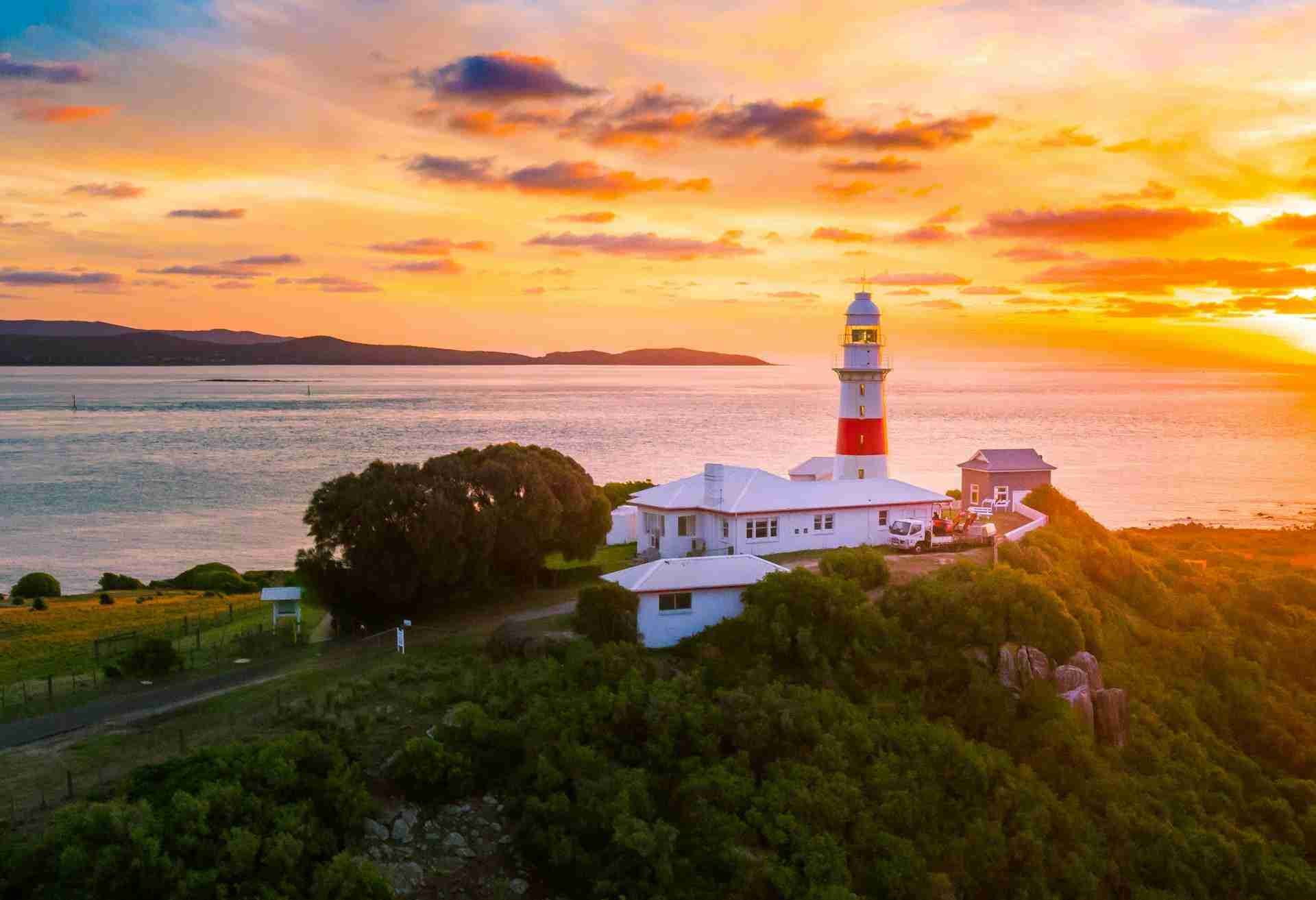
Low Head Lighthouse stands sentinel at the northern tip of Tasmania's Tamar River estuary, where the calm waters of the river meet the restless waves of Bass Strait. As the oldest continually operating pilot station in Australia, the lighthouse has guided ships since 1833, and its bold white tower with wide red bands offers one of the most recognizable silhouettes in Tasmanian coastal photography. Set against a backdrop of open sky, wild sea, and wind-swept grassland, the lighthouse and its outbuildings form a compact but visually layered subject. For photographers, the site offers a blend of historical architecture, rugged landscape, and atmospheric weather that changes rapidly throughout the day. Whether you are aiming to capture clean architectural lines, minimalist coastal compositions, or dramatic skies rolling in from the sea, Low Head provides a varied and immersive photographic environment.
Best Photography Opportunities
• Classic frontal compositions with full lighthouse elevation
The open grassland in front of the lighthouse offers a clean, unimpeded view of the tower. Standing here with a wide-angle lens allows photographers to frame the lighthouse centrally, emphasizing its bold cylindrical form and high-contrast red and white paint. The simplicity of the setting is part of its strength — a few utility buildings and some low fencing are the only structural elements in view. Morning and late afternoon light reveal the texture of the stone and create soft shadows that wrap around the base, helping the structure feel grounded in the landscape. This angle is ideal for symmetrical compositions or vertical framing that stretches skyward.
• Side-on perspectives with surrounding buildings and terrain
From slightly south or southwest of the tower, photographers can include not just the lighthouse but also the original keeper's cottages and other historic buildings that dot the headland. These elements help contextualize the lighthouse within its working environment and create a more narrative frame. Using a mid-range focal length enables precise layering of structure and background, with the horizon and ocean often visible behind the compound. This perspective is especially effective during overcast conditions, when moody skies and the subdued colors of the buildings create atmospheric, story-driven images.
• Telephoto isolations with coastal backdrop
A longer lens allows photographers to compress space and isolate the lighthouse against the sea or sky. Standing further back or from the lower slope of the headland, the tower can be framed with the coastline below it or with distant weather systems forming over Bass Strait. This type of shot works particularly well when clouds are building or breaking, casting light across the tower while the background remains darker. These high-contrast, compressed images lend themselves well to black-and-white conversion or desaturated processing, bringing out the stark form of the structure against the natural elements.
• Low-angle shots with textured foreground
The windswept headland offers a variety of natural textures — tufts of coastal grass, weathered fences, and rocky outcroppings — that can serve as engaging foreground elements. By composing from a low angle and allowing these elements to occupy the lower third of the frame, photographers can guide the viewer's eye toward the lighthouse while adding a tactile, grounded layer to the composition. Early or late light brings out detail in these textures and helps separate them from the more structured geometry of the lighthouse behind.
• Twilight and night photography with beacon flash
As the light fades and the beacon becomes visible, the site takes on an entirely different character. Shooting at blue hour allows photographers to balance the ambient glow of the sky with the white flash of the active lighthouse. With a tripod and long exposure, it's possible to capture the full sweep of light or freeze a single flash within a timed frame. Including nearby structures or elements of the landscape in the composition creates balance and contrast, while the absence of artificial lighting elsewhere on the site means stars may begin to appear during longer night exposures.
Best Time to Visit
Light and weather shape the experience of photographing Low Head Lighthouse more than any other factor. Early morning brings clean light from the east, illuminating the face of the tower that looks out to sea. At this time of day, the air is generally calmer, and the light falls at a low angle, creating long, soft shadows and revealing the surface texture of the stonework. The site is often quiet during these hours, allowing for uninterrupted compositions and tripod use without interruption from visitors.
Late afternoon and golden hour bring warmer tones and directional light from the west, which side-lights the tower and auxiliary buildings. These conditions add volume and contrast to images, especially when framed to include the sloping grassland or open sky. This is also the best time to catch the beacon lighting up as the sun sets. Blue hour follows quickly and introduces cooler tones that work well for long exposure work, particularly if clouds are moving across the frame or the lighthouse flash is used as a timed point of contrast.
Overcast days transform the scene completely. The soft, diffuse light eliminates harsh shadows and brings a gentle mood to the landscape. These conditions are excellent for more documentary or architectural compositions where even exposure is preferred. Strong wind and rough sea conditions also add motion and energy to the wider landscape, creating opportunities for expressive wide-angle shots or tight compositions that contrast static and dynamic elements.
How to Get There
Low Head Lighthouse is located on the northern tip of the Tamar Valley in Tasmania, approximately 55 kilometers north of Launceston. From Launceston, the route follows the East Tamar Highway (A8) through George Town. Once in George Town, follow signs to Low Head via Low Head Road. The drive from Launceston typically takes around 45 minutes and passes through coastal and rural scenery.
There is a public car park near the lighthouse, and the site is accessible via short footpaths that connect the lot with the buildings and the edge of the headland. The terrain is gently sloped and grassy, with clearly marked walkways. The lighthouse grounds are freely open to the public at all times, making it possible to shoot at sunrise, sunset, or late at night without restrictions. No photography permit is required for exterior work. For interior access to the tower or museum displays in the pilot station area, visitors should check local opening times.
Recommended Photography Gear
A wide-angle zoom lens such as a 16–35mm is essential for capturing the full form of the lighthouse in relation to its surroundings. It's particularly effective when shooting from close to the tower or when incorporating foreground elements like fences, stones, or grasses. A mid-range zoom (24–70mm) provides flexibility for capturing multiple compositions while walking the site, allowing photographers to move between tight architectural frames and broader environmental views without changing lenses.
A telephoto lens (70–200mm) is useful for compressing the lighthouse against the sky or sea, isolating details in the buildings, or working with distant weather layers. It is especially valuable when shooting in dramatic light or with strong cloud cover in the background. A tripod is a must for low light and long exposure photography, particularly during blue hour or for capturing the lighthouse beacon at night. ND filters are helpful for extending shutter speed when shooting clouds or water movement, while a circular polarizer enhances sky contrast and reduces reflections on bright days.
Carrying a weatherproof bag and lens cloth is advisable, as the headland is often windy and subject to sea spray. A lens hood can help manage flare during low-angle sun, and a remote shutter release ensures sharpness when working with long exposures. The location rewards patience and adaptability, so packing a small, flexible kit is ideal.
Nearby Photography Locations
Just ten minutes south of Low Head, the George Town waterfront offers quieter waterside compositions with piers, moored boats, and distant views of the Tamar River. It's ideal for evening reflection shots and coastal atmosphere in softer light.
Located adjacent to the lighthouse, the Low Head Pilot Station features preserved cottages, outbuildings, and equipment sheds. These structures provide additional historical context and can be framed individually or in connection with the lighthouse in wide environmental compositions.
• Bell Bay Industrial Zone
South of George Town, this working port and industrial area presents a stark visual contrast to the headland. With cranes, shipping containers, and rail lines, it offers an entirely different photographic mood for those interested in juxtaposing industry and nature.
Just around the headland from the lighthouse, East Beach provides wide open sand, gentle surf, and long views of Bass Strait. It's particularly beautiful at sunrise or during low tide when wet sand reflects sky color. Minimalist compositions and long exposures work especially well here.
Further inland along the Tamar River, this protected reserve features boardwalk trails, birdlife, and reeds. The wetlands are excellent for calm, nature-driven compositions with a telephoto lens, and also provide an excellent alternative to open headland shooting during harsh coastal wind.
Low Head Lighthouse is a place of contrasts — between human structure and elemental force, between stillness and motion, and between soft light and harsh exposure. Its compact footprint belies the diversity of scenes and moods it offers throughout the day. For photographers drawn to coastal solitude, weather-worn textures, and timeless architecture set against the edge of the sea, this lighthouse delivers images that feel both grounded in place and elevated by atmosphere.
Comments
Loading comments…