
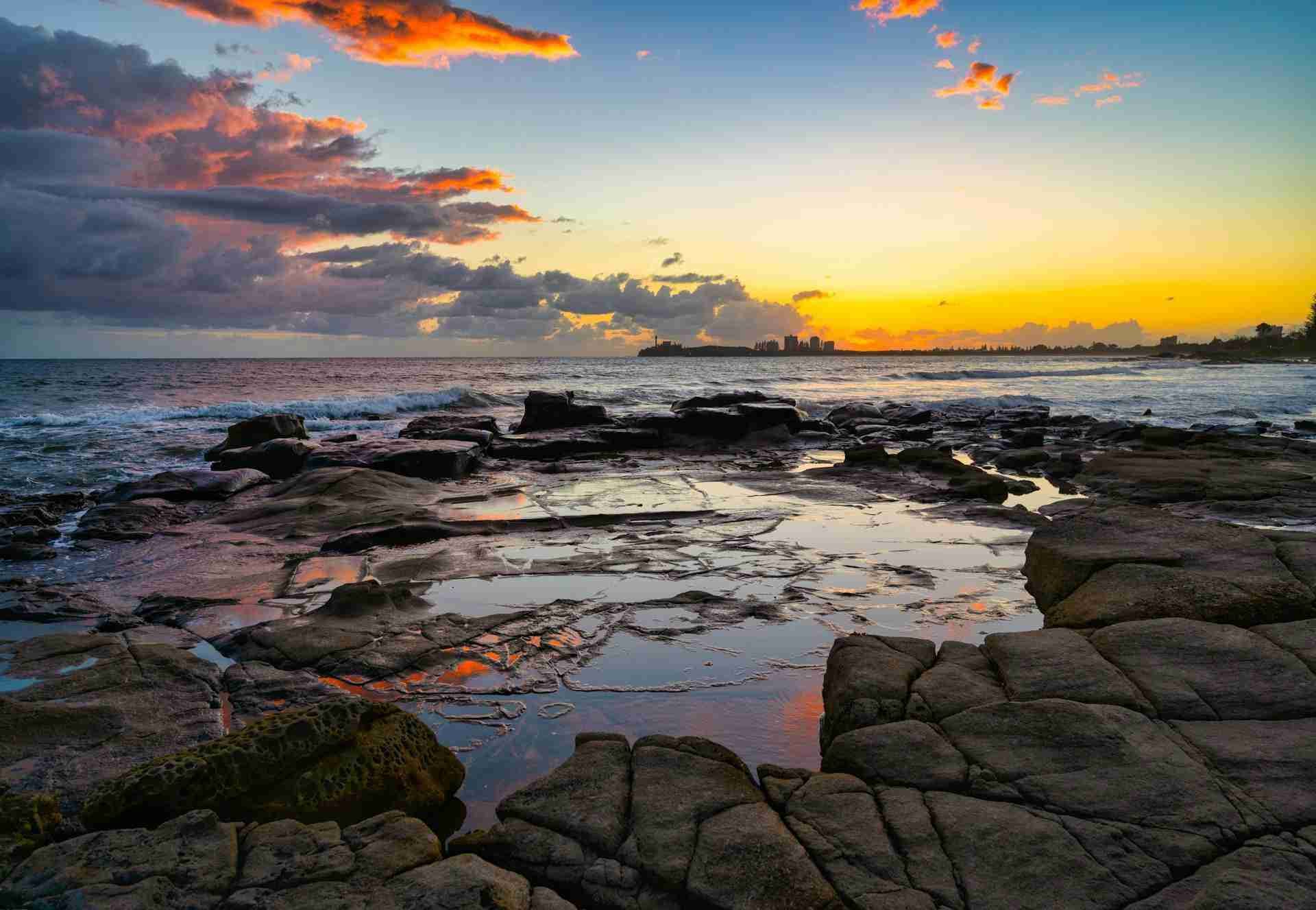
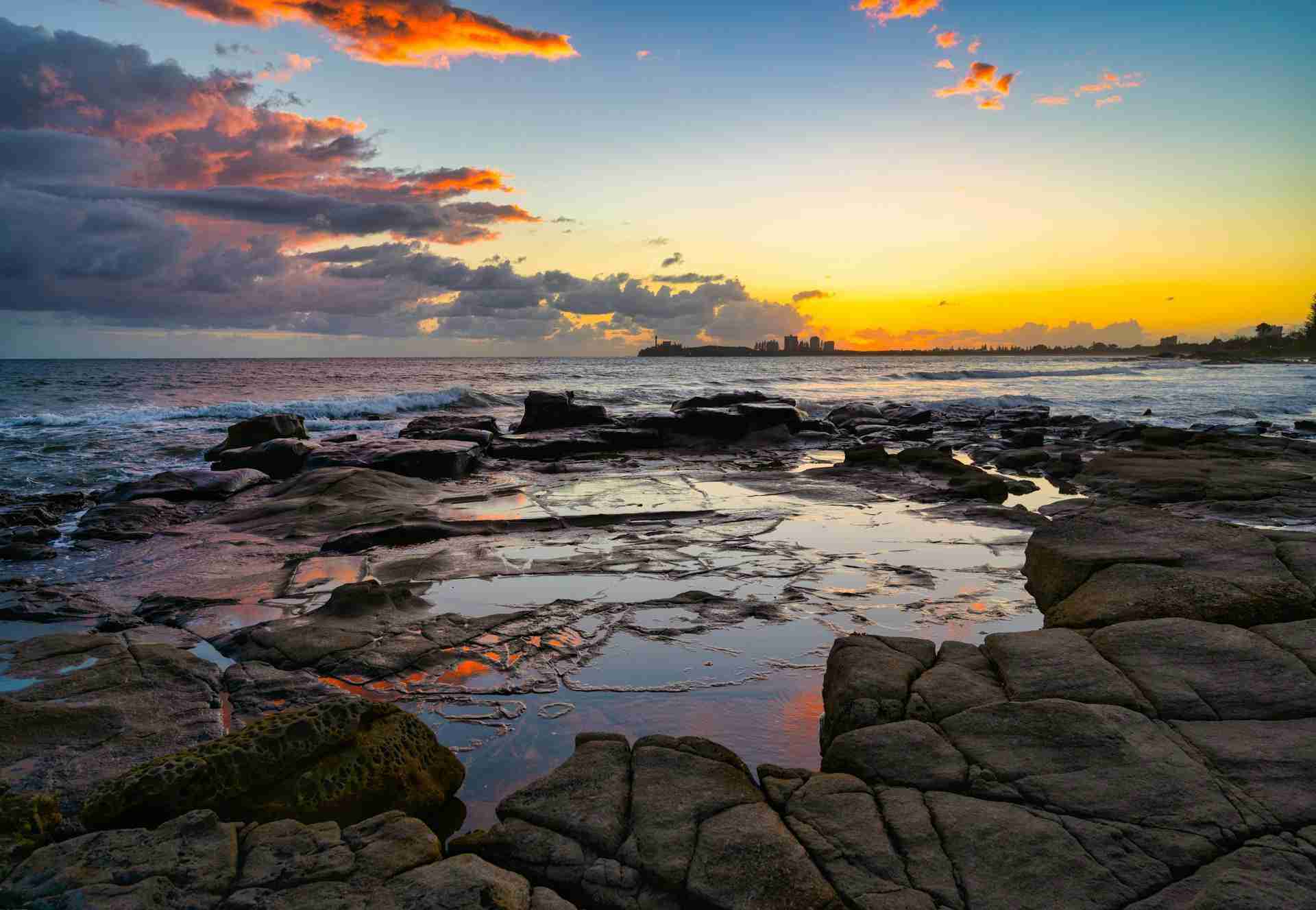
Mooloolaba Beach, located on Queensland's Sunshine Coast, blends the clean curve of golden sand with gentle surf, rugged headlands, and subtropical skies. Its position facing northeast makes it one of the few beaches in the region ideal for sunrise photography, with early morning light cutting across the water and illuminating the shoreline in warm tones. The beach itself stretches for over a kilometer, backed by pandanus palms and low-rise buildings, while the nearby rock pools and breakwaters offer natural contrast to the open sea. With constant wave movement, abundant foreground texture, and walkable access from town, Mooloolaba is a practical and dynamic destination for photographers working in both wide seascapes and intimate coastal studies.
Best Photography Opportunities
• Sunrise Over the Pacific Horizon
Sunrise is the defining moment at Mooloolaba Beach, particularly when the sky is lightly clouded and colors shift from deep blue to burnt orange across the water. Arrive well before dawn and position yourself mid-beach, looking directly east to where the first light breaks. A wide-angle lens helps to emphasize the curve of the beach while including low-hanging clouds that reflect the sun's warm tones. Use a tripod for exposures in the one- to three-second range to soften the wave texture without losing detail in the sand. Including the silhouettes of early swimmers or surfers can add a subtle human element that complements the vastness of the scene.
• Wave Action and Rock Pools Near the Spit
At the southern end of the beach near Mooloolaba Spit, rocky outcrops and tidal pools offer a different visual character. Shoot during low tide to access these areas more safely and build foreground interest using the lines of wet rocks and water channels. Fast shutter speeds freeze wave splash against the rocks, while longer exposures blur motion and produce a soft, dreamlike surface across the pools. This location is ideal in the early morning or late afternoon when side light reveals the texture of the volcanic stone and the movement of water across uneven surfaces. A polarizer helps control reflections on wet rock, particularly when photographing the details of shells, sand patterns, or marine life.
• Golden Hour Beachscapes with Soft Shadows
As the sun rises higher, golden hour creates soft, directional light across the beach, adding shape and warmth to dunes, footprints, and sea foam. The shadows cast by pandanus trees and beach walkers create a layered effect that helps define depth in wide compositions. This is a good time to switch to a mid-range zoom lens and explore more candid or spontaneous framing, especially if you want to include people, boats, or shoreline activity without overpowering the landscape. Use backlight to catch sea spray and lift color from the water surface, or shoot into the sun at a slight angle to create light flares for visual impact.
• Abstract Studies of Water and Sand
Mooloolaba's consistent surf and gradual slope create beautiful repeating patterns where waves wash up and recede. Use a long lens or shoot close with a shallow depth of field to isolate textures like foam trails, ripple marks, or the sheen of light across wet sand. These shots benefit from calm conditions and soft light, often found just after sunrise or in the late afternoon. Look for small natural elements like driftwood, shells, or seaweed that can become focal points within these minimalist scenes. These details can stand alone or act as connecting elements within a larger visual series.
• Nighttime Skyline and Beachfront Lights
Although not a large city, Mooloolaba's beachfront has enough ambient lighting to support low-light photography, especially along the promenade. After dark, use long exposures to capture reflections of streetlights across the wet beach or smooth the incoming tide under a twilight sky. Facing north, you can photograph light trails from boats returning to the harbor, or frame silhouetted buildings against a deepening blue background. A small aperture and longer shutter help bring detail into these low-light scenes, and using foreground texture such as driftwood or sea grass adds dimension to compositions that include urban elements.
Best Time to Visit
Mooloolaba Beach is best photographed in the early morning, when light is soft, the tide is low, and the shoreline is mostly undisturbed by footprints. Sunrise varies throughout the year, but the beach's northeast orientation means there is nearly always a clean view of the horizon, unobstructed by headlands or buildings. Late spring and early autumn offer some of the best conditions, with mild temperatures, calm seas, and good cloud structure that enhances sunrise color.
Summer brings bright, intense light and higher humidity, which can create dramatic skies during early storms or tropical afternoons. These conditions are useful for high-contrast compositions or moody weather studies. However, the beach is busier in summer, especially in school holiday periods, so plan your visit earlier in the day if you want to avoid crowds in your frame.
Winter mornings are crisp and often clearer, with long stretches of soft blue light after sunrise. While the surf may be calmer, the angle of the sun still provides excellent directional light for revealing texture in the sand and movement in the waves. Night photography is more manageable in winter due to earlier sunsets, but be prepared for cooler temperatures and occasional wind gusts from the ocean. Always check tide charts before planning shoreline or rock pool shots, as these dramatically affect accessibility and composition options.
How to Get There
Mooloolaba Beach is located along the southern stretch of the Sunshine Coast in Queensland, about 100 kilometers north of Brisbane. From Brisbane, take the Bruce Highway (M1) north to the Sunshine Motorway (State Route 70), then follow signs for Mooloolaba along Brisbane Road until you reach the Esplanade.
There is public parking along the waterfront and side streets, though these can fill quickly on weekends and holidays. Several paid parking lots are available within walking distance of the beach, including near the Surf Club and the Wharf precinct. The beach is flat and fully accessible on foot, with ramps and paved paths running along the foreshore.
Local buses from Maroochydore and other Sunshine Coast hubs stop directly near the Esplanade, and ride-share services are also widely available in the area. Once on site, the beach is open access with no fees or restrictions. Tripods are allowed and welcome, and the broad promenade provides space to work comfortably without impeding foot traffic.
Recommended Photography Gear
A wide-angle lens in the 14 to 24 millimeter range is ideal for capturing the curve of the beach at sunrise or incorporating the sky and water in balanced compositions. A 24 to 70 millimeter standard zoom gives you flexibility for tighter scenes, including silhouettes, wave detail, and mid-range action shots along the rocks or promenade.
A tripod is essential for long exposures during low light, especially before sunrise or at night. A polarizing filter is useful throughout the day to reduce glare on the water and wet sand and to deepen blue tones in the sky. Neutral density filters allow for creative control of shutter speed even in bright conditions, ideal for smoothing surf or isolating motion in the water.
A telephoto lens from 70 to 200 millimeters helps isolate distant boats, frame surfers against the skyline, or compress elements such as headland cliffs and wave lines. For macro or detail-oriented shots, a short telephoto or dedicated macro lens can reveal shells, water droplets, and tide patterns that add intimacy to broader landscape series.
Comfortable footwear is helpful for walking across sand, rock, and paved surfaces. A lens cloth is essential to deal with sea spray, and a rain cover or waterproof bag insert is recommended if shooting in uncertain weather. Battery life tends to drain faster with long exposures, so carry a spare along with extra memory cards if you plan to shoot sunrise through late morning.
Nearby Photography Locations
Located to the south, Point Cartwright offers a rocky headland, lighthouse, and elevated ocean views. The cliffs provide strong vantage points for sunrise and wave photography with dramatic backdrops.
At the southern tip of Mooloolaba, this area includes jetties, fishing boats, and water traffic moving in and out of the harbor. It is ideal for long exposures and boat trail photography, particularly at sunset.
North of Mooloolaba, this beach offers a quieter atmosphere with rolling surf and a broader view north toward Maroochydore. Sunset light often reflects off the wet sand and low tide pools.
Along the river near the marina, this green space includes calm water views, mangroves, and reflections, especially during golden hour. It offers a softer, more subdued counterpoint to the beach's open ocean energy.
Further north, this spot blends coastal and estuarine landscapes, with shifting sandbars and quiet water textures perfect for low-tide detail shots and layered compositions at dusk.
Mooloolaba Beach offers a range of photographic opportunities that shift with the tides, light, and season. From the quiet of pre-dawn reflections to the texture of breaking surf or the energy of the shoreline at golden hour, it is a location that rewards both early risers and patient observers. With easy access, consistent light, and room to explore, it remains one of the Sunshine Coast's most versatile and photographically rich coastal environments.
Comments
Loading comments…