
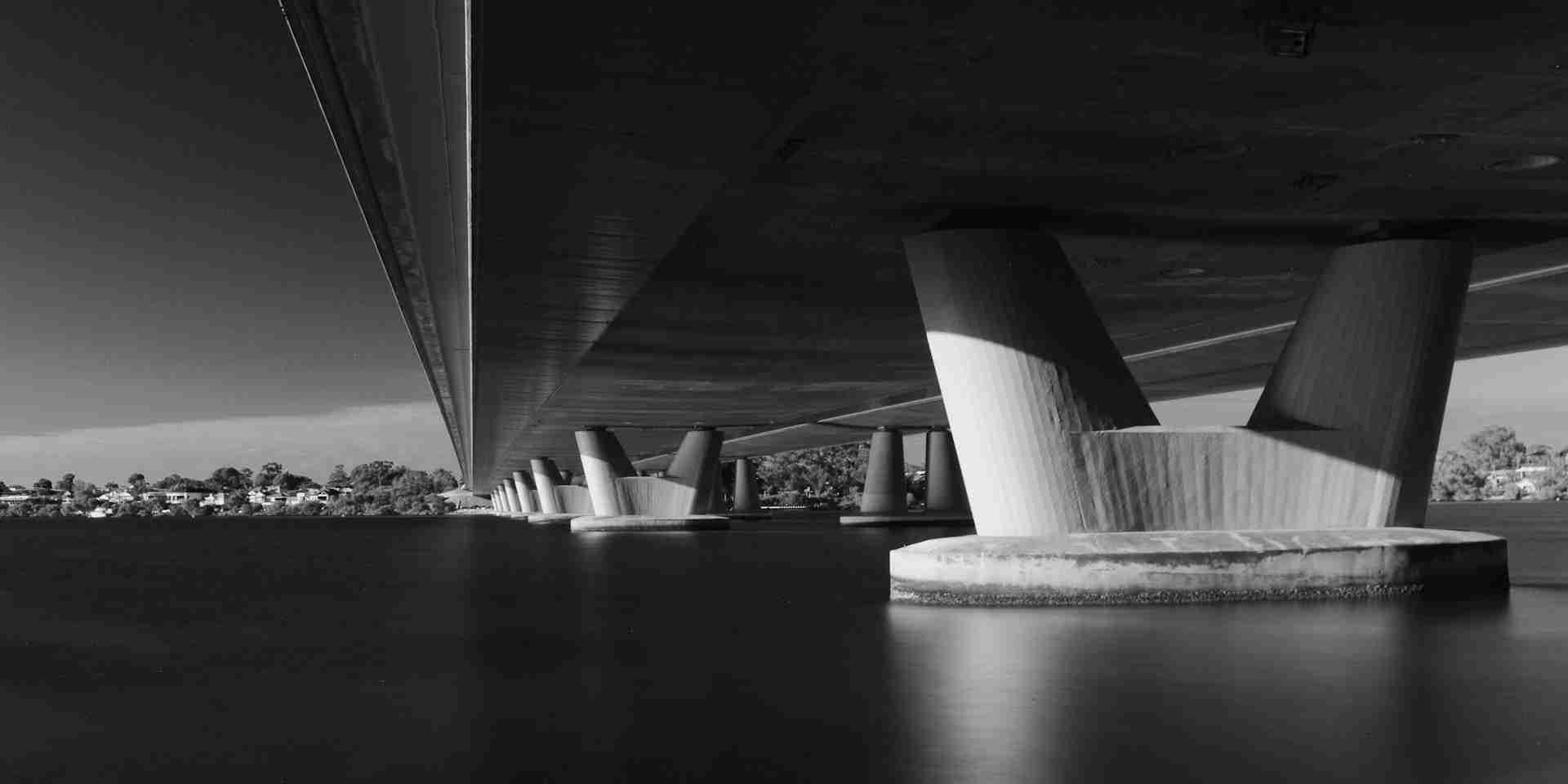
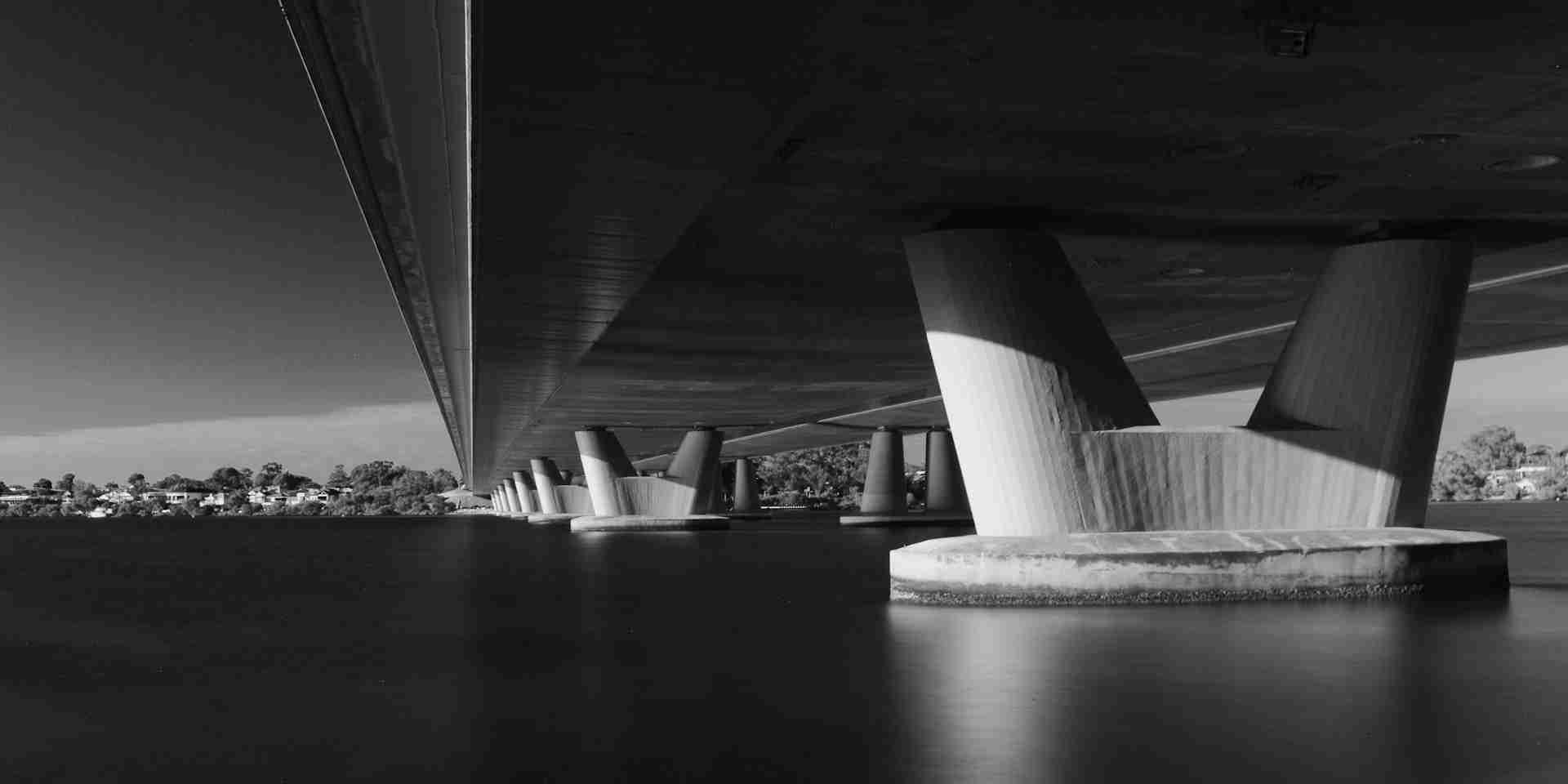
Mount Henry Bridge isn't the first place most people think of when it comes to photographing Perth, but that's exactly what makes it interesting. Spanning the Canning River just south of the city, this double-deck bridge carries cars above and a quiet pedestrian and cycle path below. The lower level, with its massive concrete pillars and clean curves, creates a tunnel-like space full of lines, reflections, and repetition. Light filters through in shifting patterns depending on the time of day, and the setting feels more like an abstract art installation than a piece of transport infrastructure. For photographers looking to work with symmetry, long exposure, and subtle textures, this is a location worth spending time on.
Best Photography Opportunities
• Symmetrical Compositions from the Center Path
One of the most striking features of Mount Henry Bridge is the walkway that runs directly beneath the traffic lanes, creating a tunnel-like corridor framed by repeating concrete beams. From the center of this path, the symmetry is almost perfect. A wide-angle lens can exaggerate the vanishing point, leading the viewer's eye deep into the frame. The best time for this shot is early morning, when light filters in softly from the sides, creating even exposure across the entire structure without harsh shadows. The repeating vertical supports and horizontal slabs create a grid that lends itself well to clean, balanced compositions, especially when shot low to the ground for added depth.
• Reflections in the Canning River from Shoreline Vantage Points
Just off the southern bank near Mount Henry Peninsula, the bridge casts a bold reflection onto the river, particularly in the early morning when the water is calm. These reflections create a visual echo of the bridge's linear design and offer a great opportunity to work with symmetry and layering. You can include foreground elements like reeds or shoreline textures to add dimension to the frame. A polarizing filter helps manage glare from the water, while long exposures smooth out ripples and enhance the mirrored effect. Misty mornings or slightly overcast skies work well here, providing a neutral background that keeps the focus on shape and reflection.
• Long Exposure Light Trails and Structural Contrast
Photographers looking to combine architectural stillness with urban motion can shoot the bridge during the transition from day to night. As traffic continues over the upper deck, long exposures capture the red and white streaks of vehicle lights, which contrast nicely against the hard concrete lines of the bridge's understructure. Position yourself near one of the gaps where the bridge rises above the pedestrian path, or set up along the nearby shoreline for a side view of the entire structure. You'll need a sturdy tripod and a remote shutter release to keep your framing consistent during longer exposures. The result is a clean, graphic shot that blends natural and manmade motion into one cohesive frame.
• Abstract Details and Negative Space Beneath the Bridge
The bridge's concrete design creates all kinds of opportunities for abstract photography. Look for intersections between pillars and beams, especially where they cut diagonally across open sky or the darker tunnel beneath. These spots are excellent for minimalist compositions that focus on negative space, light contrast, and repeating forms. Midday light can work surprisingly well here, casting sharp shadows and illuminating surfaces that are often shaded during golden hour. A longer lens helps isolate sections of the structure and compress space, allowing you to work with layered patterns without including the entire scene.
• Environmental and Wildlife Integration
Despite its industrial look, the area around Mount Henry Bridge supports a fair amount of local wildlife. Swans, ducks, and pelicans are common along the banks of the river, and they often pass beneath the bridge or gather near the shallow water around Mount Henry Peninsula. Including these birds in the frame adds a sense of scale and movement to what might otherwise be a very rigid composition. Try using a fast shutter speed to freeze birds in flight or a longer exposure to blur their movement across still water. If you're shooting early in the morning, you may also catch the soft golden light skimming across the water and highlighting ripples or wing reflections.
Best Time to Visit
The bridge is accessible and photographable throughout the year, but the quality of light and activity around it shifts with the seasons. Mornings are the most productive time to shoot, especially just after sunrise when the light enters at a low angle from the east and stretches across the structure. This side lighting brings out texture in the concrete and adds depth to the walkway's repeating lines. It also helps avoid the harsh contrasts you often get during midday, particularly under the exposed sections of the bridge. If you're planning to shoot reflections, the best conditions are on windless mornings in late autumn or winter, when the river is still and the air is cool enough to produce a bit of mist.
Afternoons offer a different kind of light, especially when shooting from the western bank. The sun sets behind the structure, creating opportunities for silhouette compositions or backlit details. During the warmer months, golden hour is long and soft, while in winter it arrives quickly and creates deep shadows under the bridge. Night photography can also work well here. The streetlights above cast a subtle glow, and the traffic provides motion for long exposures. Winter evenings tend to be quieter, making it easier to set up undisturbed. Keep in mind that light conditions under the bridge can be dim even during the day, so plan to adjust your exposure settings accordingly.
How to Get There
Mount Henry Bridge crosses the Canning River in the southern suburbs of Perth, connecting the areas of Como and Mount Pleasant via the Kwinana Freeway. For easy access to the pedestrian and cycle path under the bridge, head to Mount Henry Peninsula Reserve. There is street parking available along The Esplanade and in nearby residential areas, just a short walk from the riverbank. From there, you can walk along a short trail that leads directly to the lower deck and shoreline viewpoints.
There is no fee to access the bridge or surrounding public areas, and it is open at all times. The path underneath is shared between walkers and cyclists, so be mindful of others while setting up gear. The terrain around the riverbank can be uneven or muddy after rain, so waterproof footwear is helpful. While the bridge itself provides some cover, you'll still want to check the weather before heading out if you're planning a longer session. Public restrooms and water fountains are available nearby at the reserve.
Recommended Photography Gear
A wide-angle lens in the 16–35mm range is essential for capturing the full sense of space and symmetry beneath the bridge. This will help you frame compositions from the center of the walkway and exaggerate the length of the corridor. A 24–70mm zoom is useful for general-purpose shooting and gives you flexibility to capture both architectural context and environmental elements like reflections or birds. For more specialized shots of abstract forms or details, bring a 70–200mm lens to isolate sections of the structure or compress layers in a side view of the bridge.
A sturdy tripod is critical for long exposures, particularly when working in low light under the bridge or during early morning and evening. You'll also want a remote shutter release or timer to avoid camera shake. A circular polarizer can help manage water glare during bright hours and bring out more contrast in the river reflections. If you plan to shoot after dark or before sunrise, pack a headlamp or small flashlight so you can safely navigate the area and make adjustments to your camera setup. Drone photography is possible here as long as you stay within legal altitude limits and away from traffic. Flying from the park on the southern side provides a good vantage point without disrupting pedestrian areas.
Nearby Photography Locations
Just steps from the bridge itself, this riverside park is a good place to shoot early morning light over the Canning River. Grassy paths, low bushland, and open access to the water's edge make it easy to move around and try different angles. You can also capture wide views of the bridge from a distance, or include birds and small boats in the foreground for added visual interest.
Located across the river on the eastern side, this spot gives you a more distant, side-on view of the bridge. It's perfect for shooting the full structure reflected in the water, particularly around sunrise or sunset. The area also has a small jetty, which can be used as a leading line or subject in longer exposures.
A short drive upstream, this area offers expansive river views and a more open skyline. Canning Bridge itself can be photographed from the water's edge, and the surrounding foreshore has plenty of clean foreground space to include in your frames. Early morning often brings good reflection conditions and soft colors, especially during winter.
This elevated park sits above the Canning River and offers views back toward Mount Henry Bridge and the city skyline. It's a good place to catch the last light of the day as it falls across the river. The park also includes older buildings, winding paths, and tall trees that add variety to your shoot if you're combining locations.
• South Perth Foreshore
Farther north along the Swan River, South Perth Foreshore remains one of the best places to photograph the Perth skyline. If you're planning a full day of river-based photography, it makes a good companion stop to Mount Henry Bridge. Arrive before sunrise or stay through golden hour to catch strong reflections and shifting color across the city's high-rises.
Mount Henry Bridge offers a solid mix of structure, light, and texture that rewards photographers who take the time to look beyond the usual skyline spots. Its clean lines and quiet surroundings make it ideal for experimenting with symmetry and motion, while the nearby riverbanks open the door to more natural compositions. Whether you're chasing long exposures, architectural abstracts, or quiet moments along the water, this location has more to offer than meets the eye.
Comments
Loading comments…