
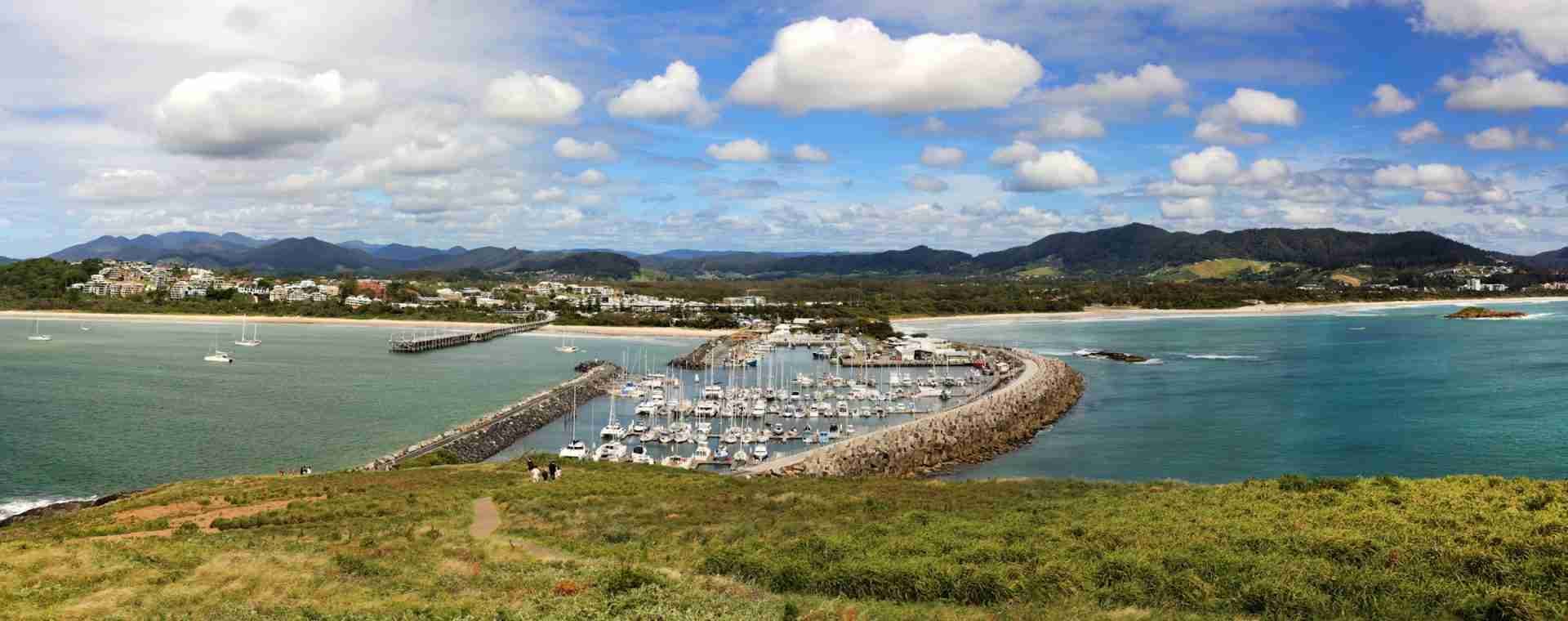
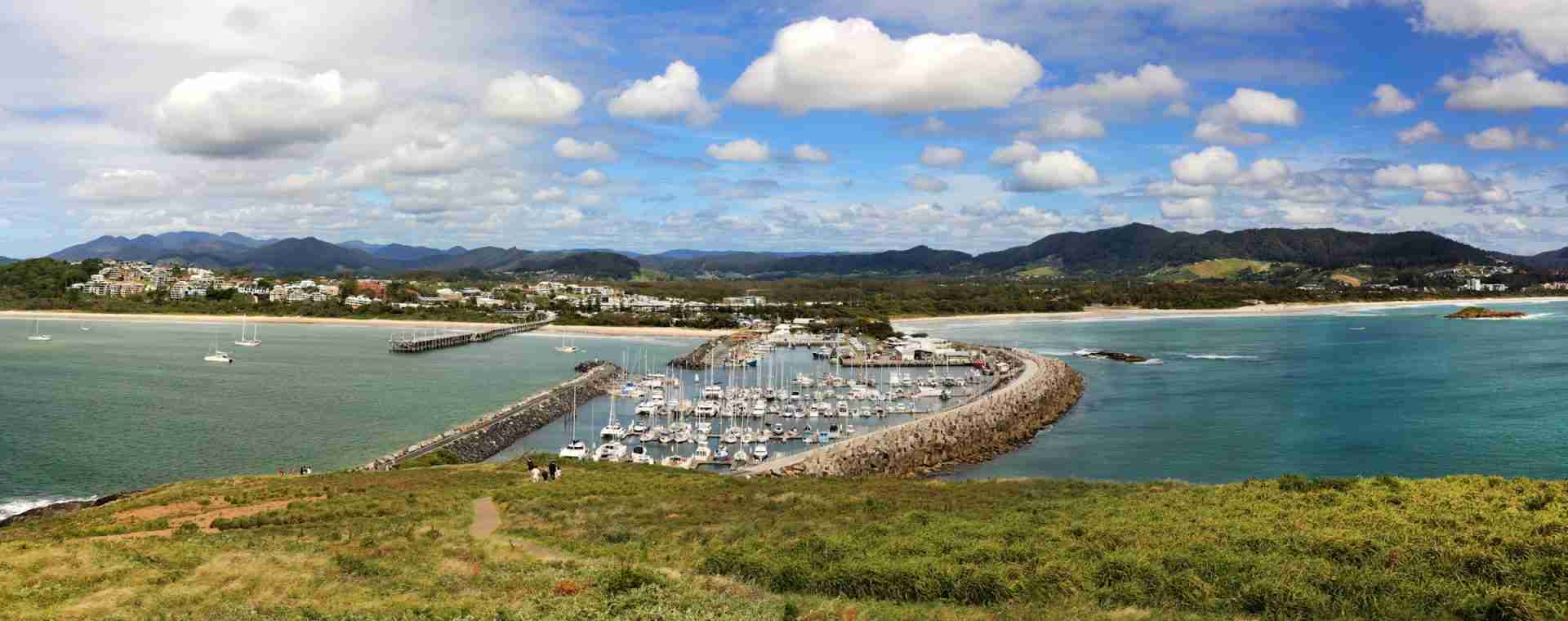
Muttonbird Island Nature Reserve rises just offshore from Coffs Harbour, forming a natural barrier between the marina and the Pacific Ocean. This steep, grass covered island is connected to the mainland by a causeway, making it easily accessible while still feeling isolated and wild. From its summit, panoramic views stretch across the coastline, and the rhythmic sound of surf below blends with the wind overhead. The island is named for the wedge-tailed shearwaters, or muttonbirds, that return each year to nest in burrows across the slopes. For photographers, Muttonbird Island offers a unique vantage point over land and sea, with light that changes rapidly across open skies and textured grasslands.
Best Photography Opportunities
• Summit Views Over the Pacific
The top of the island gives a full, unobstructed view over the ocean and back toward the coast. From here, you can frame long coastal curves, track cloud movement over the horizon, and shoot wide scenes where sky and sea dominate. Early morning and late afternoon bring the best contrast, especially when the sun is low and the grasses glow gold in the angled light. Compositions can benefit from including the winding trail leading up the slope, which draws the viewer's eye into the frame. Strong winds are common, so use extra care when working with longer exposures or lightweight gear.
• Golden Hour Light
The sloped terrain of the island is covered in low, windblown grasses that take on a soft, warm tone during golden hour. These natural textures reflect light beautifully, especially when shot at a shallow angle near sunrise or sunset. Position yourself low to the ground to emphasize the foreground and let the light rake across the surface. The resulting images feel expansive, with layers of color and movement even in still conditions. This is also a great time to capture the subtle color shifts in the sky, especially on days with high clouds.
• Coastal Birdlife
The island is a seasonal nesting site for wedge-tailed shearwaters, and even when they are not present in large numbers, seabirds frequently ride the thermals around the headlands. With a medium to long lens, you can photograph them gliding over the surf, banking above the cliffs, or silhouetted against the sky. Patience is key, as birds often follow the same flight paths repeatedly, allowing you to anticipate their movements. If you visit during breeding season, avoid disturbing nesting areas by sticking to the trail and using longer focal lengths. Bird photography here is less about variety and more about motion, light, and timing.
• Wave Impact on the Outer Cliffs
The eastern edge of the island faces directly into the open Pacific, where swells crash into the black rock below. This is a prime location for capturing wave motion, sea spray, and the dramatic contrast between dark stone and white water. Use a sturdy tripod and a polarizing or neutral density filter to experiment with slower shutter speeds that turn chaotic surf into silky patterns. The cliffs also provide a strong compositional anchor for wider seascapes, especially under stormy skies. Always keep a safe distance, as waves here are unpredictable and powerful.
• Twilight and City Lights from the Causeway
The path back to the mainland offers an often overlooked perspective as the sky darkens. From the breakwall or lower slopes, you can photograph the soft glow of Coffs Harbour beginning to light up while the last color fades from the western sky. Reflections on the water, silhouettes of anchored boats, and distant building lights all add subtle narrative to these low light scenes. A fast lens and higher ISO will help when shooting handheld, though a small tripod can be set up in sheltered spots along the path. This transitional time is quiet, making it easier to work without interruption.
Best Time to Visit
The island offers year round potential for photography, but seasonal and daily timing will affect both access and the kind of images you can create. Late spring and early summer bring the return of the muttonbirds, adding movement and biological interest to the landscape. Early morning light is ideal for quiet compositions, and the lower sun angle helps shape the terrain with long shadows and golden tones. Sunset sessions work best when there are clouds in the sky to catch the light, casting pinks and oranges over the grasses and ocean. On clear evenings, the open sky and minimal light pollution can even allow for basic night photography. Wind is common throughout the year, and strong gusts are more frequent in winter, which can make drone or long lens work more challenging. The trail is exposed, so plan for early or late sessions in the summer to avoid harsh light and heat.
How to Get There
Muttonbird Island is accessible on foot from Coffs Harbour via a paved breakwater that leads directly from the marina to the island's base. The entire walk from the harbor to the summit is manageable in under 30 minutes, though the final incline is moderately steep. Public parking is available near the marina and boat harbor, and there is no entry fee for accessing the island. The site is open during daylight hours and is part of a protected nature reserve, so sticking to marked trails is essential. The path is suitable for tripods and light gear, though strong winds at the summit may limit setup options during certain conditions.
Recommended Photography Gear
A wide angle lens is a must for capturing the sweeping coastal views from the summit, especially during sunrise or sunset. A mid range zoom works well for tighter landscapes, shoreline details, and layering the trail or rock faces into your frames. A long lens is useful for photographing birds in flight or isolating distant boats and surf beyond the cliffs. A compact tripod is helpful, particularly for low light work and long exposures of the ocean or twilight scenes, but should be weighted or stabilized in wind. A polarizing filter will cut glare off the water and add depth to the sky, while a neutral density filter can help control shutter speed for wave motion. Protective gear for your camera is recommended, especially on days with sea spray or fast-moving weather. Light hiking shoes, sunscreen, and water are essential, as there are no facilities on the island itself.
Nearby Photography Locations
• Jetty Beach and Foreshore
Located just below the causeway, this calm, curved shoreline is ideal for soft morning light and reflection shots. The nearby wharf structures and boats add layers of human interest to otherwise minimal beach compositions.
• Coffs Harbour Marina
A short walk from the island's base, the marina offers colorful boats, moorings, and gentle water movement that work well during golden hour and twilight. It is a good location for candid photography and quieter detail studies.
Parallel to the Muttonbird Island access path, this breakwall gives side-on views of the harbor and ocean beyond. It is especially strong for sunset compositions and long exposures of waves hitting the rocks.
Just north of the marina, this long stretch of sand provides wide open scenes and access to the mouth of Coffs Creek. It is ideal for sunrise and early morning walks with soft light and minimal foot traffic.
A short drive inland, this elevated lookout provides panoramic views back over Coffs Harbour and the coastline. It is a great location for golden hour landscapes, especially when the light hits the city and ocean from behind.
Comments
Loading comments…