
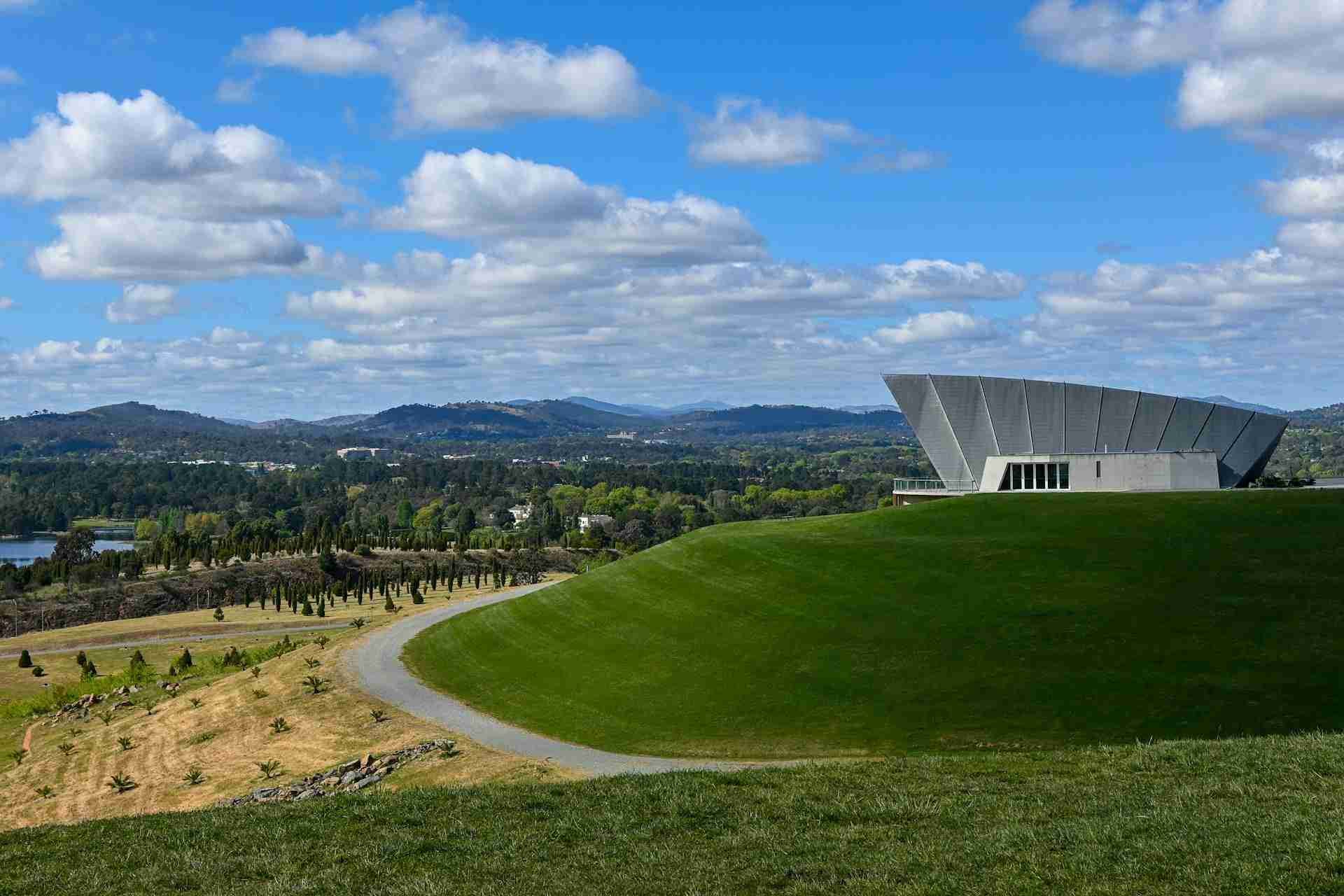
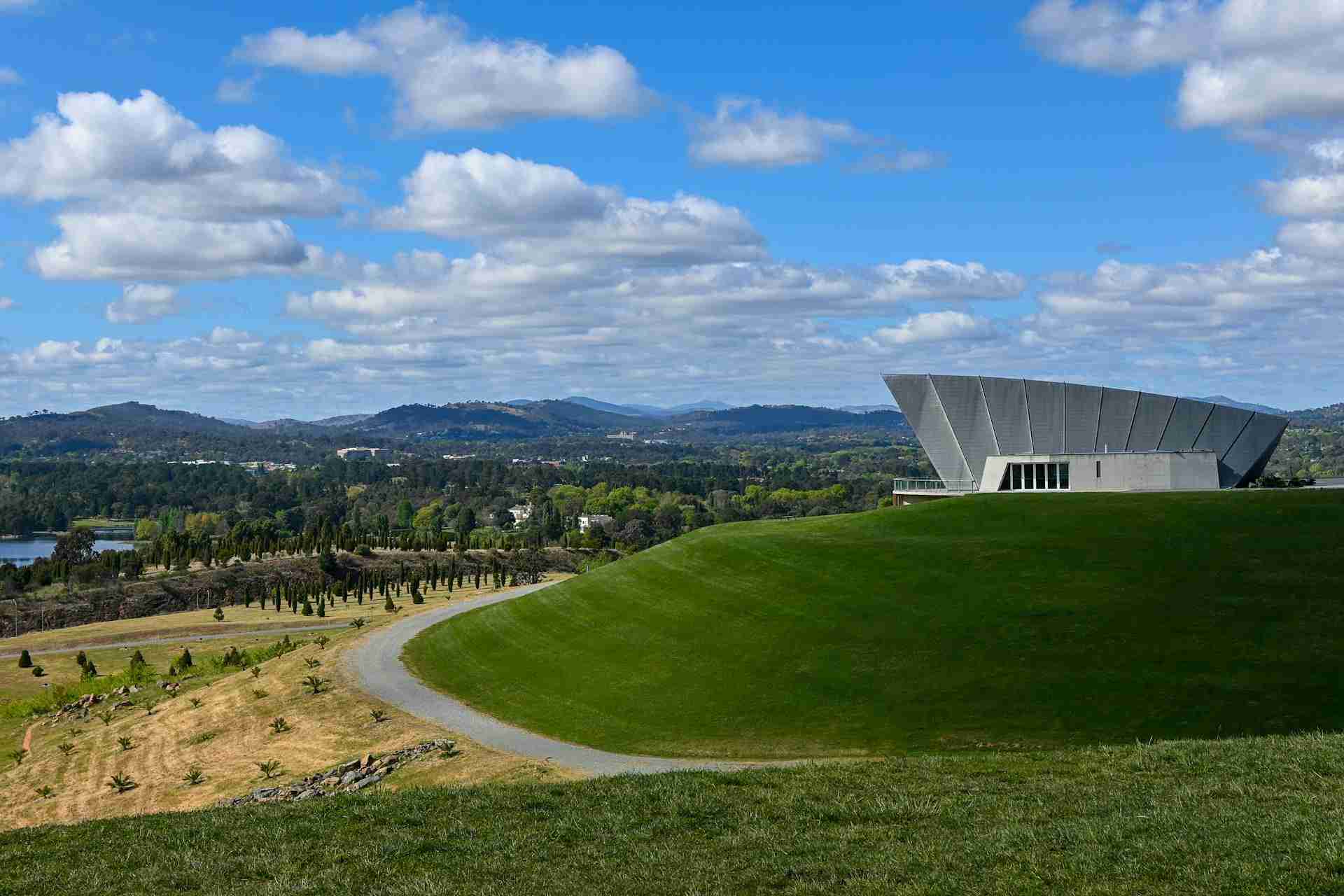
Spread across 250 hectares of rolling hills west of Canberra's city center, the National Arboretum is both a living museum of trees and one of Australia's most photogenic cultural landscapes. Established after the devastating 2003 bushfires, the arboretum features 104 forests of rare, endangered, and symbolic tree species planted in sweeping geometric patterns. The layout is striking when viewed from elevated points, with curving rows of trees flowing across ridgelines and valleys like waves of green and gold. For photographers, the arboretum offers remarkable variety: panoramic views over Lake Burley Griffin and the Brindabellas, intimate forest compositions, modern architecture, and ever-changing light across its sculpted hills. It is a location where design and nature blend seamlessly, offering fresh opportunities in every season.
Best Photography Opportunities
• Panoramic Views from Dairy Farmers Hill
This elevated viewpoint is one of the best places to capture the full scope of the arboretum. From here, sweeping vistas stretch across Canberra, Lake Burley Griffin, and the distant Brindabella Range. Wide-angle lenses are essential to capture both the foreground forests and the expansive background. Sunset is especially rewarding, with warm light flooding across the hills and silhouettes of trees against glowing skies. Panoramic stitches can capture the immense scale of the arboretum's layout, while telephoto lenses compress the rows of trees into striking geometric layers.
• Forest Patterns and Repetition
Each forest within the arboretum is planted with a single species, resulting in blocks of repeated form and texture. These are excellent subjects for graphic photography, whether shot from elevated viewpoints or within the groves themselves. Walking through the Himalayan cedar or cork oak forests reveals rhythmic patterns of trunks and shadows, ideal for both wide compositions and tighter studies. Early morning and late afternoon light adds depth to these scenes, with long shadows accentuating repetition. On overcast days, soft light enhances color and texture without distracting contrast.
• The Village Centre and Modern Architecture
The Village Centre is a striking building with a sweeping timber roof that resembles a leaf or wing, making it a strong subject for architectural photography. Its interior spaces, framed by glass and natural light, provide opportunities for abstract compositions and detail studies of design elements. Shooting from outside at twilight is particularly rewarding, when interior lights glow warmly against the darkening sky. A mid-range zoom lens works well for these compositions, balancing structural context with detail.
• The National Bonsai and Penjing Collection
Located within the Village Centre precinct, this collection offers opportunities for close-up photography of meticulously cultivated miniature trees. Macro lenses and fast primes allow for detailed studies of texture, shape, and foliage. The collection changes throughout the year, with seasonal blossoms and autumn colors providing added variety. Careful use of shallow depth of field isolates each specimen against soft backgrounds, creating intimate portraits of living sculpture.
• Sculptures and Designed Landscapes
Scattered throughout the arboretum are public art installations such as the Wide Brown Land sculpture, whose sweeping steel letters make a bold subject against sky and hills. These installations provide focal points for wide environmental photography, particularly effective at sunrise and sunset when long shadows stretch across the landscape. Foregrounds of grasses and trees can be incorporated to frame the artwork, creating layered compositions that highlight the dialogue between culture and environment.
Best Time to Visit
The arboretum is photogenic in every season. Spring brings fresh growth and blossoms, with soft greens dominating the forests and wildflowers adding color to meadows. Summer offers long golden evenings, with warm tones sweeping across the hills. Autumn is particularly dramatic, as deciduous plantings ignite in orange and red, contrasting with the evergreens around them. Winter often brings mist and low light, creating moody conditions that suit black-and-white photography and structural compositions. For daily timing, sunrise offers calm conditions and soft light across the forests, while sunset is best for panoramas from Dairy Farmers Hill. Twilight sessions provide glowing architectural compositions of the Village Centre. Overcast days are excellent for forest interiors and bonsai photography, as diffused light reveals subtle detail without harsh contrast.
How to Get There
The National Arboretum Canberra is located about 6 kilometers west of the city center, easily accessible by car in under 15 minutes. Public buses also serve the site, though driving provides greater flexibility. There is ample parking near the Village Centre, with trails and paths leading to forests, lookouts, and sculptures. Entry to the arboretum grounds is free, though some exhibitions, such as special displays in the bonsai collection, may require small fees. Tripods are permitted throughout the site, with plenty of space to set up at viewpoints and within forest areas. The grounds are extensive, so comfortable footwear and water are essential if you plan to explore beyond the central precinct. The arboretum is open daily, though hours vary for the Village Centre and bonsai collection.
Recommended Photography Gear
A wide-angle lens in the 14 to 24 millimeter range is invaluable for capturing sweeping landscapes and architectural perspectives of the Village Centre. A mid-range zoom such as a 24 to 70 millimeter lens is useful for general shooting, forest scenes, and sculpture compositions. A telephoto lens up to 200 millimeters allows for compression of tree rows and distant landscape details. A tripod is essential for sunrise, sunset, and twilight work, as well as for panoramic stitching. A circular polarizer helps manage glare on foliage and deepen sky tones, while neutral density filters enable long exposures for creative cloud and light movement over landscapes. Macro lenses are recommended for detailed studies in the bonsai collection and for seasonal wildflower photography. Weather protection for both gear and clothing is advisable, as conditions can shift quickly on the exposed hilltops.
Nearby Photography Locations
Just a short drive west, the observatory combines ruins from the 2003 fires with modern research facilities and expansive views of Canberra and the Brindabellas. It is excellent for both sunset landscapes and astrophotography.
Situated directly below the arboretum, the lake provides reflections of city landmarks and open water compositions. Sunrise and sunset are particularly effective for capturing still reflections and glowing skies.
This nearby telecommunications tower offers elevated views across Canberra and is itself a strong subject for photography when framed against dramatic skies.
South of the arboretum, Tidbinbilla provides diverse wildlife photography opportunities, including kangaroos, emus, and birdlife in wetland and bush settings.
• Cotter Dam
About 20 minutes west, Cotter Dam provides a striking subject for architectural and landscape photography, with sweeping concrete walls set against forested hills.
The National Arboretum Canberra is a location where design, ecology, and landscape come together in ways that are both inspiring and photogenic. From its sweeping tree-lined hills to its architectural center and bonsai collection, it rewards photographers with subjects that shift in mood and appearance across seasons and light. For those exploring Canberra with a camera, it is a destination that combines diversity and creativity in equal measure.
Comments
Loading comments…