
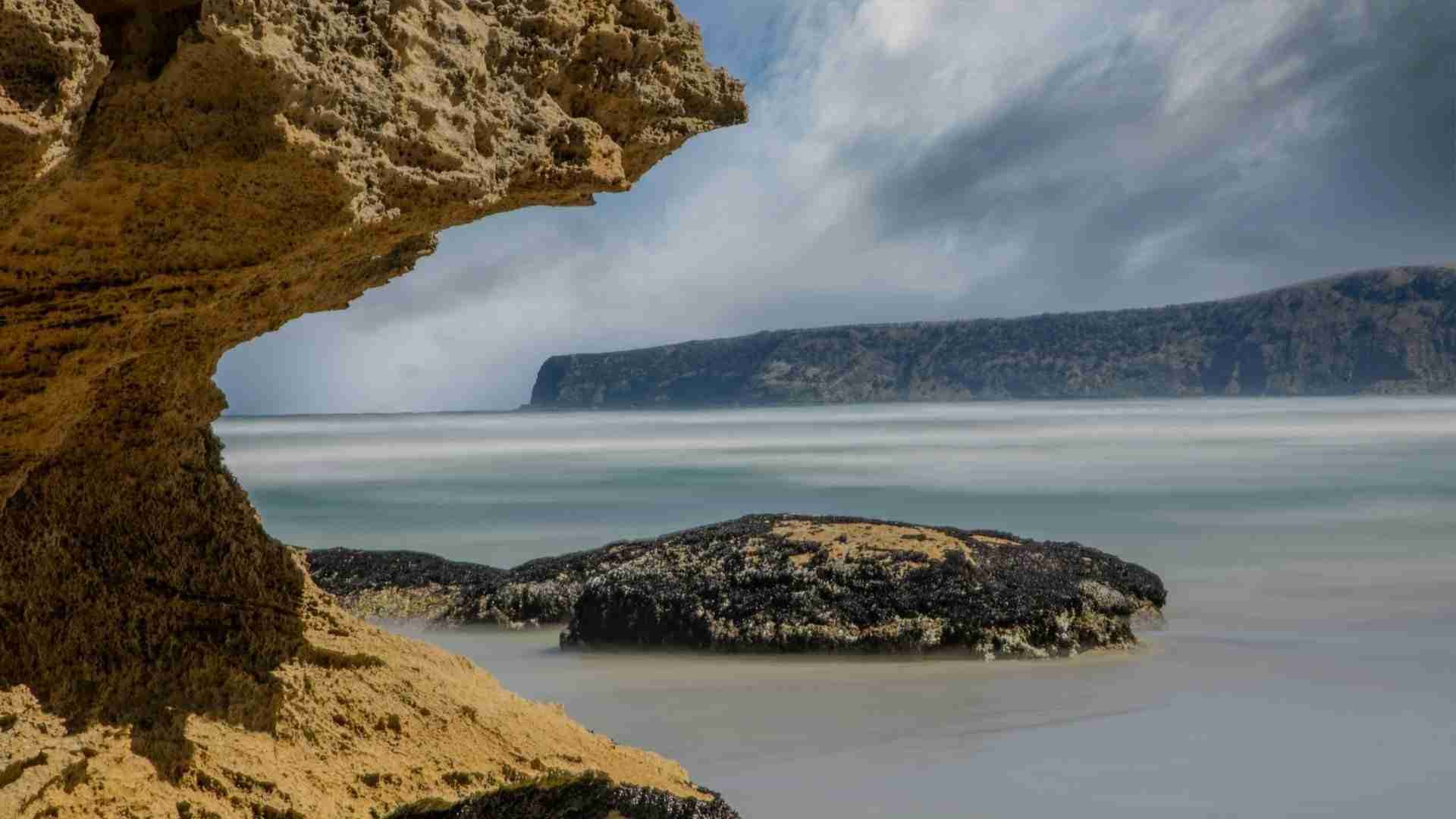
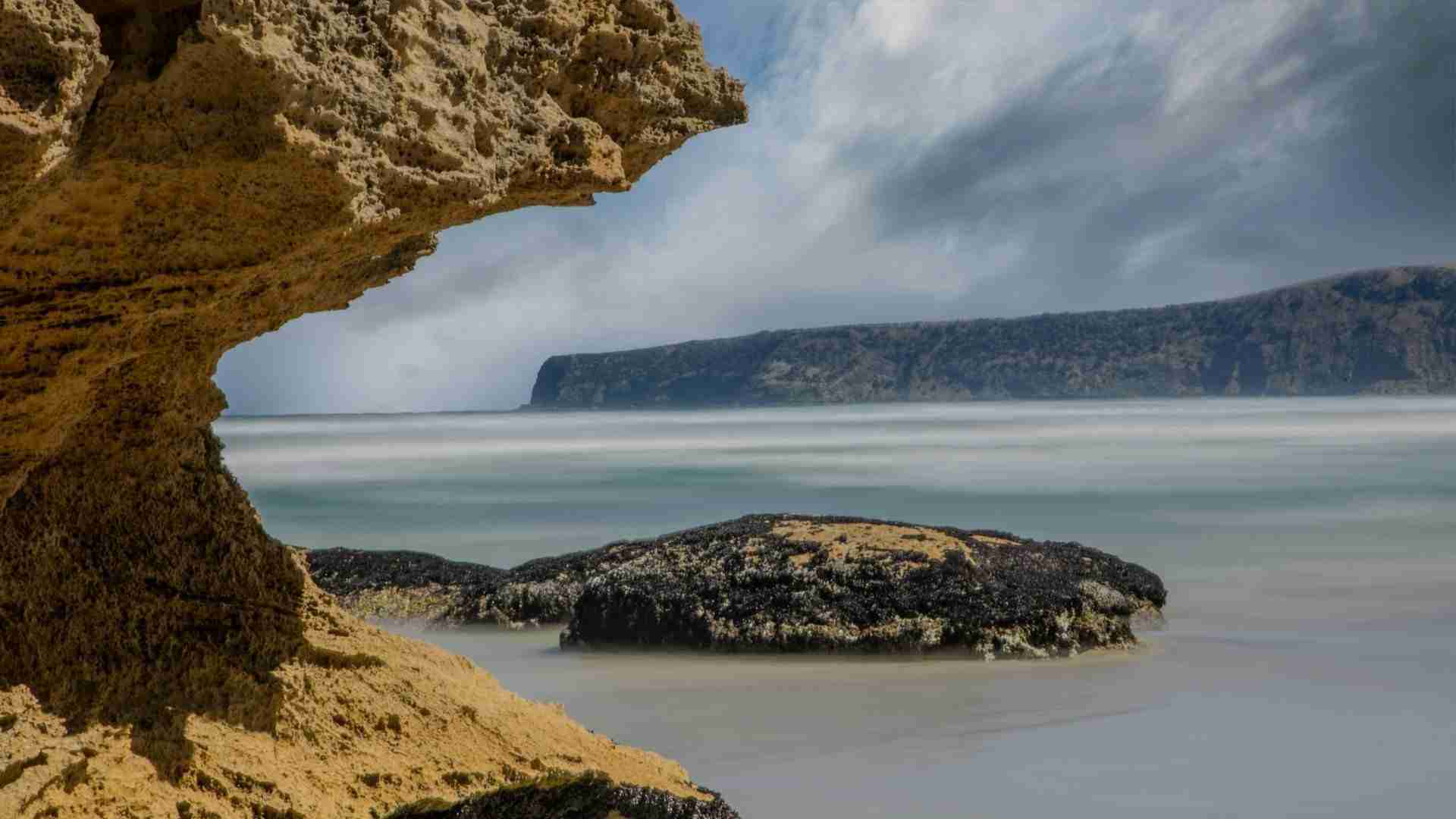
Tucked away on the wild southern edge of Cape Bridgewater, Shelly Beach is one of Victoria's most remote and visually rewarding stretches of coastline. With its namesake shell-laden sands, sculpted limestone cliffs, turquoise water, and windswept dunes, the beach feels untouched—raw, elemental, and atmospheric. Facing southwest into the Southern Ocean, it captures shifting skies, dynamic surf, and the distant curve of the cape, making it a haven for landscape photographers seeking minimalist seascapes, long exposure drama, and coastal textures unmarred by crowds or development.
Best Photography Opportunities
• Wide-Angle Seascapes Framed by Cliffs
The beach is bordered by rugged limestone formations that rise steeply from the sand, providing natural framing for wide coastal compositions. Use a 16–35mm lens to capture the expanse of the bay with leading lines from the shoreline or the gentle arc of the wave-washed beach. Sunset light warms the cliffs, creating rich contrast with the cool blues of the ocean.
• Shell Textures and Abstract Foregrounds
True to its name, Shelly Beach is carpeted with fragments of seashells—bleached, broken, and scattered by the tide. These create compelling foreground texture for both macro work and wide-angle shots. Shoot low with a shallow depth of field to isolate details or use them as a textured lead-in to broader coastal scenes.
• Long Exposure of Southern Ocean Swells
With constant surf and strong winds, this location lends itself beautifully to long exposures that smooth out the sea and create contrast between water, rock, and sky. Use an ND filter and tripod to extend shutter speed during twilight or overcast days, especially when moody clouds hover above the horizon.
• Elevated Views from the Clifftop Trails
From the trail above the beach, accessible via a short climb from the eastern end, you can look down on the curve of the bay with waves rolling in from the open sea. These high perspectives are excellent for showcasing the full sweep of the coastline and the remote setting of the beach. Best shot at golden hour when the sun lights the surf in diagonal lines.
• Stormy Skies and Dramatic Light over the Water
Facing into the prevailing southern weather systems, Shelly Beach frequently sees fast-moving fronts and broken skies. These conditions are ideal for moody, high-drama seascapes—especially when shafts of light break through cloud layers and catch on the water or dunes.
Best Time to Visit
Shelly Beach is a location that thrives under varied and changing conditions. Sunset provides the best directional light for illuminating the cliffs and sand, particularly from spring through autumn when the sun sets southwest into the sea. Arrive an hour before golden hour to explore compositions and prepare for the light transition.
Early morning visits offer solitude and softer tones, especially in winter when the low sun grazes the dunes and softens shadows. Overcast days are perfect for shooting details and long exposures, while clear days can be harsh by mid-morning—ideal instead for silhouette work or high-key studies.
Autumn and winter bring the most dramatic weather and cloud movement, making them ideal seasons for long exposure work and atmospheric photography. In summer, calmer conditions allow for greater color saturation, cleaner skies, and more mirror-like sand surfaces at low tide.
How to Get There
Shelly Beach is located just south of Cape Bridgewater in southwest Victoria, about 20 minutes' drive west of Portland. From Cape Bridgewater Road, follow Blowholes Road toward the Seal Viewing Platform, and look for the marked walking track leading down to Shelly Beach. The path is not signposted for vehicle access directly to the sand but is accessible via a short walk from the nearby clifftop car parks.
Wear sturdy shoes for the descent, as the path can be uneven and sandy. The walk is moderate and rewards you with an untouched stretch of coastline with few—if any—other visitors. There are no facilities at the beach, so come prepared with water, food, and weather protection.
Tripods are essential for long exposure and low-light work. A lens cloth or cover is also useful, as strong winds off the Southern Ocean can bring mist and sea spray.
Exploring the Surrounding Area
The surrounding landscape of Cape Bridgewater is equally rich with photographic opportunities. Just above the beach, the clifftop trail continues toward the Blowholes and the petrified forest—a geological curiosity of hollow limestone formations resembling ancient tree trunks. These are especially striking under low sidelight or after rain.
A short drive north brings you to the seal lookout, where a colony of fur seals basks on offshore rocks. With a long lens, you can capture natural wildlife moments set against the crashing surf and dark basalt cliffs. Early morning offers the best light and activity.
The inland dune system and grass-covered headlands near Cape Bridgewater provide pastoral contrast, with old fence lines, wind-twisted trees, and long views toward Discovery Bay. These scenes pair beautifully with moody skies and fog-filtered light.
Nearby Photography Locations
Just north of Shelly Beach, the Blowholes are a dramatic cluster of wave-carved sea cliffs. On rough days, powerful spray explodes through narrow fissures—ideal for shooting motion and elemental force with a telephoto lens.
A unique geological site of calcified sand tubes that resemble a fossilized woodland. Best photographed in low sidelight to emphasize texture, especially at sunrise or sunset with dramatic skies overhead.
• Cape Nelson Lighthouse
Located to the east near Portland, this classic lighthouse stands on a basalt headland above rugged surf. Perfect for long exposure work, sunrise seascapes, and architectural contrasts with sky and sea.
The more protected sibling of Shelly Beach, this long, crescent-shaped bay offers calmer surf, reflective wet sand, and views toward the cape—great for soft golden-hour scenes and family-friendly foregrounds.
Located near Portland, this headland is excellent for wildlife photography, including seabirds and occasional dolphins. Rock pools and tide lines make for intricate detail work and moody coastal abstracts.
Shelly Beach at Cape Bridgewater is a photographer's quiet haven—a place where the drama of the Southern Ocean meets the intimacy of shell-littered sand and timeless wind. Whether you're shooting from above, crafting slow exposures at water's edge, or simply standing still to watch the sky change, this beach rewards those who chase the shifting moods of light, sea, and solitude.
Comments
Loading comments…