
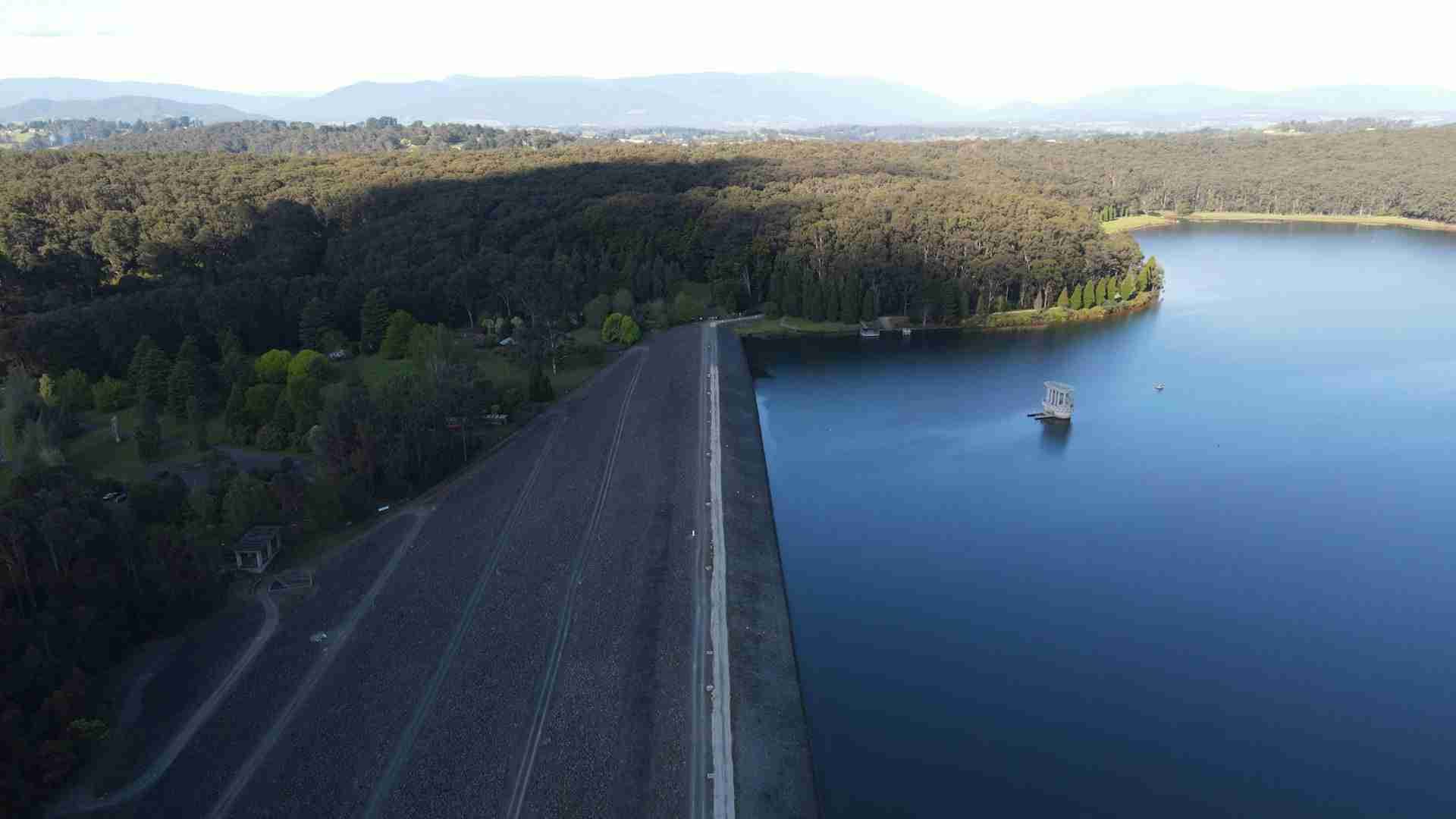
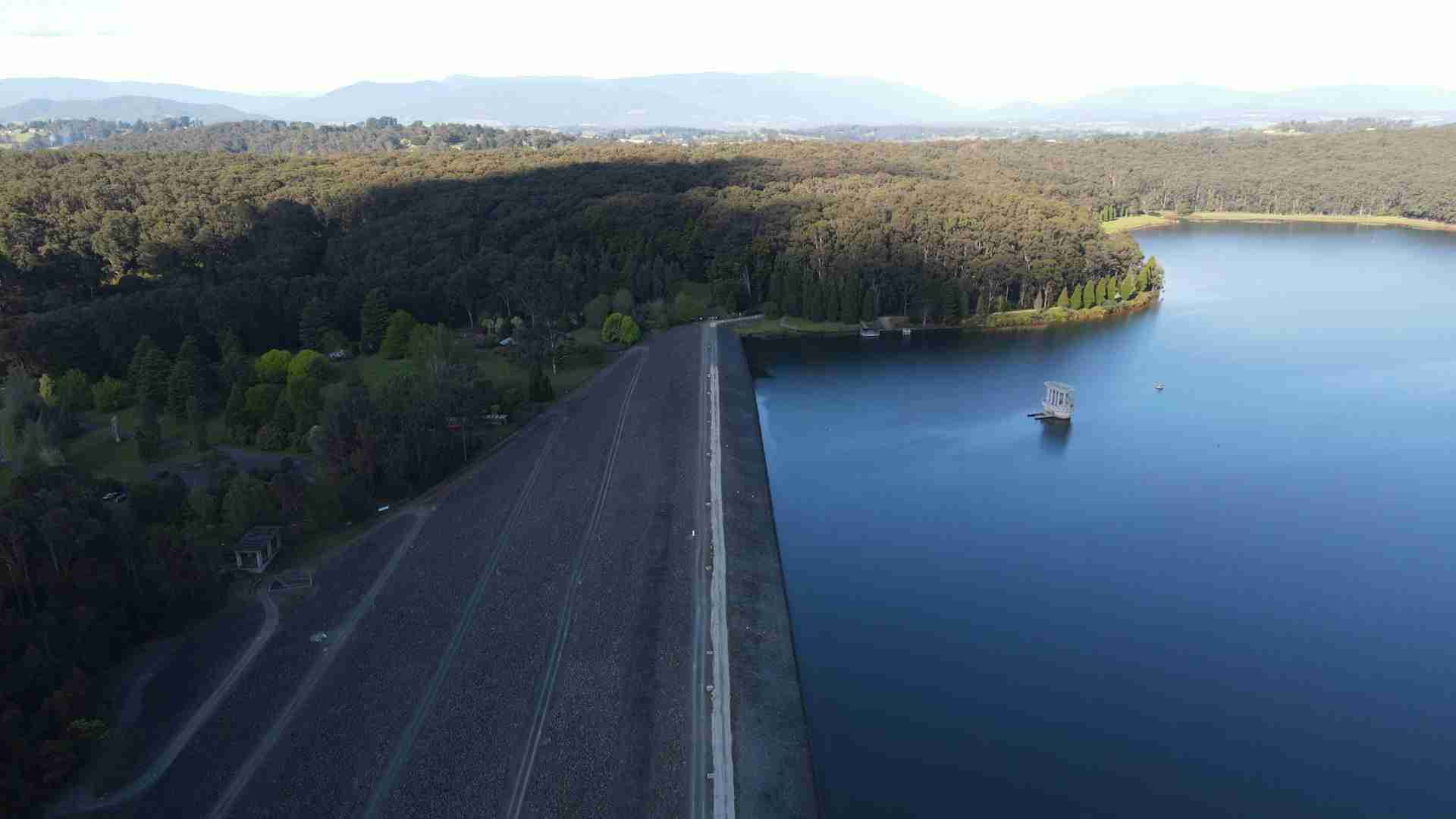
Tucked at the edge of the Dandenong Ranges east of Melbourne, Silvan Reservoir offers a tranquil and structured setting for photographers interested in the quiet interaction between forest, water, and engineered form. Surrounded by towering mountain ash and shaded picnic areas, the reservoir's curved retaining wall, manicured banks, and still surface provide a rare combination of nature and geometry. This is not a wild landscape but a composed one, framed by pathways, filtered light, and the faint echo of birdsong through the gums. Photographers here can work with repeating forms, reflected sky, and subtle gradations of green and grey across water and leaf. It's a location that rewards slow observation, patient framing, and a sensitivity to light as it moves through layers of canopy and cloud.
Best Photography Opportunities
Reservoir Wall and Spillway Curves in Soft Light
The concrete arc of the Silvan Reservoir wall provides a strong visual anchor for graphic compositions, especially in diffused morning light. From the upper viewing area, you can frame the full curve of the spillway as it leads toward the forested backdrop. On overcast days, the muted tones of concrete and trees flatten into a soft, painterly palette that works well for minimalist imagery. Including a figure on the walking path above the wall adds scale and human interest. Shoot from slightly elevated or offset angles to make the most of the leading lines and repeating shapes.
Reflections and Cloud Movement Over the Water
On still mornings or during light rain, the reservoir's surface becomes a subtle mirror, reflecting grey skies, silhouetted trees, and the occasional flash of sun through cloud gaps. Long exposures of fifteen seconds to two minutes create gentle surface blur, ideal for minimalist compositions using negative space and soft color transitions. Use a tripod and a six-stop ND filter to control the exposure length, and a low ISO for cleaner files. A circular polarizer can also be useful in adjusting the reflection-to-transparency balance depending on what lies beneath the surface near the banks.
Eucalyptus and Fern Layers on the Hillside Trails
The bushland surrounding the reservoir is home to towering eucalypts, tree ferns, and dense undergrowth that create strong vertical compositions. The light filtering through the canopy shifts constantly, offering pockets of contrast and glowing greens. These scenes work best with a standard or short telephoto lens, which allows you to compress layers and isolate visual patterns in trunks, leaves, and undergrowth. Overcast days are especially productive here, softening shadows and revealing more tonal detail in bark and foliage. Use a small aperture and tripod to maintain depth of field when working in the lower light of the forest floor.
Moss-Covered Infrastructure and Forgotten Details
Small maintenance buildings, weathered pipes, old steps, and partially overgrown barriers offer opportunities for photographers interested in textures and visual contrast between built and natural elements. These subjects often sit quietly at the edge of the main walking paths, partially obscured by growth and time. Compositions that balance man-made lines with encroaching vegetation are particularly effective in black and white, especially when shot in soft light. Look for lichen on concrete, rusted metal against damp stone, or symmetrical stairways fading into ground cover.
Birdlife and Patterned Water During Golden Hour
In the hour just after sunrise or before sunset, the light across the reservoir shifts to gold and copper, illuminating the banks and highlighting ripples from passing birds. Swans, herons, and ducks often move across the surface during these quieter hours, creating delicate wake lines that catch light in surprising ways. These scenes benefit from a medium telephoto lens and a fast shutter speed to freeze water movement without sacrificing sharpness. When conditions align, golden hour reflection shots can carry a painterly, serene quality that contrasts nicely with the cooler greens of the surrounding bush.
Best Time to Visit
Silvan Reservoir can be photographed year-round, but autumn and winter provide the most consistent conditions for soft, even light and fog-laced mornings. During these seasons, the atmosphere around the water is cooler and quieter, with reduced foot traffic and more moisture in the air, ideal for long exposures and subtle contrast work. Spring introduces fresh greens and blooming undergrowth, offering bright color accents and livelier compositions in the forested areas. Summer brings harsher light and heavier visitor activity, making early morning the best option during those months.
For reflections and long-exposure work, windless mornings are ideal. Early fog rolling in from the surrounding hills can add layers of depth to both the water and tree-line shots. Sunset light often catches the tops of the tallest gums and paints the reservoir banks with a low-angle warmth. Midday is less productive unless shooting within the shaded trails where canopy cover diffuses the light. Rainy days, while less comfortable, can produce some of the best tonal balance and mood.
How to Get There
Silvan Reservoir is located in the Yarra Ranges east of Melbourne, approximately one hour by car from the city center. From the suburb of Montrose, take the Mt Dandenong Tourist Road east to Olinda, then follow signs to Silvan along Olinda Creek Road. Clear signage leads directly to the Silvan Reservoir Park entrance, where multiple car parks are available. Entry is free, and the site is open daily.
The main car park provides immediate access to the viewing platforms, picnic areas, and trails that wrap around the western and northern sections of the reservoir. While the dam wall itself is fenced for safety, several vantage points along the walking paths offer elevated views. Most trails are compacted gravel or sealed pavement, making them easy to navigate with a daypack and tripod. There are no steep ascents, and shooting locations are generally within a ten-minute walk from the main entry.
Recommended Photography Gear
A standard zoom lens from 24 to 70 millimeters is the most versatile option here, offering enough flexibility to shoot wide architectural scenes as well as intimate forest details. A wide-angle lens, such as 16 to 35 millimeters, is useful for capturing the curvature of the dam wall and broader compositions over the reservoir. For wildlife or compressing background layers, a telephoto lens in the 70 to 200 millimeter range will serve well.
A sturdy tripod is essential for long exposures and forest shooting under low light. Bring a six-stop or ten-stop neutral density filter for smoothing water and capturing motion in cloud or tree branches. A polarizing filter helps with glare control and boosting saturation in the bush. A rain sleeve or weather cover is recommended year-round due to the region's fast-changing conditions. Footwear with good grip will make navigating damp or mossy paths safer, particularly in winter or after rain.
Nearby Photography Locations
Just a short drive up the road, Olinda Falls offers cascading water and dense tree fern surrounds in a compact, accessible setting. Best photographed after rainfall, the falls and surrounding forest deliver strong vertical compositions and a cool, filtered light throughout the day.
For expansive views over the Melbourne skyline and Port Phillip Bay, SkyHigh offers a dramatic change in scale and subject. This is a sunset location, with silhouetted trees and wide horizons that contrast well with the enclosed feel of Silvan.
Formerly known as the National Rhododendron Garden, this site is ideal in spring when flowering trees explode in color. The manicured paths and layered planting designs offer controlled compositions that work well with both wide and macro lenses.
South of Silvan, the Kallista area contains some of the densest and tallest stands of mountain ash in the ranges. Early morning here can produce spectacular light shafts, mist through the trunks, and strong tonal contrast for black and white or moody color work.
Further to the southwest, Lysterfield offers broader lakeside views and more active wildlife. It is best in the evening, when birds move across the water in warm light and the forested banks reflect long across the surface.
Silvan Reservoir is a location that rewards a deliberate approach. It is not about grand alpine drama or ocean-scale horizons, but about form, rhythm, and the quiet tension between human design and forest growth. Whether you're drawn to the elegant arc of the spillway, the slow texture of bark in fading light, or a single ripple breaking across still water, this is a place that invites photographers to see deliberately and shoot with intention.
Comments
Loading comments…