
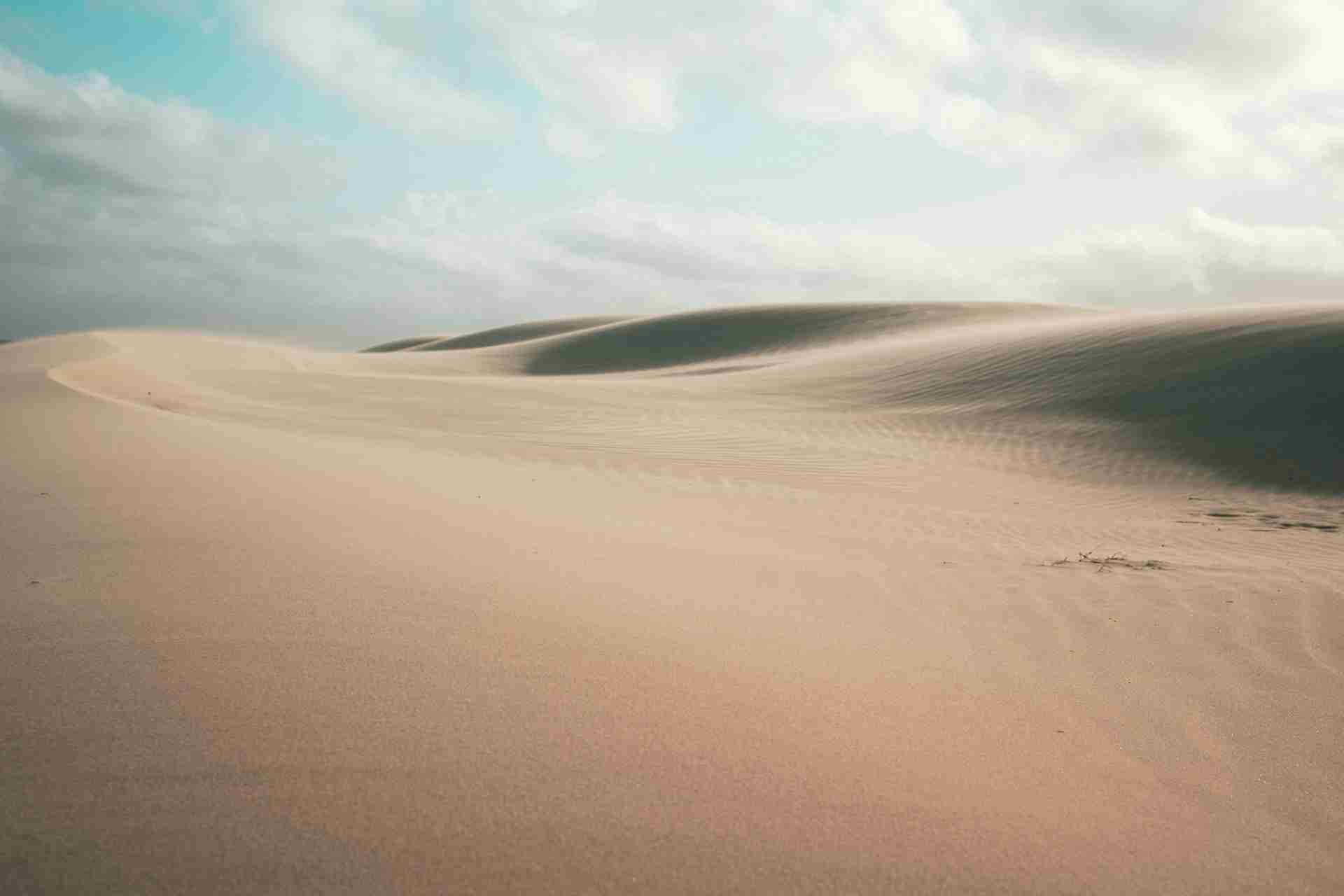
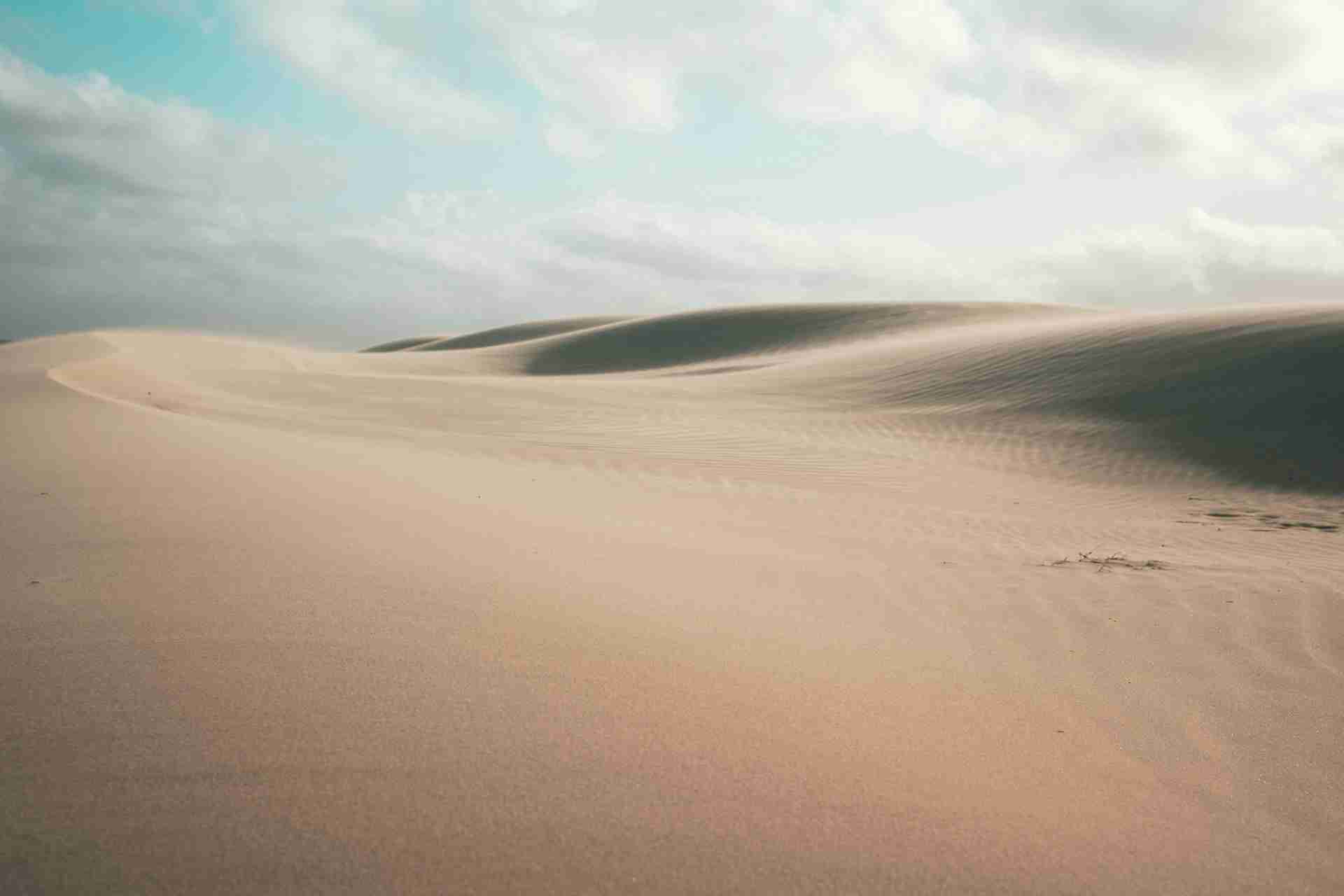
Stockton Sand Dunes stretch along the coast just north of Newcastle, forming one of the largest and most visually dramatic dune systems in the Southern Hemisphere. The landscape is wide open and always changing, shaped by wind and light rather than anything permanent. For photographers, this is a place where the absence of clutter is the main attraction. There are no buildings, no trees, and very little color outside of warm sand and blue sky, which makes every composition hinge on line, texture, and shadow. Whether you are walking out with a single lens or planning a drone session over ridgelines and curves, Stockton gives you the space to slow down and focus on the fundamentals of strong image-making.
Best Photography Opportunities
• Wind-Carved Ridges and Leading Lines
The ridgelines that form across the dunes are a defining feature of Stockton. They shift with every change in wind direction, creating a fresh set of patterns each time you visit. These natural lines are perfect for drawing the eye through a frame, especially when photographed from a low angle with a wide lens. Early morning or late afternoon light stretches shadows across the ridges and gives shape to the smooth surfaces of the dunes. The direction and quality of this light are key, and the longer shadows make it easier to read the form and depth of each dune. These lines do not last long once people start walking the area, so arriving early gives you a better chance to work with clean, untouched shapes.
• Minimalist Compositions in Open Space
One of the most effective ways to photograph Stockton is to simplify your compositions and work with very little in the frame. The open landscape makes it easy to isolate a single crest, ridge, or slope without any visual noise. These scenes work well in both color and black and white and often benefit from soft side light or subtle gradients in the sky. The absence of context forces your attention onto shape, curve, and balance. Even a small element, like a lone shrub or a single person, becomes a strong point of focus in this setting. It is a rare place where empty space is not just useful but essential to the final image.
• Abstract Textures and Surface Details
Zooming in on the surface of the dunes reveals a different kind of visual interest. Ripple patterns in the sand shift constantly, and fresh tracks from animals or wind-blown grass offer texture that is easy to overlook from a distance. These details are perfect for working handheld with a mid-range or macro lens, especially in soft light. They also respond well to monochrome treatments where shape and contrast take the lead. After sunrise, when the sun climbs higher, these textures can lose some of their definition, so this is a good subject to focus on during the first hour of light. Look for contrast between hard and soft surfaces, especially near the base of dunes or in corners protected from the wind.
• Silhouettes and Human Scale
Adding a figure to the landscape can help communicate the scale of Stockton's dunes, which are often much larger than they appear from a distance. A single person walking along a ridge becomes a strong silhouette when backlit at sunrise or sunset. Their shape provides context without overpowering the simplicity of the scene. This approach works especially well when combined with wide compositions and clean horizons. Lifestyle and portrait photographers can also use the dunes as a neutral backdrop that places full attention on light, posture, and movement. The light bouncing off the sand is clean and soft, and even the harshest sun can be managed with positioning and time of day.
• Aerial Views and Top-Down Patterns
The dunes are an excellent location for drone photography, offering a perspective that cannot be seen from the ground. From the air, Stockton becomes a landscape of lines, swirls, and overlapping curves. Top-down shots work especially well when light is low and shadows stretch across the ridges. Tracks left by vehicles, animals, or hikers create patterns that add rhythm to an otherwise blank surface. Oblique angles can show depth and layering across the dunes, especially when shooting toward the horizon with a long focal length. Be aware of wind conditions, which can pick up quickly and make flying difficult. Always check local airspace rules, especially around tour operations and conservation zones.
Best Time to Visit
The dunes are entirely exposed and open to the elements, so the time of day makes a huge difference in both comfort and image quality. Sunrise is the most dependable time to shoot, especially from April through September when the sun rises at a lower angle and stays soft for longer. Morning light brings out the fine ridges in the sand, creates long shadows, and offers calm air that makes drone flight safer and easier. Sunset is equally beautiful but usually windier, which can erase surface detail and create airborne sand that interferes with both shooting and gear safety. During summer, the heat on the dunes becomes intense by mid-morning, and harsh light can wash out both texture and contrast. Winter offers cleaner skies and more manageable temperatures, making it the preferred season for long sessions. If you are hoping to capture the dunes in a pristine state, aim to arrive shortly after a windy night or before any visitors have walked through. Footprints can linger in the sand for hours and are nearly impossible to avoid in popular areas once the day gets underway.
How to Get There
Stockton Sand Dunes are part of the Worimi Conservation Lands and run along the coast north of Newcastle. The most common access points for photographers are located at Birubi Beach in Anna Bay, Lavis Lane near Williamtown, and Salt Ash. From Newcastle city center, the drive to Birubi Beach takes about forty minutes. From Sydney, expect a drive of approximately two and a half hours via the M1 Pacific Motorway and Nelson Bay Road. The Birubi Beach access is the easiest for foot traffic, with a car park near the surf club and clear walking paths directly onto the southern edge of the dunes. For deeper access, 4WD vehicles can enter via Lavis Lane or Gan Gan Road, but off-road permits may be required depending on where you are heading. Commercial activity, including photography for clients, may also require prior approval or booking with local operators. There is no entry fee for general access on foot, but facilities are limited. Bring everything you need, including water, sun protection, and enough power to last through your session, since there are no shops or shade once you are in the dunes.
Recommended Photography Gear
Photographing Stockton Sand Dunes requires gear that can stand up to bright light, shifting conditions, and constant exposure to fine sand. A wide-angle lens is essential for capturing the scale and openness of the dunes. A 16 to 35 millimeter range is ideal for placing lines and ridges across the frame and for working low to the ground to exaggerate perspective. A mid-range zoom such as a 24 to 70 millimeter lens is useful for tighter compositions or for including human elements without distorting the background. A longer lens can be helpful for compressing dune layers or shooting details from a distance when heat haze becomes a factor. A drone is highly recommended for aerial work, but only if wind conditions allow for safe flying. A sturdy tripod is useful in low light, though you will want to use spike feet or weight your setup to keep it steady on soft sand. Filters can help manage harsh light, with polarizers cutting glare and neutral density filters extending exposure time during early or late hours. Always carry a lens cloth, air blower, and sealed storage bags for your gear to avoid damage from windblown sand. Sturdy boots or trail shoes are a better choice than open footwear, and a sun hat is often more useful than a viewfinder cover during long shooting sessions in open sun.
Nearby Photography Locations
Located at the southern edge of the dune system, Birubi Beach is a productive spot for combining coastal and desert-style imagery in one location. The beach offers clean lines, reflective wet sand at low tide, and a direct path onto the dunes. It is also a reliable sunrise location with open horizons and shifting light across both water and sand.
North of the dunes, the Tomaree Head walking track leads to a panoramic lookout over Shoal Bay and the offshore islands. The view from the summit is one of the best in the area for coastal scale, with deep water, sandy beaches, and high ground all visible in one wide frame. This is a strong location for early morning or late afternoon shooting with telephoto lenses.
Fingal Bay offers a more compact and intimate coastal setting with a strong headland and the tidal sand spit that connects to Fingal Island. During low tide, the spit creates leading lines and curves that work well in golden hour light. The rock pools and surrounding vegetation add texture and color to what is otherwise a very clean seascape.
• Boat Harbour and Kingsley Beach
Just south of Anna Bay, these two small coastal areas are perfect for rocky textures and dramatic wave action. Boat Harbour has sheltered inlets and uneven terrain that respond well to slow shutter work. Kingsley Beach is more open and exposed, with good opportunities for wave patterns and long-lens compositions from the cliffs.
For something completely different, the Nelson Bay marina area offers boats, jetties, and still water reflections during early morning calm. The light here is softer, and the harbor has more structural elements that work well for detail shots or casual street photography near the water. It is a good place to reset after a long morning in the dunes.
Stockton Sand Dunes offer one of the most flexible and rewarding environments for photographers working along the New South Wales coast. The location is quiet, open, and always in motion, even when the scene appears still. Whether you are there for wide, clean compositions or tight detail work in shifting light, Stockton gives you room to think and space to shoot without distraction. With the right timing and a bit of preparation, it is one of the best places in Australia to focus on the essentials of great outdoor photography.
Comments
Loading comments…