

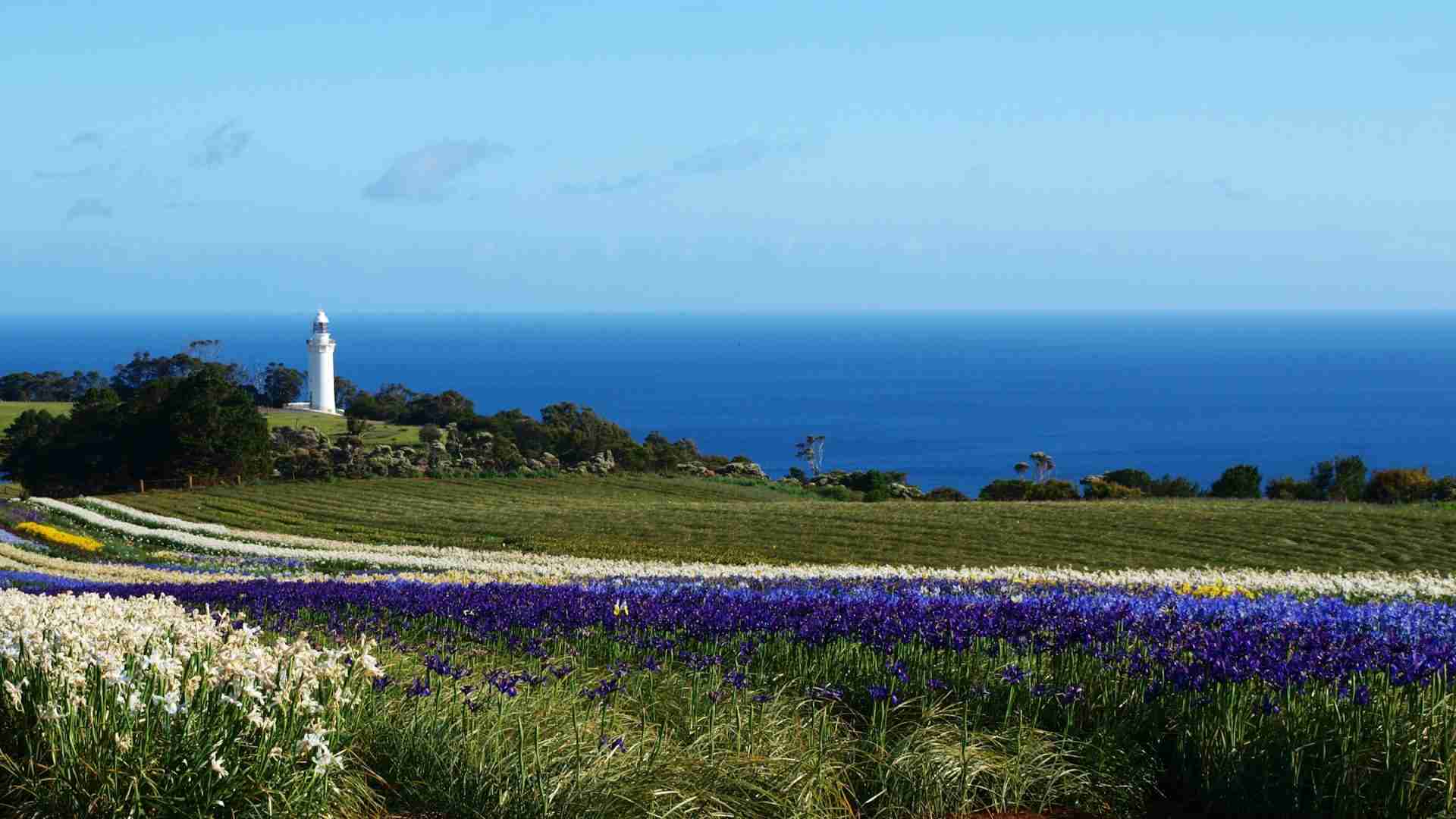
Table Cape Lookout is one of those locations where everything is laid out in a way that makes photography feel easy. Sitting on a flat topped headland along Tasmania's north coast, it gives you wide open views in multiple directions without needing to hike or search for vantage points. On one side, you have steep cliffs dropping into the ocean, and on the other, farmland stretching out in clean, geometric patterns. The Table Cape Lighthouse adds a clear focal point that helps anchor compositions when you want something more structured. It is a place where you can move a short distance and come away with completely different images, which makes it especially rewarding if you take the time to explore rather than settling on one spot.
Best Photography Opportunities
• Clifftop Edge Compositions Looking Down the Coast
Walking along the edge of the headland gives you strong views down the coastline, with cliffs leading the eye toward the horizon. You can use the curve of the land to build a natural flow through your composition, especially when shooting at a slight angle rather than straight out to sea. Including a bit of foreground grass or rock helps ground the image and adds depth. The height of the cliffs gives a clear sense of scale, which works well in wider shots. Light direction plays a big role here, with lower sun creating more shape in the land and water. It is one of the most reliable setups on the cape and worth revisiting as conditions change.
• Table Cape Lighthouse as a Focal Point
The lighthouse is an important subject on its own and also works well as part of a larger scene. You can frame it against the ocean for a clean, minimal composition or include surrounding land to give more context. Moving around the area changes how it sits in the frame, so it is worth trying a few different positions rather than settling on the first view. It works well with both wide and tighter focal lengths depending on how much of the environment you want to include. Early or late light adds more depth to the structure and helps separate it from the background. It is a strong anchor for compositions when the landscape feels too open.
• Farmland Patterns and Leading Lines
Looking inland, the farmland creates a completely different type of subject with clean lines and repeating patterns. Fields, roads, and boundaries form shapes that are easy to work into structured compositions. You can use these lines to guide the viewer through the frame or focus on more abstract patterns from slightly elevated positions. This is especially effective when the light is low, as it brings out texture and subtle variations in the land. It is a good way to add variety to your shoot rather than focusing only on the coastline. Small changes in position can completely change how these patterns line up.
• Spring Tulip Fields for Color and Contrast
If you visit during spring, the tulip fields around Table Cape bring in strong color that changes the feel of the entire location. Rows of flowers create natural leading lines that work well for both wide and tighter compositions. You can position yourself to include the lighthouse in the background, adding a clear focal point behind the color. It is worth exploring different angles to find combinations where the rows guide the viewer's eye effectively. Soft light helps keep colors balanced and avoids harsh contrast. This is one of the most seasonal but rewarding opportunities on the cape.
• Minimal Ocean Horizon Compositions
Looking out to sea, you can create very simple compositions that focus on the horizon and open space. This works well when the light is soft or when there are subtle changes in the sky and water. Including a small section of cliff or land can help anchor the frame without making it feel busy. It is a good approach if you want something more understated compared to the more detailed scenes inland. Playing with negative space here can lead to clean, balanced images. It is also a useful option when conditions are less dramatic.
Best Time to Visit
Sunrise is one of the best times to shoot at Table Cape Lookout, especially if you are facing inland or along the coastline where the first light starts to define the shape of the land. The softer light helps bring out texture in the cliffs and fields without creating harsh contrast. Early morning also tends to be quieter, which makes it easier to move around and take your time with compositions.
Sunset can also work well, particularly when the sky adds color over the ocean, though the direction of light may not highlight the cliffs in the same way. Overcast conditions are useful if you want to focus on patterns in the farmland or more subtle tones along the coast. Spring is the standout season due to the tulip fields, but the location works year round thanks to its mix of subjects. Wind can be a factor on the headland, so calmer days make shooting more comfortable, especially if you are working near the edge.
How to Get There
Table Cape Lookout is located near the town of Wynyard on Tasmania's north coast. It is easily accessible by car, with Table Cape Rd leading up onto the headland. Parking is available near the lookout, and from there, you can walk short distances to access different viewpoints. There are no major hikes required, which makes it easy to carry gear and move between spots. Access is generally free, though certain areas such as tulip farms may have restrictions depending on the season. The terrain is mostly open and easy to navigate, but care is needed near cliff edges, especially in windy conditions.
Recommended Photography Gear
A standard zoom lens is ideal here, giving you the flexibility to move between wide coastal views and more focused compositions on the lighthouse or farmland. A wide lens is useful for capturing the scale of the cliffs and sky, especially when you want to emphasize foreground elements. A short telephoto can help isolate patterns in the fields or compress the lighthouse into the landscape.
A tripod is helpful for sunrise or sunset shooting, particularly if you want to work with longer exposures or ensure sharpness in lower light. A polarizer can help reduce glare on the ocean and bring out more color in the sky and land. Since the location is exposed, it is worth keeping your setup stable and manageable, especially on windy days. You will likely be moving around quite a bit, so a lighter kit makes the experience easier.
Nearby Photography Locations
Located right on the headland, the lighthouse is a key subject with clean lines and strong contrast against the sky and ocean. It works well as both a standalone subject and as part of wider compositions. The surrounding area gives you multiple angles to experiment with framing.
A short drive from Table Cape, this beach offers bright sand and clear water that contrast nicely with the darker cliffs nearby. It is a great spot for more open coastal compositions and works especially well in good light. The shape of the bay helps create balanced, easy to work with scenes.
Fossil Bluff combines coastal cliffs with interesting rock formations and a historic lighthouse. The layered rock and changing shoreline give you a lot to work with, especially if you enjoy textures and natural patterns. It is a good location for both wider shots and detail work.
• Wynyard Foreshore
Closer to town, the foreshore offers a calmer setting with views across the water and space to work with reflections. It is a good place to shoot sunrise or sunset in a more sheltered environment. The area is easy to access and works well for a relaxed session.
A bit further along the coast, Rocky Cape National Park offers rugged shoreline, walking tracks, and elevated viewpoints. It provides a more natural and less developed setting compared to Table Cape. The variety of landscapes here makes it worth the extra time if you want to expand your shoot.
Comments
Loading comments…