
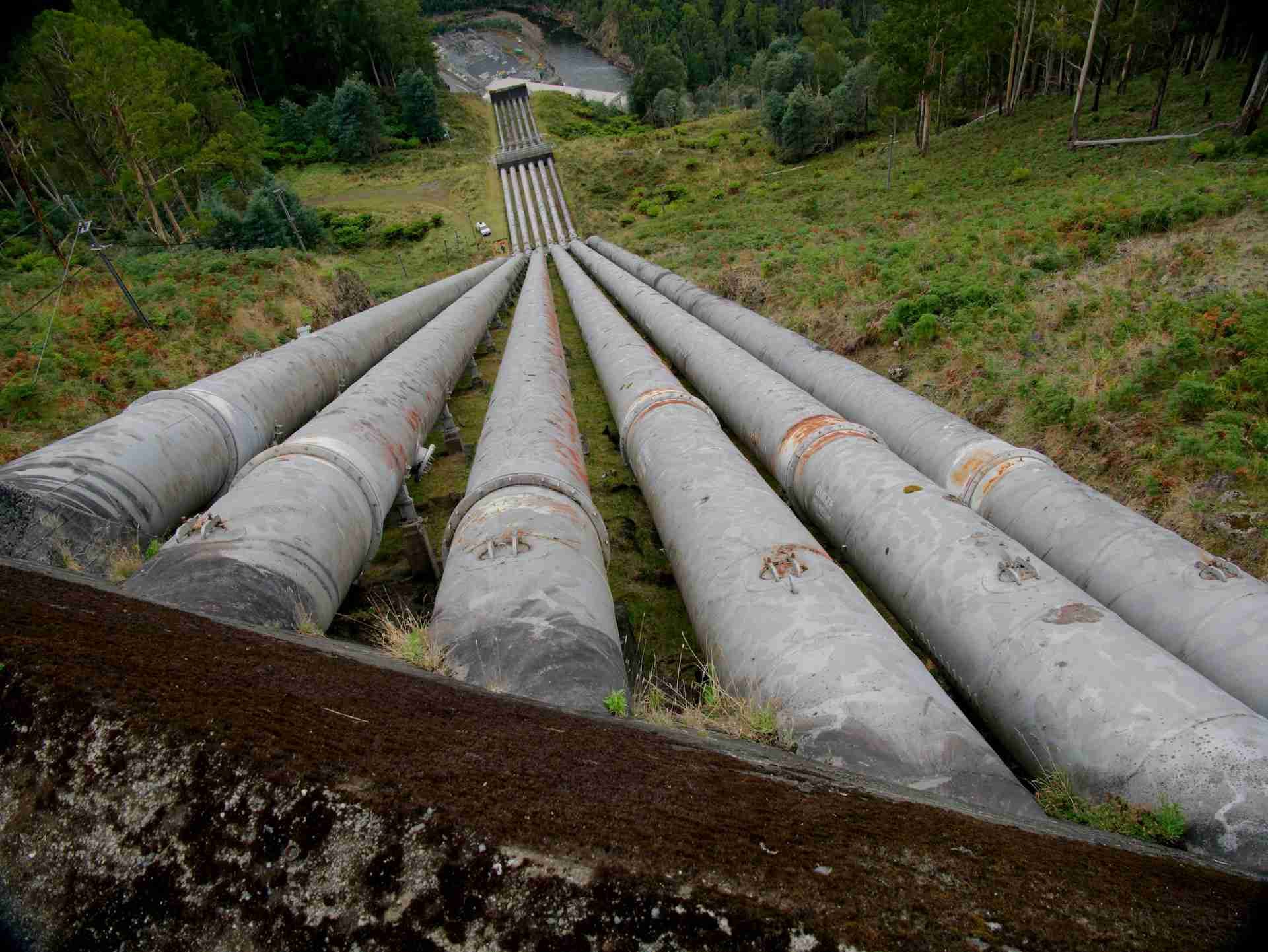
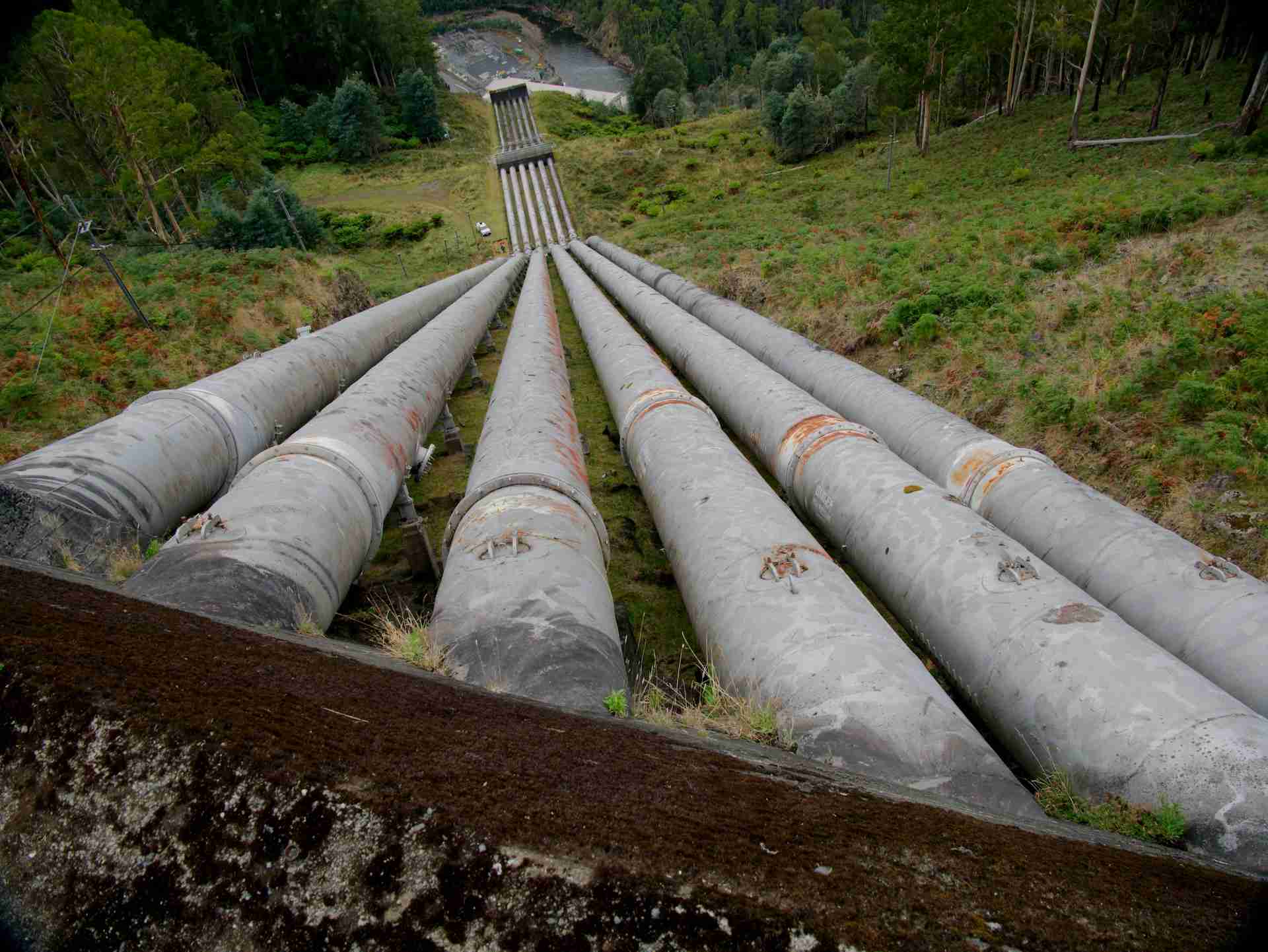
Tarraleah Lookout sits above the historic Tarraleah Power Station in central Tasmania, offering one of the clearest views of engineered infrastructure meets rugged landscape. From the lookout, you're positioned high above the Nive River gorge, looking down on the power station complex set within steep forested slopes. The scene is layered and graphic. Concrete structures, steel penstocks (very large piles), and transmission lines cut through deep green bushland, with water channels threading their way through the valley. It's not a polished tourist viewpoint. It feels industrial, remote, and distinctly Tasmanian. For photographers, the appeal lies in contrast. Hard geometry against irregular terrain, controlled water flow against wild river gorge.
Best Photography Opportunities
• Overlook Showing the Entire Power Station
The classic shot from Tarraleah Lookout frames the full power station complex below. From this height, the buildings, penstocks, and channels form strong linear elements that guide the eye through the valley. A moderate focal length keeps the proportions realistic while allowing enough compression to bring separate components into visual relationship. Pay attention to edge framing, as stray trees near the lookout can intrude if you're not careful. Even light works well here, especially when clouds soften contrast across both forest and concrete. This is a composition that benefits from careful alignment rather than dramatic angles.
• Penstocks as Leading Lines
The long steel penstocks descending toward the power station create bold diagonal lines through the landscape. Using them as a dominant foreground or midground element adds structure to the image. A slightly longer focal length can compress their length and intensify the graphic quality of the shot. These lines work particularly well when light skims across them, adding subtle highlight and shadow. The surrounding bushland provides texture, but the real visual strength comes from those strong engineered diagonals cutting through it.
• River Gorge Context Shot
Looking beyond the station, the Nive River gorge adds depth and scale. Including more of the surrounding terrain shifts the focus from infrastructure alone to the broader landscape. This approach works best when atmospheric conditions create subtle layering in distant hills. A wider focal length can help emphasize the drop into the valley. These compositions tell a fuller story about where the power station sits rather than isolating it from its environment.
• Low Light or Moody Weather
Overcast skies or incoming weather can dramatically improve the scene. Flat midday sun can make the concrete appear washed out and the forest overly contrasty. Cloud cover evens out tones and strengthens texture in the vegetation. After rain, the greens deepen and water channels become more visually pronounced. This location benefits from mood rather than bright blue skies.
• Detail Studies of Infrastructure From Higher Zoom
Using a longer lens to isolate sections of the power station creates more abstract, industrial compositions. Pipes, retaining walls, and geometric building shapes stand out when removed from the wider landscape context. This works especially well if light is angled enough to create shadow separation between structural elements. These tighter frames add variety to a series dominated by wide overlook shots.
Best Time to Visit
Late afternoon often provides the most balanced light at Tarraleah Lookout. As the sun lowers, angled light defines the forest canopy and adds subtle depth to the concrete structures below. Morning can also work well, especially if low cloud sits in the valley and creates atmosphere around the power station. Midday light tends to be harsh and flattens texture in both vegetation and industrial surfaces.
Tasmania's weather shifts quickly, and this location benefits from cloud movement. Overcast conditions often produce stronger results than clear skies, especially for maintaining tonal balance. Autumn can bring warmer tones to surrounding foliage, while winter introduces moodier skies and mist. Because the lookout is elevated and exposed, wind conditions should be considered when using a tripod.
How to Get There
Tarraleah Lookout is accessed by road from the small settlement of Tarraleah in central Tasmania. The lookout is reached via a short drive from the village area, with roadside parking available near the viewing platform. There is no entrance fee to access the lookout itself.
The viewing area is close to the parking area, requiring only a short walk. The platform is open and exposed, so be mindful of wind and footing. Because this is not a heavily developed tourist site, facilities are limited.
Recommended Photography Gear
A standard zoom lens will cover most compositional needs from the lookout, allowing flexibility between wide valley scenes and tighter framing of infrastructure. A short telephoto lens is particularly useful for compressing penstocks and isolating industrial details. A tripod is recommended for low light conditions or moody weather sessions.
A polarizer can help manage glare on water channels and deepen sky tones when appropriate. Given the elevated position and potential wind, a stable tripod setup is important. Because access is simple, carrying a slightly broader kit is manageable, but wind protection and secure footing remain important considerations.
Nearby Photography Locations
The walking track to Wilsons Falls begins at Tarraleah Lookout. It offers a shift from wide industrial views to a more intimate forest setting with moving water and dark rock. After rain, the flow becomes more impressive and the surrounding vegetation deepens in color. It's a strong complement to the overlook if you want variety within the same area.
• Lake King William
This large hydro reservoir provides wide open water views and changing shoreline textures depending on water levels. It offers calmer, more minimal compositions that contrast with the graphic lines of the power station.
• Nive River
The river system feeding the hydro scheme offers forested banks and smaller cascades. It provides more intimate landscape subjects compared to the elevated overlook.
A relatively short drive away, this park offers rainforest trails and larger waterfalls such as Russell Falls. It expands your subject matter beyond hydro infrastructure into classic Tasmanian wilderness.
Near Lake St Clair, Derwent Bridge offers access to alpine scenery and historic structures. It broadens a central Tasmania photography trip into more traditional highland landscapes.
Comments
Loading comments…