
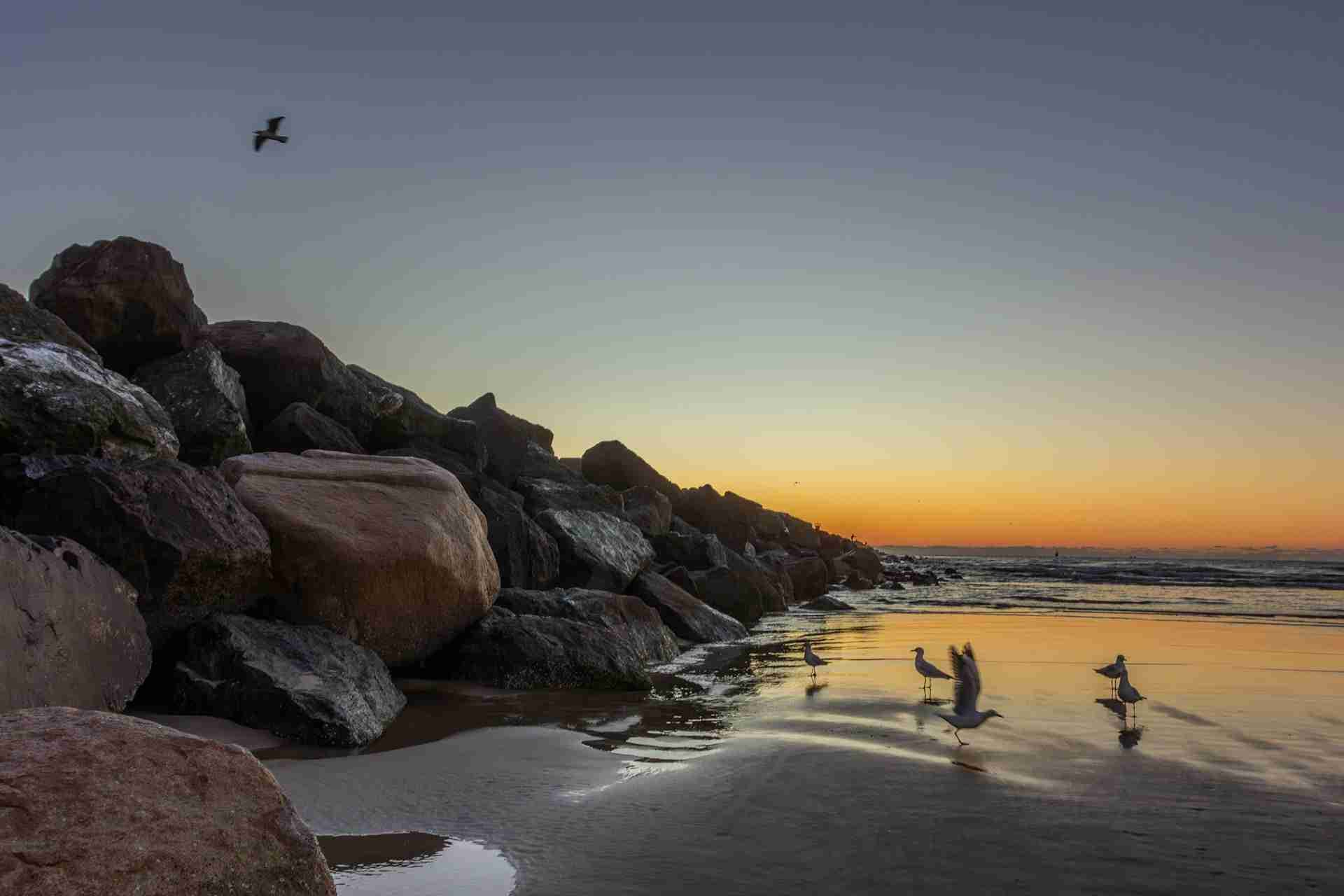
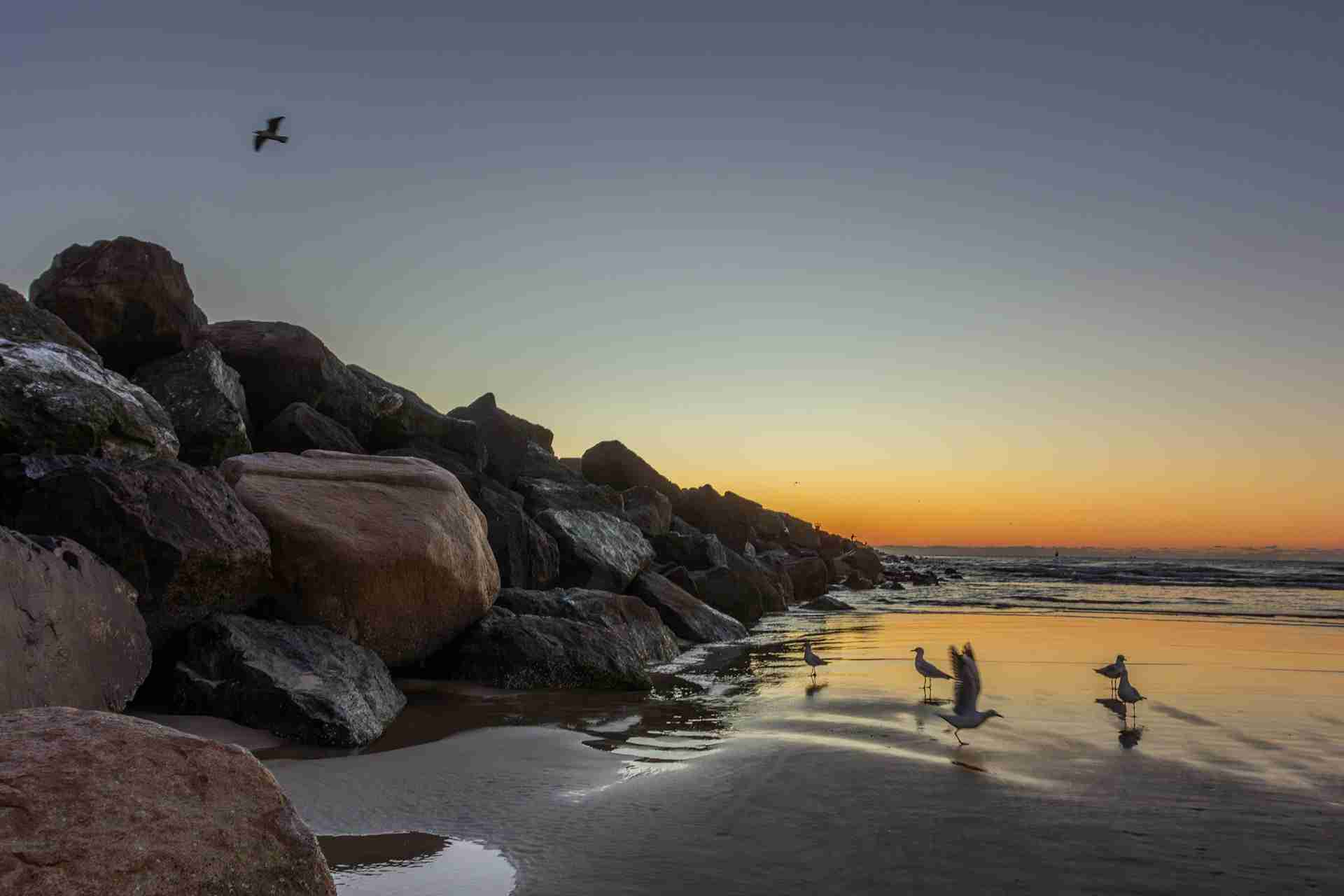
Stretching into the Pacific from the northern end of Main Beach, The Spit is a versatile coastal location where long shoreline views, shifting tides, and steady wave action combine to create strong material for seascape photography. Located at the end of Seaworld Drive on the Gold Coast, this area is defined by its breakwater walls, open beach, and consistent surf conditions. It is also one of the few places in the region where photographers can work with both sunrise-facing horizons and long, clean sightlines along engineered and natural elements. Whether you are after minimalist water studies, drone-based shoreline abstracts, or golden hour portraits of coastal infrastructure, The Spit delivers broad visual potential with easy access and year-round consistency.
Best Photography Opportunities
• Sunrise over the Ocean from the Shoreline
The main eastern beach along The Spit faces directly toward the rising sun, offering clear, uninterrupted views across the horizon. On calm mornings, the water reflects the developing color in the sky, and gentle surf provides soft motion for long exposures. Use a wide-angle lens to capture sky, sea, and foreground sand patterns all in one frame. As the light builds, footprints and drift lines in the sand can add texture and lead the eye toward the horizon. This is also a good location for minimalist vertical frames with strong sky-to-water balance.
• Rock Wall and Breakwater Structure with Long Exposures
The engineered breakwater that extends from the point provides leading lines and graphic elements that hold up well under long exposures. With the right neutral density filter and tripod, you can smooth out wave action while keeping the dark rock structure sharp. The best angles are found by walking along the rocks to frame the curve of the wall against the sea, particularly during mid to high tide. Composing with the structure as a diagonal element can create strong depth, while shooting low along the rock edge exaggerates scale and draws attention to the water's surface.
• Drone Views of the Coastline and Currents
Because The Spit runs north-south and juts outward into deeper water, it offers excellent opportunities for drone work. From the air, the beach curves, water channels, and shifting waves create natural patterns that are strongest during early morning or late afternoon when shadows define surface textures. A top-down view reveals changing sandbars and tidal influence along the breakwater. Lateral views facing south can include Surfers Paradise in the distance, giving a sense of place without needing to crowd the frame with structures. Always check for local drone regulations and fly during low-traffic times.
• Silhouettes and Color during Blue Hour
Just before sunrise and just after sunset, The Spit offers good conditions for silhouette compositions. The long pier structure, scattered driftwood, or human figures walking the shoreline can all be used as simple black shapes against a glowing sky. A midrange zoom lens helps control the background and isolate strong subjects while maintaining a balanced horizon. On days with high cloud cover, the color in the sky can stretch across the frame and reflect into the wet sand, creating layered tones that shift by the minute. Use a tripod to keep exposures sharp and plan to stay through the transition from light to dark for the most variation.
• Details in the Sand and Dune Vegetation
Just inland from the water, low dunes and vegetation patches provide smaller compositions worth exploring, particularly in soft light. Early morning shadows on the dunes create contrast and depth, while grasses and drifted debris offer textures that work well in close-ups. A fast prime lens or macro setup allows you to isolate forms like windblown grass or sand ripple patterns without needing a wide field of view. These details are best shot handheld so you can move freely through the low vegetation and respond to changing light quickly.
Best Time to Visit
The Spit can be photographed year-round, but some conditions are more productive than others depending on your subject. For sunrise-based seascapes and long exposures, the best months are April through October when the sun rises slightly farther north and light stays soft for longer periods. During these cooler months, the atmosphere is also clearer, which improves color transitions and increases visibility across the ocean.
Summer offers more vivid sunrise color due to higher humidity, but the air tends to haze quickly after the sun comes up. Early arrival is essential during this time of year to catch clean light before it flattens. Mornings generally offer calmer wind conditions than afternoons, which helps with water smoothness and easier drone flights. Sunset light is usable on the western side of the spit or for blue hour work facing east. Tidal shifts play a big role here, so check tide charts before planning compositions near the rocks or when using reflections in the sand. Mid to high tide often produces cleaner compositions with fewer distractions on the waterline.
How to Get There
The Spit is located at the northern tip of Main Beach, accessible via Seaworld Drive. From central Gold Coast, the drive takes about 15 to 20 minutes depending on traffic. Follow Seaworld Drive north until it ends at the Doug Jennings Park carpark, which provides free parking and direct access to both the beach and breakwater. The area is flat and walkable, with paved and dirt paths leading toward the water.
There are no access fees, and the site is open throughout the day and night. Lighting is minimal before sunrise or after dark, so a headlamp is useful if arriving early. The beach is popular with walkers and anglers but rarely overcrowded at first light. Tripods are permitted, and drone use is allowed with standard safety and legal restrictions. Toilets and picnic areas are available near the parking lot, and a short walk south leads to additional sheltered dunes and quiet beach sections for alternative compositions.
Recommended Photography Gear
A lightweight coastal kit that balances flexibility with weather resistance is ideal for The Spit. A full-frame or APS-C camera with good low-light performance will help when working during blue hour or in fast-changing conditions. A wide-angle lens, such as a 16 to 35 millimeter, is essential for capturing shoreline depth and sunrise color. A midrange zoom like a 24 to 70 millimeter helps isolate subjects against sky or surf, especially when working from the rocks or during long exposures.
A sturdy tripod is necessary for water-based long exposure work and for shooting in early morning wind. A circular polarizer will help manage glare on the water, and ND filters in the 6 to 10 stop range are key for stretching shutter speeds during brighter light. A drone is a valuable tool here for capturing the full shape of the point and the relationship between land, water, and distant cityscape. Keep extra batteries and a lens cloth handy, especially if you are working near salt spray or in humid summer air. Footwear that handles sand and sharp rocks is useful if you plan to move between beach and breakwater throughout your shoot.
Nearby Photography Locations
• Southport Spit Sand Pumping Jetty
Just south of the main breakwater, this long jetty extends far into the ocean and is one of the best locations on the coast for long, linear compositions. The repetitive structure of the pylons and the movement of water beneath are ideal for long exposures and backlit silhouettes at sunrise. Early arrival is recommended to beat the morning walkers.
This lightly trafficked dune and forest corridor sits behind The Spit and offers shaded trails, native vegetation, and filtered light throughout the day. It is a good location for detail shots of flora or backlit compositions through the trees, especially in the late afternoon. It also serves as a quieter location for wildlife photography, particularly birds.
Located to the west across the Broadwater, this open park area includes piers, landscaped trails, and water features that provide urban contrast to the coastal visuals of The Spit. Sunset light reflects well across the calm water, and the park's infrastructure can be used as strong framing elements in structured compositions.
Running along the shoreline from Narrowneck up to The Spit, this paved walkway offers a variety of low-elevation viewpoints with minimal foot traffic early in the morning. Palm trees, beach fencing, and open dunes give plenty of material for balanced sunrise shots and layering foreground textures.
Just inland from The Spit, the marina is a strong location for reflective surfaces and clean lines during calm conditions. Boats, docks, and still water combine well with morning or twilight light, especially when clouds reflect across the bay. Long-lens detail work with rigging, structure, and hull lines makes for a useful change of pace.
The Spit is not a location built on singular spectacle. Its strength lies in how it connects natural motion with human scale across a clean, open space. With nothing to block the sky, no crowding around the shore, and the ability to shoot everything from drones to macros in one place, it gives photographers room to work without rushing. Whether you're planning a long exposure seascape session or just walking the edge of the tide with a wide lens and some early light, The Spit delivers something reliable, simple, and worth revisiting.
Comments
Loading comments…