
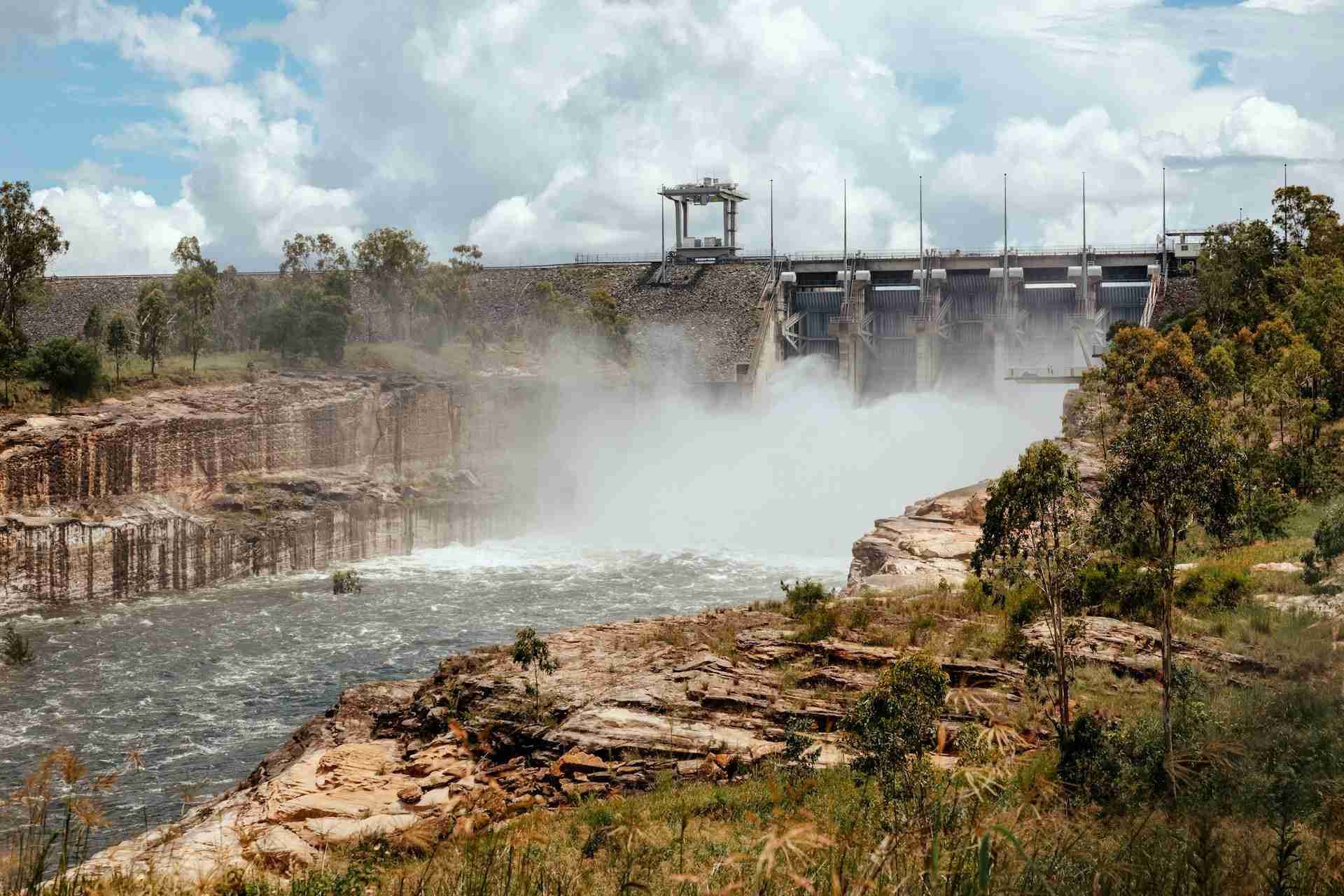
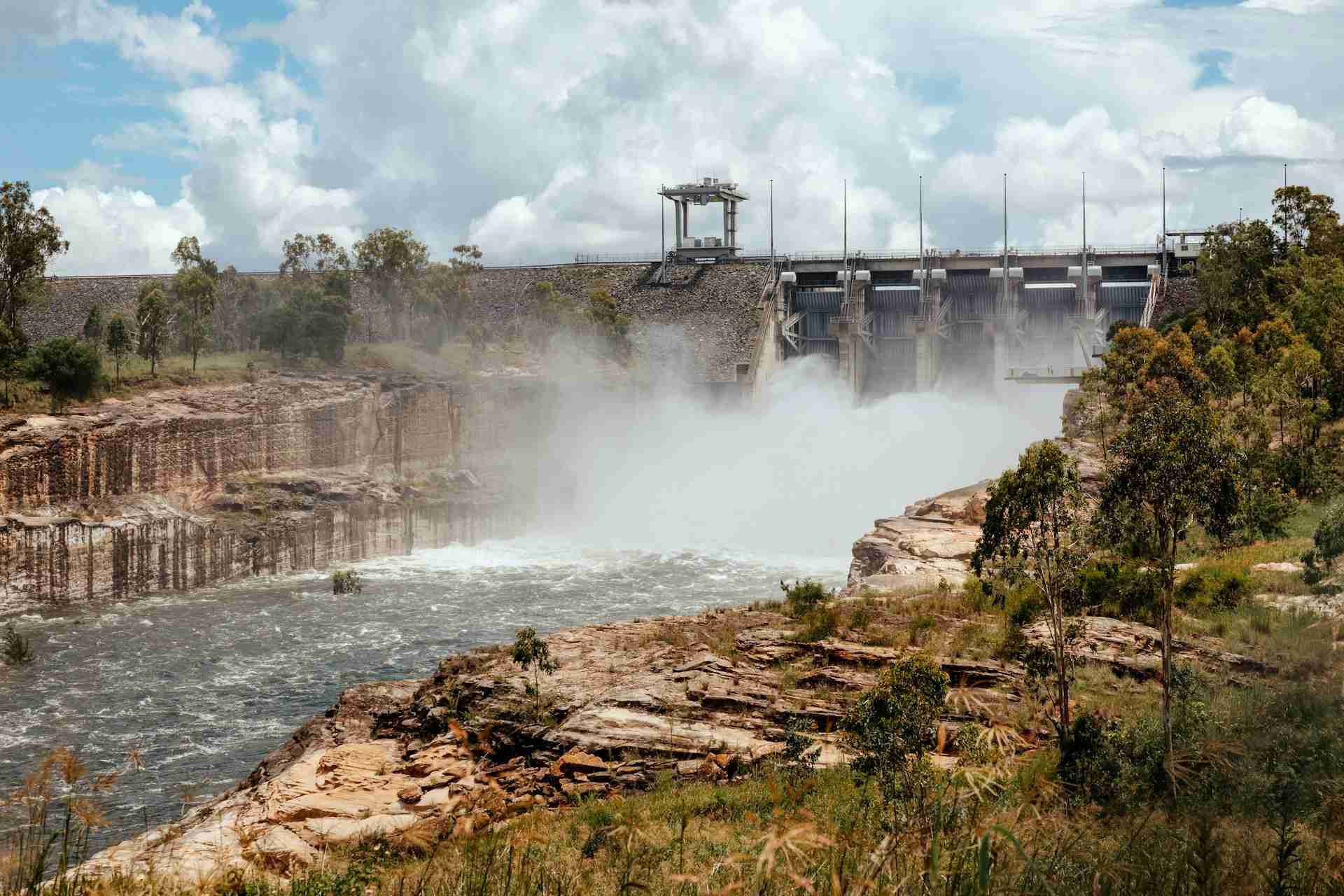
Just over an hour west of Brisbane, Wivenhoe Dam stretches across a wide floodplain in the Somerset Region, holding back the immense waters of Lake Wivenhoe. Originally constructed in the 1980s as part of South East Queensland's flood mitigation and water storage system, this massive concrete structure now offers photographers a wide-open canvas where human engineering meets the rhythms of sky, land, and water. Unlike more dramatic alpine lakes or secluded forest dams, Wivenhoe is defined by space and scale. Long horizons, geometric spillways, and slow-moving light provide a setting for architectural compositions, minimal landscapes, and moody studies in reflection. Whether you're drawn to industrial textures or atmospheric transitions at dawn and dusk, this is a location that challenges and rewards deliberate, patient shooting.
Best Photography Opportunities
• Spillway Viewed from the Lookout Platform
The main spillway is one of the most visually commanding features of the dam. From the designated viewing area, you can capture the full concrete geometry of the structure as it cuts through the hillside. Late afternoon light creates angled shadows across the walls, emphasizing form and depth. Use a wide-angle lens to capture the full span or a telephoto to compress and isolate repeating lines and mechanical details. On cloudy days, the tone becomes more industrial and muted, which works well for monochrome studies or contrast-driven frames.
• Lake Shorelines near Logan Inlet
South of the dam wall, the Logan Inlet day-use area offers access to wide lakeside views with long, sweeping foregrounds. Early morning is best, especially in still conditions when the lake turns to glass and reflects the sky with clarity. Framing lone trees or shoreline curves against distant ridges can create layered depth and soft, balanced compositions. A standard zoom lens around 24–70mm works well here for flexibility between broader landscapes and tighter details. The open space encourages horizontal framing and clean horizons.
• Bridge and Walkway near the Dam Wall
The pedestrian bridge and adjoining paths near the wall offer repeating lines, railings, and perspective-rich vanishing points. This is an excellent location for symmetry-focused compositions, especially during golden hour when warm light grazes the metal and stone. Shoot low along the walkway to lead the eye directly through the frame and balance the man-made elements against the background sky. Reflections and long shadows add additional compositional layers in both color and black-and-white.
• Evening Reflections and Soft Light at Billies Bay
On the western side of the lake, Billies Bay provides a more secluded stretch of shoreline with minimal development and quiet water. Sunset light spreads across the open water and illuminates the far bank with golden tones. Use a tripod and longer exposure to smooth the surface and emphasize stillness. This location is ideal for working with negative space, subtle gradients, and soft color transitions. A 35mm or 50mm prime lens helps simplify compositions and isolate clean visual elements against the open sky.
• Fog and Low Cloud over the Reservoir in Winter
On cool winter mornings, Wivenhoe can be blanketed in fog that hovers over the water and softens the outlines of hills and structures. This creates opportunities for abstract, atmospheric images with minimal contrast and subtle tonal variation. Use a telephoto lens to isolate trees, transmission towers, or boats that appear as silhouettes through the mist. These conditions often shift rapidly, so it's worth arriving well before sunrise and staying through the first hour of daylight. A series of images showing the slow clearing of fog can create a narrative sequence or visual study in changing light.
Best Time to Visit
Wivenhoe Dam is a year-round photography destination, but certain conditions elevate its visual potential. Winter is the most reliable season for early morning fog and still water, especially from June through August. These months also bring crisp skies, long shadows, and more predictable lighting for architectural and structural compositions. Autumn offers balance between clarity and mood, with cooler evenings and golden light that lingers across the lake and hills. Spring is best for shoreline vegetation and brighter overall color, though stronger breezes can disrupt water reflections.
Summer brings long daylight hours and high sun, which can flatten textures around midday but work well during early morning and late evening. Dramatic skies and passing storms in summer also create strong contrast and visual interest across the wide-open terrain. The spillway and surrounding infrastructure are especially photogenic under cloud-heavy conditions. Regardless of season, early morning and late afternoon are the most favorable windows for soft light, directional shadow, and minimal foot traffic.
How to Get There
Wivenhoe Dam is located in the Somerset Region of Queensland, approximately one hour northwest of Brisbane by car. From Brisbane, take the Warrego Highway west toward Ipswich, then follow the Brisbane Valley Highway north to the dam site. There are multiple access points depending on your desired shooting location. The main viewing areas near the dam wall and spillway are accessible via Wivenhoe Somerset Road and include car parks, public toilets, and marked walkways.
Lake access areas such as Logan Inlet, Hamon Cove, and Billies Bay have parking and basic facilities, with short trails leading to the water's edge. Some spots allow for vehicle pull-offs along the road, though caution is advised when parking near narrow shoulders. Entry is free and open year-round, though some areas may close temporarily due to maintenance or weather events. Tripods and drones are permitted, but drone pilots should be aware of nearby restricted airspace and fly in accordance with CASA regulations. Cell service is generally reliable, and signage throughout the area makes navigation straightforward.
Recommended Photography Gear
A well-rounded landscape and architecture kit will serve you best at Wivenhoe Dam. A wide-angle lens in the 16–35mm range is essential for capturing the scale of the dam wall, spillway, and sky-dominant compositions across the lake. A 24–70mm zoom provides flexibility for walkaround shooting and shoreline scenes, while a longer lens such as a 70–200mm is ideal for isolating distant shapes, misty hills, or repeating structures in compressed perspective.
A sturdy tripod is important for dawn and dusk shooting, particularly when working with reflections or longer exposures around the water. A circular polarizer can be helpful for controlling surface glare and enhancing contrast on bright days. Consider bringing ND filters if you plan to blur water movement or shoot under stronger daylight. Weather protection for your gear is advisable, especially in summer months when storms can form quickly. Spare batteries, microfiber cloths, and a simple camera backpack will make it easier to move between locations and adapt as conditions change throughout the day.
Nearby Photography Locations
Just north of Wivenhoe, this reservoir offers a different visual tone with more jagged shorelines and tighter coves. Sunset light across the lake and surrounding ridgelines can be dramatic, especially with clouds or weather rolling through from the west.
Southeast of Wivenhoe, Mount Glorious provides high vantage points with layered mountain views, rainforest foregrounds, and filtered light through dense canopy. Ideal for moody forest scenes or panoramic ridge compositions at sunrise.
Running alongside parts of Wivenhoe and continuing north, this trail includes wooden bridges, open farmland, and rural stations that work well for documentary or environmental photography. Early morning and golden hour light can stretch beautifully across the flat terrain.
• Splityard Creek Lookout
Located near the eastern end of the dam, this high point overlooks the Splityard Creek Reservoir with views of the switchyard and dam infrastructure below. A strong location for telephoto abstracts, industrial textures, and symmetrical patterns under changing light.
• Fernvale and the Brisbane Valley River Crossing
On the southern route toward Wivenhoe, the small town of Fernvale offers bridges, riverside trails, and early morning mist across open paddocks. It's a great area to explore before reaching the dam, especially for rural landscapes and layered compositions.
Wivenhoe Dam is not about dramatic peaks or fast-changing weather. Its strength lies in space, structure, and atmosphere. For photographers willing to work with scale, subtlety, and the patient rhythm of water and light, it offers a surprisingly deep canvas—one shaped more by what you notice than by what first meets the eye.
Comments
Loading comments…