
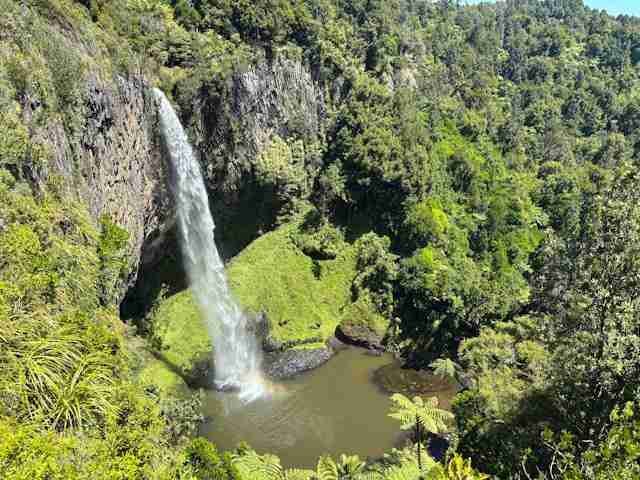
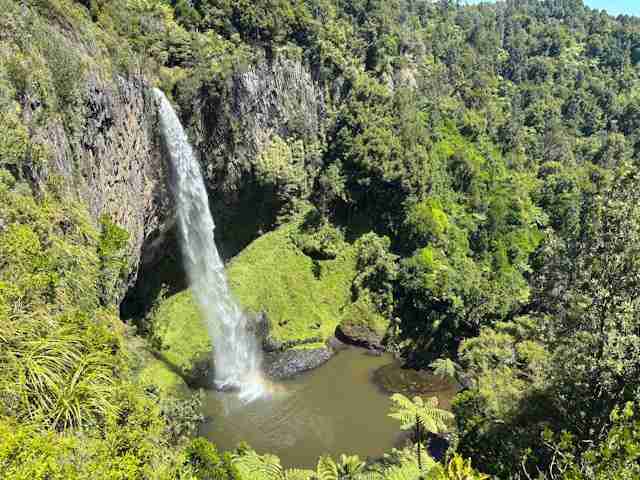
Tucked into the lush native bush of the Waikato region, Bridal Veil Falls—known to Māori as Wairēinga, "water of the underworld"—plummets 55 meters in a single dramatic drop, forming one of New Zealand's most photogenic waterfalls. Located just outside the small rural settlement of Makomako, this waterfall slices through a sheer basalt cliff before plunging into a deep pool framed by ferns, moss-covered rock, and dense native forest. For photographers, Bridal Veil Falls is a location of layered opportunity: from sweeping wide-angle perspectives above and below the falls to moody, intimate studies of mist, texture, and light through foliage. With its well-maintained trails and multiple viewing platforms, it offers excellent access without compromising its wild, untouched atmosphere.
Best Photography Opportunities
• Upper Lookout Platform
: Just a few minutes from the carpark, the first viewing platform sits level with the crest of the falls. This spot offers a striking top-down perspective, where the river accelerates before vanishing off the edge of the basalt cliff. Framing the curve of the waterfall's lip with dense vegetation on either side creates a natural vignette, guiding the viewer's eye to the plunge point. Use a wide-angle lens (16–24mm) to emphasize the drop and include the upper forest canopy for scale. In the early morning, mist rising from the lower pool backlights through the trees, creating ethereal lighting conditions. Long exposures (around 0.5 to 2 seconds) here result in silky water motion while retaining detail in the rocky streambed and ferns.
• Mid-Tier Lookout and Cliff Wall Composition
: Midway down the trail, a secondary platform allows you to frame the entire waterfall from the side, showing the full drop from crest to pool. This position offers the best vantage for photographing the waterfall's vertical drama in a single frame. Use a standard zoom (24–70mm) or medium telephoto (70–135mm) to compress the cliff face and emphasize the contrast between the white veil of water and the dark basalt columns behind it. Early to mid-morning light from the east strikes the waterfall directly, bringing out detail in both water and rock while the surrounding bush remains softly lit. Fog or rain can add atmosphere, especially when capturing the waterfall as part of a moody, forested scene.
• Lower Basin and Pool Viewpoint
: At the base of the 261-step descent, a final platform lets you approach the plunge pool. From here, the falls tower directly overhead, framed by mossy rock walls and subtropical vegetation. This location is ideal for wide-angle vertical compositions that convey scale, especially when using foreground elements like ferns, boulders, or reflections in shallow water. Bring a tripod for long exposures (2–6 seconds) to capture the cascade as a soft, luminous ribbon. The ambient light is low due to the forest canopy and cliff shadows, creating ideal conditions for slower shutter speeds even during daytime. Shoot in portrait orientation to emphasize the waterfall's height or incorporate a human figure at the railing for dramatic sense of scale.
• Streamside Details and Intimate Landscapes
: The trail leading down includes several points where smaller cascades, stream crossings, and mossy banks offer intimate compositions. These quieter scenes work well with a macro or standard lens, isolating water trickles, dew-covered leaves, or light reflecting off damp rock. This is also a chance to experiment with handheld slower shutter speeds under the canopy, using fallen logs or stones as natural tripods. The cool green color palette of the forest contrasts beautifully with the pale water tones, especially on overcast days when the light is evenly diffused.
• Aerial and Contextual Shots from the Forest Rim
: While drone photography is currently restricted at this Department of Conservation site to protect native wildlife and the visitor experience, elevated shots can still be composed by carefully positioning from the highest parts of the trail near the upper platform. With a longer lens, you can capture the falls framed against the surrounding forest, revealing the basin's full amphitheater shape. This angle works particularly well at sunrise or sunset when warm light hits the treetops, casting soft glows into the otherwise cool-toned gorge.
Best Time to Visit
Bridal Veil Falls can be photographed year-round, but conditions vary significantly with light and season. The most consistent light quality is found in the early morning between 7:30 and 10:00, especially from spring to autumn. At this time, the sun rises behind the forest canopy to the east, casting angled light onto the falls and illuminating the mist that often hovers over the plunge pool. This golden hour window is ideal for capturing contrast and drama without harsh highlights.
Overcast days are excellent for long exposure photography, especially from the lower platform, as the soft, diffused light enhances color saturation in the forest and eliminates glare on wet rock surfaces. On cloudy mornings, the water glows faintly white against the darker backdrop, and color temperatures remain cool and atmospheric. Rainy days create moodier scenes, but trail conditions can become slippery—waterproof gear is essential, and care must be taken on the staircase.
Summer offers extended daylight hours and lush vegetation, while autumn adds golden and copper tones to the forest edges near the trail. In winter, lower sun angles and cooler air temperatures often produce denser mist and more dramatic lighting effects, particularly from the upper platforms. Regardless of season, weekdays are preferable for solitude. Arriving early ensures quieter trails and uninterrupted compositions.
How to Get There
Bridal Veil Falls is located approximately 15 minutes west of Raglan in the Waikato region of New Zealand's North Island. From the town of Raglan, follow Te Mata Road to Kawhia Road, then turn onto Te Mata Road again to reach the Bridal Veil Falls carpark, clearly signposted. The road is sealed and accessible to standard vehicles, with ample free parking available at the trailhead.
The walking track to the falls is well maintained and takes about 10 minutes to reach the upper lookout. From there, an additional 10–15 minutes of descending well-constructed stairs brings you to the lower platforms. Allow about 45 minutes to an hour for a full loop with time for photography at each tier. The walk is relatively easy but includes a significant stair section; carrying lightweight gear is recommended. Tripods are allowed, and the trails are open from dawn until dusk.
There is no fee to access the falls, but as this is a Department of Conservation site, commercial photographers and drone operators must obtain prior permission. All visitors are encouraged to stay on marked paths to preserve the native environment and respect the cultural significance of the site to local iwi.
Recommended Photography Gear
A wide-angle zoom lens (16–35mm) is the core tool for photographing Bridal Veil Falls, particularly when composing from the lower platform or including full views of the drop. This lens also helps with foreground-background layering in tight forest conditions. Pair it with a standard zoom (24–70mm) to capture tighter views from the upper platforms and mid-trail scenes where background compression enhances visual impact.
A tripod is essential for long exposures, especially in the dimly lit forest under canopy. Choose a model with rubber feet and solid ground grip, as the trail and platforms can be damp or uneven. A remote shutter release or 2-second timer is useful for minimizing vibration, and a microfiber cloth is critical to keep your lens dry from waterfall spray and mist.
A circular polarizer is especially helpful at this location, reducing glare on wet foliage and enhancing water clarity. For those interested in detail shots, a macro or fast prime lens (50mm or 100mm) is excellent for capturing moss textures, dripping leaves, or stream reflections along the trail. Waterproof boots and a rain cover for your camera bag are advisable year-round due to the rainforest environment.
Nearby Photography Locations
: Just a short drive east, Raglan's historic wharf and boat basin offer moody maritime compositions with old fishing vessels, rustic buildings, and still water reflections. Sunset provides warm light over the estuary, and the area has excellent long exposure potential.
: Known for its sweeping black sand shoreline and dramatic surf, this west-facing beach is ideal for golden hour photography and wave studies. The long, sloping beach and silhouetted headlands provide excellent subjects at both sunset and twilight.
: South of Raglan, this lesser-known cliffside viewpoint offers expansive vistas over the Tasman Sea, with rolling hills and coastal cliffs framing the foreground. The layered terrain and changing weather make it a strong location for dramatic landscape shots.
The dormant volcanic peak visible from many vantage points around Raglan provides an excellent subject for wide-angle landscape photography. While the summit requires a hike, the lower flanks and surrounding farmland can be photographed from road turnouts at sunrise.
: These coastal spots west of Raglan are famed for their surf breaks and rugged shoreline. Photographers will find tide pools, lava rock formations, and rolling ocean mist—best photographed in low light or after storms for added atmosphere.
Bridal Veil Falls is one of New Zealand's most accessible yet visually rewarding waterfalls—a place where power and elegance meet in a single vertical line of motion. Whether you're composing sweeping landscapes or focused details of moss and mist, the falls provide a setting that rewards patience, timing, and a careful eye for natural harmony.
Comments
Loading comments…