
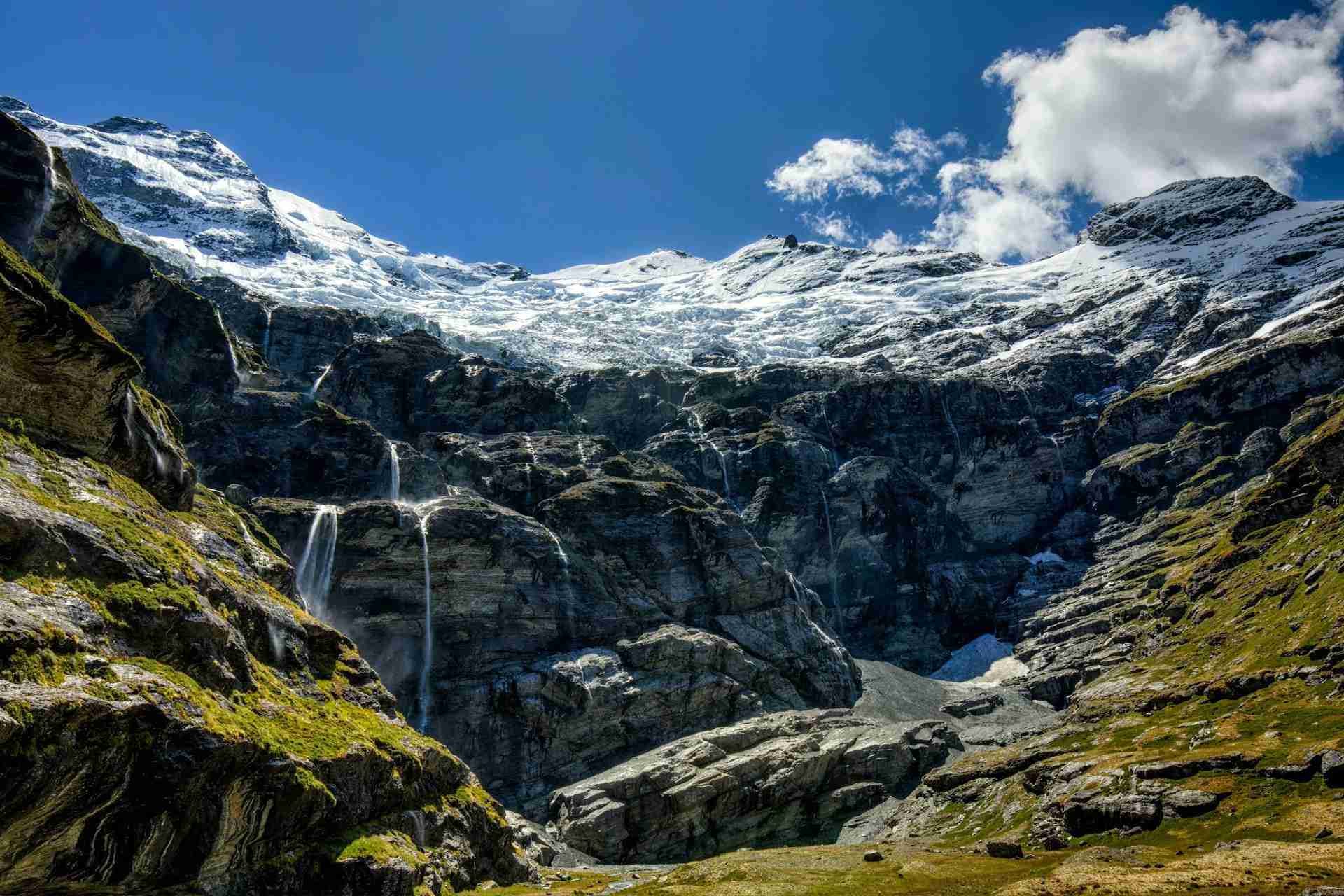
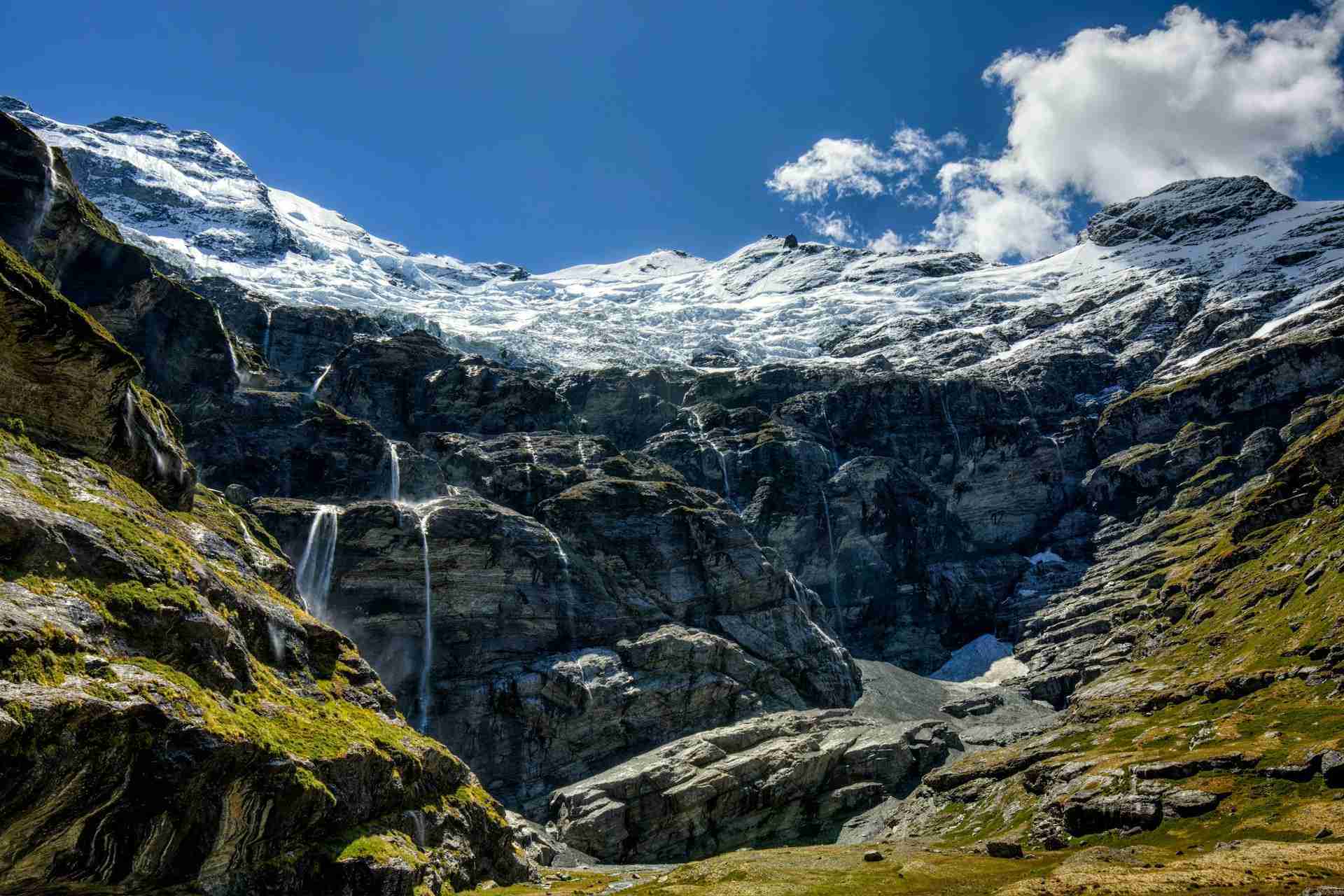
At the head of the Rees Valley near Glenorchy, the Earnslaw Glacier Lookout offers a front-row seat to one of the most dramatic mountain landscapes in New Zealand's South Island. Mount Earnslaw, or Pikirakatahi, towers above at nearly 2,830 meters, its sheer cliffs and hanging glaciers dominating the horizon. From the lookout, photographers can capture the massive Earnslaw Glacier spilling down from the mountain in frozen ribbons, framed by cliffs, waterfalls, and alpine vegetation. The scale is overwhelming, with the lookout providing both wide, sweeping perspectives and the chance to focus on intimate details of ice and rock. This location combines the raw energy of New Zealand's Southern Alps with accessibility via a classic backcountry trail, making it one of the most rewarding glacier viewpoints in the Otago region.
Best Photography Opportunities
• Wide-Angle Compositions of the Glacier and Cliffs
The main attraction from the lookout is the Earnslaw Glacier itself, which cascades down the mountain in fractured blue ice. A wide-angle lens captures the full sweep of the glacier, the dark cliffs, and the waterfalls that plunge from melting ice. Including foreground elements such as tussock grasses, alpine rocks, or cairns helps ground the scene and add depth. Shooting at different times of day reveals changing character, from the cold tones of morning to the warm side light of late afternoon. Patience is key here, as shifting cloud and light transform the glacier's appearance minute by minute.
• Detail Studies of Ice and Waterfalls
With a telephoto lens, you can isolate sections of the glacier to focus on the patterns of crevasses, seracs, and the streams of meltwater cascading down the cliffs. These tighter frames reveal texture and detail that are lost in wider compositions. The waterfalls are especially photogenic, often appearing as white ribbons that contrast sharply with the dark stone. Overcast days are ideal for this type of photography, as the diffused light brings out subtle tones in the ice without harsh shadow. Long exposures smooth the flow of water into silken lines, while faster shutter speeds freeze its power.
• Foreground Layers Along the Rees Valley Track
As you approach the lookout, the track provides multiple opportunities to incorporate foreground detail such as braided riverbeds, alpine plants, or scattered boulders. These elements add scale and narrative to the glacier backdrop, linking the valley floor with the icy cliffs above. Shooting low and wide enhances depth, while leading lines created by river braids or stream channels naturally guide the eye toward Mount Earnslaw. Morning light is especially effective here, casting long shadows across the valley and enriching the textures of grass and rock.
• Atmospheric Weather and Passing Clouds
The Earnslaw Glacier is rarely seen under the same conditions twice, as clouds sweep quickly across the mountain and create ever-changing moods. On moody days, the glacier emerges from veils of mist, while shafts of sunlight pierce the clouds to illuminate sections of the cliffs. These conditions are perfect for atmospheric compositions that emphasize scale and drama. A telephoto lens helps isolate the interplay between cloud and rock, while wide shots capture the broader scene. Neutral density filters are useful for capturing moving clouds as soft streaks across the mountain face.
• Sunset and Twilight Glow on the Peaks
In clear weather, the western light of sunset paints the peaks above the glacier in warm orange and pink tones, contrasting beautifully with the cool blue ice. This fleeting alpine glow is one of the most rewarding moments to capture, especially when reflected in meltwater pools near the lookout. As twilight deepens, the glacier and cliffs take on a more subdued, moody character, with long exposures emphasizing the softness of light. A tripod is essential at this time, and bracketed exposures help manage the high contrast between bright peaks and darker valleys.
Best Time to Visit
The Earnslaw Glacier Lookout is accessible during the warmer months from late spring through early autumn, roughly November to April, when trails are clear of snow and conditions in the valley are stable. Summer offers the most reliable weather, long days, and abundant water flow from the glacier, which makes waterfalls more dramatic. Early autumn is quieter and provides cooler air with warmer tones in the vegetation, often accompanied by more stable light. Winter and early spring access can be dangerous due to snow, avalanches, and swollen rivers, and is not recommended without alpine experience. For daily timing, mornings provide calm conditions and clearer light on the cliffs, while late afternoon and evening are best for golden tones and long shadows. Overcast days are excellent for detail work and evenly lit wide shots, while transitional weather with passing clouds often produces the most dynamic compositions.
How to Get There
The lookout is reached via the Rees Valley Track, which begins near Glenorchy, about a one-hour drive from Queenstown. The drive to the trailhead follows the Glenorchy-Paradise Road and requires fording small streams, so high-clearance vehicles are recommended. From the trailhead, the hike to the Earnslaw Glacier Lookout takes roughly four to five hours return, depending on pace and conditions. The track follows the Rees River through farmland and into the valley, gradually climbing until the glacier comes into view near the head of the valley. The final section to the lookout involves uneven ground but remains manageable for fit hikers. There is no fee to access the track or the lookout, though weather conditions can make the route challenging, especially after heavy rain when river crossings swell. There are no facilities along the trail, so bring all necessary food, water, and equipment.
Recommended Photography Gear
A versatile kit is best for capturing both wide alpine views and glacier detail. A wide-angle lens between 14 and 24 millimeters is essential for framing the glacier within its mountainous surroundings. A mid-range zoom such as a 24 to 70 millimeter lens offers flexibility for foregrounds and wider landscapes. A telephoto lens up to 200 millimeters allows for isolating seracs, crevasses, and waterfalls. A sturdy tripod is crucial for long exposures of water and twilight shooting, while neutral density filters help control exposure for moving water and clouds. A circular polarizer reduces glare on wet rock and enhances sky contrast. Weather protection for both camera and backpack is necessary, as valley conditions can shift quickly with sudden rain or mist. Good hiking boots, layered clothing, and a waterproof shell are essential for comfort and safety. Extra batteries and memory cards should be packed, as the remoteness of the location means there are no charging options.
Nearby Photography Locations
The braided Rees River, open meadows, and grazing lands provide pastoral foregrounds framed by steep mountainsides. Early morning fog often adds layers of atmosphere across the valley floor.
• Paradise Valley
Located near Glenorchy, this area is famous for its lush beech forests, braided rivers, and film locations from The Lord of the Rings. It offers softer, more intimate landscapes compared to the dramatic glacier environment.
A short drive and easy walk from Glenorchy, Lake Sylvan is a tranquil forest lake with mirrored reflections of surrounding peaks. It is especially rewarding in the calm of early morning.
One of New Zealand's Great Walks begins nearby and offers access to a variety of alpine scenery including waterfalls, lakes, and panoramic ridgelines. Key summit points are excellent for wide-angle landscape work.
The northern end of Lake Wakatipu provides expansive views across turquoise water toward the Humboldt Mountains. Sunset here often creates dramatic skies reflected in the lake surface.
The Earnslaw Glacier Lookout is a destination that blends effort, scale, and atmosphere into one of the South Island's most compelling photographic experiences. With its towering cliffs, fractured ice, and sweeping valley approach, it rewards patience and persistence with images that carry the weight and majesty of New Zealand's alpine landscapes.
Comments
Loading comments…