
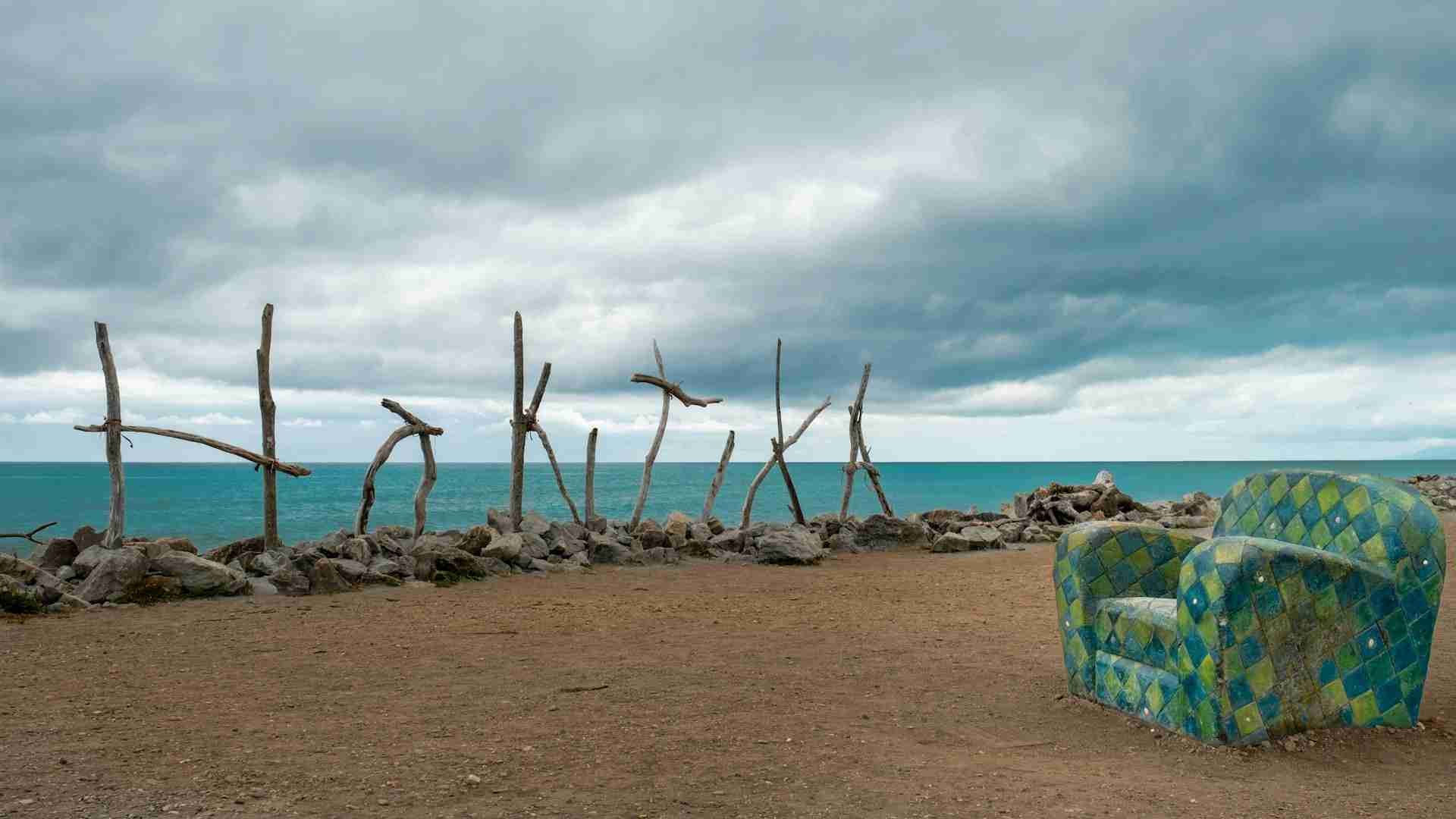
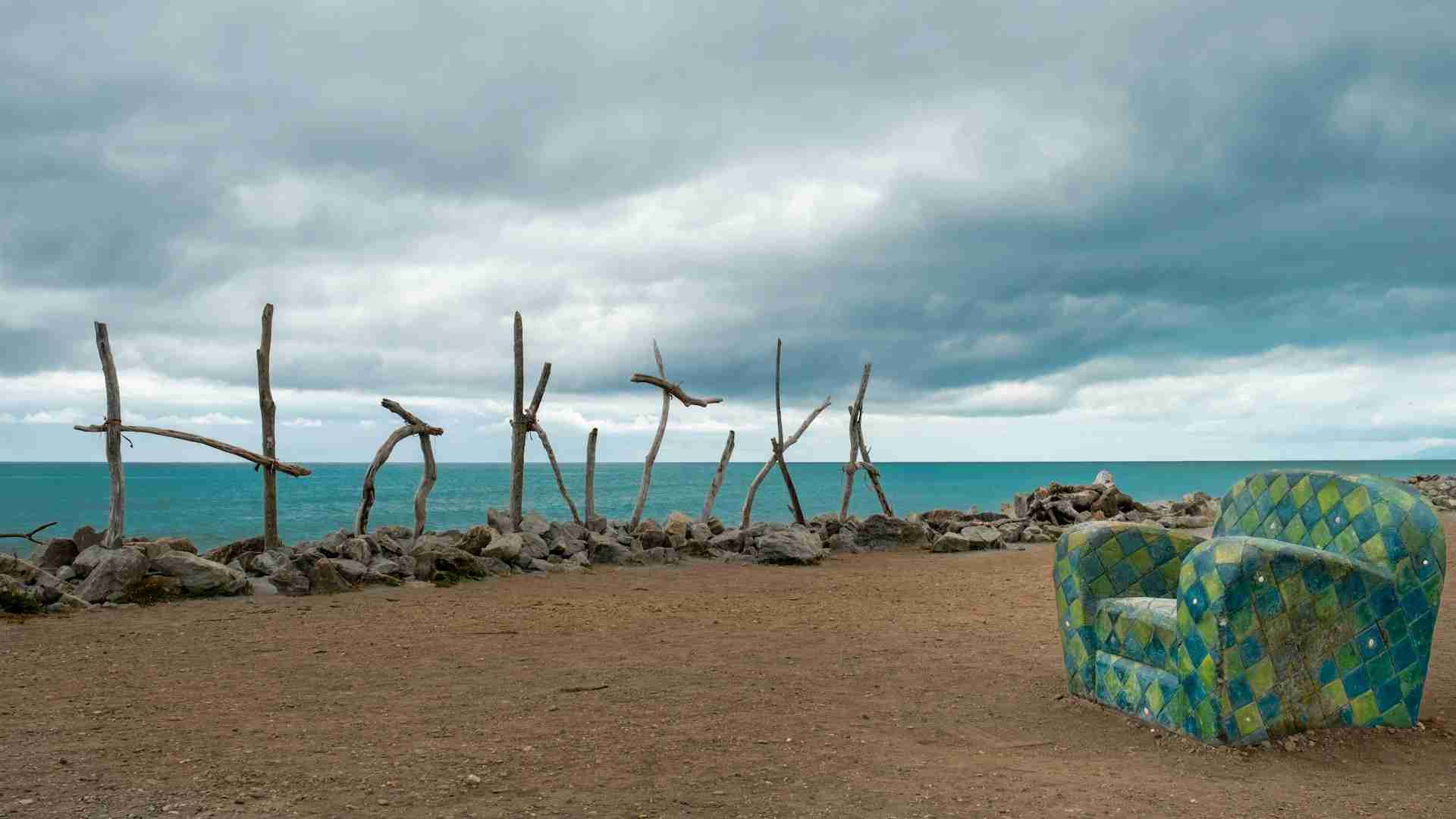
Hokitika Beach, perched on the rugged edge of New Zealand's West Coast, is a place where elemental forces meet—wild surf, shifting sands, and ever-changing skies combine to create one of the South Island's most visually compelling seascapes. Known for its moody weather, vibrant sunsets, and the iconic driftwood "Hokitika" sign, this stretch of beach is ideal for photographers who seek contrast, motion, and atmosphere. The beach offers an unusually rich range of subjects in a single location, from expressive sky-scapes and tidal textures to intimate foregrounds of stones and bleached wood. Whether you're working with wide panoramas or isolating smaller compositions, Hokitika Beach rewards patience and creative framing with dramatic and unpredictable light.
Best Photography Opportunities
• The Driftwood "Hokitika" Sign
: This handmade sculpture, constructed from twisted driftwood branches arranged to spell "Hokitika," is a local icon and a strong visual anchor. Its irregular form contrasts beautifully against the open sky and surf behind it, especially when silhouetted at sunset. From a compositional standpoint, it's ideal for symmetrical framing with a centered horizon, or for off-center shots that lead into dramatic sky color. A wide-angle lens (16–24mm) helps exaggerate the sign's scale relative to the beach and sky, and puddles or wet sand can serve as foreground reflectors. Arrive well before sunset to position yourself and experiment with low or close-up angles that create a sense of presence within the frame. The sign also works brilliantly for blue hour silhouettes, where long exposures soften the background and bring out the structural details of the wood.
• Dynamic Sunset Skies over the Tasman Sea
: Hokitika's west-facing location means you get an unobstructed horizon—perfect for sunset compositions. The Tasman Sea regularly delivers bold color displays, with cloudbanks igniting in layers of gold, purple, and crimson. For broad seascapes, position yourself just above the high tide line with foreground elements like driftwood, stone clusters, or tide-carved channels. A tripod-mounted camera with a 10–30 second exposure smooths the surf and allows the clouds to streak subtly, adding depth and movement to the sky. Use a graduated neutral density filter to balance exposure and preserve detail in both sky and land. Late summer evenings are especially fruitful, when high humidity produces richly colored sunsets that linger in the atmosphere long after the sun dips below the horizon.
• Low Tide Patterns and Sand Textures
: When the tide recedes, the beach reveals a variety of textures—rippled sand, braided channels, scattered pebbles, and temporary pools that catch the sky's color. These features make ideal foregrounds for minimalist compositions or for use as leading lines that guide the eye to the horizon. Use a mid-range zoom (24–70mm) or even a macro lens to explore abstract details, especially when working in diffused overcast light, which reduces contrast and allows for even rendering of tones. These patterns shift daily, so repeat visits can yield entirely different results. Look for curved water trails or sharp wet-dry boundaries—both add visual rhythm and narrative to an otherwise stark landscape.
• Driftwood Studies with Long Exposure
: The beach is strewn with dramatic pieces of driftwood—some the size of small trees—bleached by salt and sun into sculptural forms. Isolate one of these against the sea using a 6- or 10-stop ND filter and a sturdy tripod. With exposure times of 20 to 60 seconds, waves blur into a soft gradient while clouds stretch overhead, turning the driftwood into a static focal point in a scene full of implied motion. Experiment with low angles to emphasize size and texture, and consider working in black and white to highlight shape and tonal contrast. These compositions are especially effective in transitional light—just after sunset or under stormy skies—when color saturation is low and texture becomes the dominant subject.
• Stormfronts and Atmospheric Conditions
: The West Coast's unpredictable weather is a major photographic asset. Rain squalls and fast-moving cloud layers often break just before dusk, revealing golden light beams or dramatic shafts of sun piercing through the gloom. From the northern edge of the beach near Sunset Point, you can capture these transitions as they play out across the sea, often with light hitting different parts of the water in distinct bands. Use a telephoto lens (70–200mm) to compress these horizontal layers—storm clouds, sunlit waves, distant rain curtains—into painterly frames. Fast shutter speeds (1/500s and up) help freeze dramatic cloud edges or breaking surf. Keep gear ready even in poor weather; some of the most photogenic moments come during brief clearings between rain bands.
Best Time to Visit
Hokitika Beach can be photographed in any season, but each time of year offers distinct advantages depending on what you're looking to capture. Late summer through early autumn, from February to April, is generally the best window for dramatic skies and consistent evening color. The sunsets during this period are often prolonged and vivid due to residual humidity and atmospheric haze, which deepen the reds and purples of twilight.
Winter, from June to August, while colder and wetter, is ideal for storm-driven photography. The low angle of the sun creates longer shadows and reveals intricate textures in both sand and driftwood. Skies during this time are more volatile, producing fast-changing conditions that yield moody, high-contrast compositions. Winter also brings fewer people, giving you the freedom to shoot undisturbed.
Sunset is by far the most rewarding time of day. Because the beach faces directly west, the sun's arc creates a predictable descent into the sea, offering golden hour glow, silhouette opportunities, and a long blue hour afterward. Arrive at least 45 minutes before official sunset to allow time for scouting and changing compositions as the light shifts. On clear evenings, the color intensity often peaks 15 to 20 minutes after the sun disappears.
Overcast and post-rain conditions are excellent for close-up work and long exposures. The diffused light brings out the grain in driftwood, the contrast in sand patterns, and allows the use of slower shutter speeds without blown highlights. On these days, tide pools and puddles become natural mirrors, and the horizon often holds a soft pastel gradient that adds a quiet mood to the scene.
While the beach is accessible and photogenic all day, the hours just after rainstorms or during changing weather are often the most fruitful for creative work. This is when Hokitika Beach becomes a true canvas—reflective, unpredictable, and full of atmospheric potential.
How to Get There
Hokitika Beach is located in the heart of Hokitika township on the West Coast of New Zealand's South Island. From the town center, it's just a short walk or two-minute drive to the main beach access point at Beach Street. The driftwood "Hokitika" sign is located directly in front of the car park, with open views of the Tasman Sea and plenty of space to set up tripods or move around for alternate compositions.
The beach is open to the public year-round, and there is no cost to access or photograph the area. Facilities including restrooms, cafés, and galleries are all within walking distance, making it one of the most convenient coastal shooting locations in the region. For those planning long exposure sessions or shooting late into twilight, bring a headlamp for navigating the beach safely after dark, and be mindful of rising tides and shifting sand near the waterline.
Recommended Photography Gear
A wide-angle zoom (16–35mm) is indispensable for expansive beach scenes, especially when working with foreground driftwood or reflective pools. A mid-range zoom (24–70mm) provides flexibility for tighter framing and detail work, while a telephoto (70–200mm) is excellent for isolating storm clouds, shafts of light, or compressing texture across the surf.
A sturdy tripod is essential for long exposures, especially in the wind-prone West Coast environment. Combine this with a 6- or 10-stop ND filter for smoothing out waves or streaking cloud motion. A graduated ND filter is also useful for balancing sky and beach exposure during high-contrast sunset conditions. A circular polarizer helps manage glare on wet sand and intensifies color in the sky and sea.
Waterproof footwear and a microfiber cloth are highly recommended—sea spray, shifting tide lines, and sudden weather changes mean conditions can get messy fast. Use a lens hood to reduce flare when shooting into the sun, and always bring a backup battery, especially when working in cold or damp weather that can drain power faster than usual.
Nearby Photography Locations
: Just a 30-minute drive inland, this turquoise-blue river canyon features vibrant foliage, swing bridges, and misty rainforest conditions. It's an excellent contrast to the beach, perfect for lush compositions in soft light.
: A tranquil inland lake surrounded by forested hills and known for stunning reflections at sunrise. The still water and morning mist make it one of the West Coast's top inland locations for serene, moody landscapes.
Located just north of the main beach, this elevated coastal spot offers wider views of the shoreline and horizon, ideal for photographing storm fronts and broad cloud formations rolling in from the sea.
A multi-use cycling and walking path that runs through varied environments, including wetlands, bush, and coastal edges. It's a great place for walkabout photography and environmental portraits with scenic backdrops.
: For something completely different, visit this small reserve just minutes from town after dark. Bioluminescent glow worms cover the rock walls and ceiling of the dell, offering a unique low-light challenge for macro and long exposure photography.
Hokitika Beach is a place where you can shoot with both instinct and precision—whether you're chasing the perfect sunset, isolating a sculptural piece of driftwood, or watching storm clouds churn over the horizon. For photographers who appreciate coastal drama with easy access and infinite mood, it's one of New Zealand's most evocative west-facing beaches.
Comments
Loading comments…