
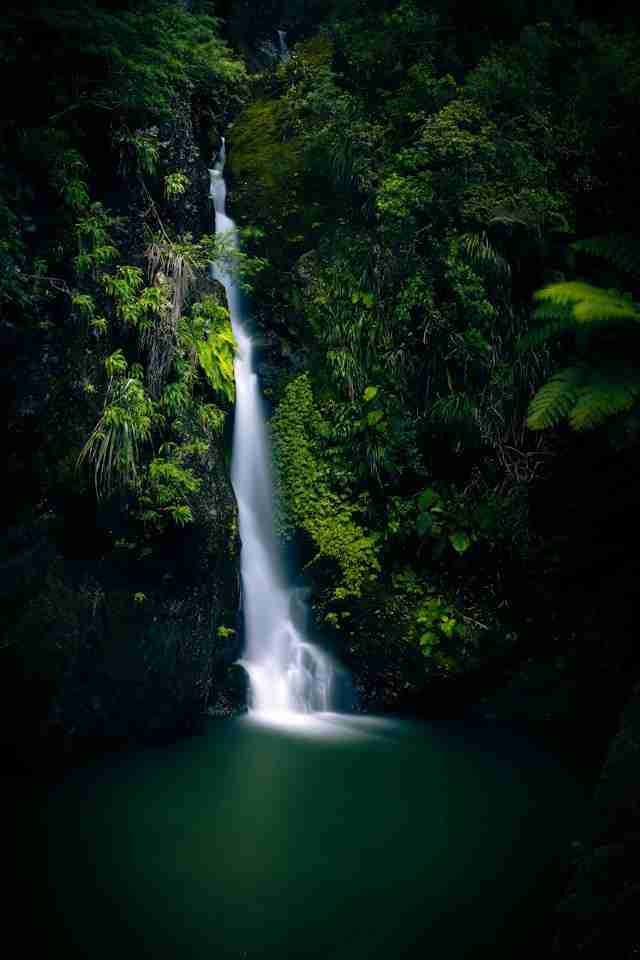
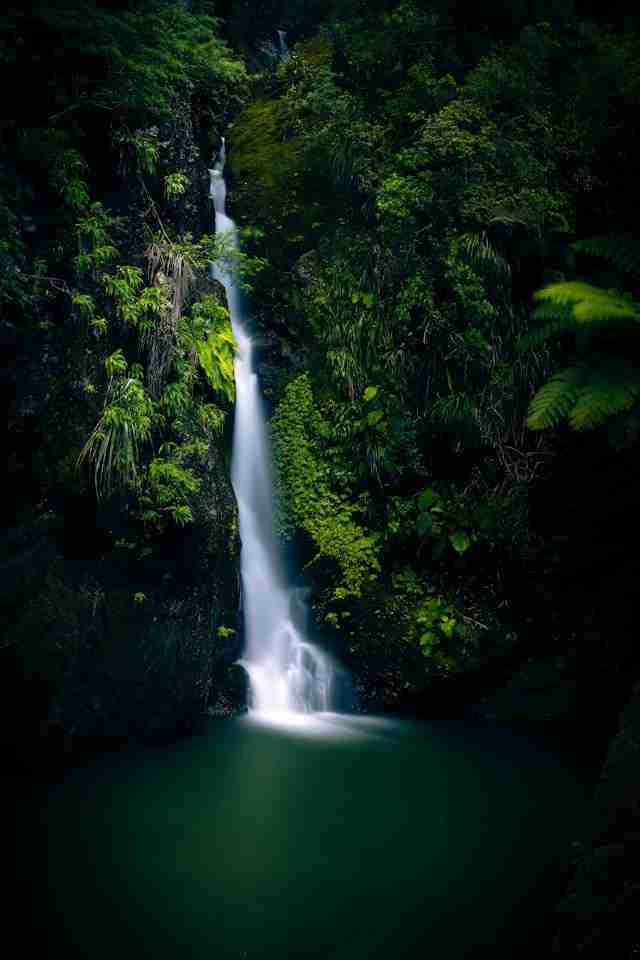
Tucked into the lush forest of the Waitākere Ranges near Huia, Karamatura Falls is a graceful cascade that rewards photographers with both drama and intimacy. The waterfall plunges in a single white ribbon into a shaded pool, surrounded by dense native bush that hums with the sounds of birds and flowing water. Though less visited than some of the larger falls in the region, its secluded setting and easy access make it a favorite among those who prefer quiet locations. The falls are especially photogenic when framed by the rich greens of New Zealand's native ferns and trees, which provide both texture and scale. Whether you are interested in silky long exposures, detail studies of water and stone, or moody compositions in mist, Karamatura Falls offers a rewarding subject just a short journey from Auckland.
Best Photography Opportunities
• Full Cascade from the Basin
The classic view of Karamatura Falls is from the base pool, where the entire drop is visible framed by mossy rock and dense vegetation. A wide-angle lens captures the complete scene, showing both the plunge and the surrounding bush. Shooting on overcast days or in soft morning light prevents the highlights of the water from blowing out while maintaining detail in the greenery. A tripod and neutral density filter allow for long exposures that transform the falling water into silky ribbons, while fast shutter speeds freeze spray and flow for a more dynamic result. This vantage point provides the strongest introduction to the falls and emphasizes their setting in the forest.
• Stream and Foreground Rock Textures
The stream below the waterfall winds through rocks and fallen branches, offering excellent foregrounds that can lead the viewer's eye back toward the cascade. Compositions that include moss-covered stones, ferns, or pools of water add depth and context. Shooting low and close to the water emphasizes texture, and using a polarizer reduces glare on wet surfaces while enhancing color. This area is particularly effective in long exposure work, where moving water contrasts with the stillness of stone and foliage. Seasonal variations in flow give the stream different character, from calm trickles to energetic torrents.
• Detail Studies in Spray and Stone
Karamatura Falls is also well-suited for abstract compositions. Isolating sections of the cascade with a telephoto lens highlights the interplay between water and rock, with spray creating luminous textures. Tight framing reveals patterns of moss and lichen clinging to the stone, or swirling eddies of water around the plunge pool. These details are best photographed under soft, even light that flattens contrast and emphasizes texture. Working in black and white can further highlight the graphic qualities of these intimate scenes.
• Framing with Native Bush and Ferns
The falls are surrounded by New Zealand's characteristic bush, including tall trees and thick stands of silver ferns. These elements provide natural frames that can be used to create depth and atmosphere in your images. Shooting through the ferns with the waterfall beyond gives a sense of discovery and immersion in the forest. In summer, the greens are vibrant and dense, while in winter, the foliage takes on darker, moodier tones that suit monochrome work. This framing works particularly well with mid-range focal lengths that balance the scale of vegetation and cascade.
• Moody Atmosphere in Mist and Rain
After heavy rain, the waterfall swells with energy, and mist rises into the bush. These conditions are perfect for atmospheric photography, where the falls appear softened and the greens of the forest become saturated with color. Long exposures create a dreamy quality, while faster shutter speeds emphasize the spray and force of the water. Shooting in light rain or drizzle requires waterproof protection for gear but can result in some of the most memorable images, as the environment feels alive and dynamic.
Best Time to Visit
Karamatura Falls is accessible year-round, but each season brings its own character. Autumn and winter provide stronger flows and moody, subdued light that works well for long exposure photography. Spring adds fresh growth in the surrounding bush and good water volume from seasonal rains. Summer offers lush green vegetation, though flows may be lighter after dry spells. The best daily timing is early morning or late afternoon, when the forest canopy softens the light and fewer visitors are present. Overcast days are ideal for balancing exposure between white water and dark vegetation, while rainy conditions bring drama and richness of color. Photographers should avoid midday in bright sun, as the contrast between light and shadow becomes difficult to manage.
How to Get There
Karamatura Falls is located near the coastal village of Huia, about a 45-minute drive west of central Auckland. From Huia Road, follow signs to the Karamatura Track car park, where the trail begins. The walk to the falls is short and well-marked, taking about 30 minutes through regenerating native bush along the Karamatura Stream. The track is graded and accessible to most visitors, though it can be muddy and slippery after rain. There is no fee to access the trail or the falls, and the area is open year-round during daylight hours. Tripods are permitted, and there is enough space at the base of the falls to set up comfortably without obstructing others. Drones are not recommended due to the narrow valley, dense vegetation, and Department of Conservation restrictions in the Waitākere Ranges. Visitors should respect rāhui or temporary closures that may be in place for forest protection.
Recommended Photography Gear
A wide-angle lens in the 14 to 24 millimeter range is essential for capturing the full waterfall from the basin, while a mid-range zoom between 24 and 70 millimeters is ideal for stream and forest compositions. A telephoto lens up to 200 millimeters is useful for isolating details in the cascade and stone textures. A sturdy tripod is necessary for long exposures, especially on the uneven ground near the stream. Neutral density filters, particularly six-stop and ten-stop, allow creative control over shutter speed in daylight. A circular polarizer is highly recommended for controlling glare on wet rocks and enhancing the greens of the bush. Protective gear such as rain covers and microfiber cloths are essential when shooting in wet or misty conditions. Comfortable hiking boots with good grip will make the approach safer, particularly after rain.
Nearby Photography Locations
• Huia Bay
Just minutes from the falls, this coastal area offers sweeping views across the Manukau Harbour, with tidal flats, mangroves, and reflective waters that shine at sunset and low tide.
A short drive south of Huia, Whatipu is a wild black-sand beach bordered by dramatic cliffs and sea caves. It is excellent for seascape photography, particularly at golden hour when light catches the surf and volcanic sand.
North of Huia, Piha is one of Auckland's most famous surf beaches, with rugged cliffs and the prominent Lion Rock as a natural focal point. Sunset here often delivers dramatic skies and strong surf for long exposure work.
Situated at the entrance to the Waitākere Ranges, this viewpoint provides sweeping panoramas across forested hills to the Manukau Harbour. It is especially photogenic in early morning mist.
Another nearby waterfall, Karekare Falls drops in a clean curtain of water into a lush pool surrounded by native bush. Its accessibility and graceful form make it a natural complement to Karamatura Falls on the same outing.
Karamatura Falls offers a perfect blend of accessibility, natural beauty, and photographic diversity. Its setting in dense bush, its elegant single drop, and its changing moods through weather and season make it a rewarding subject for photographers seeking both classic waterfall scenes and creative detail work. For those willing to walk the short forest track, the reward is a waterfall that feels both intimate and powerful, a slice of wilderness just beyond the city.
Comments
Loading comments…